
Seamless Rate vs Packet Loss: Impact Analysis
MAR 2, 20269 MIN READ
Generate Your Research Report Instantly with AI Agent
Patsnap Eureka helps you evaluate technical feasibility & market potential.
Seamless Rate Technology Background and Objectives
Seamless rate technology emerged from the fundamental need to maintain continuous data transmission quality in dynamic network environments where packet loss is inevitable. This technology represents a paradigm shift from traditional fixed-rate transmission systems to adaptive mechanisms that can dynamically adjust transmission parameters in real-time based on network conditions. The concept originated in the early 2000s as multimedia streaming and real-time communication applications began demanding higher quality of service guarantees despite varying network conditions.
The evolution of seamless rate technology has been driven by the exponential growth of bandwidth-intensive applications, including video conferencing, live streaming, cloud gaming, and IoT communications. Traditional transmission protocols often suffered from abrupt quality degradation when encountering packet loss, leading to user experience deterioration and service interruptions. Seamless rate technology addresses these limitations by implementing intelligent rate adaptation algorithms that can predict, detect, and respond to network congestion and packet loss events before they significantly impact service quality.
Current technological trends indicate a convergence toward machine learning-enhanced seamless rate systems that leverage predictive analytics and network state estimation. These advanced systems utilize historical network performance data, real-time congestion indicators, and application-specific quality metrics to optimize transmission rates proactively. The integration of artificial intelligence enables more sophisticated decision-making processes that consider multiple variables simultaneously, including buffer occupancy, round-trip time variations, and application-specific quality requirements.
The primary objective of seamless rate technology development focuses on achieving optimal balance between transmission efficiency and service quality maintenance. This involves minimizing the perceptual impact of rate changes while maximizing network resource utilization. Key performance indicators include maintaining acceptable quality levels during network fluctuations, reducing rebuffering events, and ensuring smooth transitions between different rate levels without noticeable artifacts or interruptions.
Future development goals emphasize cross-layer optimization approaches that integrate seamless rate mechanisms with network infrastructure improvements and application-layer enhancements. The technology aims to support emerging applications such as augmented reality, virtual reality, and ultra-low latency communications that demand even more stringent quality and responsiveness requirements. Additionally, the development trajectory includes standardization efforts to ensure interoperability across different platforms and network environments while maintaining backward compatibility with existing systems.
The evolution of seamless rate technology has been driven by the exponential growth of bandwidth-intensive applications, including video conferencing, live streaming, cloud gaming, and IoT communications. Traditional transmission protocols often suffered from abrupt quality degradation when encountering packet loss, leading to user experience deterioration and service interruptions. Seamless rate technology addresses these limitations by implementing intelligent rate adaptation algorithms that can predict, detect, and respond to network congestion and packet loss events before they significantly impact service quality.
Current technological trends indicate a convergence toward machine learning-enhanced seamless rate systems that leverage predictive analytics and network state estimation. These advanced systems utilize historical network performance data, real-time congestion indicators, and application-specific quality metrics to optimize transmission rates proactively. The integration of artificial intelligence enables more sophisticated decision-making processes that consider multiple variables simultaneously, including buffer occupancy, round-trip time variations, and application-specific quality requirements.
The primary objective of seamless rate technology development focuses on achieving optimal balance between transmission efficiency and service quality maintenance. This involves minimizing the perceptual impact of rate changes while maximizing network resource utilization. Key performance indicators include maintaining acceptable quality levels during network fluctuations, reducing rebuffering events, and ensuring smooth transitions between different rate levels without noticeable artifacts or interruptions.
Future development goals emphasize cross-layer optimization approaches that integrate seamless rate mechanisms with network infrastructure improvements and application-layer enhancements. The technology aims to support emerging applications such as augmented reality, virtual reality, and ultra-low latency communications that demand even more stringent quality and responsiveness requirements. Additionally, the development trajectory includes standardization efforts to ensure interoperability across different platforms and network environments while maintaining backward compatibility with existing systems.
Market Demand for Low-Latency Network Solutions
The telecommunications industry is experiencing unprecedented demand for low-latency network solutions, driven by the proliferation of real-time applications and emerging technologies. This demand surge stems from the critical relationship between seamless data transmission rates and packet loss, where even minimal latency can significantly impact user experience and operational efficiency.
Enterprise applications represent a substantial portion of this market demand, particularly in financial services where high-frequency trading requires microsecond-level precision. Trading firms and financial institutions are investing heavily in ultra-low latency infrastructure to maintain competitive advantages. Similarly, manufacturing sectors implementing Industry 4.0 initiatives demand real-time communication between IoT devices, automated systems, and control centers to ensure seamless production workflows.
The gaming and entertainment industry has emerged as another major driver of low-latency network demand. Cloud gaming platforms, virtual reality applications, and live streaming services require consistent, high-quality data transmission to deliver acceptable user experiences. The growing popularity of esports and competitive gaming has further intensified requirements for minimal network delays and zero packet loss scenarios.
Healthcare digitization has created substantial demand for reliable, low-latency networks supporting telemedicine, remote surgery, and real-time patient monitoring systems. Medical professionals require instantaneous data transmission for critical decision-making, making network reliability and speed paramount concerns. Emergency response systems and remote diagnostic tools depend on seamless connectivity to function effectively.
Autonomous vehicle development and smart city initiatives represent emerging market segments with stringent low-latency requirements. Vehicle-to-vehicle communication, traffic management systems, and autonomous navigation rely on real-time data exchange to ensure safety and operational efficiency. These applications cannot tolerate packet loss or transmission delays that could compromise system reliability.
The telecommunications infrastructure market is responding with increased investments in 5G networks, edge computing solutions, and advanced routing technologies. Service providers are prioritizing network optimization to meet growing customer expectations for seamless connectivity across diverse application scenarios.
Market research indicates sustained growth in demand for low-latency solutions across multiple sectors, with enterprises increasingly willing to invest in premium network services that guarantee minimal packet loss and consistent performance metrics.
Enterprise applications represent a substantial portion of this market demand, particularly in financial services where high-frequency trading requires microsecond-level precision. Trading firms and financial institutions are investing heavily in ultra-low latency infrastructure to maintain competitive advantages. Similarly, manufacturing sectors implementing Industry 4.0 initiatives demand real-time communication between IoT devices, automated systems, and control centers to ensure seamless production workflows.
The gaming and entertainment industry has emerged as another major driver of low-latency network demand. Cloud gaming platforms, virtual reality applications, and live streaming services require consistent, high-quality data transmission to deliver acceptable user experiences. The growing popularity of esports and competitive gaming has further intensified requirements for minimal network delays and zero packet loss scenarios.
Healthcare digitization has created substantial demand for reliable, low-latency networks supporting telemedicine, remote surgery, and real-time patient monitoring systems. Medical professionals require instantaneous data transmission for critical decision-making, making network reliability and speed paramount concerns. Emergency response systems and remote diagnostic tools depend on seamless connectivity to function effectively.
Autonomous vehicle development and smart city initiatives represent emerging market segments with stringent low-latency requirements. Vehicle-to-vehicle communication, traffic management systems, and autonomous navigation rely on real-time data exchange to ensure safety and operational efficiency. These applications cannot tolerate packet loss or transmission delays that could compromise system reliability.
The telecommunications infrastructure market is responding with increased investments in 5G networks, edge computing solutions, and advanced routing technologies. Service providers are prioritizing network optimization to meet growing customer expectations for seamless connectivity across diverse application scenarios.
Market research indicates sustained growth in demand for low-latency solutions across multiple sectors, with enterprises increasingly willing to invest in premium network services that guarantee minimal packet loss and consistent performance metrics.
Current Packet Loss Challenges in Network Systems
Network systems today face unprecedented challenges in managing packet loss while maintaining seamless data transmission rates. The fundamental tension between achieving high throughput and minimizing packet loss has become increasingly complex as network architectures evolve toward higher speeds and greater complexity. Traditional network protocols were designed for relatively stable environments, but modern applications demand real-time performance across diverse and dynamic network conditions.
The proliferation of bandwidth-intensive applications has intensified packet loss challenges significantly. Video streaming services, cloud computing platforms, and IoT deployments generate massive data volumes that strain network infrastructure. When networks approach capacity limits, congestion-induced packet loss becomes inevitable, creating cascading effects that degrade overall system performance. This congestion manifests differently across various network layers, from physical link saturation to buffer overflow at intermediate routing nodes.
Buffer management represents one of the most critical technical bottlenecks in current network systems. Routers and switches employ finite buffer spaces to temporarily store packets during transmission delays. When incoming packet rates exceed processing capabilities, buffers overflow, resulting in packet drops. The challenge lies in optimizing buffer sizes and management algorithms to balance memory costs against packet loss prevention while maintaining low latency requirements.
Quality of Service mechanisms attempt to address packet loss through traffic prioritization and bandwidth allocation strategies. However, these approaches often create new complexities in network management and may not effectively handle dynamic traffic patterns. The interaction between different QoS policies can lead to unexpected packet loss scenarios, particularly when multiple applications compete for limited network resources simultaneously.
Wireless network environments introduce additional packet loss challenges due to signal interference, mobility, and varying channel conditions. The inherent unreliability of wireless transmission mediums requires sophisticated error correction and retransmission mechanisms. These solutions often conflict with seamless rate requirements, as error recovery processes introduce latency and reduce effective throughput.
Network virtualization and software-defined networking architectures have created new packet loss vectors through increased processing overhead and virtualization layer inefficiencies. While these technologies offer greater flexibility and control, they introduce additional processing steps that can become bottlenecks under high traffic loads. The abstraction layers necessary for network virtualization can mask underlying packet loss issues, making diagnosis and resolution more challenging.
Modern applications increasingly require predictable network performance with minimal packet loss tolerance. Real-time communication systems, financial trading platforms, and industrial control networks cannot accommodate traditional best-effort delivery models. These stringent requirements demand fundamental rethinking of network design principles and packet loss mitigation strategies to achieve truly seamless rate performance.
The proliferation of bandwidth-intensive applications has intensified packet loss challenges significantly. Video streaming services, cloud computing platforms, and IoT deployments generate massive data volumes that strain network infrastructure. When networks approach capacity limits, congestion-induced packet loss becomes inevitable, creating cascading effects that degrade overall system performance. This congestion manifests differently across various network layers, from physical link saturation to buffer overflow at intermediate routing nodes.
Buffer management represents one of the most critical technical bottlenecks in current network systems. Routers and switches employ finite buffer spaces to temporarily store packets during transmission delays. When incoming packet rates exceed processing capabilities, buffers overflow, resulting in packet drops. The challenge lies in optimizing buffer sizes and management algorithms to balance memory costs against packet loss prevention while maintaining low latency requirements.
Quality of Service mechanisms attempt to address packet loss through traffic prioritization and bandwidth allocation strategies. However, these approaches often create new complexities in network management and may not effectively handle dynamic traffic patterns. The interaction between different QoS policies can lead to unexpected packet loss scenarios, particularly when multiple applications compete for limited network resources simultaneously.
Wireless network environments introduce additional packet loss challenges due to signal interference, mobility, and varying channel conditions. The inherent unreliability of wireless transmission mediums requires sophisticated error correction and retransmission mechanisms. These solutions often conflict with seamless rate requirements, as error recovery processes introduce latency and reduce effective throughput.
Network virtualization and software-defined networking architectures have created new packet loss vectors through increased processing overhead and virtualization layer inefficiencies. While these technologies offer greater flexibility and control, they introduce additional processing steps that can become bottlenecks under high traffic loads. The abstraction layers necessary for network virtualization can mask underlying packet loss issues, making diagnosis and resolution more challenging.
Modern applications increasingly require predictable network performance with minimal packet loss tolerance. Real-time communication systems, financial trading platforms, and industrial control networks cannot accommodate traditional best-effort delivery models. These stringent requirements demand fundamental rethinking of network design principles and packet loss mitigation strategies to achieve truly seamless rate performance.
Existing Rate Control and Loss Recovery Solutions
01 Seamless data transmission rate adaptation in wireless communication systems
Technologies for dynamically adjusting data transmission rates in wireless networks without interrupting ongoing communications. These methods enable smooth transitions between different rate configurations based on channel conditions, signal quality, and network congestion. The adaptation mechanisms can automatically switch between transmission modes to maintain optimal throughput while ensuring seamless connectivity for end users.- Seamless communication handover between different network technologies: Technologies enabling seamless rate transitions during handover between different wireless communication standards such as 3G, 4G, LTE, and 5G networks. These methods ensure continuous data transmission without interruption by maintaining consistent data rates during network switching, utilizing advanced signaling protocols and buffer management techniques to minimize packet loss and latency during transitions.
- Adaptive bit rate streaming for multimedia content: Systems and methods for dynamically adjusting streaming rates based on network conditions to provide seamless playback experience. The technology monitors bandwidth availability and automatically switches between different quality levels without buffering interruptions, ensuring smooth video and audio delivery across varying network conditions while maintaining optimal quality.
- Rate matching and adaptation in wireless transmission: Techniques for seamlessly adjusting transmission rates in wireless systems to match channel conditions and receiver capabilities. These methods employ sophisticated algorithms to modify coding rates, modulation schemes, and transmission parameters in real-time, ensuring efficient spectrum utilization and maintaining connection stability across varying signal conditions.
- Seamless rate control in video encoding and compression: Advanced video encoding technologies that provide smooth rate transitions during compression processes. These systems implement intelligent bitrate allocation mechanisms that adjust compression parameters dynamically to maintain consistent visual quality while adapting to storage or transmission constraints, enabling efficient video processing without visible artifacts.
- Multi-rate interface and protocol conversion systems: Interface technologies that enable seamless data rate conversion between different communication protocols and standards. These systems facilitate interoperability between devices operating at different speeds by implementing rate adaptation mechanisms, buffering strategies, and protocol translation layers that ensure data integrity during rate transitions.
02 Rate matching and seamless handover in mobile networks
Techniques for achieving seamless rate transitions during handover procedures between base stations or access points. These solutions ensure continuous service delivery by coordinating rate adjustments with mobility management functions. The methods include buffer management, timing synchronization, and protocol adaptations that prevent data loss or service degradation during cell transitions.Expand Specific Solutions03 Adaptive coding and modulation for seamless rate control
Systems implementing adaptive coding and modulation schemes that enable seamless rate adjustments based on real-time channel feedback. These approaches optimize spectral efficiency by selecting appropriate modulation orders and coding rates without requiring connection re-establishment. The techniques support gradual rate transitions that maintain quality of service across varying radio conditions.Expand Specific Solutions04 Seamless rate negotiation protocols for multimedia streaming
Protocol mechanisms designed for negotiating and adjusting streaming rates seamlessly during multimedia content delivery. These solutions enable dynamic bitrate adaptation for video and audio streams based on available bandwidth and device capabilities. The protocols support smooth quality transitions without buffering interruptions or playback discontinuities.Expand Specific Solutions05 Hardware architectures for seamless rate switching
Circuit designs and hardware implementations that facilitate instantaneous rate switching capabilities in communication devices. These architectures include specialized processing units, clock management systems, and interface controllers that enable rapid rate transitions without system resets. The designs support multiple rate standards and provide backward compatibility while maintaining seamless operation.Expand Specific Solutions
Key Players in Network Optimization Industry
The seamless rate vs packet loss impact analysis represents a critical networking challenge in the mature telecommunications infrastructure market, valued at over $1.7 trillion globally. The industry is in a consolidation phase with established players like Huawei, Cisco, and Ericsson dominating carrier-grade solutions, while Intel, Qualcomm, and Texas Instruments lead in semiconductor optimization for packet processing. Technology maturity varies significantly across segments - traditional networking equipment from Huawei, Cisco, and Alcatel-Lucent has reached high maturity, whereas AI-driven packet loss prediction solutions from Google and advanced 5G implementations by Qualcomm and Ericsson remain in development phases. Chinese manufacturers like ZTE and Fiberhome are rapidly advancing, while research institutions including Tsinghua University and University of California contribute foundational algorithms. The competitive landscape shows increasing focus on software-defined networking solutions and real-time analytics capabilities.
Huawei Technologies Co., Ltd.
Technical Solution: Huawei has developed advanced adaptive rate control algorithms that dynamically adjust transmission rates based on real-time packet loss feedback. Their solution employs machine learning-based prediction models to anticipate network congestion and proactively reduce transmission rates before significant packet loss occurs. The system implements a multi-layer approach combining physical layer rate adaptation with application layer flow control, achieving seamless rate transitions while maintaining Quality of Service (QoS) requirements. Their technology includes intelligent buffering mechanisms and forward error correction (FEC) techniques that help maintain data integrity during rate adjustments, particularly effective in 5G and wireless communication scenarios.
Strengths: Strong integration with 5G infrastructure, proven scalability in large networks. Weaknesses: Higher computational complexity, potential vendor lock-in concerns.
Cisco Technology, Inc.
Technical Solution: Cisco's approach focuses on intelligent network fabric solutions that provide real-time visibility into packet loss patterns and automatically adjust transmission rates across network segments. Their technology leverages Software-Defined Networking (SDN) principles to create dynamic rate adaptation policies that respond to network conditions within milliseconds. The solution includes advanced analytics engines that correlate packet loss events with network topology changes, enabling predictive rate adjustments. Cisco's implementation features distributed rate control mechanisms that operate at both edge and core network levels, ensuring consistent performance across enterprise and service provider networks while maintaining backward compatibility with existing infrastructure.
Strengths: Excellent enterprise integration, comprehensive network management capabilities. Weaknesses: Higher licensing costs, complexity in multi-vendor environments.
Core Innovations in Seamless Rate Algorithms
Data rate shifting methods and techniques
PatentInactiveUS20050249157A1
Innovation
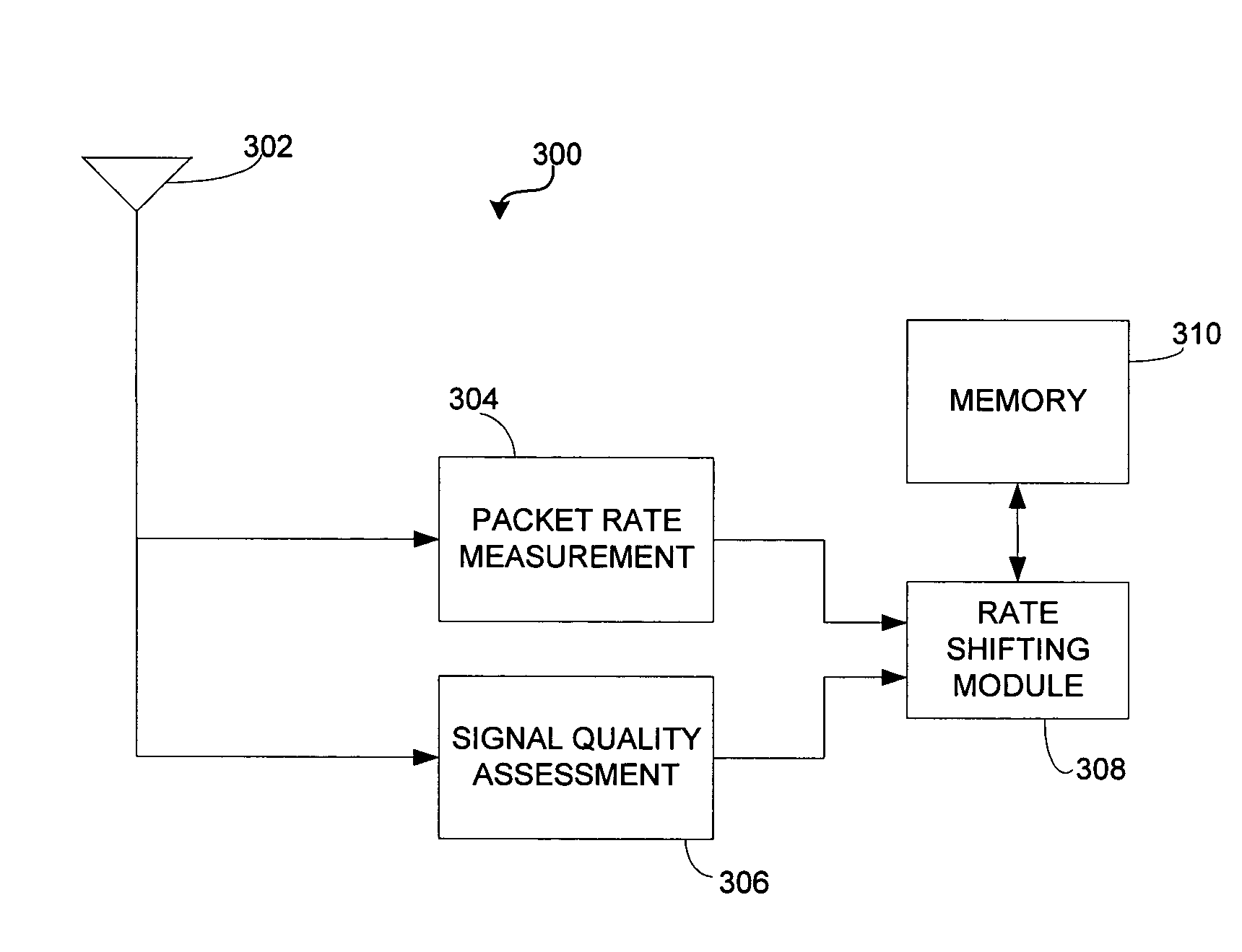
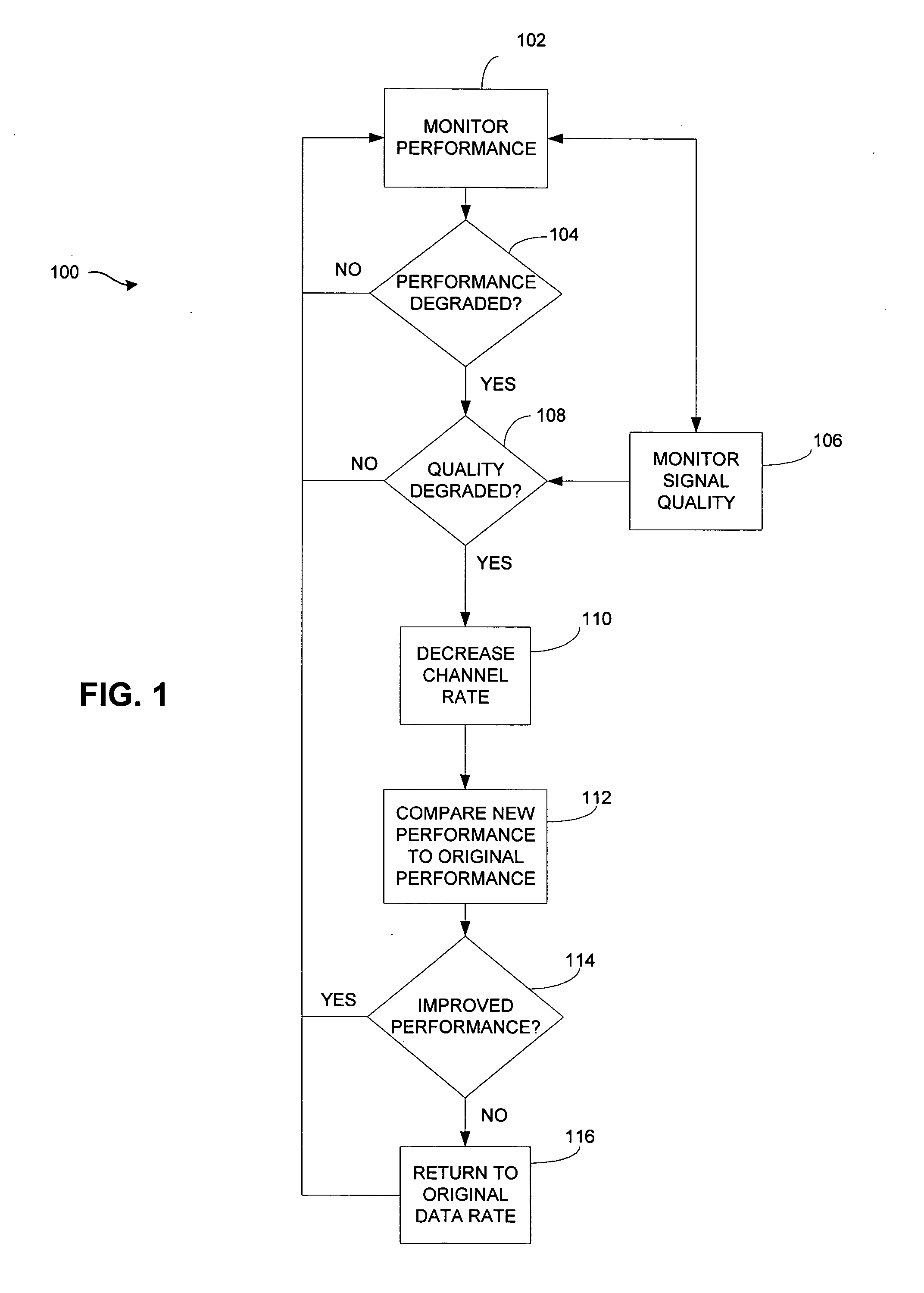
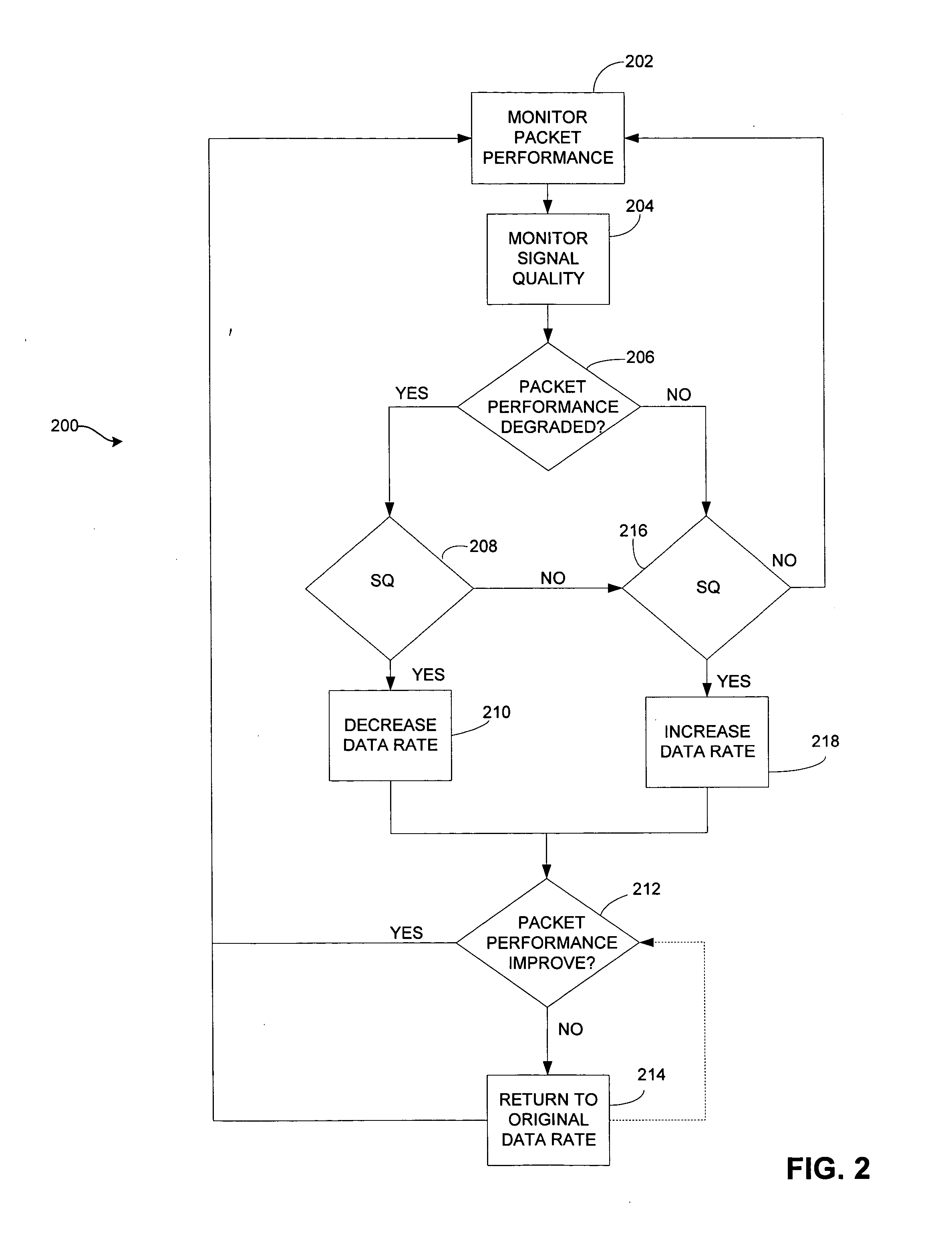
- A method that differentiates between packet loss caused by poor signal quality and packet loss due to collisions by using signal strength measurement, channel quality, packet loss rate, and throughput, allowing for targeted data rate adjustments to optimize network performance without unnecessary rate shifting.

Method for evaluating a wireless link, respective device, computer program and storage medium
PatentActiveUS20230422064A1
Innovation
- A method for evaluating the wireless link of customer premises equipment (CPE) devices by determining the actual and available data rates and calculating a headroom, using a ratio or assessment value to estimate the risk of visible Wi-Fi issues, allowing for improved monitoring and diagnosis of performance problems.


Quality of Service Standards and Compliance
Quality of Service (QoS) standards play a crucial role in defining acceptable performance thresholds for seamless rate delivery and packet loss tolerance across different network applications. The International Telecommunication Union (ITU-T) has established comprehensive guidelines through recommendations such as G.1010 and Y.1541, which specify end-to-end performance parameters including packet loss ratios, delay variations, and throughput requirements for various service classes.
The Internet Engineering Task Force (IETF) has developed complementary standards including RFC 2475 for Differentiated Services and RFC 2205 for Resource Reservation Protocol (RSVP), creating frameworks that enable network operators to prioritize traffic based on application requirements. These standards establish clear metrics for measuring the relationship between seamless rate performance and acceptable packet loss thresholds across different service categories.
Compliance with QoS standards requires adherence to specific packet loss benchmarks that vary significantly across application types. Real-time communications typically demand packet loss rates below 0.1% to maintain seamless operation, while data transfer applications may tolerate higher loss rates up to 1% without significant performance degradation. Video streaming services generally require packet loss rates under 0.01% for high-definition content delivery.
Network equipment manufacturers must demonstrate compliance through rigorous testing protocols that validate seamless rate capabilities under various packet loss scenarios. Certification processes involve standardized test suites that simulate real-world network conditions, measuring performance against established benchmarks for jitter, latency, and throughput consistency.
Regulatory compliance frameworks in different regions impose additional requirements for QoS performance monitoring and reporting. The Federal Communications Commission (FCC) in the United States and the European Telecommunications Standards Institute (ETSI) have established mandatory performance disclosure requirements that directly impact how service providers manage the seamless rate versus packet loss relationship in their network infrastructure.
Service Level Agreements (SLAs) increasingly incorporate QoS compliance metrics as contractual obligations, creating legal frameworks that enforce specific performance standards for seamless rate delivery while maintaining acceptable packet loss parameters across diverse network conditions and application scenarios.
The Internet Engineering Task Force (IETF) has developed complementary standards including RFC 2475 for Differentiated Services and RFC 2205 for Resource Reservation Protocol (RSVP), creating frameworks that enable network operators to prioritize traffic based on application requirements. These standards establish clear metrics for measuring the relationship between seamless rate performance and acceptable packet loss thresholds across different service categories.
Compliance with QoS standards requires adherence to specific packet loss benchmarks that vary significantly across application types. Real-time communications typically demand packet loss rates below 0.1% to maintain seamless operation, while data transfer applications may tolerate higher loss rates up to 1% without significant performance degradation. Video streaming services generally require packet loss rates under 0.01% for high-definition content delivery.
Network equipment manufacturers must demonstrate compliance through rigorous testing protocols that validate seamless rate capabilities under various packet loss scenarios. Certification processes involve standardized test suites that simulate real-world network conditions, measuring performance against established benchmarks for jitter, latency, and throughput consistency.
Regulatory compliance frameworks in different regions impose additional requirements for QoS performance monitoring and reporting. The Federal Communications Commission (FCC) in the United States and the European Telecommunications Standards Institute (ETSI) have established mandatory performance disclosure requirements that directly impact how service providers manage the seamless rate versus packet loss relationship in their network infrastructure.
Service Level Agreements (SLAs) increasingly incorporate QoS compliance metrics as contractual obligations, creating legal frameworks that enforce specific performance standards for seamless rate delivery while maintaining acceptable packet loss parameters across diverse network conditions and application scenarios.
Performance Metrics and Impact Assessment Methods
Performance metrics for seamless rate versus packet loss analysis require comprehensive measurement frameworks that capture both quantitative network parameters and qualitative user experience indicators. The primary metrics include throughput measurement, latency assessment, jitter analysis, and packet loss rate calculations. These fundamental parameters must be monitored continuously across different network conditions to establish baseline performance characteristics and identify degradation patterns.
Seamless rate evaluation encompasses multiple dimensions beyond simple bandwidth measurements. Effective bitrate, adaptive streaming quality levels, buffer health metrics, and rebuffering frequency serve as critical indicators of streaming performance. These metrics must be correlated with real-time packet loss measurements to understand the direct impact on content delivery quality. Advanced measurement systems employ statistical sampling techniques to capture performance variations across different time intervals and network segments.
Impact assessment methodologies utilize both passive monitoring and active probing techniques to evaluate the relationship between packet loss and seamless rate degradation. Passive monitoring involves analyzing actual traffic flows without introducing additional network load, while active probing uses synthetic traffic generation to test network resilience under controlled conditions. These approaches provide complementary perspectives on network performance characteristics.
Quality of Experience (QoE) assessment frameworks translate technical performance metrics into user-perceived quality indicators. Mean Opinion Score (MOS) calculations, Video Quality Assessment (VQA) algorithms, and perceptual quality metrics bridge the gap between network-level measurements and end-user satisfaction. These assessment methods incorporate human visual perception models to predict the subjective impact of packet loss on streaming quality.
Statistical analysis techniques play crucial roles in impact assessment, employing correlation analysis, regression modeling, and machine learning algorithms to identify patterns and predict performance degradation. Time-series analysis helps identify temporal relationships between packet loss events and seamless rate fluctuations, while predictive modeling enables proactive quality management strategies.
Measurement infrastructure requirements include distributed monitoring points, high-precision timing systems, and scalable data collection platforms. Real-time analytics capabilities enable immediate detection of performance anomalies and automated response mechanisms. Integration with network management systems ensures comprehensive visibility across the entire delivery chain from content sources to end-user devices.
Seamless rate evaluation encompasses multiple dimensions beyond simple bandwidth measurements. Effective bitrate, adaptive streaming quality levels, buffer health metrics, and rebuffering frequency serve as critical indicators of streaming performance. These metrics must be correlated with real-time packet loss measurements to understand the direct impact on content delivery quality. Advanced measurement systems employ statistical sampling techniques to capture performance variations across different time intervals and network segments.
Impact assessment methodologies utilize both passive monitoring and active probing techniques to evaluate the relationship between packet loss and seamless rate degradation. Passive monitoring involves analyzing actual traffic flows without introducing additional network load, while active probing uses synthetic traffic generation to test network resilience under controlled conditions. These approaches provide complementary perspectives on network performance characteristics.
Quality of Experience (QoE) assessment frameworks translate technical performance metrics into user-perceived quality indicators. Mean Opinion Score (MOS) calculations, Video Quality Assessment (VQA) algorithms, and perceptual quality metrics bridge the gap between network-level measurements and end-user satisfaction. These assessment methods incorporate human visual perception models to predict the subjective impact of packet loss on streaming quality.
Statistical analysis techniques play crucial roles in impact assessment, employing correlation analysis, regression modeling, and machine learning algorithms to identify patterns and predict performance degradation. Time-series analysis helps identify temporal relationships between packet loss events and seamless rate fluctuations, while predictive modeling enables proactive quality management strategies.
Measurement infrastructure requirements include distributed monitoring points, high-precision timing systems, and scalable data collection platforms. Real-time analytics capabilities enable immediate detection of performance anomalies and automated response mechanisms. Integration with network management systems ensures comprehensive visibility across the entire delivery chain from content sources to end-user devices.
Unlock deeper insights with Patsnap Eureka Quick Research — get a full tech report to explore trends and direct your research. Try now!
Generate Your Research Report Instantly with AI Agent
Supercharge your innovation with Patsnap Eureka AI Agent Platform!