
Seamless Rate vs Network Load: Performance Metrics
MAR 2, 20269 MIN READ
Generate Your Research Report Instantly with AI Agent
Patsnap Eureka helps you evaluate technical feasibility & market potential.
Seamless Rate Technology Background and Objectives
Seamless rate technology has emerged as a critical performance metric in modern telecommunications and networking systems, representing the ability to maintain continuous data transmission without interruption or quality degradation during network transitions. This technology concept originated from the increasing demand for uninterrupted connectivity in mobile communications, where users expect consistent service quality regardless of their mobility patterns or network conditions.
The fundamental principle of seamless rate technology lies in its capacity to dynamically adapt transmission parameters while preserving service continuity. Unlike traditional fixed-rate systems, seamless rate mechanisms employ sophisticated algorithms to monitor network conditions in real-time and adjust data transmission rates accordingly. This adaptive approach ensures optimal utilization of available bandwidth while minimizing packet loss and latency variations.
Historical development of seamless rate technology can be traced back to early Quality of Service (QoS) implementations in the 1990s, evolving through various generations of wireless communication standards. The technology gained significant momentum with the advent of 4G LTE networks, where seamless handover mechanisms became essential for maintaining user experience during cell transitions. Subsequently, 5G networks have further advanced these concepts, introducing more granular control over rate adaptation and network resource allocation.
The relationship between seamless rate and network load represents a fundamental challenge in network optimization. As network load increases, maintaining seamless transmission becomes increasingly complex due to resource contention and congestion. This dynamic interaction requires sophisticated load balancing algorithms and predictive analytics to anticipate network behavior and proactively adjust transmission parameters.
Current technological objectives focus on achieving near-zero interruption rates while maximizing network efficiency. Key targets include reducing handover latency to sub-millisecond levels, maintaining consistent throughput across varying load conditions, and implementing intelligent traffic prioritization mechanisms. These objectives are particularly crucial for emerging applications such as autonomous vehicles, industrial IoT, and real-time augmented reality systems.
The evolution toward seamless rate technology also encompasses energy efficiency considerations, as adaptive rate mechanisms can significantly impact power consumption in both network infrastructure and end-user devices. Modern implementations strive to balance performance optimization with energy conservation, employing machine learning algorithms to predict optimal operating parameters based on historical usage patterns and current network conditions.
The fundamental principle of seamless rate technology lies in its capacity to dynamically adapt transmission parameters while preserving service continuity. Unlike traditional fixed-rate systems, seamless rate mechanisms employ sophisticated algorithms to monitor network conditions in real-time and adjust data transmission rates accordingly. This adaptive approach ensures optimal utilization of available bandwidth while minimizing packet loss and latency variations.
Historical development of seamless rate technology can be traced back to early Quality of Service (QoS) implementations in the 1990s, evolving through various generations of wireless communication standards. The technology gained significant momentum with the advent of 4G LTE networks, where seamless handover mechanisms became essential for maintaining user experience during cell transitions. Subsequently, 5G networks have further advanced these concepts, introducing more granular control over rate adaptation and network resource allocation.
The relationship between seamless rate and network load represents a fundamental challenge in network optimization. As network load increases, maintaining seamless transmission becomes increasingly complex due to resource contention and congestion. This dynamic interaction requires sophisticated load balancing algorithms and predictive analytics to anticipate network behavior and proactively adjust transmission parameters.
Current technological objectives focus on achieving near-zero interruption rates while maximizing network efficiency. Key targets include reducing handover latency to sub-millisecond levels, maintaining consistent throughput across varying load conditions, and implementing intelligent traffic prioritization mechanisms. These objectives are particularly crucial for emerging applications such as autonomous vehicles, industrial IoT, and real-time augmented reality systems.
The evolution toward seamless rate technology also encompasses energy efficiency considerations, as adaptive rate mechanisms can significantly impact power consumption in both network infrastructure and end-user devices. Modern implementations strive to balance performance optimization with energy conservation, employing machine learning algorithms to predict optimal operating parameters based on historical usage patterns and current network conditions.
Market Demand for Network Performance Optimization
The telecommunications industry faces unprecedented pressure to deliver consistent, high-quality network performance as digital transformation accelerates across all sectors. Organizations increasingly rely on real-time applications, cloud services, and data-intensive operations that demand seamless connectivity regardless of network load conditions. This fundamental shift has created a substantial market opportunity for network performance optimization solutions that can maintain service quality under varying traffic conditions.
Enterprise customers represent the largest segment driving demand for network performance optimization technologies. Large corporations operating distributed workforces, multi-cloud environments, and mission-critical applications require networks that can adapt dynamically to changing load patterns while preserving user experience. The rise of remote work, video conferencing, and collaborative platforms has intensified the need for solutions that can guarantee seamless performance metrics across diverse network conditions.
Telecommunications service providers constitute another significant market segment seeking advanced performance optimization capabilities. Network operators face mounting pressure to differentiate their services while managing increasing traffic volumes and maintaining competitive pricing. Solutions that can optimize the relationship between seamless rate delivery and network load provide carriers with the tools to maximize infrastructure utilization while ensuring service level agreement compliance.
The emergence of edge computing and Internet of Things deployments has created new market dynamics for network performance optimization. These distributed architectures generate variable traffic patterns that traditional network management approaches struggle to handle effectively. Organizations implementing edge strategies require sophisticated performance metrics and optimization capabilities to ensure consistent application performance across geographically dispersed network nodes.
Cloud service providers and content delivery networks represent rapidly growing market segments for performance optimization solutions. These organizations must deliver consistent user experiences while managing fluctuating demand patterns and optimizing resource utilization. The ability to maintain seamless performance rates under varying network loads directly impacts customer satisfaction and operational efficiency.
Financial services, healthcare, and manufacturing industries demonstrate particularly strong demand for network performance optimization due to their stringent reliability and latency requirements. These sectors require solutions that can guarantee consistent performance metrics regardless of network load variations, as service disruptions can result in significant financial losses or operational impacts.
The market demand continues expanding as organizations recognize that traditional network management approaches cannot adequately address the complexity of modern distributed systems and the critical importance of maintaining seamless performance under all operating conditions.
Enterprise customers represent the largest segment driving demand for network performance optimization technologies. Large corporations operating distributed workforces, multi-cloud environments, and mission-critical applications require networks that can adapt dynamically to changing load patterns while preserving user experience. The rise of remote work, video conferencing, and collaborative platforms has intensified the need for solutions that can guarantee seamless performance metrics across diverse network conditions.
Telecommunications service providers constitute another significant market segment seeking advanced performance optimization capabilities. Network operators face mounting pressure to differentiate their services while managing increasing traffic volumes and maintaining competitive pricing. Solutions that can optimize the relationship between seamless rate delivery and network load provide carriers with the tools to maximize infrastructure utilization while ensuring service level agreement compliance.
The emergence of edge computing and Internet of Things deployments has created new market dynamics for network performance optimization. These distributed architectures generate variable traffic patterns that traditional network management approaches struggle to handle effectively. Organizations implementing edge strategies require sophisticated performance metrics and optimization capabilities to ensure consistent application performance across geographically dispersed network nodes.
Cloud service providers and content delivery networks represent rapidly growing market segments for performance optimization solutions. These organizations must deliver consistent user experiences while managing fluctuating demand patterns and optimizing resource utilization. The ability to maintain seamless performance rates under varying network loads directly impacts customer satisfaction and operational efficiency.
Financial services, healthcare, and manufacturing industries demonstrate particularly strong demand for network performance optimization due to their stringent reliability and latency requirements. These sectors require solutions that can guarantee consistent performance metrics regardless of network load variations, as service disruptions can result in significant financial losses or operational impacts.
The market demand continues expanding as organizations recognize that traditional network management approaches cannot adequately address the complexity of modern distributed systems and the critical importance of maintaining seamless performance under all operating conditions.
Current Network Load Management Challenges
Network load management faces unprecedented challenges as modern communication systems demand higher throughput while maintaining service quality. Traditional load balancing mechanisms struggle to adapt to dynamic traffic patterns, creating bottlenecks that directly impact seamless rate performance. The exponential growth in data consumption, driven by streaming services, IoT devices, and real-time applications, has exposed fundamental limitations in current network architectures.
Existing load distribution algorithms often rely on static parameters that fail to account for real-time network conditions. These systems typically use round-robin or weighted distribution methods that cannot dynamically adjust to varying traffic loads or changing network topologies. Consequently, certain network segments become oversaturated while others remain underutilized, leading to suboptimal performance metrics and degraded user experience.
The challenge of maintaining seamless rates becomes particularly acute during peak usage periods. Current monitoring systems lack the granularity needed to predict traffic surges accurately, resulting in reactive rather than proactive load management. This reactive approach creates temporary service disruptions and inconsistent performance metrics that affect overall network reliability.
Legacy infrastructure presents another significant obstacle, as many networks operate on heterogeneous systems with varying capabilities and protocols. Integrating modern load management solutions with existing hardware often requires complex workarounds that introduce additional latency and potential failure points. The lack of standardized interfaces between different network components further complicates unified load management strategies.
Real-time decision-making capabilities remain limited in current systems. Most load management solutions operate on predetermined thresholds and rules that cannot adapt quickly enough to sudden traffic variations. This inflexibility results in suboptimal resource allocation and missed opportunities for performance optimization, particularly in scenarios requiring instantaneous load redistribution.
The complexity of measuring and correlating seamless rate metrics with network load presents ongoing challenges. Current performance monitoring tools often provide fragmented views of network health, making it difficult to establish clear relationships between load distribution strategies and actual service quality outcomes.
Existing load distribution algorithms often rely on static parameters that fail to account for real-time network conditions. These systems typically use round-robin or weighted distribution methods that cannot dynamically adjust to varying traffic loads or changing network topologies. Consequently, certain network segments become oversaturated while others remain underutilized, leading to suboptimal performance metrics and degraded user experience.
The challenge of maintaining seamless rates becomes particularly acute during peak usage periods. Current monitoring systems lack the granularity needed to predict traffic surges accurately, resulting in reactive rather than proactive load management. This reactive approach creates temporary service disruptions and inconsistent performance metrics that affect overall network reliability.
Legacy infrastructure presents another significant obstacle, as many networks operate on heterogeneous systems with varying capabilities and protocols. Integrating modern load management solutions with existing hardware often requires complex workarounds that introduce additional latency and potential failure points. The lack of standardized interfaces between different network components further complicates unified load management strategies.
Real-time decision-making capabilities remain limited in current systems. Most load management solutions operate on predetermined thresholds and rules that cannot adapt quickly enough to sudden traffic variations. This inflexibility results in suboptimal resource allocation and missed opportunities for performance optimization, particularly in scenarios requiring instantaneous load redistribution.
The complexity of measuring and correlating seamless rate metrics with network load presents ongoing challenges. Current performance monitoring tools often provide fragmented views of network health, making it difficult to establish clear relationships between load distribution strategies and actual service quality outcomes.
Existing Seamless Rate vs Load Balancing Methods
01 Seamless handover measurement and optimization techniques
Methods and systems for measuring and optimizing seamless handover rates in wireless networks. These techniques involve monitoring network performance during handover events, collecting metrics related to connection continuity, and implementing algorithms to minimize service interruption. The approaches include predictive handover mechanisms, quality of service measurements, and real-time performance analysis to ensure smooth transitions between network cells or access points.- Seamless handover measurement and reporting mechanisms: Methods and systems for measuring and reporting network performance metrics during seamless handover events between different network nodes or cells. These mechanisms enable the collection of key performance indicators such as handover success rate, interruption time, and signal quality measurements to evaluate the seamlessness of mobility transitions. The measurements can be performed by user equipment or network entities and reported to optimize handover procedures.
- Quality of Service metrics for seamless connectivity: Techniques for defining and monitoring quality of service parameters that characterize seamless connectivity experiences. These metrics include packet loss rate, latency, jitter, and throughput measurements during network transitions. The systems evaluate whether service continuity is maintained within acceptable thresholds during handovers or network changes, enabling assessment of the seamless rate from an end-user perspective.
- Predictive analytics for seamless rate optimization: Systems employing machine learning and predictive algorithms to forecast and improve seamless handover rates. These approaches analyze historical performance data, network conditions, and user mobility patterns to predict potential handover failures and proactively adjust network parameters. The predictive models help maintain high seamless rates by anticipating and mitigating factors that could cause service interruptions.
- Multi-connectivity and dual connectivity performance metrics: Methods for measuring seamless rate in scenarios involving simultaneous connections to multiple network nodes or radio access technologies. These techniques assess the continuity of service when user equipment maintains parallel connections and transitions between them. Performance indicators include the success rate of make-before-break handovers and the ability to maintain uninterrupted data flow during connectivity changes.
- Real-time monitoring and adaptive control systems: Infrastructure for continuous real-time monitoring of seamless rate metrics with adaptive feedback mechanisms. These systems dynamically adjust network parameters such as handover thresholds, resource allocation, and load balancing based on observed seamless performance. The monitoring frameworks provide dashboards and alerts for network operators to maintain target seamless rates across different service areas and conditions.
02 Network performance monitoring and analytics systems
Systems and methods for comprehensive network performance monitoring that track various metrics including seamless rate indicators. These solutions employ data collection frameworks, analytics engines, and reporting mechanisms to assess network quality. The technologies enable operators to identify performance bottlenecks, analyze user experience metrics, and generate actionable insights for network optimization.Expand Specific Solutions03 Quality of Experience (QoE) measurement for seamless connectivity
Techniques for measuring and improving quality of experience related to seamless connectivity in communication networks. These methods focus on user-centric metrics that evaluate service continuity, including session persistence, connection stability, and uninterrupted data flow. The approaches incorporate feedback mechanisms, performance indicators, and adaptive algorithms to maintain high-quality seamless experiences.Expand Specific Solutions04 Mobility management and session continuity protocols
Protocols and mechanisms for managing mobility and ensuring session continuity across network boundaries. These technologies address seamless rate performance through advanced mobility management procedures, session transfer protocols, and state synchronization methods. The solutions enable uninterrupted service delivery during user movement and network transitions, supporting various mobility scenarios and network architectures.Expand Specific Solutions05 Real-time performance metric collection and reporting
Systems for real-time collection, processing, and reporting of network performance metrics including seamless rate indicators. These frameworks utilize distributed monitoring agents, data aggregation techniques, and visualization tools to provide immediate visibility into network performance. The technologies support automated threshold detection, anomaly identification, and performance trend analysis for proactive network management.Expand Specific Solutions
Key Players in Network Performance Solutions
The seamless rate vs network load performance metrics technology represents a mature field within the telecommunications and networking industry, currently experiencing significant growth driven by 5G deployment and network optimization demands. The market demonstrates substantial scale with established infrastructure providers like Huawei Technologies, Ericsson, and ZTE Corporation leading core network equipment development, while specialized companies such as Extreme Networks, Riverbed Technology, and EXFO focus on performance monitoring solutions. Technology maturity varies across segments, with traditional network performance measurement being well-established, while emerging areas like AI-driven optimization and real-time adaptive load balancing show rapid advancement. Major telecommunications operators including China Mobile Communications Group and equipment manufacturers like Samsung Electronics are driving innovation through practical deployment requirements. The competitive landscape features both hardware-focused companies developing network infrastructure and software-centric firms creating monitoring and analytics platforms, supported by extensive research from institutions like Beijing University of Posts & Telecommunications and Huazhong University of Science & Technology, indicating strong academic-industry collaboration in advancing performance optimization methodologies.
Huawei Technologies Co., Ltd.
Technical Solution: Huawei has developed comprehensive network performance monitoring solutions that focus on seamless rate optimization under varying network loads. Their approach integrates AI-driven traffic prediction algorithms with dynamic bandwidth allocation mechanisms to maintain consistent data transmission rates even during peak network congestion. The company's solution employs real-time network analytics to monitor key performance indicators including throughput, latency, and packet loss rates, automatically adjusting network parameters to optimize seamless rate performance. Their technology stack includes advanced Quality of Service (QoS) management systems that prioritize critical traffic flows while maintaining overall network efficiency. The solution also incorporates machine learning models that can predict network load patterns and proactively adjust network configurations to prevent performance degradation.
Strengths: Strong AI integration for predictive network optimization, comprehensive QoS management capabilities. Weaknesses: Complex implementation requiring significant infrastructure investment, potential vendor lock-in concerns.
Telefonaktiebolaget LM Ericsson
Technical Solution: Ericsson's network performance solution focuses on intelligent traffic management through their Network Intelligence platform, which provides real-time monitoring and optimization of seamless rate metrics across different network load conditions. Their approach utilizes advanced analytics engines that continuously assess network performance parameters including data transmission rates, connection stability, and resource utilization efficiency. The system employs adaptive algorithms that automatically adjust network configurations based on current load conditions to maintain optimal seamless rate performance. Ericsson's solution includes comprehensive performance dashboards that provide network operators with detailed insights into rate vs load correlations, enabling proactive network management. The platform also features automated anomaly detection capabilities that can identify potential performance issues before they impact end-user experience.
Strengths: Proven track record in telecommunications, robust analytics platform with real-time monitoring capabilities. Weaknesses: High complexity in deployment, requires specialized expertise for optimal configuration.
Core Metrics for Network Performance Evaluation
Method and apparatus to estimate application and network performance metrics and distribute those metrics across the appropriate applications, sites, servers, etc
PatentInactiveUS20120290711A1
Innovation
- A dual-depth analysis system that performs shallow analysis on all traffic and deep analysis on a sampled subset, using the results to estimate application and network performance metrics, allowing for accurate distribution across appropriate systems without requiring deep analysis on the entire set.


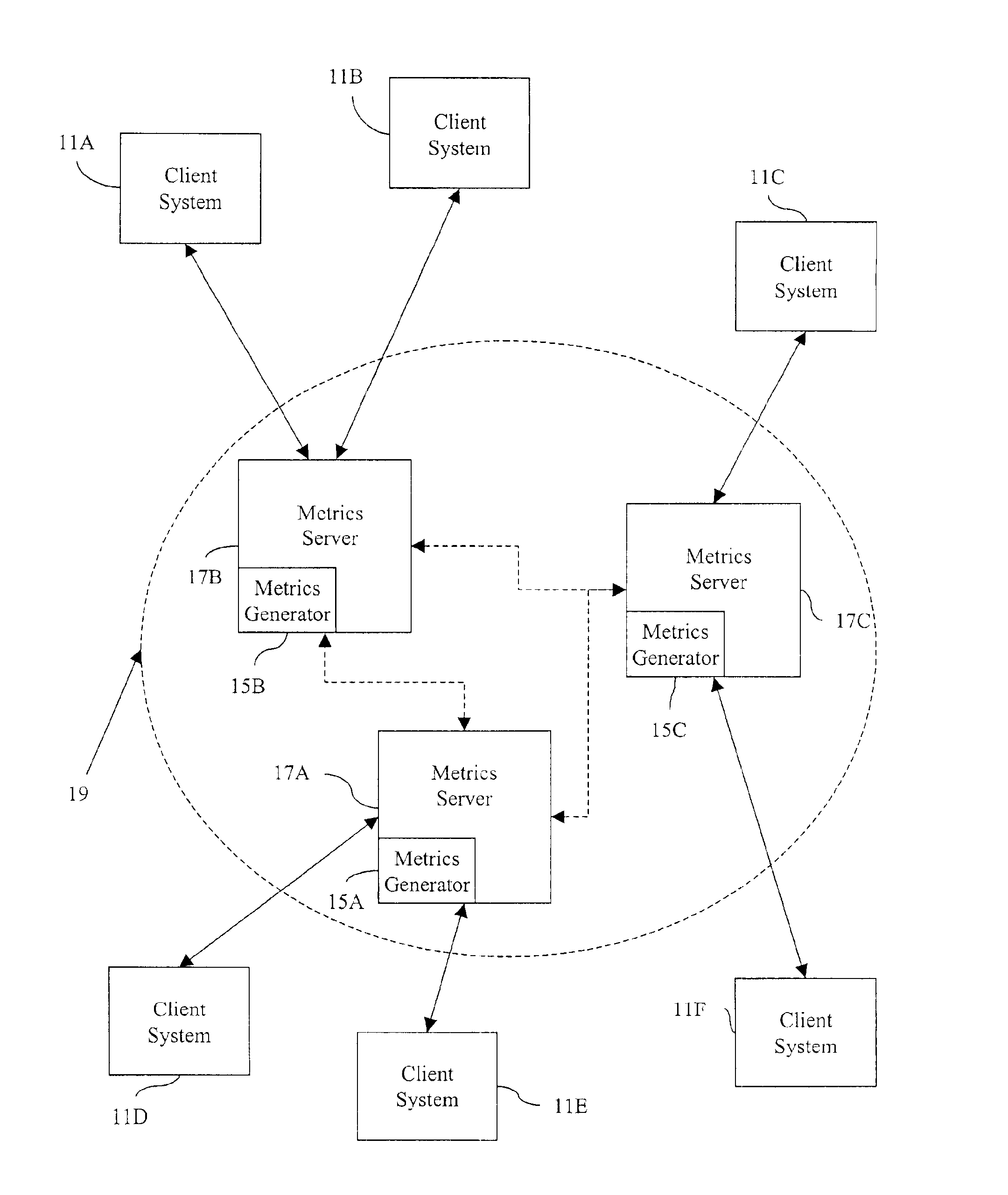
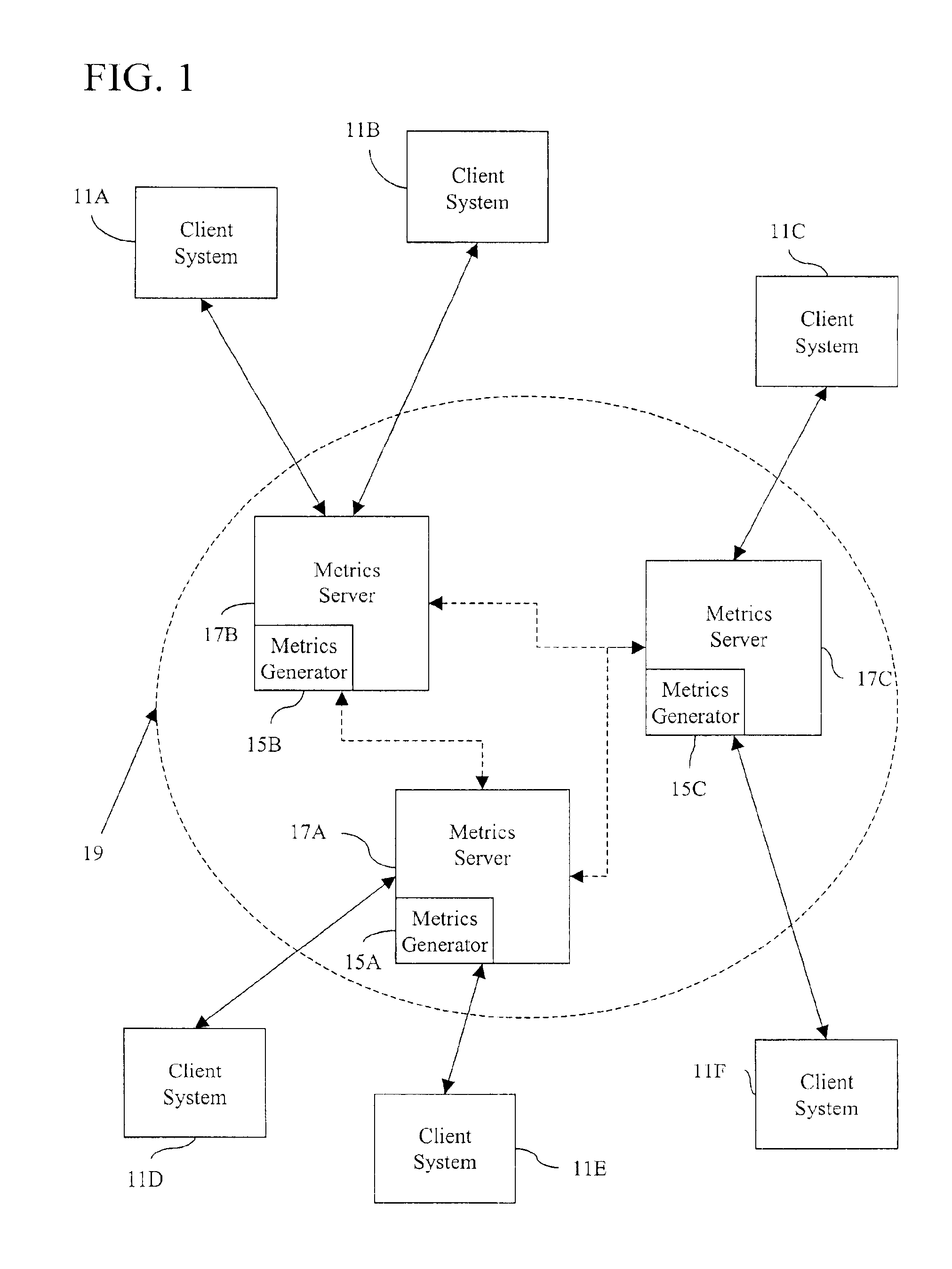
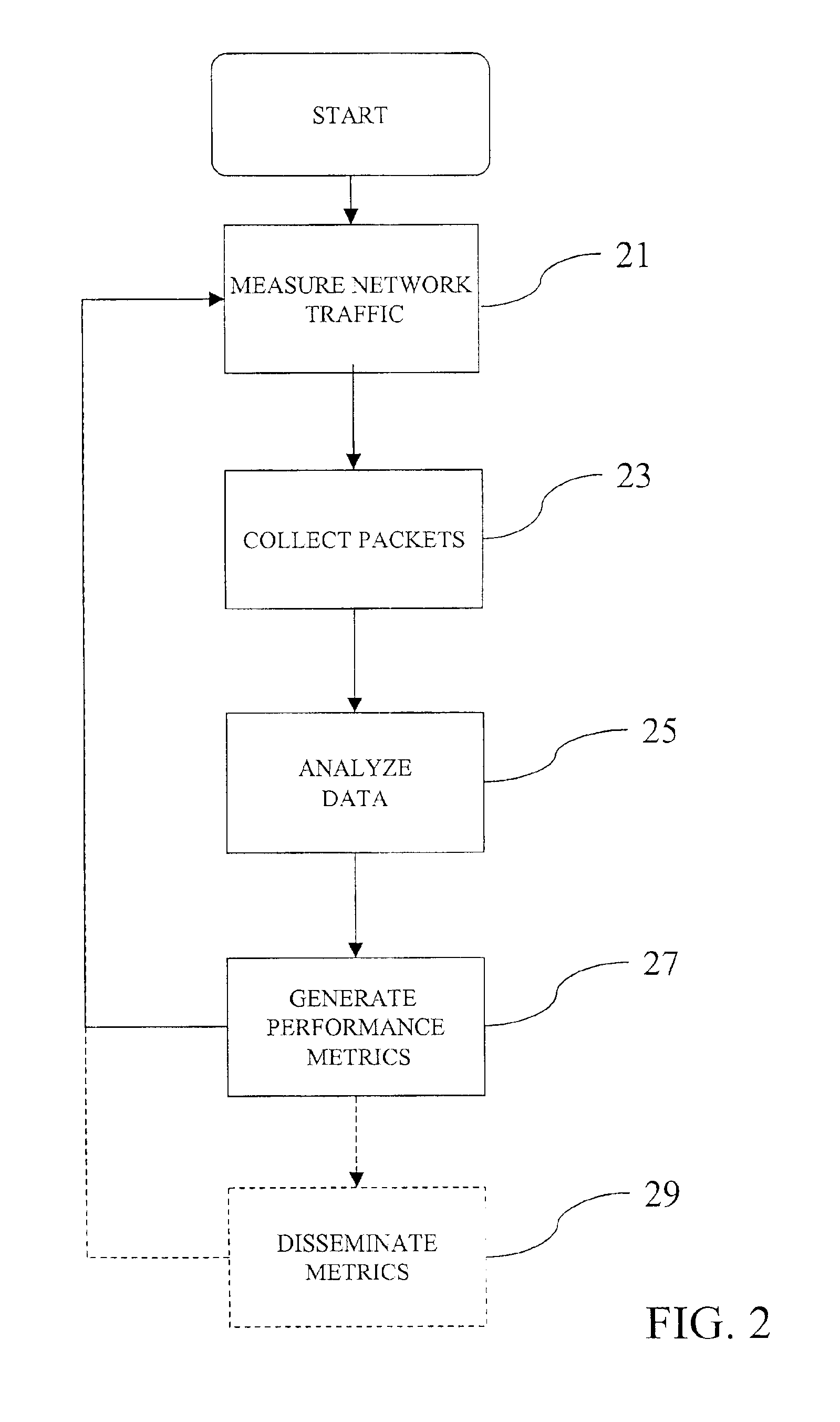
Server-based network performance metrics generation system and method
PatentInactiveUS6901051B1
Innovation
- A server-based measurement system that non-intrusively measures network traffic and generates performance metrics, using a metrics server with a network interface and processor to monitor traffic between servers and clients, reducing network overhead by employing both non-intrusive and intrusive measurement techniques.

Quality of Service Standards and Compliance
Quality of Service (QoS) standards play a crucial role in defining acceptable performance thresholds for seamless rate versus network load metrics. The International Telecommunication Union (ITU-T) has established comprehensive guidelines through recommendations such as G.1010 and Y.1541, which specify end-to-end performance parameters including latency, jitter, and packet loss rates. These standards provide quantitative benchmarks that network operators must achieve to ensure seamless service delivery under varying load conditions.
The IEEE 802.11e standard specifically addresses QoS requirements for wireless networks, introducing Enhanced Distributed Channel Access (EDCA) mechanisms that prioritize traffic based on application requirements. This standard defines four access categories with distinct performance characteristics, enabling networks to maintain seamless rates even when experiencing high load scenarios. Compliance with these specifications ensures that critical applications receive adequate bandwidth allocation while maintaining acceptable performance degradation thresholds.
3GPP standards, particularly Release 15 and beyond, establish stringent QoS requirements for 5G networks, mandating ultra-low latency and high reliability for mission-critical applications. These specifications define Quality of Service Class Identifiers (QCI) that correlate seamless rate performance with network load characteristics. The standards require networks to maintain specific performance levels across different load scenarios, with guaranteed bit rates and maximum allowable latency variations clearly defined.
Regulatory compliance frameworks, including those established by the Federal Communications Commission (FCC) and European Telecommunications Standards Institute (ETSI), mandate adherence to QoS metrics that directly impact seamless rate performance. These regulations require network operators to implement monitoring systems that continuously assess performance against established benchmarks, ensuring consistent service quality regardless of network congestion levels.
Service Level Agreement (SLA) compliance mechanisms incorporate automated monitoring and reporting systems that track seamless rate performance against network load variations. These systems utilize real-time analytics to detect deviations from established QoS parameters, triggering corrective actions when performance thresholds are exceeded. Compliance verification involves continuous measurement of key performance indicators, including throughput consistency, connection establishment times, and service availability metrics under different load conditions.
The IEEE 802.11e standard specifically addresses QoS requirements for wireless networks, introducing Enhanced Distributed Channel Access (EDCA) mechanisms that prioritize traffic based on application requirements. This standard defines four access categories with distinct performance characteristics, enabling networks to maintain seamless rates even when experiencing high load scenarios. Compliance with these specifications ensures that critical applications receive adequate bandwidth allocation while maintaining acceptable performance degradation thresholds.
3GPP standards, particularly Release 15 and beyond, establish stringent QoS requirements for 5G networks, mandating ultra-low latency and high reliability for mission-critical applications. These specifications define Quality of Service Class Identifiers (QCI) that correlate seamless rate performance with network load characteristics. The standards require networks to maintain specific performance levels across different load scenarios, with guaranteed bit rates and maximum allowable latency variations clearly defined.
Regulatory compliance frameworks, including those established by the Federal Communications Commission (FCC) and European Telecommunications Standards Institute (ETSI), mandate adherence to QoS metrics that directly impact seamless rate performance. These regulations require network operators to implement monitoring systems that continuously assess performance against established benchmarks, ensuring consistent service quality regardless of network congestion levels.
Service Level Agreement (SLA) compliance mechanisms incorporate automated monitoring and reporting systems that track seamless rate performance against network load variations. These systems utilize real-time analytics to detect deviations from established QoS parameters, triggering corrective actions when performance thresholds are exceeded. Compliance verification involves continuous measurement of key performance indicators, including throughput consistency, connection establishment times, and service availability metrics under different load conditions.
Real-time Performance Monitoring Frameworks
Real-time performance monitoring frameworks have emerged as critical infrastructure components for managing the complex relationship between seamless rate and network load metrics. These frameworks provide continuous visibility into network performance characteristics, enabling operators to maintain optimal service quality while efficiently utilizing available bandwidth resources.
Modern monitoring architectures typically employ distributed sensor networks that collect performance data at multiple network layers simultaneously. These systems capture seamless rate measurements alongside network utilization metrics, creating comprehensive datasets that reveal correlation patterns between traffic load and service continuity. Advanced frameworks integrate machine learning algorithms to identify performance degradation patterns before they impact end-user experience.
The implementation of real-time monitoring requires sophisticated data processing pipelines capable of handling high-velocity metric streams. Contemporary frameworks utilize time-series databases optimized for network telemetry, supporting sub-second granularity measurements across thousands of network elements. These systems employ adaptive sampling techniques to balance monitoring overhead with measurement accuracy, particularly crucial when tracking seamless rate variations under dynamic load conditions.
Cloud-native monitoring platforms have revolutionized scalability and deployment flexibility for performance tracking systems. Container-based architectures enable rapid deployment of monitoring agents across diverse network environments, while microservices design patterns facilitate modular functionality expansion. These platforms support multi-tenant monitoring scenarios, allowing different network segments to maintain isolated performance tracking while sharing underlying infrastructure resources.
Integration capabilities represent a fundamental requirement for effective real-time monitoring frameworks. Modern solutions provide extensive API ecosystems that enable seamless integration with network orchestration platforms, automated remediation systems, and business intelligence tools. This connectivity ensures that seamless rate and network load metrics can trigger automated responses or inform strategic capacity planning decisions.
Emerging frameworks increasingly incorporate edge computing capabilities to reduce monitoring latency and improve data locality. Edge-deployed monitoring components perform preliminary analysis and filtering, transmitting only relevant performance anomalies to centralized management systems. This distributed approach proves particularly valuable for monitoring seamless rate metrics in latency-sensitive applications where real-time feedback directly impacts service quality.
Modern monitoring architectures typically employ distributed sensor networks that collect performance data at multiple network layers simultaneously. These systems capture seamless rate measurements alongside network utilization metrics, creating comprehensive datasets that reveal correlation patterns between traffic load and service continuity. Advanced frameworks integrate machine learning algorithms to identify performance degradation patterns before they impact end-user experience.
The implementation of real-time monitoring requires sophisticated data processing pipelines capable of handling high-velocity metric streams. Contemporary frameworks utilize time-series databases optimized for network telemetry, supporting sub-second granularity measurements across thousands of network elements. These systems employ adaptive sampling techniques to balance monitoring overhead with measurement accuracy, particularly crucial when tracking seamless rate variations under dynamic load conditions.
Cloud-native monitoring platforms have revolutionized scalability and deployment flexibility for performance tracking systems. Container-based architectures enable rapid deployment of monitoring agents across diverse network environments, while microservices design patterns facilitate modular functionality expansion. These platforms support multi-tenant monitoring scenarios, allowing different network segments to maintain isolated performance tracking while sharing underlying infrastructure resources.
Integration capabilities represent a fundamental requirement for effective real-time monitoring frameworks. Modern solutions provide extensive API ecosystems that enable seamless integration with network orchestration platforms, automated remediation systems, and business intelligence tools. This connectivity ensures that seamless rate and network load metrics can trigger automated responses or inform strategic capacity planning decisions.
Emerging frameworks increasingly incorporate edge computing capabilities to reduce monitoring latency and improve data locality. Edge-deployed monitoring components perform preliminary analysis and filtering, transmitting only relevant performance anomalies to centralized management systems. This distributed approach proves particularly valuable for monitoring seamless rate metrics in latency-sensitive applications where real-time feedback directly impacts service quality.
Unlock deeper insights with Patsnap Eureka Quick Research — get a full tech report to explore trends and direct your research. Try now!
Generate Your Research Report Instantly with AI Agent
Supercharge your innovation with Patsnap Eureka AI Agent Platform!