

Signal Integrity vs Signal Modeling
MAR 26, 20269 MIN READ
Generate Your Research Report Instantly with AI Agent
PatSnap Eureka helps you evaluate technical feasibility & market potential.
Signal Integrity and Modeling Background and Objectives
Signal integrity has emerged as one of the most critical challenges in modern electronic system design, fundamentally driven by the relentless pursuit of higher data rates, increased circuit density, and miniaturization of electronic devices. As digital systems operate at frequencies extending into the multi-gigahertz range, the traditional assumption that interconnects behave as simple wires has become obsolete, necessitating sophisticated analysis and modeling approaches to ensure reliable signal transmission.
The evolution of signal integrity concerns parallels the advancement of semiconductor technology and system complexity. In early digital systems operating at relatively low frequencies, signal degradation effects were minimal and often negligible. However, as clock speeds increased and rise times decreased, phenomena such as reflection, crosstalk, power delivery noise, and electromagnetic interference began to significantly impact system performance and reliability.
Signal modeling has evolved as the cornerstone methodology for addressing these challenges, providing engineers with predictive capabilities to analyze and optimize signal behavior before physical implementation. This approach encompasses various modeling techniques ranging from simple lumped-element models to complex full-wave electromagnetic simulations, each tailored to specific frequency ranges and accuracy requirements.
The primary objective of contemporary signal integrity analysis is to ensure that digital signals maintain their logical states throughout the transmission path while meeting timing requirements and minimizing interference effects. This involves comprehensive characterization of transmission lines, connectors, vias, and package structures, coupled with accurate modeling of driver and receiver characteristics.
Modern signal modeling objectives extend beyond basic signal quality assessment to encompass power integrity, thermal effects, and system-level interactions. The integration of signal and power integrity analysis has become essential as power delivery networks increasingly influence signal behavior through simultaneous switching noise and voltage fluctuations.
The technological targets driving current research include support for data rates exceeding 100 Gbps, development of predictive models for emerging materials and structures, and creation of efficient simulation methodologies that balance accuracy with computational efficiency. These objectives are particularly critical in applications such as high-performance computing, 5G communications, and artificial intelligence accelerators where signal integrity directly impacts system functionality and performance.
The evolution of signal integrity concerns parallels the advancement of semiconductor technology and system complexity. In early digital systems operating at relatively low frequencies, signal degradation effects were minimal and often negligible. However, as clock speeds increased and rise times decreased, phenomena such as reflection, crosstalk, power delivery noise, and electromagnetic interference began to significantly impact system performance and reliability.
Signal modeling has evolved as the cornerstone methodology for addressing these challenges, providing engineers with predictive capabilities to analyze and optimize signal behavior before physical implementation. This approach encompasses various modeling techniques ranging from simple lumped-element models to complex full-wave electromagnetic simulations, each tailored to specific frequency ranges and accuracy requirements.
The primary objective of contemporary signal integrity analysis is to ensure that digital signals maintain their logical states throughout the transmission path while meeting timing requirements and minimizing interference effects. This involves comprehensive characterization of transmission lines, connectors, vias, and package structures, coupled with accurate modeling of driver and receiver characteristics.
Modern signal modeling objectives extend beyond basic signal quality assessment to encompass power integrity, thermal effects, and system-level interactions. The integration of signal and power integrity analysis has become essential as power delivery networks increasingly influence signal behavior through simultaneous switching noise and voltage fluctuations.
The technological targets driving current research include support for data rates exceeding 100 Gbps, development of predictive models for emerging materials and structures, and creation of efficient simulation methodologies that balance accuracy with computational efficiency. These objectives are particularly critical in applications such as high-performance computing, 5G communications, and artificial intelligence accelerators where signal integrity directly impacts system functionality and performance.
Market Demand for Advanced Signal Integrity Solutions
The global electronics industry is experiencing unprecedented growth in high-speed digital applications, driving substantial demand for advanced signal integrity solutions. Modern electronic systems operate at increasingly higher frequencies, with data rates reaching multi-gigabit levels in consumer electronics, automotive systems, and telecommunications infrastructure. This technological evolution has created critical challenges in maintaining signal quality and system reliability.
Enterprise data centers represent one of the most significant market segments demanding sophisticated signal integrity solutions. The proliferation of cloud computing, artificial intelligence workloads, and high-performance computing applications requires robust signal modeling capabilities to ensure reliable data transmission across complex interconnect systems. Server manufacturers and data center operators are actively seeking comprehensive solutions that can predict and mitigate signal degradation issues before physical implementation.
The automotive industry has emerged as a rapidly expanding market for signal integrity technologies. Advanced driver assistance systems, autonomous vehicle platforms, and electric vehicle architectures incorporate numerous high-speed communication protocols that demand precise signal modeling. Automotive electronics manufacturers require solutions capable of addressing electromagnetic interference, crosstalk, and power delivery challenges in increasingly compact and harsh operating environments.
Telecommunications infrastructure modernization, particularly the deployment of fifth-generation wireless networks, has intensified demand for advanced signal integrity analysis tools. Network equipment manufacturers must ensure signal quality across diverse frequency ranges while managing complex multi-layer circuit board designs and high-density packaging constraints.
Consumer electronics manufacturers face mounting pressure to deliver higher performance products with reduced development cycles. Mobile device manufacturers, gaming console developers, and wearable technology companies require efficient signal modeling solutions that can accelerate design validation processes while maintaining product reliability standards.
The aerospace and defense sectors continue to drive demand for specialized signal integrity solutions capable of operating in extreme environments. Military communication systems, satellite technologies, and avionics applications require advanced modeling capabilities to ensure mission-critical system performance under challenging operational conditions.
Market growth is further accelerated by the increasing complexity of modern electronic designs, which incorporate multiple high-speed interfaces, dense component placement, and advanced packaging technologies. Design engineers require comprehensive solutions that can accurately predict signal behavior across diverse operating conditions and manufacturing variations.
Enterprise data centers represent one of the most significant market segments demanding sophisticated signal integrity solutions. The proliferation of cloud computing, artificial intelligence workloads, and high-performance computing applications requires robust signal modeling capabilities to ensure reliable data transmission across complex interconnect systems. Server manufacturers and data center operators are actively seeking comprehensive solutions that can predict and mitigate signal degradation issues before physical implementation.
The automotive industry has emerged as a rapidly expanding market for signal integrity technologies. Advanced driver assistance systems, autonomous vehicle platforms, and electric vehicle architectures incorporate numerous high-speed communication protocols that demand precise signal modeling. Automotive electronics manufacturers require solutions capable of addressing electromagnetic interference, crosstalk, and power delivery challenges in increasingly compact and harsh operating environments.
Telecommunications infrastructure modernization, particularly the deployment of fifth-generation wireless networks, has intensified demand for advanced signal integrity analysis tools. Network equipment manufacturers must ensure signal quality across diverse frequency ranges while managing complex multi-layer circuit board designs and high-density packaging constraints.
Consumer electronics manufacturers face mounting pressure to deliver higher performance products with reduced development cycles. Mobile device manufacturers, gaming console developers, and wearable technology companies require efficient signal modeling solutions that can accelerate design validation processes while maintaining product reliability standards.
The aerospace and defense sectors continue to drive demand for specialized signal integrity solutions capable of operating in extreme environments. Military communication systems, satellite technologies, and avionics applications require advanced modeling capabilities to ensure mission-critical system performance under challenging operational conditions.
Market growth is further accelerated by the increasing complexity of modern electronic designs, which incorporate multiple high-speed interfaces, dense component placement, and advanced packaging technologies. Design engineers require comprehensive solutions that can accurately predict signal behavior across diverse operating conditions and manufacturing variations.
Current State and Challenges in Signal Modeling
Signal modeling has emerged as a critical discipline within the broader signal integrity domain, yet it faces significant technological and methodological challenges that limit its effectiveness in modern high-speed electronic systems. The current state reveals a complex landscape where traditional modeling approaches struggle to keep pace with rapidly evolving hardware architectures and increasingly stringent performance requirements.
Contemporary signal modeling techniques primarily rely on electromagnetic field solvers, circuit simulation tools, and statistical analysis methods. However, these approaches often operate in isolation, creating fragmented solutions that fail to capture the full complexity of signal behavior in real-world applications. The predominant use of frequency-domain analysis, while mathematically robust, frequently overlooks time-domain phenomena that are crucial for understanding signal degradation mechanisms.
One of the most pressing challenges lies in the computational complexity associated with full-wave electromagnetic simulations. As system frequencies continue to escalate beyond 100 GHz and interconnect densities increase exponentially, traditional modeling approaches require prohibitive computational resources and time investments. This computational bottleneck severely limits the ability to perform comprehensive system-level analysis during critical design phases.
Model accuracy represents another fundamental constraint, particularly when dealing with manufacturing variations and environmental factors. Current modeling frameworks often assume idealized conditions that rarely exist in production environments. Process variations, temperature fluctuations, and aging effects introduce uncertainties that existing models struggle to quantify accurately, leading to significant discrepancies between predicted and measured performance.
The integration of multiple physical phenomena poses additional complexity. Modern signal modeling must simultaneously account for electromagnetic coupling, thermal effects, mechanical stress, and power delivery network interactions. Existing tools typically address these domains separately, requiring manual correlation and interpretation that introduces potential errors and inefficiencies.
Scalability issues further compound these challenges, as traditional modeling approaches fail to efficiently handle the massive interconnect networks found in contemporary system-on-chip designs. The computational overhead grows exponentially with system complexity, making comprehensive signal integrity analysis impractical for large-scale implementations.
Validation and correlation with measured data remain problematic areas, as existing modeling frameworks often lack robust mechanisms for continuous model refinement based on empirical observations. This limitation perpetuates the gap between theoretical predictions and actual system performance, undermining confidence in modeling results and hindering effective design optimization strategies.
Contemporary signal modeling techniques primarily rely on electromagnetic field solvers, circuit simulation tools, and statistical analysis methods. However, these approaches often operate in isolation, creating fragmented solutions that fail to capture the full complexity of signal behavior in real-world applications. The predominant use of frequency-domain analysis, while mathematically robust, frequently overlooks time-domain phenomena that are crucial for understanding signal degradation mechanisms.
One of the most pressing challenges lies in the computational complexity associated with full-wave electromagnetic simulations. As system frequencies continue to escalate beyond 100 GHz and interconnect densities increase exponentially, traditional modeling approaches require prohibitive computational resources and time investments. This computational bottleneck severely limits the ability to perform comprehensive system-level analysis during critical design phases.
Model accuracy represents another fundamental constraint, particularly when dealing with manufacturing variations and environmental factors. Current modeling frameworks often assume idealized conditions that rarely exist in production environments. Process variations, temperature fluctuations, and aging effects introduce uncertainties that existing models struggle to quantify accurately, leading to significant discrepancies between predicted and measured performance.
The integration of multiple physical phenomena poses additional complexity. Modern signal modeling must simultaneously account for electromagnetic coupling, thermal effects, mechanical stress, and power delivery network interactions. Existing tools typically address these domains separately, requiring manual correlation and interpretation that introduces potential errors and inefficiencies.
Scalability issues further compound these challenges, as traditional modeling approaches fail to efficiently handle the massive interconnect networks found in contemporary system-on-chip designs. The computational overhead grows exponentially with system complexity, making comprehensive signal integrity analysis impractical for large-scale implementations.
Validation and correlation with measured data remain problematic areas, as existing modeling frameworks often lack robust mechanisms for continuous model refinement based on empirical observations. This limitation perpetuates the gap between theoretical predictions and actual system performance, undermining confidence in modeling results and hindering effective design optimization strategies.
Existing Signal Modeling and Analysis Solutions
01 Signal integrity analysis and simulation methods
Methods and systems for analyzing and simulating signal integrity in electronic circuits and systems. These approaches involve computational techniques to predict signal behavior, identify potential integrity issues, and optimize circuit designs before physical implementation. The methods typically include modeling of transmission lines, interconnects, and other circuit elements to evaluate signal quality, timing, and electromagnetic effects.- Signal integrity analysis and simulation methods: Methods and systems for analyzing and simulating signal integrity in electronic circuits and systems. These approaches involve computational techniques to predict signal behavior, identify potential integrity issues, and optimize circuit designs before physical implementation. The methods typically include modeling signal propagation, analyzing timing characteristics, and evaluating the impact of various circuit parameters on signal quality.
- Transmission line modeling and characterization: Techniques for modeling and characterizing transmission lines in high-speed digital systems. These methods focus on creating accurate models that represent the electrical behavior of interconnects, including impedance characteristics, propagation delays, and loss mechanisms. The modeling approaches help predict how signals will behave as they travel through various transmission media and enable designers to optimize routing and termination strategies.
- Crosstalk analysis and mitigation: Methods for analyzing and reducing crosstalk effects between adjacent signal lines in electronic systems. These techniques involve identifying coupling mechanisms between conductors, quantifying the magnitude of interference, and implementing design strategies to minimize unwanted signal coupling. The approaches include both analytical methods for predicting crosstalk and practical design guidelines for reducing its impact on system performance.
- Eye diagram analysis and jitter characterization: Techniques for evaluating signal quality through eye diagram analysis and jitter measurement. These methods provide visual and quantitative assessments of signal integrity by examining the opening of eye patterns and characterizing various jitter components. The approaches enable designers to identify timing margins, assess noise levels, and determine whether signals meet required specifications for reliable data transmission.
- Power integrity and ground bounce modeling: Methods for modeling and analyzing power distribution networks and ground bounce effects in electronic systems. These techniques focus on ensuring stable power delivery to components while minimizing voltage fluctuations and noise. The approaches include modeling power distribution impedance, analyzing simultaneous switching noise, and optimizing decoupling strategies to maintain signal integrity through adequate power supply quality.
02 Transmission line modeling and characterization
Techniques for creating accurate models of transmission lines and interconnects to predict signal propagation characteristics. These methods focus on characterizing the electrical properties of signal paths, including impedance, capacitance, inductance, and resistance. The modeling approaches enable designers to understand how signals will behave as they travel through various media and structures in electronic systems.Expand Specific Solutions03 Signal integrity verification and testing
Systems and methods for verifying and testing signal integrity in electronic devices and circuits. These approaches include measurement techniques, test equipment configurations, and validation procedures to ensure that signals maintain their quality throughout the system. The verification processes help identify issues such as reflections, crosstalk, noise, and timing violations that can degrade signal integrity.Expand Specific Solutions04 Crosstalk and electromagnetic interference mitigation
Techniques for reducing crosstalk and electromagnetic interference in signal transmission. These methods address the coupling effects between adjacent signal lines and the impact of external electromagnetic fields on signal quality. Solutions include physical design strategies, shielding techniques, and circuit-level approaches to minimize unwanted signal interactions and maintain signal integrity in high-speed and high-density electronic systems.Expand Specific Solutions05 High-speed signal modeling and optimization
Advanced modeling techniques specifically designed for high-speed digital signals and their integrity challenges. These methods address issues unique to high-frequency operation, including skin effect, dielectric losses, and frequency-dependent behaviors. The approaches provide tools for optimizing signal paths, termination strategies, and timing parameters to ensure reliable high-speed data transmission in modern electronic systems.Expand Specific Solutions
Key Players in EDA and Signal Integrity Industry
The signal integrity versus signal modeling domain represents a mature yet rapidly evolving sector within the broader electronic design automation (EDA) and semiconductor industries, currently valued at approximately $15-20 billion globally. The competitive landscape is characterized by established EDA leaders like Cadence Design Systems and Synopsys dominating software-based modeling solutions, while semiconductor giants including Taiwan Semiconductor Manufacturing, Samsung Electronics, and GlobalFoundries drive advanced process node requirements. Technology maturity varies significantly across segments, with companies like Apple, Huawei, and MediaTek pushing cutting-edge signal integrity challenges in mobile and high-performance computing applications, while traditional players such as Texas Instruments and Infineon focus on proven automotive and industrial solutions. The market demonstrates a clear bifurcation between pure-play EDA tool providers offering sophisticated modeling capabilities and integrated device manufacturers like Hon Hai Precision and Rambus developing proprietary signal integrity solutions, indicating a competitive environment where both specialized software expertise and manufacturing scale create distinct competitive advantages.
Cadence Design Systems, Inc.
Technical Solution: Cadence provides comprehensive signal integrity analysis solutions through their Sigrity portfolio, including PowerSI for power delivery network analysis and SIwave for 3D electromagnetic field simulation. Their tools enable accurate signal modeling by extracting SPICE models from physical layouts and performing full-wave electromagnetic simulation. The platform supports advanced packaging analysis, DDR memory interface validation, and high-speed serial link design. Cadence integrates signal integrity verification directly into the PCB design flow, allowing engineers to identify and resolve SI issues early in the design process. Their machine learning-enhanced algorithms accelerate simulation convergence while maintaining accuracy for complex multi-gigabit designs.
Strengths: Industry-leading accuracy in electromagnetic simulation, seamless integration with design flows, comprehensive toolset covering all SI aspects. Weaknesses: High licensing costs, steep learning curve for advanced features, computationally intensive simulations requiring significant hardware resources.
Synopsys, Inc.
Technical Solution: Synopsys offers advanced signal integrity solutions through their HSPICE and CustomSim platforms, providing industry-standard SPICE simulation capabilities for accurate signal modeling. Their tools feature proprietary FastSPICE technology that delivers up to 10x faster simulation speeds while maintaining SPICE accuracy. The platform includes comprehensive modeling libraries for advanced process nodes and supports statistical analysis for process variation effects. Synopsys integrates machine learning algorithms to optimize simulation parameters and reduce convergence issues. Their signal integrity workflow encompasses pre-layout estimation, post-layout verification, and correlation with silicon measurements, enabling designers to achieve first-pass silicon success in high-performance designs.
Strengths: Gold-standard SPICE accuracy, excellent process technology support, robust statistical analysis capabilities. Weaknesses: Complex setup procedures, expensive licensing model, requires specialized expertise for optimal utilization.
Core Innovations in SI Modeling Technologies
Hierarchical method of power supply noise and signal integrity analysis
PatentInactiveUS7197446B2
Innovation
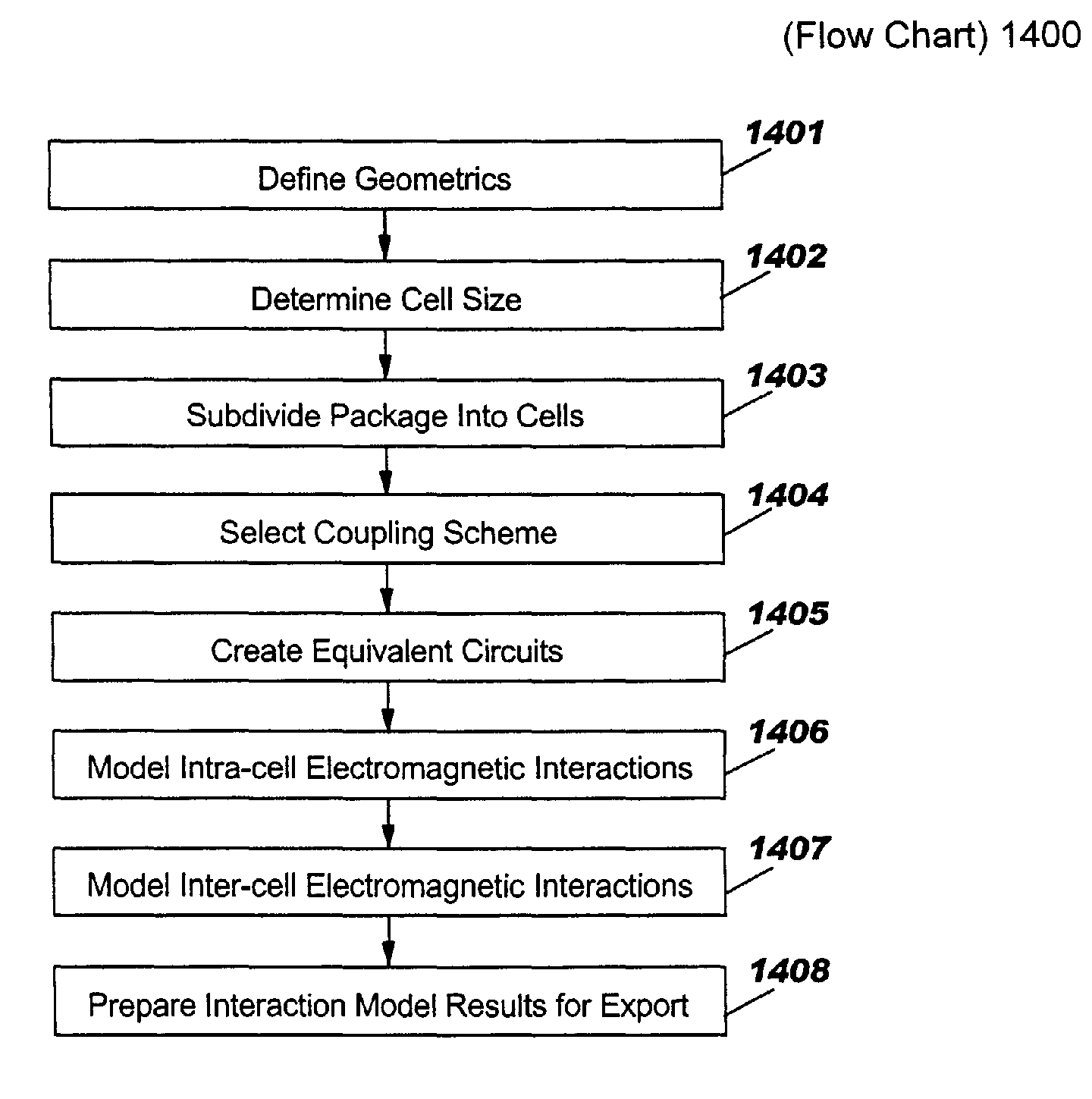
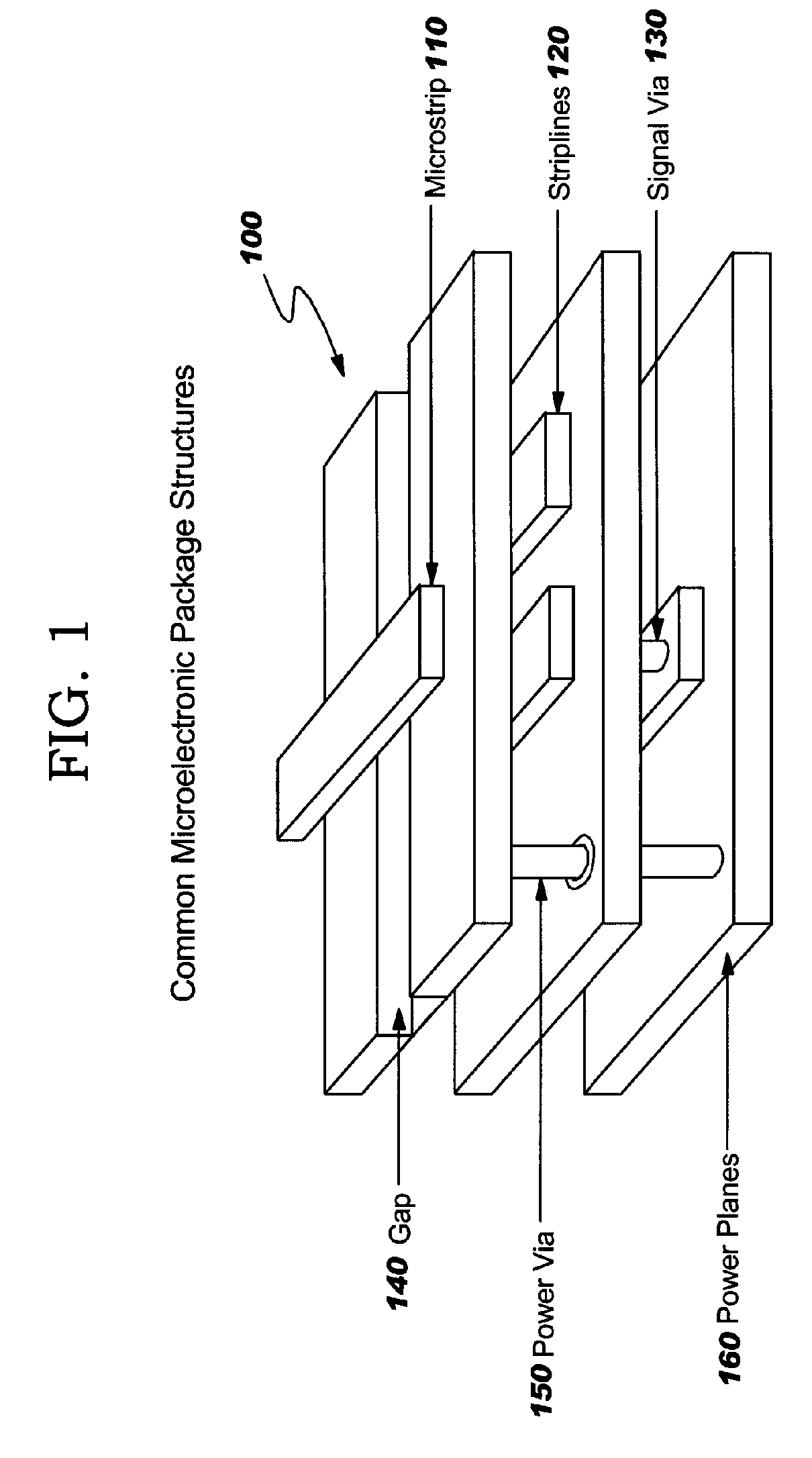
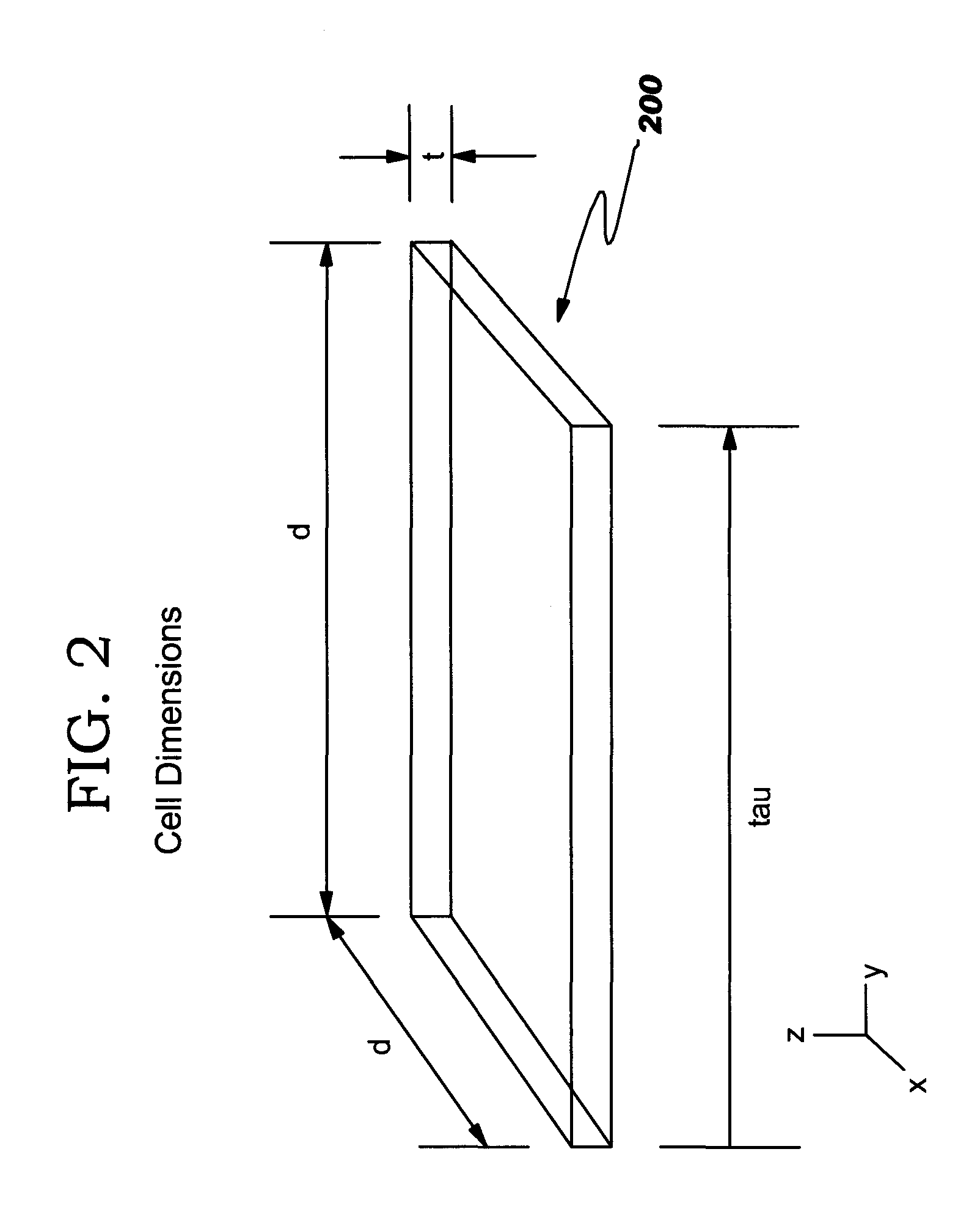
- The method divides the microelectronic package structure into smaller cells based on the fastest signal rise time or a fraction of the signal wavelength, using lumped element or transmission line coupling techniques to create efficient frequency-dependent electrical models that account for signal switching times and time delays, reducing the number of model elements and improving computational efficiency.

Integrated circuit chip having on-chip signal integrity and noise verification using frequency dependent RLC extraction and modeling techniques
PatentInactiveUS7844435B2
Innovation
- The implementation of frequency-dependent RLC extraction and simulation techniques using a 2D scan line algorithm for determining conductor positions, followed by 2D RL field solvers and 3D capacitance extraction, allows for the creation of complete RLC models for each pair-wise interaction, enabling accurate time domain simulations of coupling noise.


High-Speed Design Standards and Compliance
High-speed digital design compliance requires adherence to established industry standards that govern signal integrity and modeling practices. These standards provide essential frameworks for ensuring reliable signal transmission in complex electronic systems operating at frequencies exceeding several gigahertz. The primary standards include IEEE 802.3 for Ethernet applications, PCI Express specifications, DDR memory standards, and USB high-speed protocols.
IEEE 802.3 standards define critical parameters for Ethernet signal integrity, including differential impedance requirements of 100 ohms ±10%, return loss specifications exceeding -10dB up to the Nyquist frequency, and insertion loss limits that vary based on channel length and data rates. These specifications directly impact signal modeling accuracy by establishing measurable compliance criteria that simulation tools must predict within acceptable tolerances.
PCI Express compliance standards mandate specific eye diagram requirements, including minimum eye width and height parameters that ensure adequate signal margins. The standards specify jitter budgets, crosstalk limits, and power delivery network impedance requirements that modeling tools must accurately simulate to validate design compliance before fabrication.
DDR memory interface standards impose stringent timing requirements and signal quality specifications that challenge both signal integrity design and modeling accuracy. These include setup and hold time margins, voltage reference stability, and simultaneous switching noise limits that require sophisticated modeling techniques to predict accurately across process, voltage, and temperature variations.
USB high-speed standards define differential signaling requirements, common-mode rejection specifications, and electromagnetic compatibility criteria that modeling tools must incorporate to ensure compliance. The standards establish test methodologies and measurement procedures that validate both physical implementations and simulation model accuracy.
Compliance verification involves correlation between simulation predictions and actual measurements using standardized test fixtures and procedures. This correlation process validates modeling accuracy and identifies areas where simulation tools may require calibration or enhancement to meet industry standards for high-speed digital design applications.
IEEE 802.3 standards define critical parameters for Ethernet signal integrity, including differential impedance requirements of 100 ohms ±10%, return loss specifications exceeding -10dB up to the Nyquist frequency, and insertion loss limits that vary based on channel length and data rates. These specifications directly impact signal modeling accuracy by establishing measurable compliance criteria that simulation tools must predict within acceptable tolerances.
PCI Express compliance standards mandate specific eye diagram requirements, including minimum eye width and height parameters that ensure adequate signal margins. The standards specify jitter budgets, crosstalk limits, and power delivery network impedance requirements that modeling tools must accurately simulate to validate design compliance before fabrication.
DDR memory interface standards impose stringent timing requirements and signal quality specifications that challenge both signal integrity design and modeling accuracy. These include setup and hold time margins, voltage reference stability, and simultaneous switching noise limits that require sophisticated modeling techniques to predict accurately across process, voltage, and temperature variations.
USB high-speed standards define differential signaling requirements, common-mode rejection specifications, and electromagnetic compatibility criteria that modeling tools must incorporate to ensure compliance. The standards establish test methodologies and measurement procedures that validate both physical implementations and simulation model accuracy.
Compliance verification involves correlation between simulation predictions and actual measurements using standardized test fixtures and procedures. This correlation process validates modeling accuracy and identifies areas where simulation tools may require calibration or enhancement to meet industry standards for high-speed digital design applications.
AI-Driven Signal Integrity Optimization
The integration of artificial intelligence into signal integrity optimization represents a paradigm shift from traditional rule-based approaches to adaptive, data-driven methodologies. Machine learning algorithms are increasingly being deployed to predict signal behavior, optimize routing strategies, and automatically adjust design parameters in real-time. These AI systems can process vast amounts of simulation data to identify patterns that human engineers might overlook, enabling more sophisticated optimization strategies that consider multiple variables simultaneously.
Deep learning neural networks have shown particular promise in modeling complex electromagnetic interactions within high-speed digital systems. Convolutional neural networks can analyze signal waveforms and predict crosstalk effects, while recurrent neural networks excel at modeling time-dependent signal propagation characteristics. These models can be trained on extensive datasets from electromagnetic field solvers and measurement data, creating surrogate models that provide near-instantaneous predictions with accuracy comparable to full-wave simulations.
Reinforcement learning algorithms are being applied to automated PCB routing optimization, where AI agents learn to make routing decisions that minimize signal integrity violations. These systems can explore design spaces more efficiently than traditional optimization algorithms, considering factors such as via placement, trace width selection, and layer assignment simultaneously. The AI agents receive feedback based on signal integrity metrics and gradually improve their decision-making capabilities through iterative learning processes.
Genetic algorithms and particle swarm optimization enhanced with machine learning capabilities are revolutionizing multi-objective design optimization. These hybrid approaches can balance competing requirements such as signal timing, power delivery, and electromagnetic compatibility while adapting their search strategies based on learned design preferences and constraint patterns.
Real-time adaptive equalization represents another frontier where AI-driven optimization excels. Machine learning algorithms can continuously monitor signal quality metrics and dynamically adjust pre-emphasis, de-emphasis, and receiver equalization settings to maintain optimal signal integrity under varying operating conditions. This adaptive capability is particularly valuable in high-speed serial communication systems where channel characteristics may change due to temperature variations, aging effects, or manufacturing tolerances.
The emergence of physics-informed neural networks is bridging the gap between traditional electromagnetic modeling and AI-driven optimization, ensuring that learned models respect fundamental physical laws while maintaining computational efficiency.
Deep learning neural networks have shown particular promise in modeling complex electromagnetic interactions within high-speed digital systems. Convolutional neural networks can analyze signal waveforms and predict crosstalk effects, while recurrent neural networks excel at modeling time-dependent signal propagation characteristics. These models can be trained on extensive datasets from electromagnetic field solvers and measurement data, creating surrogate models that provide near-instantaneous predictions with accuracy comparable to full-wave simulations.
Reinforcement learning algorithms are being applied to automated PCB routing optimization, where AI agents learn to make routing decisions that minimize signal integrity violations. These systems can explore design spaces more efficiently than traditional optimization algorithms, considering factors such as via placement, trace width selection, and layer assignment simultaneously. The AI agents receive feedback based on signal integrity metrics and gradually improve their decision-making capabilities through iterative learning processes.
Genetic algorithms and particle swarm optimization enhanced with machine learning capabilities are revolutionizing multi-objective design optimization. These hybrid approaches can balance competing requirements such as signal timing, power delivery, and electromagnetic compatibility while adapting their search strategies based on learned design preferences and constraint patterns.
Real-time adaptive equalization represents another frontier where AI-driven optimization excels. Machine learning algorithms can continuously monitor signal quality metrics and dynamically adjust pre-emphasis, de-emphasis, and receiver equalization settings to maintain optimal signal integrity under varying operating conditions. This adaptive capability is particularly valuable in high-speed serial communication systems where channel characteristics may change due to temperature variations, aging effects, or manufacturing tolerances.
The emergence of physics-informed neural networks is bridging the gap between traditional electromagnetic modeling and AI-driven optimization, ensuring that learned models respect fundamental physical laws while maintaining computational efficiency.
Unlock deeper insights with PatSnap Eureka Quick Research — get a full tech report to explore trends and direct your research. Try now!
Generate Your Research Report Instantly with AI Agent
Supercharge your innovation with PatSnap Eureka AI Agent Platform!