Standardization Challenges for Micro Energy Harvesters
OCT 22, 20259 MIN READ
Generate Your Research Report Instantly with AI Agent
Patsnap Eureka helps you evaluate technical feasibility & market potential.
Micro Energy Harvesting Background and Objectives
Micro energy harvesting has evolved significantly over the past two decades, transforming from laboratory curiosities into practical energy solutions for low-power electronic devices. The fundamental concept involves capturing small amounts of energy from ambient sources such as vibrations, temperature differentials, light, and electromagnetic radiation. This technology emerged in the early 2000s with rudimentary piezoelectric harvesters, but has since expanded to encompass a diverse range of energy conversion mechanisms and applications.
The technological trajectory shows a clear progression from simple, inefficient harvesting mechanisms toward sophisticated, multi-source integrated systems. Early harvesters typically operated at efficiencies below 5%, while contemporary solutions can achieve 15-30% efficiency depending on the energy source. This improvement reflects advancements in materials science, particularly in piezoelectric ceramics, thermoelectric compounds, and photovoltaic materials optimized for indoor lighting conditions.
A significant trend in this field is the miniaturization of harvesting devices, with dimensions decreasing from centimeter to millimeter and even micrometer scales. This reduction in size has been accompanied by innovations in low-power electronics and energy storage technologies, creating a synergistic ecosystem that enables self-powered microsystems. The integration of these technologies has opened possibilities for autonomous sensor networks, medical implants, and wearable devices that operate without battery replacement.
Despite these advances, standardization remains a critical challenge. The diversity of energy sources, harvesting mechanisms, and application requirements has resulted in a fragmented technological landscape with limited interoperability. Current standards primarily focus on testing methodologies rather than providing comprehensive frameworks for system integration or performance benchmarks across different harvesting technologies.
The primary objective of addressing standardization challenges is to establish a unified framework that enables consistent evaluation, comparison, and integration of micro energy harvesters across different applications and industries. This includes developing standardized testing protocols, performance metrics, and interface specifications that accommodate the diverse range of harvesting technologies while ensuring compatibility with existing electronic systems.
Additional objectives include accelerating market adoption through increased reliability and interoperability, reducing development costs through standardized components and design methodologies, and creating a foundation for regulatory compliance in sensitive applications such as medical devices and critical infrastructure. These standardization efforts must balance the need for technological innovation with the practical requirements of commercial deployment and system integration.
The technological trajectory shows a clear progression from simple, inefficient harvesting mechanisms toward sophisticated, multi-source integrated systems. Early harvesters typically operated at efficiencies below 5%, while contemporary solutions can achieve 15-30% efficiency depending on the energy source. This improvement reflects advancements in materials science, particularly in piezoelectric ceramics, thermoelectric compounds, and photovoltaic materials optimized for indoor lighting conditions.
A significant trend in this field is the miniaturization of harvesting devices, with dimensions decreasing from centimeter to millimeter and even micrometer scales. This reduction in size has been accompanied by innovations in low-power electronics and energy storage technologies, creating a synergistic ecosystem that enables self-powered microsystems. The integration of these technologies has opened possibilities for autonomous sensor networks, medical implants, and wearable devices that operate without battery replacement.
Despite these advances, standardization remains a critical challenge. The diversity of energy sources, harvesting mechanisms, and application requirements has resulted in a fragmented technological landscape with limited interoperability. Current standards primarily focus on testing methodologies rather than providing comprehensive frameworks for system integration or performance benchmarks across different harvesting technologies.
The primary objective of addressing standardization challenges is to establish a unified framework that enables consistent evaluation, comparison, and integration of micro energy harvesters across different applications and industries. This includes developing standardized testing protocols, performance metrics, and interface specifications that accommodate the diverse range of harvesting technologies while ensuring compatibility with existing electronic systems.
Additional objectives include accelerating market adoption through increased reliability and interoperability, reducing development costs through standardized components and design methodologies, and creating a foundation for regulatory compliance in sensitive applications such as medical devices and critical infrastructure. These standardization efforts must balance the need for technological innovation with the practical requirements of commercial deployment and system integration.
Market Analysis for Micro Energy Harvesting Solutions
The global micro energy harvesting market is experiencing significant growth, driven by the increasing demand for autonomous and self-powered electronic devices. Current market valuations place this sector at approximately 460 million USD in 2023, with projections indicating a compound annual growth rate (CAGR) of 12.5% through 2030, potentially reaching over 1 billion USD by the end of the decade. This growth trajectory is primarily fueled by the expanding Internet of Things (IoT) ecosystem, which requires sustainable power solutions for billions of connected devices.
The industrial sector currently represents the largest market segment for micro energy harvesting technologies, accounting for roughly 35% of total market share. Applications in industrial monitoring, predictive maintenance systems, and smart manufacturing environments demonstrate strong adoption rates due to the clear return on investment from reduced maintenance costs and improved operational efficiency. The consumer electronics sector follows closely, with wearable technology and smart home devices increasingly incorporating energy harvesting components.
Regional analysis reveals that North America and Europe currently lead the market with approximately 30% and 28% market share respectively, primarily due to advanced technological infrastructure and strong R&D investments. However, the Asia-Pacific region is expected to witness the fastest growth rate of approximately 15% annually, driven by rapid industrialization, smart city initiatives, and increasing IoT adoption in countries like China, Japan, and South Korea.
A significant market challenge remains the fragmentation of standards across different harvesting technologies. This standardization gap creates interoperability issues and increases implementation costs, effectively limiting market penetration in cost-sensitive applications. Market research indicates that approximately 40% of potential end-users cite standardization concerns as a major barrier to adoption.
The competitive landscape features both specialized energy harvesting companies and larger electronics manufacturers. Key market players include EnOcean GmbH, Powercast Corporation, Cymbet Corporation, and Microchip Technology, collectively holding approximately 45% of market share. Strategic partnerships between energy harvesting specialists and semiconductor manufacturers are becoming increasingly common, creating integrated solution ecosystems.
From a customer perspective, the primary market drivers include the need for maintenance-free operation (cited by 68% of customers), extended device lifetime (62%), and deployment flexibility (57%). The elimination of battery replacement costs represents a particularly compelling value proposition in remote or hard-to-access installation scenarios, where maintenance costs can exceed the initial device investment by several times over the product lifecycle.
The industrial sector currently represents the largest market segment for micro energy harvesting technologies, accounting for roughly 35% of total market share. Applications in industrial monitoring, predictive maintenance systems, and smart manufacturing environments demonstrate strong adoption rates due to the clear return on investment from reduced maintenance costs and improved operational efficiency. The consumer electronics sector follows closely, with wearable technology and smart home devices increasingly incorporating energy harvesting components.
Regional analysis reveals that North America and Europe currently lead the market with approximately 30% and 28% market share respectively, primarily due to advanced technological infrastructure and strong R&D investments. However, the Asia-Pacific region is expected to witness the fastest growth rate of approximately 15% annually, driven by rapid industrialization, smart city initiatives, and increasing IoT adoption in countries like China, Japan, and South Korea.
A significant market challenge remains the fragmentation of standards across different harvesting technologies. This standardization gap creates interoperability issues and increases implementation costs, effectively limiting market penetration in cost-sensitive applications. Market research indicates that approximately 40% of potential end-users cite standardization concerns as a major barrier to adoption.
The competitive landscape features both specialized energy harvesting companies and larger electronics manufacturers. Key market players include EnOcean GmbH, Powercast Corporation, Cymbet Corporation, and Microchip Technology, collectively holding approximately 45% of market share. Strategic partnerships between energy harvesting specialists and semiconductor manufacturers are becoming increasingly common, creating integrated solution ecosystems.
From a customer perspective, the primary market drivers include the need for maintenance-free operation (cited by 68% of customers), extended device lifetime (62%), and deployment flexibility (57%). The elimination of battery replacement costs represents a particularly compelling value proposition in remote or hard-to-access installation scenarios, where maintenance costs can exceed the initial device investment by several times over the product lifecycle.
Current Standardization Status and Technical Barriers
Currently, the standardization landscape for micro energy harvesters remains fragmented and underdeveloped. While traditional energy generation technologies benefit from well-established standards, micro energy harvesting technologies lack comprehensive standardization frameworks. The IEEE has initiated some efforts through its P1789 working group focusing on energy harvesting protocols, but these remain insufficient for industry-wide adoption.
The International Electrotechnical Commission (IEC) has established Technical Committee 120 for standardization of electrical energy storage systems, which tangentially addresses some aspects of energy harvesting. However, specific standards for micro-scale energy harvesting technologies are notably absent. This creates significant barriers for technology developers, manufacturers, and end-users.
A primary technical barrier is the lack of standardized testing methodologies for performance evaluation. Without consistent testing protocols, comparing the efficiency and reliability of different micro energy harvesting solutions becomes problematic. This impedes market growth as potential adopters cannot make informed decisions based on standardized performance metrics.
Another critical barrier is the absence of standardized interfaces and form factors. Unlike batteries with standardized sizes and electrical characteristics, micro energy harvesters come in various configurations with proprietary interfaces. This lack of interoperability significantly limits integration possibilities and increases implementation costs.
Safety standards specifically tailored for micro energy harvesters are also underdeveloped. While general electrical safety standards exist, they often fail to address the unique characteristics of energy harvesting technologies, such as variable power output and long-term deployment considerations.
Terminology inconsistency presents another obstacle. The field lacks universally accepted definitions for key performance parameters, making technical communication challenging across research groups and industry stakeholders. This terminology gap extends to energy storage integration, power conditioning, and system architecture descriptions.
Regulatory frameworks across different regions show significant variation, creating compliance challenges for global deployment. Some regions prioritize safety aspects while others focus on electromagnetic compatibility or environmental impact, resulting in a complex regulatory landscape that increases compliance costs and market entry barriers.
The absence of reference designs and implementation guidelines further complicates adoption. Unlike established technologies with clear implementation pathways, micro energy harvesting solutions often require custom engineering approaches, increasing development time and costs while reducing reliability.
These standardization gaps collectively slow innovation and market adoption, creating an environment where proprietary solutions dominate and interoperability remains limited. Addressing these barriers requires coordinated efforts from standards organizations, industry consortia, and research institutions to develop comprehensive standardization frameworks.
The International Electrotechnical Commission (IEC) has established Technical Committee 120 for standardization of electrical energy storage systems, which tangentially addresses some aspects of energy harvesting. However, specific standards for micro-scale energy harvesting technologies are notably absent. This creates significant barriers for technology developers, manufacturers, and end-users.
A primary technical barrier is the lack of standardized testing methodologies for performance evaluation. Without consistent testing protocols, comparing the efficiency and reliability of different micro energy harvesting solutions becomes problematic. This impedes market growth as potential adopters cannot make informed decisions based on standardized performance metrics.
Another critical barrier is the absence of standardized interfaces and form factors. Unlike batteries with standardized sizes and electrical characteristics, micro energy harvesters come in various configurations with proprietary interfaces. This lack of interoperability significantly limits integration possibilities and increases implementation costs.
Safety standards specifically tailored for micro energy harvesters are also underdeveloped. While general electrical safety standards exist, they often fail to address the unique characteristics of energy harvesting technologies, such as variable power output and long-term deployment considerations.
Terminology inconsistency presents another obstacle. The field lacks universally accepted definitions for key performance parameters, making technical communication challenging across research groups and industry stakeholders. This terminology gap extends to energy storage integration, power conditioning, and system architecture descriptions.
Regulatory frameworks across different regions show significant variation, creating compliance challenges for global deployment. Some regions prioritize safety aspects while others focus on electromagnetic compatibility or environmental impact, resulting in a complex regulatory landscape that increases compliance costs and market entry barriers.
The absence of reference designs and implementation guidelines further complicates adoption. Unlike established technologies with clear implementation pathways, micro energy harvesting solutions often require custom engineering approaches, increasing development time and costs while reducing reliability.
These standardization gaps collectively slow innovation and market adoption, creating an environment where proprietary solutions dominate and interoperability remains limited. Addressing these barriers requires coordinated efforts from standards organizations, industry consortia, and research institutions to develop comprehensive standardization frameworks.
Existing Standardization Approaches and Frameworks
01 Standardization of piezoelectric energy harvesters
Piezoelectric materials are widely used in micro energy harvesters to convert mechanical vibrations into electrical energy. Standardization efforts focus on establishing uniform testing methods, performance metrics, and design parameters for these devices. This includes standardizing the measurement of power output, efficiency, and durability under various operating conditions. Standardized approaches help in comparing different piezoelectric harvester designs and ensuring consistent performance across applications.- Standardization of piezoelectric energy harvesting systems: Piezoelectric materials are widely used in micro energy harvesters to convert mechanical vibrations into electrical energy. Standardization efforts focus on establishing uniform testing protocols, performance metrics, and design guidelines for these systems. This includes standardized methods for measuring power output, efficiency, and durability under various operating conditions. These standards help ensure consistency and reliability in piezoelectric energy harvesting applications across different industries.
- Testing and certification standards for micro energy harvesters: Testing and certification standards are essential for validating the performance and safety of micro energy harvesters. These standards define specific test procedures, measurement techniques, and quality assurance protocols. They establish minimum performance requirements, reliability benchmarks, and safety criteria that manufacturers must meet. Standardized testing enables fair comparison between different harvesting technologies and ensures that products meet industry requirements before market deployment.
- Integration standards for micro energy harvesters in IoT devices: Standards for integrating micro energy harvesters into Internet of Things (IoT) devices focus on interface specifications, communication protocols, and power management systems. These standards ensure compatibility between energy harvesting components and various IoT platforms. They define requirements for power conditioning circuits, energy storage elements, and power delivery mechanisms. Standardization in this area facilitates seamless integration of energy harvesting solutions into wireless sensor networks and other IoT applications.
- Environmental and operational standards for micro energy harvesters: Environmental and operational standards for micro energy harvesters define the conditions under which these devices must operate reliably. These standards specify requirements for temperature ranges, humidity levels, mechanical stress tolerance, and other environmental factors. They also establish guidelines for harvester performance under varying ambient conditions and energy source availability. Standardization in this area ensures that energy harvesting systems can function effectively in their intended deployment environments.
- Interoperability standards for multiple energy harvesting technologies: Interoperability standards focus on enabling the integration of different energy harvesting technologies within a single system. These standards define common interfaces, power management protocols, and control mechanisms for hybrid energy harvesting solutions that may combine solar, thermal, vibration, and RF energy sources. They establish guidelines for energy storage, power conditioning, and load management across multiple harvesting technologies. Standardization in this area promotes the development of more versatile and efficient energy harvesting systems.
02 Testing protocols for micro energy harvesting systems
Standardized testing protocols are essential for evaluating the performance of micro energy harvesters. These protocols define specific testing conditions, measurement techniques, and reporting formats to ensure comparable results across different laboratories and manufacturers. They cover aspects such as environmental conditions, load variations, and long-term reliability testing. Standardized testing enables certification of harvester performance and facilitates the integration of these devices into larger systems.Expand Specific Solutions03 Integration standards for micro energy harvesters in IoT devices
As micro energy harvesters are increasingly used to power Internet of Things (IoT) devices, standardization of integration interfaces becomes crucial. These standards define electrical connections, form factors, and communication protocols between harvesters and IoT systems. They ensure interoperability across different manufacturers and simplify the design process for system integrators. Standardized integration approaches also address challenges related to power management and energy storage in IoT applications.Expand Specific Solutions04 Performance metrics and certification standards for energy harvesting technologies
Establishing standardized performance metrics allows for objective comparison between different energy harvesting technologies. These metrics include energy conversion efficiency, power density, operational lifetime, and environmental impact. Certification standards provide a framework for validating that harvesters meet minimum performance requirements for specific applications. They help manufacturers demonstrate compliance with industry requirements and give consumers confidence in product performance and reliability.Expand Specific Solutions05 Material and manufacturing standards for micro energy harvesters
Standardization of materials and manufacturing processes ensures consistency in the production of micro energy harvesters. These standards define material specifications, quality control procedures, and fabrication techniques. They address challenges related to miniaturization, scalability, and cost-effectiveness in manufacturing. Standardized approaches to materials and manufacturing help improve reliability, reduce production costs, and facilitate mass production of energy harvesting devices.Expand Specific Solutions
Key Industry Players and Standardization Bodies
The micro energy harvesting standardization landscape is currently in an early growth phase, characterized by fragmented approaches and limited interoperability. The market is expanding rapidly, projected to reach significant scale as IoT and wearable technologies proliferate. Technical maturity varies considerably across harvesting methods, with leading organizations like Robert Bosch, Infineon, and Intel driving commercial applications while academic institutions (MIT, University of Tokyo, Yale) focus on fundamental research. Research powerhouses including Honeywell, Siemens, and Schneider Electric are advancing industrial implementations. The competitive environment features both established electronics manufacturers and specialized research institutes, with Asian institutions (Shanghai Institute of Microsystem, Nanyang Technological University) increasingly prominent. Key standardization challenges include defining universal testing protocols, performance metrics, and interface specifications to enable broader market adoption.
Robert Bosch GmbH
Technical Solution: Bosch has developed a comprehensive standardization framework for micro energy harvesters that addresses both technical and commercial challenges. Their approach includes a modular architecture that separates energy harvesting components into standardized functional blocks with well-defined interfaces. This allows for interchangeability between different harvesting technologies (piezoelectric, thermoelectric, RF, etc.) while maintaining consistent electrical outputs. Bosch's framework incorporates adaptive power management circuits that can handle variable input characteristics from different harvesters while providing regulated output suitable for IoT devices. They've also established testing protocols that quantify harvester performance under standardized conditions, enabling fair comparison between technologies. Their standardization efforts extend to physical form factors and mounting specifications, facilitating integration into automotive and industrial applications.
Strengths: Strong industrial implementation experience across multiple sectors; comprehensive approach addressing both technical and commercial aspects; established testing infrastructure. Weaknesses: Standards may be optimized for automotive/industrial use cases rather than consumer applications; proprietary elements may limit broader industry adoption.
Infineon Technologies AG
Technical Solution: Infineon has pioneered a semiconductor-centric approach to micro energy harvester standardization, focusing on creating universal interface circuits that can adapt to various energy harvesting technologies. Their solution centers on specialized power management ICs (PMICs) designed specifically for micro-harvesters, featuring ultra-low power startup capabilities (as low as 3μW input power) and maximum power point tracking algorithms optimized for intermittent energy sources. Infineon's standardization strategy includes developing reference designs with standardized electrical interfaces that abstract the complexities of different harvesting technologies. Their XMC microcontroller family includes dedicated peripherals for energy harvesting applications, with standardized firmware libraries that simplify integration. Infineon has also contributed to industry standardization efforts through participation in working groups focused on establishing testing methodologies and performance metrics for micro energy harvesters, particularly for industrial IoT applications.
Strengths: Semiconductor expertise enables highly integrated solutions; strong focus on power efficiency critical for micro-harvesting; established supply chain and manufacturing capabilities. Weaknesses: Approach may favor electrical standardization over mechanical/physical standardization; solutions might be optimized for specific harvesting technologies where Infineon has IP advantages.
Critical Technical Standards and Specifications Analysis
Energy harvesting device manufactured by print forming processes
PatentActiveUS20080079333A1
Innovation
- The use of a print-forming process to manufacture an energy harvesting device with a piezoelectric cantilever beam integrated within a ceramic package, which converts vibration energy into electrical energy, eliminating the need for external power sources and minimizing energy losses through a robust, hermetically sealed structure.


High-efficiency compact miniaturized energy harvesting and storage device
PatentInactiveUS20120228995A1
Innovation
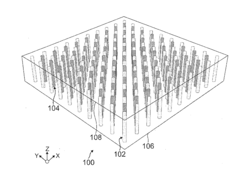
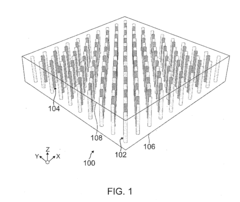
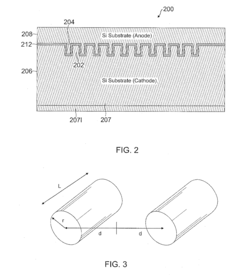
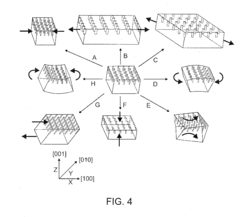
- An energy harvesting system comprising an array of piezoelectric electrodes and capacitor electrodes, monolithically coupled with a substrate, that converts mechanical strain into electrical energy and stores it capacitively, using advanced nanofabrication techniques to achieve higher power densities.
Cross-Industry Compatibility and Integration Challenges
The integration of micro energy harvesters across diverse industries presents significant compatibility challenges that impede widespread adoption. Currently, each industry sector—from consumer electronics to automotive, medical devices, and industrial IoT—employs proprietary interfaces and communication protocols, creating substantial barriers to cross-industry implementation. This fragmentation prevents the seamless transfer of harvested energy technologies between applications, forcing developers to create custom solutions for each industry vertical rather than leveraging standardized approaches.
Energy management systems across industries utilize different voltage requirements, power conditioning circuits, and energy storage interfaces. For instance, medical implantable devices typically operate at extremely low voltages (0.8-3.3V) with strict safety requirements, while industrial sensors may require higher voltages and ruggedized interfaces to withstand harsh environments. This disparity necessitates complete redesign of harvester output stages when moving between applications, significantly increasing development costs and time-to-market.
Communication protocols present another critical integration challenge. While consumer electronics increasingly adopt standards like Bluetooth Low Energy or Zigbee, industrial applications often rely on proprietary fieldbus systems or industrial Ethernet variants. Medical devices employ yet another set of protocols focused on reliability and security. The absence of universal communication standards for energy harvesting systems forces manufacturers to implement multiple protocol stacks or limit their market focus.
Physical form factors and mounting mechanisms further complicate cross-industry compatibility. Aerospace applications demand lightweight, vibration-resistant mounting solutions, whereas consumer products prioritize aesthetics and miniaturization. Industrial implementations require robust, serviceable installations that can withstand extreme conditions. These divergent requirements have resulted in a proliferation of custom mechanical interfaces rather than standardized connection methods.
Regulatory compliance frameworks vary dramatically across industries, creating additional integration hurdles. Medical device harvesters must meet stringent biocompatibility and safety standards (ISO 10993, IEC 60601), while automotive applications require compliance with vehicle-specific certifications (ISO 26262). The absence of harmonized certification pathways for energy harvesting technologies means manufacturers must navigate complex regulatory landscapes for each target industry, significantly increasing compliance costs and limiting market expansion opportunities.
Energy management systems across industries utilize different voltage requirements, power conditioning circuits, and energy storage interfaces. For instance, medical implantable devices typically operate at extremely low voltages (0.8-3.3V) with strict safety requirements, while industrial sensors may require higher voltages and ruggedized interfaces to withstand harsh environments. This disparity necessitates complete redesign of harvester output stages when moving between applications, significantly increasing development costs and time-to-market.
Communication protocols present another critical integration challenge. While consumer electronics increasingly adopt standards like Bluetooth Low Energy or Zigbee, industrial applications often rely on proprietary fieldbus systems or industrial Ethernet variants. Medical devices employ yet another set of protocols focused on reliability and security. The absence of universal communication standards for energy harvesting systems forces manufacturers to implement multiple protocol stacks or limit their market focus.
Physical form factors and mounting mechanisms further complicate cross-industry compatibility. Aerospace applications demand lightweight, vibration-resistant mounting solutions, whereas consumer products prioritize aesthetics and miniaturization. Industrial implementations require robust, serviceable installations that can withstand extreme conditions. These divergent requirements have resulted in a proliferation of custom mechanical interfaces rather than standardized connection methods.
Regulatory compliance frameworks vary dramatically across industries, creating additional integration hurdles. Medical device harvesters must meet stringent biocompatibility and safety standards (ISO 10993, IEC 60601), while automotive applications require compliance with vehicle-specific certifications (ISO 26262). The absence of harmonized certification pathways for energy harvesting technologies means manufacturers must navigate complex regulatory landscapes for each target industry, significantly increasing compliance costs and limiting market expansion opportunities.
Regulatory Compliance and Certification Roadmap
The regulatory landscape for micro energy harvesters remains fragmented globally, presenting significant challenges for manufacturers seeking to commercialize these technologies. Currently, no unified international standard specifically addresses the certification requirements for micro energy harvesting devices, forcing companies to navigate a complex web of regional regulations that were primarily designed for conventional power generation systems.
In the United States, the Federal Communications Commission (FCC) regulates electromagnetic energy harvesters through Part 15 rules for unintentional radiators, while the Food and Drug Administration (FDA) imposes additional requirements for harvesters used in medical applications. The European Union applies the CE marking process, requiring compliance with multiple directives including the Low Voltage Directive (LVD), Electromagnetic Compatibility Directive (EMC), and Restriction of Hazardous Substances (RoHS).
A clear certification roadmap must begin with pre-compliance testing during the development phase. Manufacturers should conduct internal assessments against relevant standards such as IEC 62056 for smart metering applications or ISO 14543 for building automation. This early evaluation can identify potential compliance issues before significant resources are committed to production.
The formal certification process typically involves third-party laboratory testing, which varies by harvester type. Piezoelectric and thermoelectric harvesters require performance verification under IEC 62830 series standards, while electromagnetic harvesters must meet electromagnetic emission limits defined in CISPR 11. Documentation requirements include technical files with detailed design specifications, risk assessments, and test reports demonstrating compliance with applicable standards.
Post-certification maintenance presents another challenge, as many jurisdictions require periodic recertification, especially when design modifications are implemented. Manufacturers must establish robust change management processes to track when modifications trigger recertification requirements.
Looking forward, several standardization initiatives are underway that may simplify the regulatory landscape. The International Electrotechnical Commission (IEC) Technical Committee 47 is developing comprehensive standards specifically for energy harvesting technologies. Additionally, the IEEE P1889 working group is creating guidelines for evaluating energy harvesting performance in wireless sensor networks.
Industry consortia such as the EnOcean Alliance and the Energy Harvesting Network are collaborating with regulatory bodies to establish harmonized testing methodologies and performance metrics. These efforts aim to create a more unified global approach to certification, potentially reducing market entry barriers for innovative micro energy harvesting solutions.
In the United States, the Federal Communications Commission (FCC) regulates electromagnetic energy harvesters through Part 15 rules for unintentional radiators, while the Food and Drug Administration (FDA) imposes additional requirements for harvesters used in medical applications. The European Union applies the CE marking process, requiring compliance with multiple directives including the Low Voltage Directive (LVD), Electromagnetic Compatibility Directive (EMC), and Restriction of Hazardous Substances (RoHS).
A clear certification roadmap must begin with pre-compliance testing during the development phase. Manufacturers should conduct internal assessments against relevant standards such as IEC 62056 for smart metering applications or ISO 14543 for building automation. This early evaluation can identify potential compliance issues before significant resources are committed to production.
The formal certification process typically involves third-party laboratory testing, which varies by harvester type. Piezoelectric and thermoelectric harvesters require performance verification under IEC 62830 series standards, while electromagnetic harvesters must meet electromagnetic emission limits defined in CISPR 11. Documentation requirements include technical files with detailed design specifications, risk assessments, and test reports demonstrating compliance with applicable standards.
Post-certification maintenance presents another challenge, as many jurisdictions require periodic recertification, especially when design modifications are implemented. Manufacturers must establish robust change management processes to track when modifications trigger recertification requirements.
Looking forward, several standardization initiatives are underway that may simplify the regulatory landscape. The International Electrotechnical Commission (IEC) Technical Committee 47 is developing comprehensive standards specifically for energy harvesting technologies. Additionally, the IEEE P1889 working group is creating guidelines for evaluating energy harvesting performance in wireless sensor networks.
Industry consortia such as the EnOcean Alliance and the Energy Harvesting Network are collaborating with regulatory bodies to establish harmonized testing methodologies and performance metrics. These efforts aim to create a more unified global approach to certification, potentially reducing market entry barriers for innovative micro energy harvesting solutions.
Unlock deeper insights with Patsnap Eureka Quick Research — get a full tech report to explore trends and direct your research. Try now!
Generate Your Research Report Instantly with AI Agent
Supercharge your innovation with Patsnap Eureka AI Agent Platform!