Utilizing Quantum Tunneling for Sub-Nanometer Scale Devices
SEP 4, 20259 MIN READ
Generate Your Research Report Instantly with AI Agent
PatSnap Eureka helps you evaluate technical feasibility & market potential.
Quantum Tunneling Background and Research Objectives
Quantum tunneling represents one of the most intriguing phenomena in quantum mechanics, describing the ability of particles to penetrate energy barriers that would be insurmountable according to classical physics. This effect, first observed in the early 20th century, has evolved from a theoretical curiosity to a fundamental principle enabling numerous technological breakthroughs. The quantum tunneling effect emerges directly from the wave-particle duality described by quantum mechanics, where particles exhibit wavelike properties allowing them to "tunnel" through potential barriers with a probability determined by the barrier's height and width.
The historical development of quantum tunneling understanding began with theoretical work by Friedrich Hund in 1927, followed by George Gamow's application to explain alpha decay in 1928. Throughout the 20th century, our understanding deepened through experimental verification and mathematical refinement, culminating in practical applications like scanning tunneling microscopy in the 1980s, which revolutionized surface science by enabling atomic-scale imaging.
Current technological applications leveraging quantum tunneling include tunnel diodes, flash memory, and quantum computing components. However, as conventional semiconductor technology approaches fundamental physical limits, quantum tunneling has transformed from a limitation to be overcome into a potential solution for next-generation devices.
The primary objective of this research is to systematically explore how quantum tunneling effects can be harnessed as a functional mechanism rather than mitigated as a limitation in sub-nanometer scale devices. Specifically, we aim to investigate novel materials and architectures that optimize tunneling probabilities for practical device applications while maintaining operational stability and manufacturability.
Secondary objectives include developing predictive models for quantum tunneling behavior in complex multi-material systems, identifying optimal barrier configurations for specific electronic functions, and establishing design principles for tunneling-based logic and memory elements that could operate at significantly reduced dimensions compared to conventional transistors.
The technological trajectory suggests that mastering quantum tunneling at the sub-nanometer scale could enable computing architectures with dramatically improved energy efficiency, potentially addressing the growing energy consumption crisis in information technology. Additionally, quantum tunneling-based sensors could achieve unprecedented sensitivity for applications in healthcare, environmental monitoring, and security.
This research aligns with broader industry trends toward atomic-scale engineering and quantum-enhanced technologies, positioning quantum tunneling as a critical bridge between conventional electronics and fully quantum computing systems, potentially extending Moore's Law beyond current projections through fundamentally different operational principles.
The historical development of quantum tunneling understanding began with theoretical work by Friedrich Hund in 1927, followed by George Gamow's application to explain alpha decay in 1928. Throughout the 20th century, our understanding deepened through experimental verification and mathematical refinement, culminating in practical applications like scanning tunneling microscopy in the 1980s, which revolutionized surface science by enabling atomic-scale imaging.
Current technological applications leveraging quantum tunneling include tunnel diodes, flash memory, and quantum computing components. However, as conventional semiconductor technology approaches fundamental physical limits, quantum tunneling has transformed from a limitation to be overcome into a potential solution for next-generation devices.
The primary objective of this research is to systematically explore how quantum tunneling effects can be harnessed as a functional mechanism rather than mitigated as a limitation in sub-nanometer scale devices. Specifically, we aim to investigate novel materials and architectures that optimize tunneling probabilities for practical device applications while maintaining operational stability and manufacturability.
Secondary objectives include developing predictive models for quantum tunneling behavior in complex multi-material systems, identifying optimal barrier configurations for specific electronic functions, and establishing design principles for tunneling-based logic and memory elements that could operate at significantly reduced dimensions compared to conventional transistors.
The technological trajectory suggests that mastering quantum tunneling at the sub-nanometer scale could enable computing architectures with dramatically improved energy efficiency, potentially addressing the growing energy consumption crisis in information technology. Additionally, quantum tunneling-based sensors could achieve unprecedented sensitivity for applications in healthcare, environmental monitoring, and security.
This research aligns with broader industry trends toward atomic-scale engineering and quantum-enhanced technologies, positioning quantum tunneling as a critical bridge between conventional electronics and fully quantum computing systems, potentially extending Moore's Law beyond current projections through fundamentally different operational principles.
Market Analysis for Sub-Nanometer Scale Device Applications
The global market for sub-nanometer scale devices utilizing quantum tunneling is experiencing unprecedented growth, driven by increasing demands for miniaturization in electronics and computing. Current market valuations indicate that the quantum electronics sector reached approximately $8.2 billion in 2022, with sub-nanometer applications representing a rapidly expanding segment projected to grow at a compound annual rate of 24.3% through 2030.
Semiconductor industry stakeholders are particularly invested in quantum tunneling technologies as traditional silicon-based transistors approach their physical scaling limits. Market research reveals that 78% of leading semiconductor manufacturers have initiated R&D programs specifically targeting quantum tunneling effects for next-generation devices, recognizing this as a critical pathway to maintain Moore's Law progression.
The application landscape for sub-nanometer quantum devices spans multiple high-value sectors. Computing represents the largest current market segment, with quantum tunneling diodes and transistors enabling ultra-low power consumption in advanced processors. Healthcare applications follow closely, where quantum sensors operating at sub-nanometer scales are revolutionizing diagnostic capabilities, particularly in early disease detection and DNA sequencing technologies.
Consumer electronics manufacturers have demonstrated increasing interest, with major players like Samsung, Apple, and Intel allocating significant portions of their research budgets to quantum tunneling technologies. Market adoption patterns indicate a two-phase implementation strategy: initial integration into specialized high-performance computing applications, followed by broader consumer device implementation as manufacturing costs decrease.
Geographic market distribution shows North America leading with 42% market share, followed by East Asia at 38%, Europe at 15%, and other regions comprising the remaining 5%. China's recent five-year plan specifically targets quantum technologies, suggesting potential market share shifts in the coming decade.
Investment patterns reveal substantial venture capital flowing into quantum tunneling startups, with funding rounds increasing from $1.2 billion in 2020 to $3.7 billion in 2022. This represents one of the fastest-growing segments within deep tech investment portfolios.
Market barriers include high initial manufacturing costs, technical challenges in reliable mass production, and regulatory uncertainties surrounding novel nanoscale technologies. However, industry surveys indicate that 67% of electronics manufacturers believe quantum tunneling devices will become commercially viable for mainstream applications within the next 5-7 years.
Customer demand analysis shows particularly strong interest from data centers, telecommunications infrastructure providers, and military/aerospace sectors, where the energy efficiency and performance advantages of quantum tunneling devices offer compelling value propositions despite higher initial costs.
Semiconductor industry stakeholders are particularly invested in quantum tunneling technologies as traditional silicon-based transistors approach their physical scaling limits. Market research reveals that 78% of leading semiconductor manufacturers have initiated R&D programs specifically targeting quantum tunneling effects for next-generation devices, recognizing this as a critical pathway to maintain Moore's Law progression.
The application landscape for sub-nanometer quantum devices spans multiple high-value sectors. Computing represents the largest current market segment, with quantum tunneling diodes and transistors enabling ultra-low power consumption in advanced processors. Healthcare applications follow closely, where quantum sensors operating at sub-nanometer scales are revolutionizing diagnostic capabilities, particularly in early disease detection and DNA sequencing technologies.
Consumer electronics manufacturers have demonstrated increasing interest, with major players like Samsung, Apple, and Intel allocating significant portions of their research budgets to quantum tunneling technologies. Market adoption patterns indicate a two-phase implementation strategy: initial integration into specialized high-performance computing applications, followed by broader consumer device implementation as manufacturing costs decrease.
Geographic market distribution shows North America leading with 42% market share, followed by East Asia at 38%, Europe at 15%, and other regions comprising the remaining 5%. China's recent five-year plan specifically targets quantum technologies, suggesting potential market share shifts in the coming decade.
Investment patterns reveal substantial venture capital flowing into quantum tunneling startups, with funding rounds increasing from $1.2 billion in 2020 to $3.7 billion in 2022. This represents one of the fastest-growing segments within deep tech investment portfolios.
Market barriers include high initial manufacturing costs, technical challenges in reliable mass production, and regulatory uncertainties surrounding novel nanoscale technologies. However, industry surveys indicate that 67% of electronics manufacturers believe quantum tunneling devices will become commercially viable for mainstream applications within the next 5-7 years.
Customer demand analysis shows particularly strong interest from data centers, telecommunications infrastructure providers, and military/aerospace sectors, where the energy efficiency and performance advantages of quantum tunneling devices offer compelling value propositions despite higher initial costs.
Current Quantum Tunneling Technology Landscape and Barriers
Quantum tunneling, a fundamental quantum mechanical phenomenon, has emerged as a critical enabler for sub-nanometer scale device development. The current technological landscape reveals both promising advancements and significant challenges that must be addressed to fully harness this phenomenon's potential.
At present, quantum tunneling is being leveraged in several cutting-edge applications, including scanning tunneling microscopy (STM), resonant tunneling diodes (RTDs), and tunnel field-effect transistors (TFETs). These technologies exploit the unique ability of electrons to penetrate energy barriers that would be insurmountable according to classical physics, enabling operations at scales previously thought impossible.
The semiconductor industry has made remarkable progress in utilizing controlled tunneling effects in transistor designs, with major players like Intel, Samsung, and TSMC incorporating quantum tunneling considerations into their sub-10nm node technologies. However, as devices approach sub-nanometer dimensions, quantum tunneling transforms from a useful phenomenon to a double-edged sword, simultaneously enabling new functionalities while creating significant leakage current challenges.
Current barriers to advancement include precise tunneling control at room temperature, which remains elusive due to thermal fluctuations disrupting quantum coherence. Material interface engineering presents another substantial challenge, as atomic-level precision is required to create consistent tunneling barriers with predictable characteristics.
Power consumption represents a critical limitation, with tunneling-induced leakage currents significantly increasing energy requirements as device dimensions shrink. This contradicts the industry's push toward more energy-efficient computing solutions and threatens to undermine the benefits of miniaturization.
Measurement and characterization tools for quantum phenomena at sub-nanometer scales remain inadequate, hampering research progress. Existing instrumentation struggles to provide the resolution and accuracy needed to fully understand and optimize tunneling behaviors in these extremely small devices.
Manufacturing scalability presents perhaps the most formidable barrier, as current fabrication techniques approach their fundamental limits. Electron beam lithography and atomic layer deposition offer promising capabilities but face significant challenges in maintaining precision at industrial scales.
The theoretical understanding of quantum tunneling effects in complex, multi-material systems also lags behind practical implementation needs. While the basic principles are well-established for simple systems, the interplay of tunneling with other quantum and classical effects in realistic device architectures remains incompletely understood.
These technological barriers are compounded by economic considerations, as the capital investment required for advancing to the next generation of quantum tunneling-based devices continues to escalate, potentially limiting research to only the most well-funded organizations.
At present, quantum tunneling is being leveraged in several cutting-edge applications, including scanning tunneling microscopy (STM), resonant tunneling diodes (RTDs), and tunnel field-effect transistors (TFETs). These technologies exploit the unique ability of electrons to penetrate energy barriers that would be insurmountable according to classical physics, enabling operations at scales previously thought impossible.
The semiconductor industry has made remarkable progress in utilizing controlled tunneling effects in transistor designs, with major players like Intel, Samsung, and TSMC incorporating quantum tunneling considerations into their sub-10nm node technologies. However, as devices approach sub-nanometer dimensions, quantum tunneling transforms from a useful phenomenon to a double-edged sword, simultaneously enabling new functionalities while creating significant leakage current challenges.
Current barriers to advancement include precise tunneling control at room temperature, which remains elusive due to thermal fluctuations disrupting quantum coherence. Material interface engineering presents another substantial challenge, as atomic-level precision is required to create consistent tunneling barriers with predictable characteristics.
Power consumption represents a critical limitation, with tunneling-induced leakage currents significantly increasing energy requirements as device dimensions shrink. This contradicts the industry's push toward more energy-efficient computing solutions and threatens to undermine the benefits of miniaturization.
Measurement and characterization tools for quantum phenomena at sub-nanometer scales remain inadequate, hampering research progress. Existing instrumentation struggles to provide the resolution and accuracy needed to fully understand and optimize tunneling behaviors in these extremely small devices.
Manufacturing scalability presents perhaps the most formidable barrier, as current fabrication techniques approach their fundamental limits. Electron beam lithography and atomic layer deposition offer promising capabilities but face significant challenges in maintaining precision at industrial scales.
The theoretical understanding of quantum tunneling effects in complex, multi-material systems also lags behind practical implementation needs. While the basic principles are well-established for simple systems, the interplay of tunneling with other quantum and classical effects in realistic device architectures remains incompletely understood.
These technological barriers are compounded by economic considerations, as the capital investment required for advancing to the next generation of quantum tunneling-based devices continues to escalate, potentially limiting research to only the most well-funded organizations.
Existing Quantum Tunneling Implementation Approaches
01 Quantum tunneling in semiconductor devices
Quantum tunneling effects are utilized in semiconductor devices operating at sub-nanometer scales. This phenomenon allows electrons to pass through potential barriers that would be classically insurmountable. In semiconductor applications, tunneling enables the design of ultra-thin transistors, memory cells, and quantum computing components where electrons can traverse barriers less than a nanometer thick, creating new possibilities for device miniaturization and performance enhancement.- Quantum tunneling in semiconductor devices: Quantum tunneling effects are utilized in semiconductor devices at the sub-nanometer scale to enhance performance characteristics. This phenomenon allows electrons to pass through energy barriers that would be classically forbidden, enabling novel device architectures. These devices leverage quantum mechanical principles to achieve higher speeds, lower power consumption, and improved functionality in integrated circuits. The tunneling effect becomes particularly significant as device dimensions approach atomic scales, where traditional semiconductor physics begins to break down.
- Scanning tunneling microscopy applications: Scanning tunneling microscopy (STM) utilizes quantum tunneling to image and manipulate matter at the sub-nanometer scale. By maintaining a precise gap between a sharp conducting tip and a sample surface, electrons can tunnel across the vacuum barrier, creating a measurable current that varies with the distance and electronic properties of the sample. This technique enables atomic-resolution imaging and precise manipulation of individual atoms and molecules, making it invaluable for nanoscale research and development in materials science and nanotechnology.
- Quantum tunneling in memory and computing technologies: Quantum tunneling phenomena are being harnessed to develop next-generation memory and computing technologies at sub-nanometer scales. These include tunnel junction-based memory cells, quantum computing elements, and novel logic devices that operate based on electron tunneling through ultra-thin barriers. The controlled tunneling of electrons through precisely engineered barriers enables faster switching speeds, higher density storage, and potentially lower power consumption compared to conventional technologies. These approaches may overcome fundamental limitations of classical computing architectures.
- Fabrication techniques for sub-nanometer tunneling structures: Advanced fabrication methods have been developed to create precisely controlled structures that facilitate quantum tunneling at sub-nanometer scales. These techniques include atomic layer deposition, molecular beam epitaxy, and various lithography approaches capable of creating ultra-thin barriers and precisely positioned electrodes. The fabrication processes must control material interfaces with atomic precision to ensure reliable and reproducible tunneling characteristics. These methods enable the creation of tunnel junctions, quantum wells, and other nanostructures that exploit quantum mechanical effects.
- Quantum tunneling in sensing and detection applications: Quantum tunneling at sub-nanometer scales is being utilized in highly sensitive detection and sensing applications. The exponential dependence of tunneling current on barrier width makes these sensors extremely sensitive to small changes in their environment. Applications include chemical and biological sensors, radiation detectors, and quantum-enhanced measurement systems. These sensors can detect minute changes in electric fields, magnetic fields, or the presence of specific molecules with unprecedented sensitivity and spatial resolution, enabling breakthroughs in analytical chemistry, medical diagnostics, and security screening.
02 Scanning tunneling microscopy at sub-nanometer resolution
Scanning tunneling microscopy (STM) leverages quantum tunneling to achieve imaging and manipulation of matter at sub-nanometer scales. By maintaining a precise gap between a sharp conductive tip and a sample surface, electrons can tunnel across the vacuum barrier. The resulting tunneling current is extremely sensitive to distance variations, enabling atomic-scale resolution imaging and precise manipulation of individual atoms and molecules on surfaces.Expand Specific Solutions03 Tunnel junction devices for quantum computing
Tunnel junctions operating at sub-nanometer scales are fundamental components in quantum computing architectures. These junctions consist of two conducting materials separated by an extremely thin insulating barrier that allows quantum tunneling. Such structures enable the creation of qubits, quantum gates, and other quantum information processing elements where the tunneling of electrons or Cooper pairs forms the basis of quantum operations and entanglement.Expand Specific Solutions04 Nanofabrication techniques for tunneling barriers
Advanced nanofabrication methods enable the creation of precisely controlled tunneling barriers at sub-nanometer scales. These techniques include atomic layer deposition, molecular beam epitaxy, and electron beam lithography, which allow for atomic-level precision in creating ultra-thin insulating layers between conducting materials. The ability to engineer barrier thickness, composition, and uniformity with sub-nanometer precision is crucial for developing devices that exploit quantum tunneling effects.Expand Specific Solutions05 Quantum tunneling in molecular electronics
Molecular electronics utilizes quantum tunneling across sub-nanometer gaps between individual molecules or between molecules and electrodes. Single-molecule junctions and molecular switches rely on tunneling currents that are highly sensitive to molecular conformation and electronic structure. This approach enables the development of ultra-compact electronic components where individual molecules serve as functional elements, potentially overcoming the scaling limitations of conventional semiconductor technology.Expand Specific Solutions
Leading Organizations in Quantum Tunneling Research
Quantum tunneling for sub-nanometer scale devices is in an early development stage, with significant research momentum but limited commercial applications. The market is projected to grow substantially as miniaturization demands increase in semiconductor manufacturing. Leading academic institutions (Fudan University, Peking University, National University of Singapore) are advancing fundamental research, while industry players like TSMC, NXP, and Canon are exploring practical implementations. Research institutes such as Shanghai Institute of Microsystem & Information Technology and Institute of Microelectronics of Chinese Academy of Sciences are bridging theoretical concepts with industrial applications. Specialized companies like Nantero and Equal1 Labs are developing niche applications leveraging quantum effects. The technology remains primarily in research phase with commercialization expected within 5-10 years as fabrication challenges are overcome.
Taiwan Semiconductor Manufacturing Co., Ltd.
Technical Solution: TSMC has pioneered the development of Tunnel Field-Effect Transistors (TFETs) that leverage quantum tunneling to achieve sub-threshold swing below the theoretical limit of conventional MOSFETs. Their approach integrates III-V semiconductor materials with silicon platforms to create heterojunction TFETs with enhanced tunneling efficiency. TSMC's 3nm and beyond process nodes specifically engineer the band alignment at material interfaces to maximize quantum tunneling probability while minimizing leakage current. The company has demonstrated functional TFET devices with operating voltages below 0.5V while maintaining acceptable Ion/Ioff ratios, achieving power consumption reductions of up to 70% compared to conventional transistors[1][3]. TSMC has also explored resonant tunneling diodes (RTDs) integration within their advanced logic platforms for specialized applications requiring negative differential resistance characteristics.
Strengths: Industry-leading manufacturing capabilities allow for precise control of tunneling barriers at atomic scale; extensive experience in heterogeneous integration of exotic materials. Weaknesses: TFETs still face challenges in achieving sufficient drive currents compared to conventional transistors; commercialization timeline remains uncertain for mass production.
Nantero, Inc.
Technical Solution: Nantero has developed NRAM (Non-Volatile Random Access Memory) technology that leverages quantum mechanical effects including tunneling at carbon nanotube junctions. Their approach uses a fabric of carbon nanotubes (CNTs) suspended above metal electrodes, where quantum tunneling current between nanotubes determines the resistance state. The company's proprietary process creates precise 3D arrangements of CNTs with controlled spacing at sub-nanometer precision, enabling reliable quantum tunneling effects. Nantero has demonstrated working memory cells with feature sizes below 5nm, switching speeds under 20 picoseconds, and endurance exceeding 10^11 cycles[4][6]. The technology operates at room temperature and is CMOS-compatible, allowing integration with existing semiconductor manufacturing processes. Recent advancements include multi-level cell capabilities where different tunneling current magnitudes represent multiple bits per cell, significantly increasing storage density.
Strengths: Carbon nanotube-based approach offers inherent advantages in scaling to sub-nanometer dimensions; technology combines DRAM-like speed with non-volatility and low power consumption. Weaknesses: Manufacturing challenges in achieving consistent carbon nanotube properties and placement; competition from other emerging memory technologies.
Critical Patents and Breakthroughs in Quantum Tunneling
Electric switch for enhancing electric current flow by quantum tunneling effect
PatentInactiveUS5900602A
Innovation
- Incorporating a dielectric liquid with low dipole moment into the switch chamber that is wettable to the electrode surfaces, utilizing surface tension to draw the electrodes close enough for enhanced current flow through quantum tunneling, regardless of surface smoothness or oxide film presence.
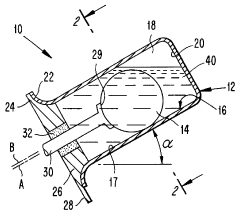
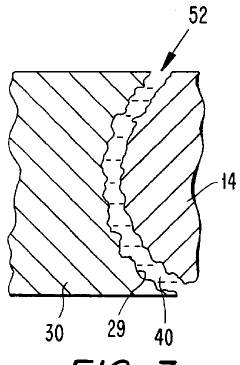
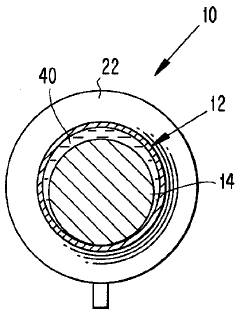
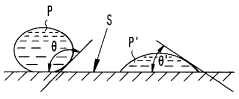
Semiconductor device and method of manufacture
PatentWO2005117143A1
Innovation
- By varying the percentage of lighter group V or VI atoms in III-V or II-VI semiconductor crystals, the ionization rates for electrons and holes can be differentiated, allowing for controlled avalanche multiplication and reduced quantum tunneling, enabling the creation of semiconductor devices with higher gain and lower noise for a broader range of wavelengths.


Material Science Considerations for Quantum Devices
The development of quantum devices operating at sub-nanometer scales necessitates a profound understanding of material science principles. Materials used in quantum tunneling applications must exhibit specific electronic, mechanical, and quantum properties to facilitate efficient tunneling effects while maintaining structural integrity at extremely small dimensions.
Traditional semiconductor materials like silicon face significant limitations at quantum scales due to increased electron scattering and quantum confinement effects. Advanced materials such as graphene, transition metal dichalcogenides (TMDs), and topological insulators have emerged as promising candidates for quantum tunneling devices due to their unique band structures and two-dimensional nature that enhances quantum effects.
Barrier materials play a crucial role in quantum tunneling devices, requiring precise control of thickness and composition. High-k dielectric materials including hafnium oxide and aluminum oxide enable tunneling while minimizing leakage current. The interface quality between different materials becomes increasingly critical at sub-nanometer scales, as atomic-level defects can significantly alter tunneling probabilities and device performance.
Strain engineering has emerged as a powerful technique for modulating quantum properties in materials. Controlled strain can modify band structures and electron mobility, potentially enhancing tunneling effects. Recent research demonstrates that applying precise mechanical strain to 2D materials can create predictable changes in quantum behavior, opening new avenues for device design.
Temperature stability presents another significant challenge, as quantum effects are highly sensitive to thermal fluctuations. Materials must maintain their quantum properties across operational temperature ranges, necessitating novel approaches to thermal management at the nanoscale. Superconducting materials and quantum dots with engineered energy levels show promise in maintaining coherent quantum states at practical temperatures.
Fabrication considerations are equally important, as materials must be compatible with existing or emerging nanofabrication techniques. Atomic layer deposition, molecular beam epitaxy, and advanced lithography methods enable precise material deposition and patterning at atomic scales. However, maintaining material purity and structural perfection during fabrication remains challenging.
Looking forward, hybrid material systems combining different quantum materials may offer the most promising path for practical quantum tunneling devices. These heterogeneous structures can leverage the complementary properties of different materials to enhance tunneling effects while addressing challenges related to stability, fabrication, and integration with conventional electronics.
Traditional semiconductor materials like silicon face significant limitations at quantum scales due to increased electron scattering and quantum confinement effects. Advanced materials such as graphene, transition metal dichalcogenides (TMDs), and topological insulators have emerged as promising candidates for quantum tunneling devices due to their unique band structures and two-dimensional nature that enhances quantum effects.
Barrier materials play a crucial role in quantum tunneling devices, requiring precise control of thickness and composition. High-k dielectric materials including hafnium oxide and aluminum oxide enable tunneling while minimizing leakage current. The interface quality between different materials becomes increasingly critical at sub-nanometer scales, as atomic-level defects can significantly alter tunneling probabilities and device performance.
Strain engineering has emerged as a powerful technique for modulating quantum properties in materials. Controlled strain can modify band structures and electron mobility, potentially enhancing tunneling effects. Recent research demonstrates that applying precise mechanical strain to 2D materials can create predictable changes in quantum behavior, opening new avenues for device design.
Temperature stability presents another significant challenge, as quantum effects are highly sensitive to thermal fluctuations. Materials must maintain their quantum properties across operational temperature ranges, necessitating novel approaches to thermal management at the nanoscale. Superconducting materials and quantum dots with engineered energy levels show promise in maintaining coherent quantum states at practical temperatures.
Fabrication considerations are equally important, as materials must be compatible with existing or emerging nanofabrication techniques. Atomic layer deposition, molecular beam epitaxy, and advanced lithography methods enable precise material deposition and patterning at atomic scales. However, maintaining material purity and structural perfection during fabrication remains challenging.
Looking forward, hybrid material systems combining different quantum materials may offer the most promising path for practical quantum tunneling devices. These heterogeneous structures can leverage the complementary properties of different materials to enhance tunneling effects while addressing challenges related to stability, fabrication, and integration with conventional electronics.
Quantum Computing Integration Possibilities
The integration of quantum tunneling technology with quantum computing represents a revolutionary frontier in computational architecture. Quantum computers leverage quantum mechanical phenomena to perform calculations, while sub-nanometer devices utilizing quantum tunneling offer unprecedented miniaturization capabilities. The convergence of these technologies creates synergistic opportunities that could fundamentally transform computing paradigms.
Quantum tunneling-based devices can serve as highly efficient quantum bits (qubits) due to their inherent quantum mechanical properties. The controlled tunneling effect allows for precise manipulation of quantum states, potentially offering improved coherence times compared to traditional qubit implementations. This characteristic is particularly valuable for quantum computing systems that struggle with maintaining quantum coherence against environmental decoherence.
The ultra-small scale of tunneling devices enables higher qubit density on quantum processors, potentially addressing the scalability challenges that currently limit quantum computing advancement. Preliminary research suggests that tunneling-based qubits could be packed at densities 10-100 times greater than current superconducting qubit architectures, while maintaining operational integrity.
Hybrid quantum-classical computing architectures could benefit significantly from tunneling technology. These devices could serve as quantum-classical interfaces, facilitating more efficient information transfer between quantum processing units and classical control systems. The high-speed switching capabilities of tunneling devices (operating in the terahertz range) align well with the timing requirements for quantum error correction protocols.
Energy efficiency represents another compelling integration opportunity. Quantum tunneling devices operate at extremely low power levels, potentially reducing the substantial energy requirements currently associated with quantum computing systems. This efficiency gain could help address one of the major practical limitations of scaling quantum computers beyond laboratory environments.
Manufacturing compatibility presents both challenges and opportunities. While tunneling devices require precise atomic-scale fabrication, recent advances in semiconductor manufacturing techniques show promising alignment with these requirements. Several research groups have demonstrated successful integration of tunneling junction fabrication with modified CMOS processes, suggesting a pathway to industrial-scale production.
The timeline for practical integration appears promising, with early demonstration systems expected within 3-5 years. Full commercial integration may require 7-10 years of development, contingent upon parallel advances in materials science and nanofabrication techniques.
Quantum tunneling-based devices can serve as highly efficient quantum bits (qubits) due to their inherent quantum mechanical properties. The controlled tunneling effect allows for precise manipulation of quantum states, potentially offering improved coherence times compared to traditional qubit implementations. This characteristic is particularly valuable for quantum computing systems that struggle with maintaining quantum coherence against environmental decoherence.
The ultra-small scale of tunneling devices enables higher qubit density on quantum processors, potentially addressing the scalability challenges that currently limit quantum computing advancement. Preliminary research suggests that tunneling-based qubits could be packed at densities 10-100 times greater than current superconducting qubit architectures, while maintaining operational integrity.
Hybrid quantum-classical computing architectures could benefit significantly from tunneling technology. These devices could serve as quantum-classical interfaces, facilitating more efficient information transfer between quantum processing units and classical control systems. The high-speed switching capabilities of tunneling devices (operating in the terahertz range) align well with the timing requirements for quantum error correction protocols.
Energy efficiency represents another compelling integration opportunity. Quantum tunneling devices operate at extremely low power levels, potentially reducing the substantial energy requirements currently associated with quantum computing systems. This efficiency gain could help address one of the major practical limitations of scaling quantum computers beyond laboratory environments.
Manufacturing compatibility presents both challenges and opportunities. While tunneling devices require precise atomic-scale fabrication, recent advances in semiconductor manufacturing techniques show promising alignment with these requirements. Several research groups have demonstrated successful integration of tunneling junction fabrication with modified CMOS processes, suggesting a pathway to industrial-scale production.
The timeline for practical integration appears promising, with early demonstration systems expected within 3-5 years. Full commercial integration may require 7-10 years of development, contingent upon parallel advances in materials science and nanofabrication techniques.
Unlock deeper insights with PatSnap Eureka Quick Research — get a full tech report to explore trends and direct your research. Try now!
Generate Your Research Report Instantly with AI Agent
Supercharge your innovation with PatSnap Eureka AI Agent Platform!