Voltage Source Inverter for Electric Power Distribution
MAR 10, 20269 MIN READ
Generate Your Research Report Instantly with AI Agent
Patsnap Eureka helps you evaluate technical feasibility & market potential.
VSI Technology Background and Grid Integration Goals
Voltage Source Inverters have emerged as fundamental components in modern electric power distribution systems, representing a critical technological evolution from traditional grid infrastructure. The development of VSI technology traces back to the 1960s with the advent of semiconductor switching devices, progressing through multiple generations of power electronics innovations. Early implementations focused primarily on motor drives and industrial applications, but the paradigm shifted dramatically with the growing emphasis on renewable energy integration and smart grid technologies.
The historical progression of VSI technology demonstrates a clear trajectory toward enhanced efficiency, reduced harmonic distortion, and improved grid compatibility. Initial thyristor-based systems gave way to more sophisticated IGBT and MOSFET configurations, enabling faster switching frequencies and superior control capabilities. This evolution has been driven by the increasing demand for bidirectional power flow management, reactive power compensation, and voltage regulation in distribution networks.
Contemporary VSI applications in power distribution encompass a broad spectrum of functionalities, including distributed generation integration, energy storage system interfaces, and active power quality management. The technology has become indispensable for accommodating the intermittent nature of renewable energy sources while maintaining grid stability and power quality standards. Modern VSI systems incorporate advanced control algorithms, real-time monitoring capabilities, and communication interfaces that enable seamless integration with distribution management systems.
The primary technical objectives for VSI deployment in electric power distribution focus on achieving optimal power conversion efficiency, typically exceeding 95% across varying load conditions. Grid integration goals emphasize maintaining voltage stability within acceptable limits, typically ±5% of nominal values, while providing dynamic reactive power support ranging from 0.9 leading to 0.9 lagging power factor. Additionally, VSI systems must demonstrate compliance with grid codes regarding harmonic distortion limits, fault ride-through capabilities, and islanding protection requirements.
Future development trajectories for VSI technology in distribution applications target enhanced grid resilience, improved cybersecurity features, and advanced predictive maintenance capabilities. The integration of artificial intelligence and machine learning algorithms promises to optimize VSI performance through adaptive control strategies and predictive fault detection mechanisms.
The historical progression of VSI technology demonstrates a clear trajectory toward enhanced efficiency, reduced harmonic distortion, and improved grid compatibility. Initial thyristor-based systems gave way to more sophisticated IGBT and MOSFET configurations, enabling faster switching frequencies and superior control capabilities. This evolution has been driven by the increasing demand for bidirectional power flow management, reactive power compensation, and voltage regulation in distribution networks.
Contemporary VSI applications in power distribution encompass a broad spectrum of functionalities, including distributed generation integration, energy storage system interfaces, and active power quality management. The technology has become indispensable for accommodating the intermittent nature of renewable energy sources while maintaining grid stability and power quality standards. Modern VSI systems incorporate advanced control algorithms, real-time monitoring capabilities, and communication interfaces that enable seamless integration with distribution management systems.
The primary technical objectives for VSI deployment in electric power distribution focus on achieving optimal power conversion efficiency, typically exceeding 95% across varying load conditions. Grid integration goals emphasize maintaining voltage stability within acceptable limits, typically ±5% of nominal values, while providing dynamic reactive power support ranging from 0.9 leading to 0.9 lagging power factor. Additionally, VSI systems must demonstrate compliance with grid codes regarding harmonic distortion limits, fault ride-through capabilities, and islanding protection requirements.
Future development trajectories for VSI technology in distribution applications target enhanced grid resilience, improved cybersecurity features, and advanced predictive maintenance capabilities. The integration of artificial intelligence and machine learning algorithms promises to optimize VSI performance through adaptive control strategies and predictive fault detection mechanisms.
Market Demand for Advanced Power Distribution Systems
The global power distribution infrastructure is undergoing a fundamental transformation driven by the increasing integration of renewable energy sources, distributed generation systems, and smart grid technologies. Traditional power distribution networks, originally designed for unidirectional power flow from centralized generation facilities, are struggling to accommodate the bidirectional power flows and variable generation patterns characteristic of modern distributed energy resources. This paradigm shift has created substantial market demand for advanced power distribution systems capable of managing complex power flows while maintaining grid stability and reliability.
Voltage source inverters have emerged as critical enabling technologies for this transformation, serving as the interface between DC-based renewable energy sources and AC distribution networks. The proliferation of solar photovoltaic installations, battery energy storage systems, and electric vehicle charging infrastructure has significantly expanded the addressable market for VSI-based solutions. These applications require sophisticated power conversion capabilities that can seamlessly integrate with existing grid infrastructure while providing enhanced functionality such as reactive power support, voltage regulation, and grid stabilization services.
The market demand is further amplified by regulatory initiatives and policy frameworks promoting grid modernization and renewable energy adoption. Utilities worldwide are investing heavily in distribution system upgrades to accommodate higher penetration levels of distributed energy resources while maintaining power quality standards. This regulatory environment has created favorable conditions for VSI technology adoption, as these systems provide the flexibility and controllability required to meet evolving grid codes and interconnection standards.
Industrial and commercial sectors represent another significant demand driver, as organizations seek to reduce energy costs and improve power reliability through on-site generation and energy storage systems. The growing emphasis on energy independence and sustainability has led to increased deployment of microgrids and distributed energy systems, all of which rely heavily on advanced inverter technologies for optimal operation.
The emergence of electric mobility as a mainstream transportation solution has created additional market opportunities for VSI applications in vehicle-to-grid systems and fast-charging infrastructure. These applications require high-performance power conversion systems capable of handling bidirectional power flows and providing grid support services during peak demand periods.
Market growth is also supported by technological advancements in power semiconductor devices, digital control systems, and communication technologies, which have enabled the development of more efficient, reliable, and cost-effective VSI solutions. The convergence of these technological improvements with favorable market conditions has established a robust foundation for sustained growth in the advanced power distribution systems market.
Voltage source inverters have emerged as critical enabling technologies for this transformation, serving as the interface between DC-based renewable energy sources and AC distribution networks. The proliferation of solar photovoltaic installations, battery energy storage systems, and electric vehicle charging infrastructure has significantly expanded the addressable market for VSI-based solutions. These applications require sophisticated power conversion capabilities that can seamlessly integrate with existing grid infrastructure while providing enhanced functionality such as reactive power support, voltage regulation, and grid stabilization services.
The market demand is further amplified by regulatory initiatives and policy frameworks promoting grid modernization and renewable energy adoption. Utilities worldwide are investing heavily in distribution system upgrades to accommodate higher penetration levels of distributed energy resources while maintaining power quality standards. This regulatory environment has created favorable conditions for VSI technology adoption, as these systems provide the flexibility and controllability required to meet evolving grid codes and interconnection standards.
Industrial and commercial sectors represent another significant demand driver, as organizations seek to reduce energy costs and improve power reliability through on-site generation and energy storage systems. The growing emphasis on energy independence and sustainability has led to increased deployment of microgrids and distributed energy systems, all of which rely heavily on advanced inverter technologies for optimal operation.
The emergence of electric mobility as a mainstream transportation solution has created additional market opportunities for VSI applications in vehicle-to-grid systems and fast-charging infrastructure. These applications require high-performance power conversion systems capable of handling bidirectional power flows and providing grid support services during peak demand periods.
Market growth is also supported by technological advancements in power semiconductor devices, digital control systems, and communication technologies, which have enabled the development of more efficient, reliable, and cost-effective VSI solutions. The convergence of these technological improvements with favorable market conditions has established a robust foundation for sustained growth in the advanced power distribution systems market.
Current VSI Development Status and Technical Challenges
Voltage Source Inverters for electric power distribution have reached significant technological maturity, with widespread deployment across utility-scale and distributed energy systems. Current VSI implementations predominantly utilize three-level and multilevel topologies, incorporating advanced semiconductor technologies such as silicon carbide (SiC) and gallium nitride (GaN) devices. These developments have enabled higher switching frequencies, reduced power losses, and improved thermal management compared to traditional silicon-based solutions.
The integration of sophisticated control algorithms represents a major advancement in VSI technology. Modern systems employ model predictive control (MPC), space vector modulation (SVM), and adaptive control strategies to optimize power quality and grid synchronization. Real-time digital signal processors and field-programmable gate arrays enable precise control of output voltage and frequency, achieving total harmonic distortion levels below 3% under nominal operating conditions.
Despite technological progress, several critical challenges persist in VSI development for power distribution applications. Grid integration complexity remains a primary concern, particularly regarding voltage regulation and reactive power management in networks with high penetration of distributed energy resources. The bidirectional power flow requirements in modern distribution systems demand enhanced control capabilities and robust fault detection mechanisms.
Thermal management continues to pose significant engineering challenges, especially in high-power density applications. Current cooling solutions, including liquid cooling and advanced heat sink designs, add substantial cost and complexity to VSI systems. The semiconductor junction temperature limitations directly impact system reliability and operational lifespan, requiring careful thermal design considerations.
Power quality issues represent another substantial challenge, particularly harmonic distortion and voltage flicker in weak grid conditions. Existing filter designs, while effective, contribute to increased system size, weight, and cost. The dynamic response requirements for grid support functions, including voltage and frequency regulation, demand faster switching capabilities and more sophisticated control algorithms.
Cybersecurity vulnerabilities in digitally controlled VSI systems have emerged as a growing concern. The increasing connectivity and remote monitoring capabilities expose these systems to potential cyber threats, requiring robust security protocols and encrypted communication channels. Additionally, the standardization of communication protocols across different manufacturers remains incomplete, limiting interoperability in multi-vendor environments.
Cost optimization remains a persistent challenge, particularly for smaller-scale distributed applications. While semiconductor costs have decreased, the overall system cost including control electronics, protection systems, and installation remains significant. The economic viability of VSI deployment in certain distribution applications continues to depend on regulatory frameworks and incentive structures.
The integration of sophisticated control algorithms represents a major advancement in VSI technology. Modern systems employ model predictive control (MPC), space vector modulation (SVM), and adaptive control strategies to optimize power quality and grid synchronization. Real-time digital signal processors and field-programmable gate arrays enable precise control of output voltage and frequency, achieving total harmonic distortion levels below 3% under nominal operating conditions.
Despite technological progress, several critical challenges persist in VSI development for power distribution applications. Grid integration complexity remains a primary concern, particularly regarding voltage regulation and reactive power management in networks with high penetration of distributed energy resources. The bidirectional power flow requirements in modern distribution systems demand enhanced control capabilities and robust fault detection mechanisms.
Thermal management continues to pose significant engineering challenges, especially in high-power density applications. Current cooling solutions, including liquid cooling and advanced heat sink designs, add substantial cost and complexity to VSI systems. The semiconductor junction temperature limitations directly impact system reliability and operational lifespan, requiring careful thermal design considerations.
Power quality issues represent another substantial challenge, particularly harmonic distortion and voltage flicker in weak grid conditions. Existing filter designs, while effective, contribute to increased system size, weight, and cost. The dynamic response requirements for grid support functions, including voltage and frequency regulation, demand faster switching capabilities and more sophisticated control algorithms.
Cybersecurity vulnerabilities in digitally controlled VSI systems have emerged as a growing concern. The increasing connectivity and remote monitoring capabilities expose these systems to potential cyber threats, requiring robust security protocols and encrypted communication channels. Additionally, the standardization of communication protocols across different manufacturers remains incomplete, limiting interoperability in multi-vendor environments.
Cost optimization remains a persistent challenge, particularly for smaller-scale distributed applications. While semiconductor costs have decreased, the overall system cost including control electronics, protection systems, and installation remains significant. The economic viability of VSI deployment in certain distribution applications continues to depend on regulatory frameworks and incentive structures.
Existing VSI Solutions for Power Distribution Applications
01 Multi-level voltage source inverter topologies
Advanced inverter configurations utilize multi-level topologies to generate output voltages with reduced harmonic distortion and improved power quality. These topologies employ multiple voltage levels through cascaded or modular structures, enabling better voltage synthesis and reduced switching losses. The multi-level approach allows for higher voltage applications while using lower voltage rated components, improving overall system efficiency and reliability.- Multi-level voltage source inverter topologies: Advanced inverter configurations utilize multi-level topologies to generate output voltages with reduced harmonic distortion and improved power quality. These topologies employ multiple voltage levels through cascaded or modular structures, enabling better voltage synthesis and reduced switching losses. The multi-level approach allows for higher voltage applications while using lower voltage rated components, improving overall system efficiency and reliability.
- PWM control and modulation techniques: Pulse width modulation strategies are employed to control the switching of power semiconductor devices in voltage source inverters. These techniques involve sophisticated algorithms for generating switching patterns that minimize harmonics and optimize output waveform quality. Advanced modulation methods enable precise control of output voltage magnitude and frequency while reducing electromagnetic interference and improving dynamic response characteristics.
- DC-link capacitor and voltage stabilization: The DC-link section incorporates capacitive elements to maintain stable voltage levels and provide energy storage for the inverter operation. Proper sizing and configuration of these components ensure minimal voltage ripple and adequate energy buffering during transient conditions. Design considerations include capacitor selection, voltage rating, and arrangement to handle peak currents while maintaining system stability across varying load conditions.
- Grid-connected inverter synchronization and control: Specialized control systems enable voltage source inverters to interface with utility grids, requiring precise synchronization with grid voltage and frequency. These systems implement phase-locked loops and advanced control algorithms to ensure proper power flow, reactive power management, and compliance with grid codes. The control architecture addresses issues such as islanding detection, fault ride-through capability, and power quality requirements for grid integration.
- Thermal management and protection circuits: Comprehensive protection and thermal management systems are integrated to ensure reliable operation of power semiconductor devices under various operating conditions. These systems monitor critical parameters such as junction temperature, overcurrent, and overvoltage conditions, implementing protective actions when thresholds are exceeded. Cooling solutions and thermal design considerations are optimized to maintain devices within safe operating areas while maximizing power density and system longevity.
02 PWM control and modulation techniques
Pulse width modulation strategies are employed to control the switching of power semiconductor devices in voltage source inverters. These techniques involve sophisticated algorithms for generating switching patterns that minimize harmonics and optimize output waveforms. Advanced modulation methods enable precise control of output voltage magnitude and frequency while reducing electromagnetic interference and improving dynamic response characteristics.Expand Specific Solutions03 Power semiconductor switching devices and configurations
The selection and arrangement of power switching elements such as transistors and thyristors form the core of voltage source inverter design. Various configurations of switching devices enable different performance characteristics including switching speed, power handling capability, and efficiency. The proper selection and thermal management of these components are critical for achieving desired inverter specifications and long-term reliability.Expand Specific Solutions04 DC-link capacitor and voltage regulation
Energy storage elements in the DC bus provide voltage stabilization and handle power fluctuations in voltage source inverters. Proper sizing and configuration of these storage components ensure stable operation under varying load conditions and minimize voltage ripple. Advanced designs incorporate active voltage regulation techniques to maintain consistent DC-link voltage levels and improve overall system performance.Expand Specific Solutions05 Grid integration and power conversion applications
Voltage source inverters are designed for interfacing with electrical grids and various power conversion applications including renewable energy systems and motor drives. These implementations require specific control strategies for synchronization, power factor correction, and compliance with grid codes. Advanced features include bidirectional power flow capability, reactive power support, and fault ride-through capabilities for enhanced grid stability.Expand Specific Solutions
Major Players in VSI and Power Electronics Industry
The voltage source inverter technology for electric power distribution represents a mature and rapidly expanding market segment within the broader power electronics industry. The sector has evolved from an emerging technology phase to widespread commercial deployment, driven by increasing renewable energy integration and grid modernization initiatives. Market growth is substantial, particularly in solar photovoltaic applications and energy storage systems. Technology maturity varies significantly among market players, with established industrial giants like ABB Ltd., Siemens AG, and Mitsubishi Electric Corp. leading in advanced grid-scale solutions, while specialized companies such as SolarEdge Technologies and SMA Solar Technology AG dominate distributed solar inverter markets. Chinese entities including State Grid Corp. of China and Sungrow Power Supply Co. represent strong regional capabilities and cost-competitive solutions. The competitive landscape features both traditional power equipment manufacturers and innovative technology companies, indicating a dynamic market with ongoing technological advancement and differentiation opportunities across various application segments.
ABB Ltd.
Technical Solution: ABB develops advanced voltage source inverters utilizing multilevel topology and silicon carbide (SiC) semiconductor technology for electric power distribution systems. Their inverters feature modular multilevel converter (MMC) architecture that enables superior power quality with total harmonic distortion below 3% and efficiency exceeding 98%. The company's VSI solutions incorporate advanced grid-tie capabilities, fault ride-through functionality, and seamless islanding detection for distributed energy resources integration. ABB's inverters support both grid-connected and standalone operations with power ratings from 100kW to several megawatts, featuring intelligent control algorithms for optimal power flow management and grid stabilization.
Strengths: Market-leading efficiency ratings, robust multilevel topology, extensive global service network. Weaknesses: Higher initial cost compared to traditional solutions, complex maintenance requirements for advanced features.
SMA Solar Technology AG
Technical Solution: SMA specializes in voltage source inverters optimized for renewable energy integration in distribution networks, featuring their Sunny Central and Sunny Tripower product series. Their VSI technology incorporates transformerless design with OptiTrac global peak tracking and reactive power capability of 0.8 leading to 0.8 lagging power factor. The inverters achieve maximum efficiency of 98.6% and feature integrated grid management functions including voltage support, frequency response, and power curtailment capabilities. SMA's solutions support both centralized and decentralized inverter architectures with advanced communication interfaces for smart grid applications and remote monitoring through their Sunny Portal platform.
Strengths: Specialized renewable energy expertise, high efficiency transformerless design, comprehensive monitoring solutions. Weaknesses: Limited experience in heavy industrial applications, primarily focused on solar applications rather than general power distribution.
Core VSI Control and Power Conversion Innovations
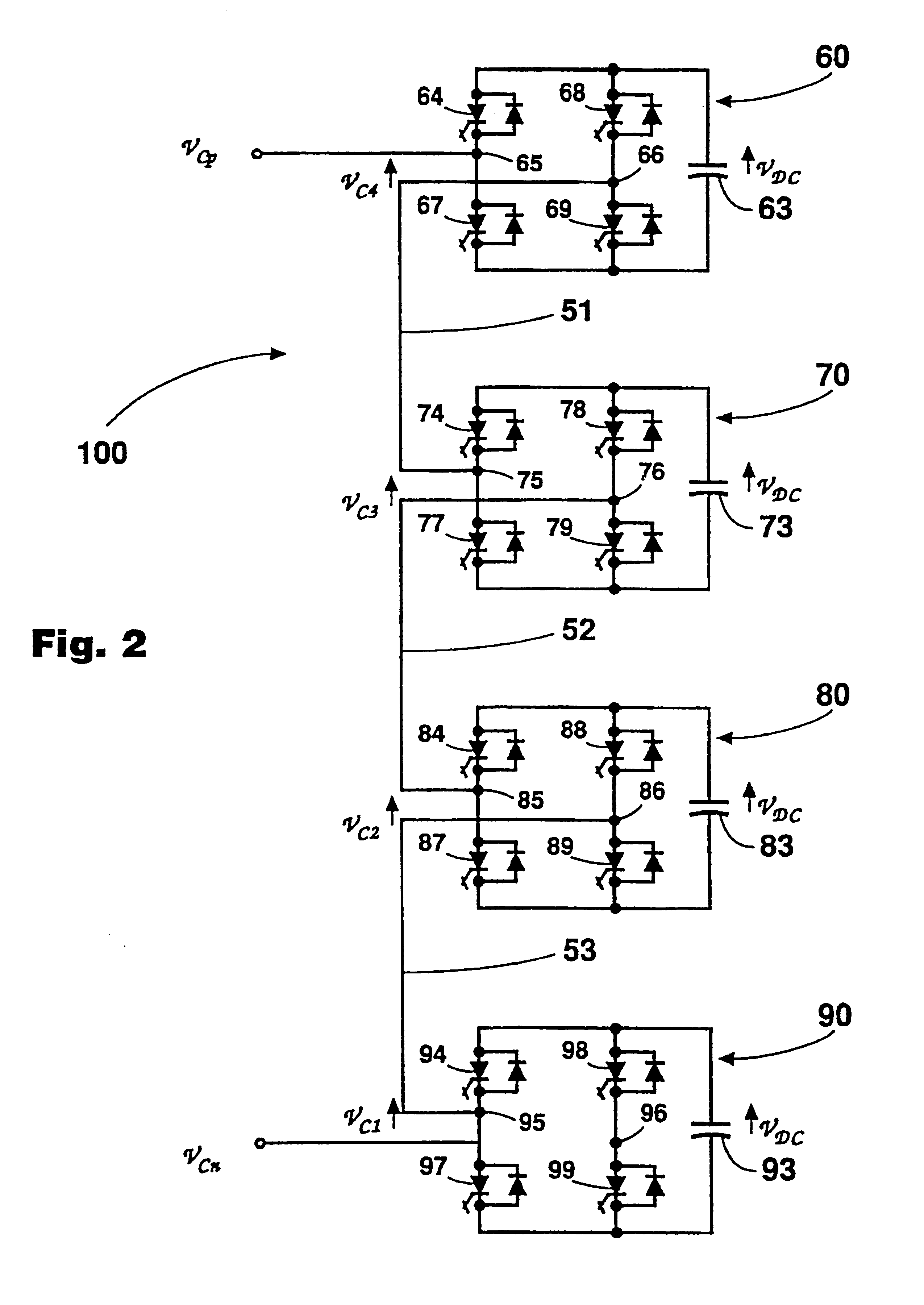
Stacked voltage source inverter with separate DC sources
PatentActiveUS20150303829A1
Innovation
- A stacked voltage source inverter system utilizing a plurality of full bridge inverters interconnected in series, with local and system controllers to generate sinusoidal voltage waveforms, allowing for high switching frequency and efficient power conversion, and featuring a configuration that can operate as either a current or voltage source, supporting multiple grid voltages and frequencies.


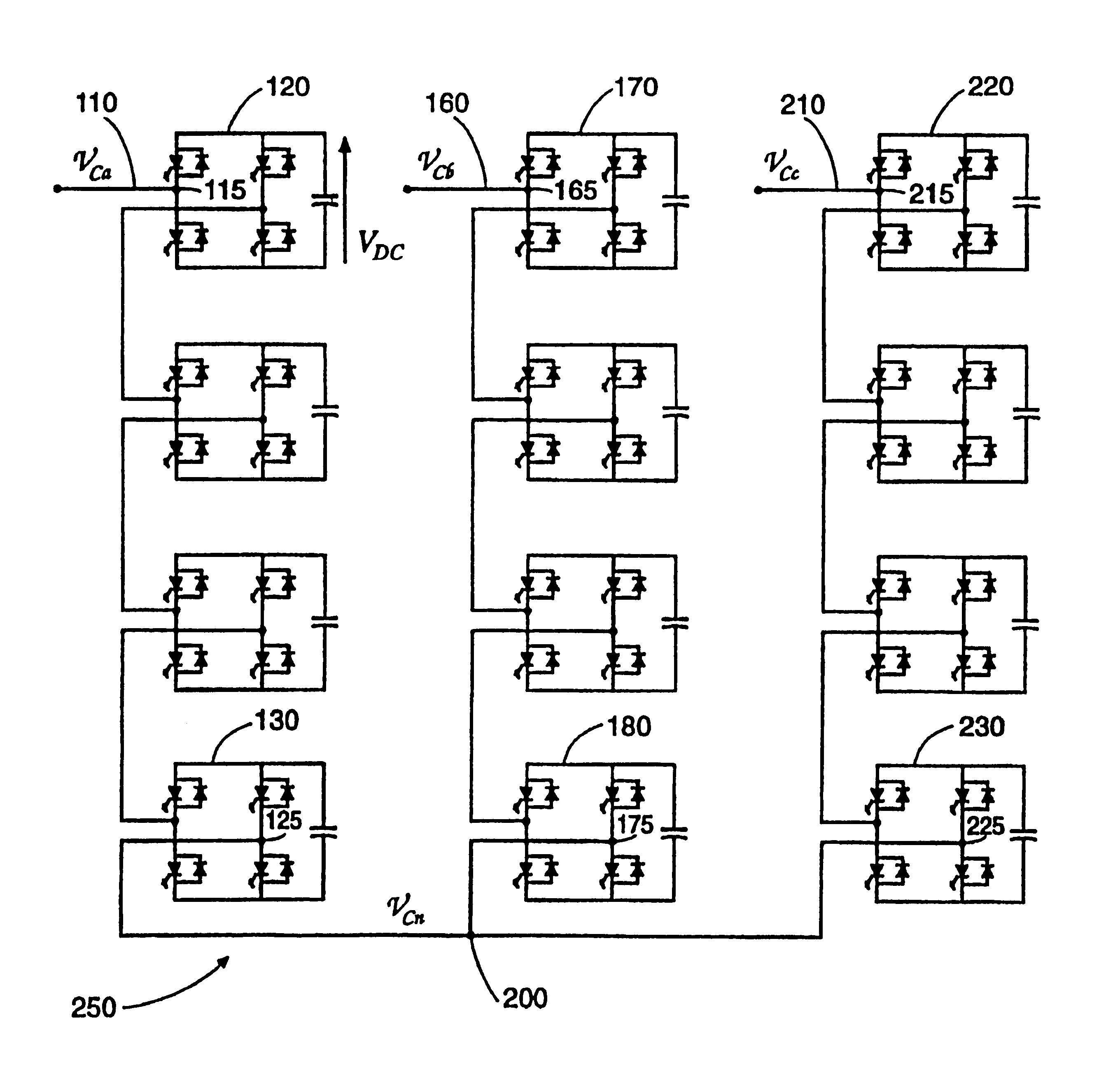
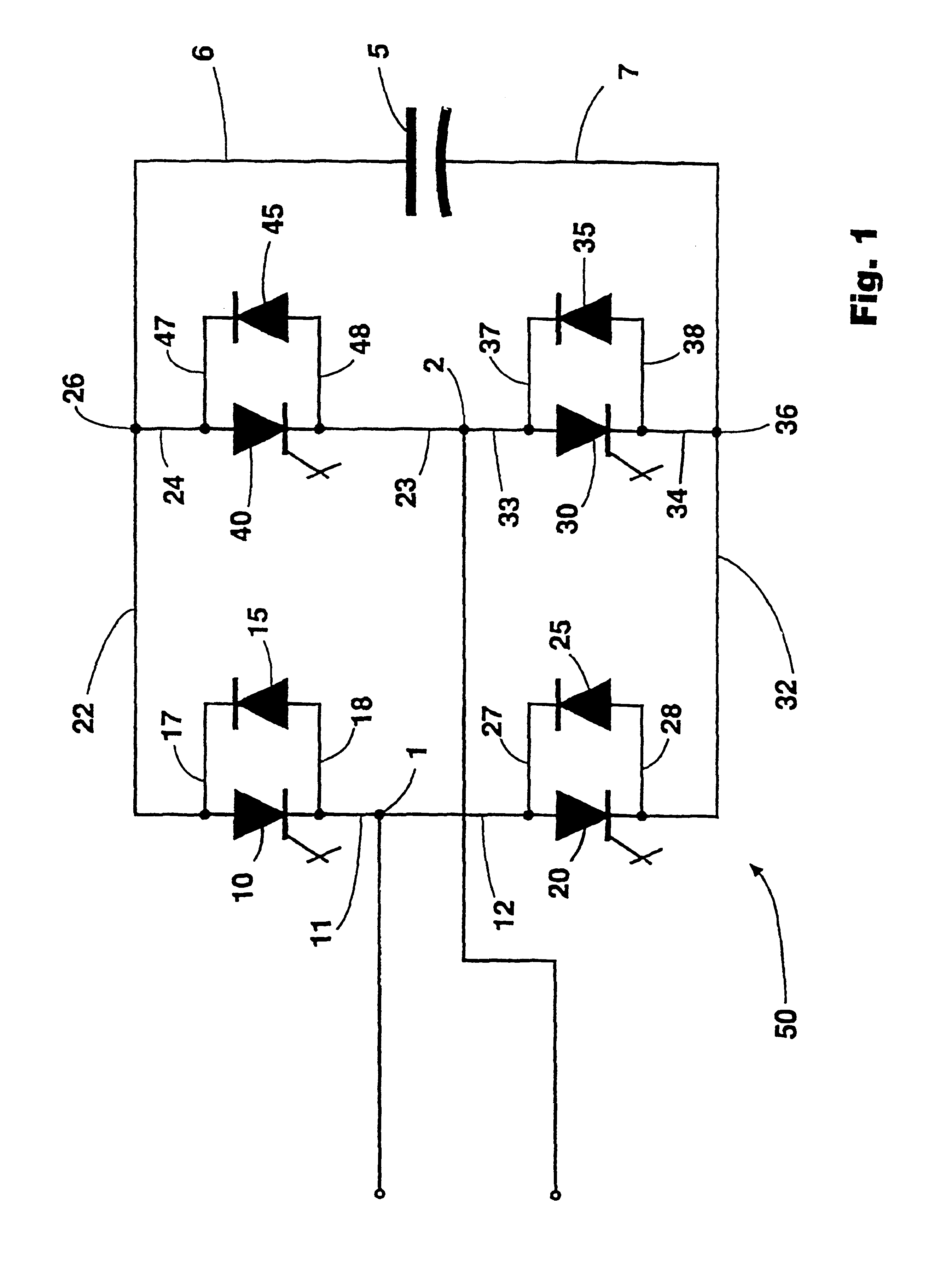
Multilevel cascade voltage source inverter with seperate DC sources
PatentInactiveUSRE37126E1
Innovation
- A multilevel cascade voltage source inverter with separate DC sources, comprising a series connection of full bridge inverters, which generates a multistep staircase voltage waveform and approximates a sinusoidal output without the need for transformers, clamping diodes, or flying capacitors, simplifying system layout and control.

Grid Code Compliance and Power Quality Standards
Grid code compliance represents a fundamental requirement for voltage source inverters operating within electric power distribution systems. These regulatory frameworks establish mandatory technical specifications that inverters must meet to ensure safe and reliable grid interconnection. Modern grid codes typically encompass voltage and frequency operating ranges, fault ride-through capabilities, reactive power support requirements, and harmonic distortion limits. The evolving nature of grid codes reflects the increasing penetration of distributed energy resources and the need for enhanced grid stability.
Power quality standards form the cornerstone of inverter design specifications, directly influencing the electrical characteristics that inverters must maintain during operation. IEEE 519 and IEC 61000 series standards define acceptable levels of harmonic distortion, with total harmonic distortion typically limited to 5% for voltage and 8% for current in distribution systems. These standards also address voltage fluctuations, flicker, and unbalance conditions that inverters must not exacerbate.
Voltage regulation requirements mandate that inverters maintain output voltage within specified tolerances, typically ±5% of nominal voltage under steady-state conditions. Advanced inverters must demonstrate capability for dynamic voltage support through reactive power injection or absorption, responding to grid voltage variations within milliseconds. This functionality becomes increasingly critical as traditional synchronous generators are displaced by inverter-based resources.
Frequency response capabilities represent another crucial compliance aspect, requiring inverters to operate within defined frequency ranges while providing appropriate response to frequency deviations. Modern grid codes often mandate frequency ride-through performance and may require active frequency support through power-frequency droop characteristics or fast frequency response services.
Anti-islanding protection standards ensure inverters disconnect from the grid during utility outages, preventing safety hazards and equipment damage. IEEE 1547 specifies maximum detection times and methods for identifying islanding conditions, requiring sophisticated monitoring algorithms that can distinguish between grid disturbances and actual loss of utility connection.
Fault ride-through requirements have become increasingly stringent, demanding that inverters remain connected during various grid fault conditions rather than immediately disconnecting. Low voltage ride-through and high voltage ride-through capabilities must be demonstrated across specified time-voltage profiles, ensuring grid stability during transient events while protecting inverter components from damage.
Power quality standards form the cornerstone of inverter design specifications, directly influencing the electrical characteristics that inverters must maintain during operation. IEEE 519 and IEC 61000 series standards define acceptable levels of harmonic distortion, with total harmonic distortion typically limited to 5% for voltage and 8% for current in distribution systems. These standards also address voltage fluctuations, flicker, and unbalance conditions that inverters must not exacerbate.
Voltage regulation requirements mandate that inverters maintain output voltage within specified tolerances, typically ±5% of nominal voltage under steady-state conditions. Advanced inverters must demonstrate capability for dynamic voltage support through reactive power injection or absorption, responding to grid voltage variations within milliseconds. This functionality becomes increasingly critical as traditional synchronous generators are displaced by inverter-based resources.
Frequency response capabilities represent another crucial compliance aspect, requiring inverters to operate within defined frequency ranges while providing appropriate response to frequency deviations. Modern grid codes often mandate frequency ride-through performance and may require active frequency support through power-frequency droop characteristics or fast frequency response services.
Anti-islanding protection standards ensure inverters disconnect from the grid during utility outages, preventing safety hazards and equipment damage. IEEE 1547 specifies maximum detection times and methods for identifying islanding conditions, requiring sophisticated monitoring algorithms that can distinguish between grid disturbances and actual loss of utility connection.
Fault ride-through requirements have become increasingly stringent, demanding that inverters remain connected during various grid fault conditions rather than immediately disconnecting. Low voltage ride-through and high voltage ride-through capabilities must be demonstrated across specified time-voltage profiles, ensuring grid stability during transient events while protecting inverter components from damage.
Environmental Impact and Sustainability of VSI Systems
The environmental impact of Voltage Source Inverter (VSI) systems in electric power distribution represents a critical consideration for sustainable energy infrastructure development. VSI technology demonstrates significant environmental benefits through its ability to integrate renewable energy sources efficiently into distribution networks. By enabling seamless connection of solar photovoltaic systems, wind turbines, and energy storage systems, VSI units facilitate the transition from fossil fuel-based generation to clean energy alternatives, substantially reducing carbon emissions and air pollutants.
Energy efficiency characteristics of modern VSI systems contribute meaningfully to environmental sustainability objectives. Advanced power electronic designs achieve conversion efficiencies exceeding 95%, minimizing energy losses during AC-DC-AC conversion processes. This high efficiency translates directly into reduced energy consumption from primary sources, lowering overall environmental footprint. Additionally, sophisticated control algorithms optimize power flow management, reducing transmission losses and improving grid stability without requiring additional infrastructure investments.
Material sustainability aspects of VSI manufacturing present both challenges and opportunities for environmental stewardship. Contemporary VSI designs increasingly incorporate recyclable materials and eliminate hazardous substances such as heavy metals and toxic compounds. Silicon carbide and gallium nitride semiconductor technologies, while requiring specialized manufacturing processes, offer superior performance characteristics that extend equipment lifespan and reduce replacement frequency, ultimately decreasing material consumption over operational lifecycles.
Lifecycle assessment studies indicate that VSI systems generate positive environmental returns within 2-3 years of operation through emissions avoidance and efficiency improvements. End-of-life considerations have prompted manufacturers to develop comprehensive recycling programs for power electronic components, recovering valuable materials including rare earth elements and semiconductor substrates. These initiatives support circular economy principles while minimizing electronic waste generation.
Grid modernization enabled by VSI deployment supports broader sustainability goals through enhanced demand response capabilities and distributed energy resource integration. Smart inverter functionalities allow dynamic grid support services, reducing reliance on conventional peaking power plants that typically exhibit higher emission profiles. Furthermore, VSI-enabled microgrids enhance system resilience while promoting local renewable energy utilization, reducing transmission infrastructure requirements and associated environmental impacts.
Energy efficiency characteristics of modern VSI systems contribute meaningfully to environmental sustainability objectives. Advanced power electronic designs achieve conversion efficiencies exceeding 95%, minimizing energy losses during AC-DC-AC conversion processes. This high efficiency translates directly into reduced energy consumption from primary sources, lowering overall environmental footprint. Additionally, sophisticated control algorithms optimize power flow management, reducing transmission losses and improving grid stability without requiring additional infrastructure investments.
Material sustainability aspects of VSI manufacturing present both challenges and opportunities for environmental stewardship. Contemporary VSI designs increasingly incorporate recyclable materials and eliminate hazardous substances such as heavy metals and toxic compounds. Silicon carbide and gallium nitride semiconductor technologies, while requiring specialized manufacturing processes, offer superior performance characteristics that extend equipment lifespan and reduce replacement frequency, ultimately decreasing material consumption over operational lifecycles.
Lifecycle assessment studies indicate that VSI systems generate positive environmental returns within 2-3 years of operation through emissions avoidance and efficiency improvements. End-of-life considerations have prompted manufacturers to develop comprehensive recycling programs for power electronic components, recovering valuable materials including rare earth elements and semiconductor substrates. These initiatives support circular economy principles while minimizing electronic waste generation.
Grid modernization enabled by VSI deployment supports broader sustainability goals through enhanced demand response capabilities and distributed energy resource integration. Smart inverter functionalities allow dynamic grid support services, reducing reliance on conventional peaking power plants that typically exhibit higher emission profiles. Furthermore, VSI-enabled microgrids enhance system resilience while promoting local renewable energy utilization, reducing transmission infrastructure requirements and associated environmental impacts.
Unlock deeper insights with Patsnap Eureka Quick Research — get a full tech report to explore trends and direct your research. Try now!
Generate Your Research Report Instantly with AI Agent
Supercharge your innovation with Patsnap Eureka AI Agent Platform!