
Ureteral stent for placement in a kidney and bladder
a technology for ureteral stents and kidneys, which is applied in the field of ureteral stents for placement in kidneys and bladders, can solve problems such as pain in patients, and achieve the effect of simplifying the delivery process for physicians
Patent Information
- Authority / Receiving Office
- US · United States
- Patent Type
- Patents(United States)
- Current Assignee / Owner
- Publication Date
- 2021-10-26
Smart Images
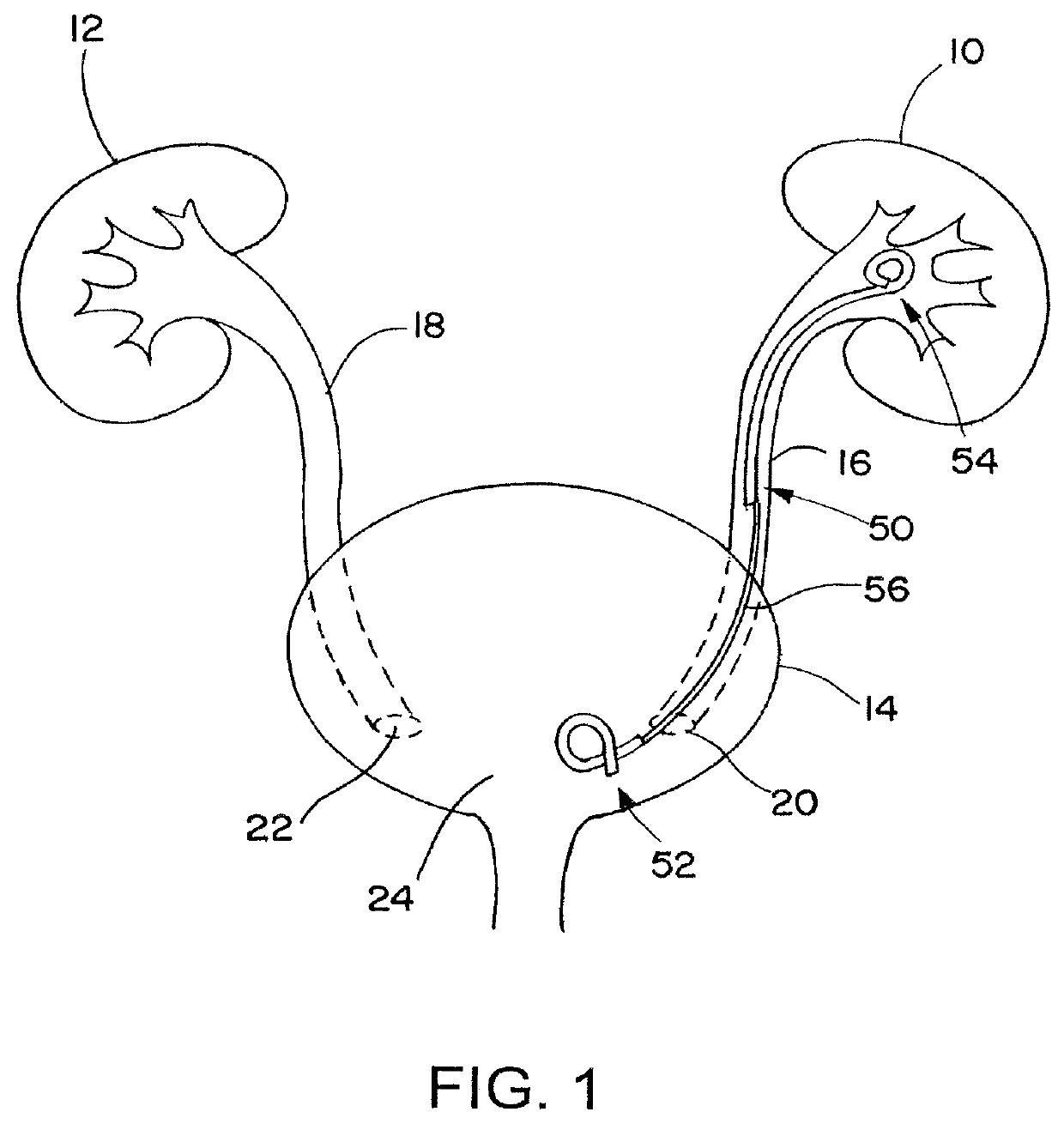
Figure 1 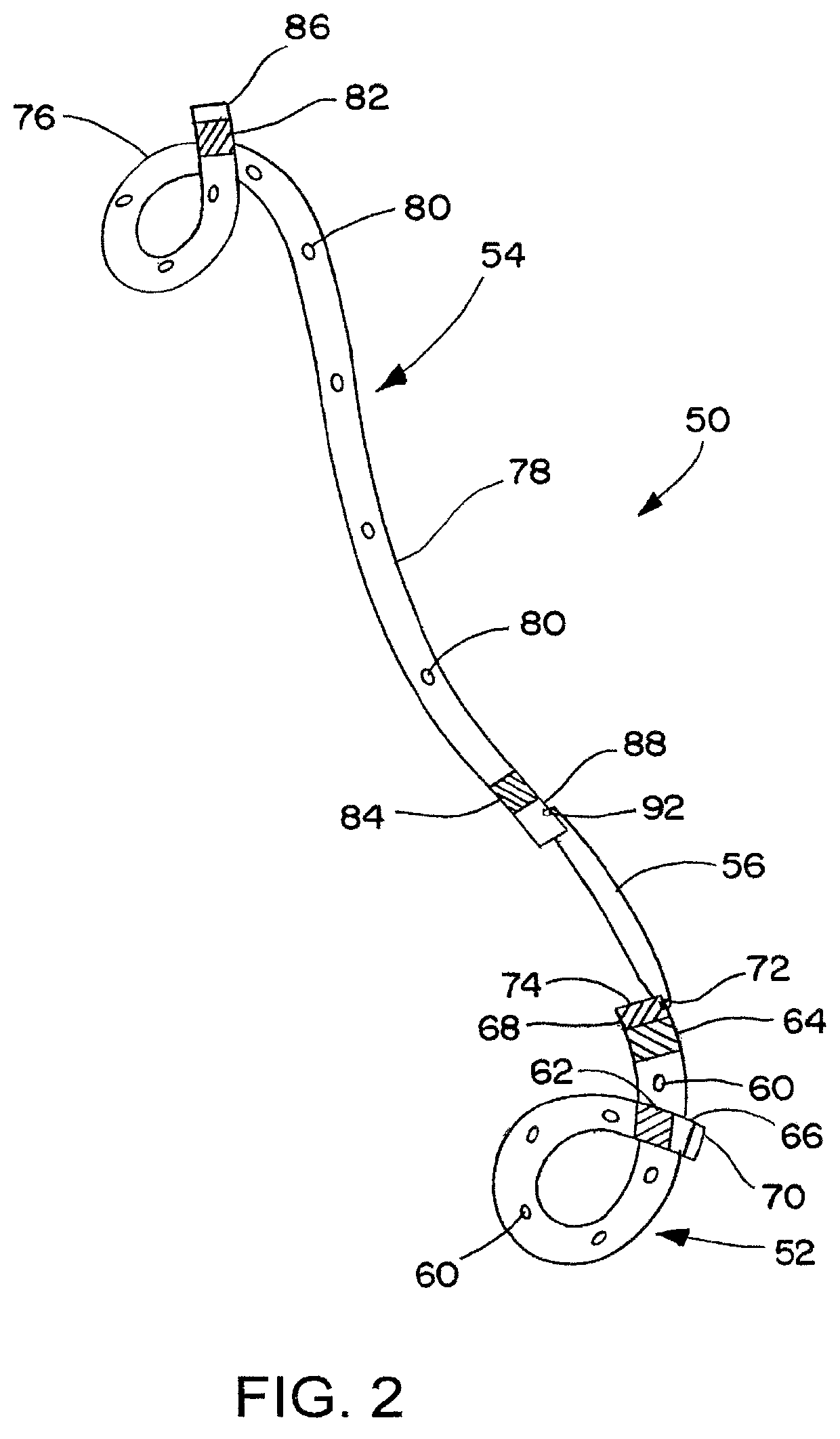
Figure 2 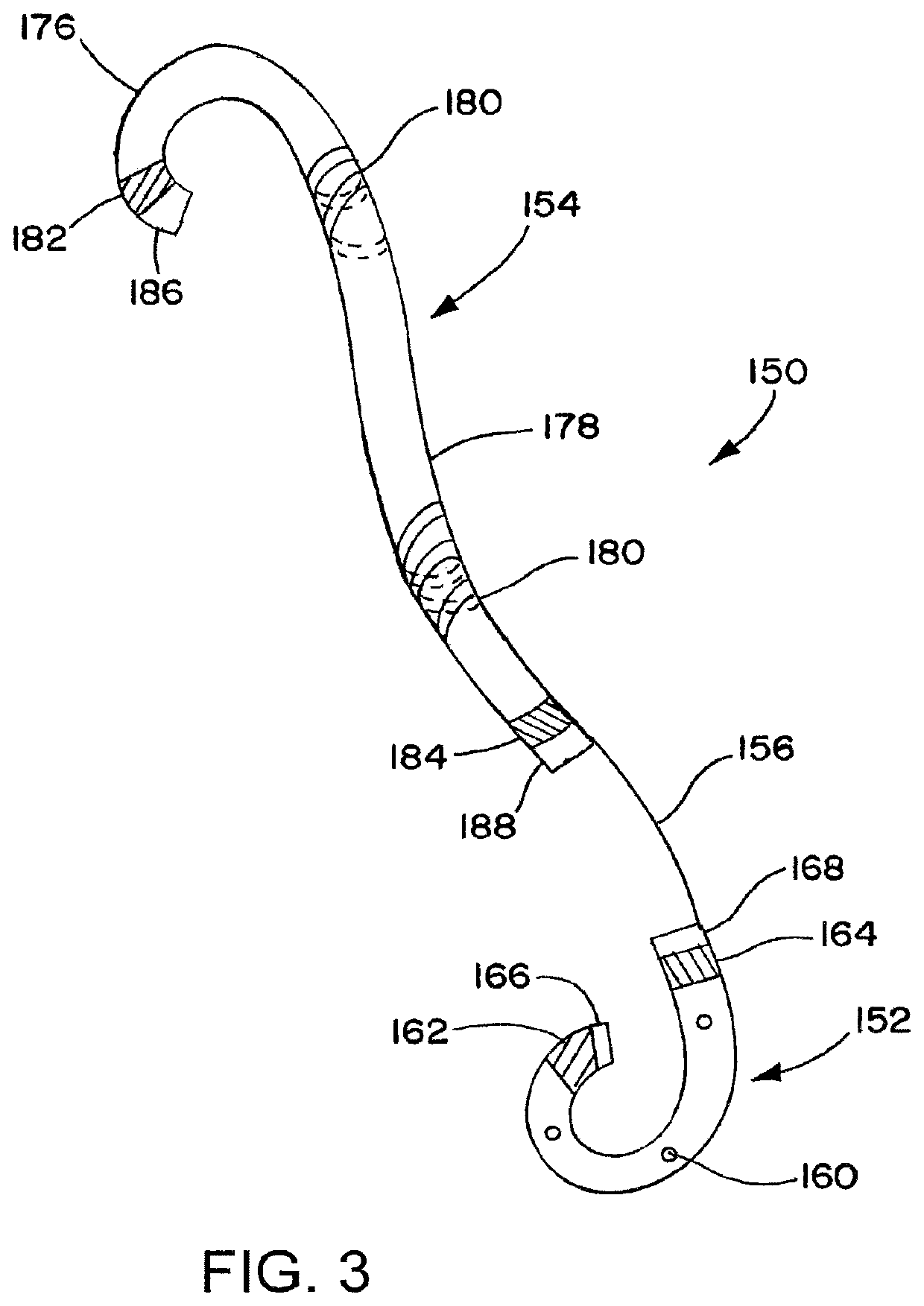
Figure 3
Abstract
Description
RELATED APPLICATIONS
[0001] This application is a continuation-in-part of International Application No. PCT / US2016 / 031104 filed May 6, 2016, which is hereby incorporated herein by reference.FIELD OF INVENTION
[0002] The present invention relates generally to implantable medical devices, and more particularly to stents, such as ureteral stents.BACKGROUND
[0003] The urinary tract has a pair of kidneys that connect to a bladder by ureteral passageways, and a urethra that extends from the bladder to the exterior of a patient. Urine is made by the kidneys, passed through the ureteral passageway, stored in the bladder and ultimately voided from the urethra. A urinary sphincter is positioned around the urethra near the base of the bladder to control the flow of urine from the bladder.
[0004] The ureteral passageways normally allow urine to pass from the kidney to the bladder by peristalsis. When the bladder fills with urine, the bladder compresses a segment of the ureteral passageway that passes t...
Examples
Embodiment Construction
[0047]The principles of the present application have particular application to ureteral stents for unblocking a ureteral passageway and thus will be described below chiefly in this context. It will, of course, be appreciated and also understood that the principles of the application may be useful in other medical applications, such as other stent applications, for example biliary stents.
[0048]Referring now in detail to the drawings and initially to FIG. 1, a pair of kidneys 10 and 12 and a bladder 14 of a patient are shown. The kidneys 10 and 12 are connected to the bladder 14 by respective ureteral passageways 16 and 18. The ureteral passageways 16 and 18 each include a portion extending into the bladder 14 that moves from an uncompressed state to compressed state and in a normal state only allows urine to pass from the kidneys 10 and 12 to the bladder 14 with the help of peristalsis of the ureter. When one of the passageways 16 and 18 becomes blocked, for example by blockage from ...