
Shared home media platform to support multi-user control
a home media platform and multi-user technology, applied in the field of computing, can solve the problems of personal communication devices, lack of general solutions for enabling people with such devices to share, and lack of solutions for more advanced requirements
Patent Information
- Authority / Receiving Office
- US · United States
- Patent Type
- Applications(United States)
- Current Assignee / Owner
- Publication Date
- 2008-07-31
- Estimated Expiration
- Not applicable · inactive patent
Smart Images
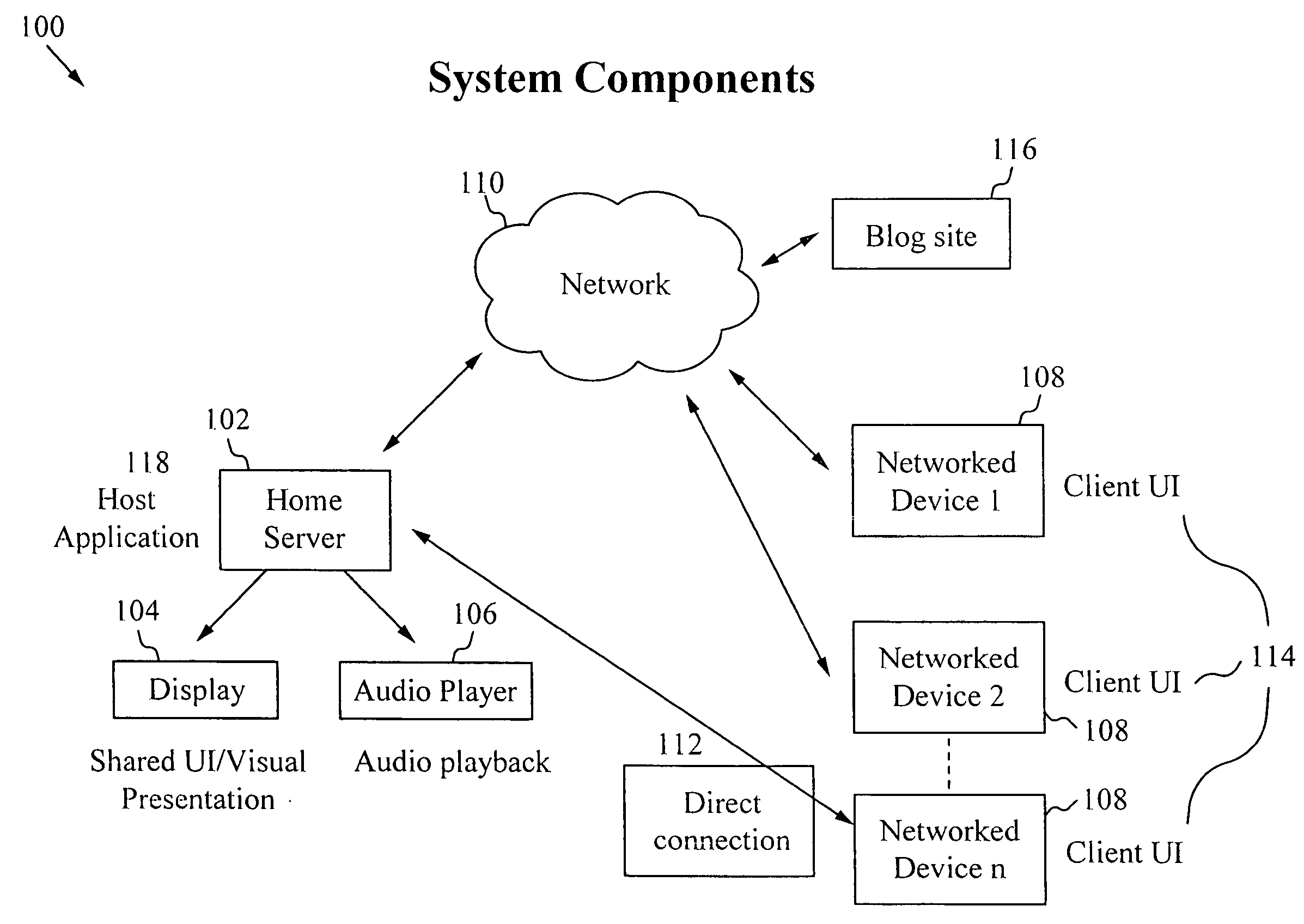
Figure 1 
Figure 2 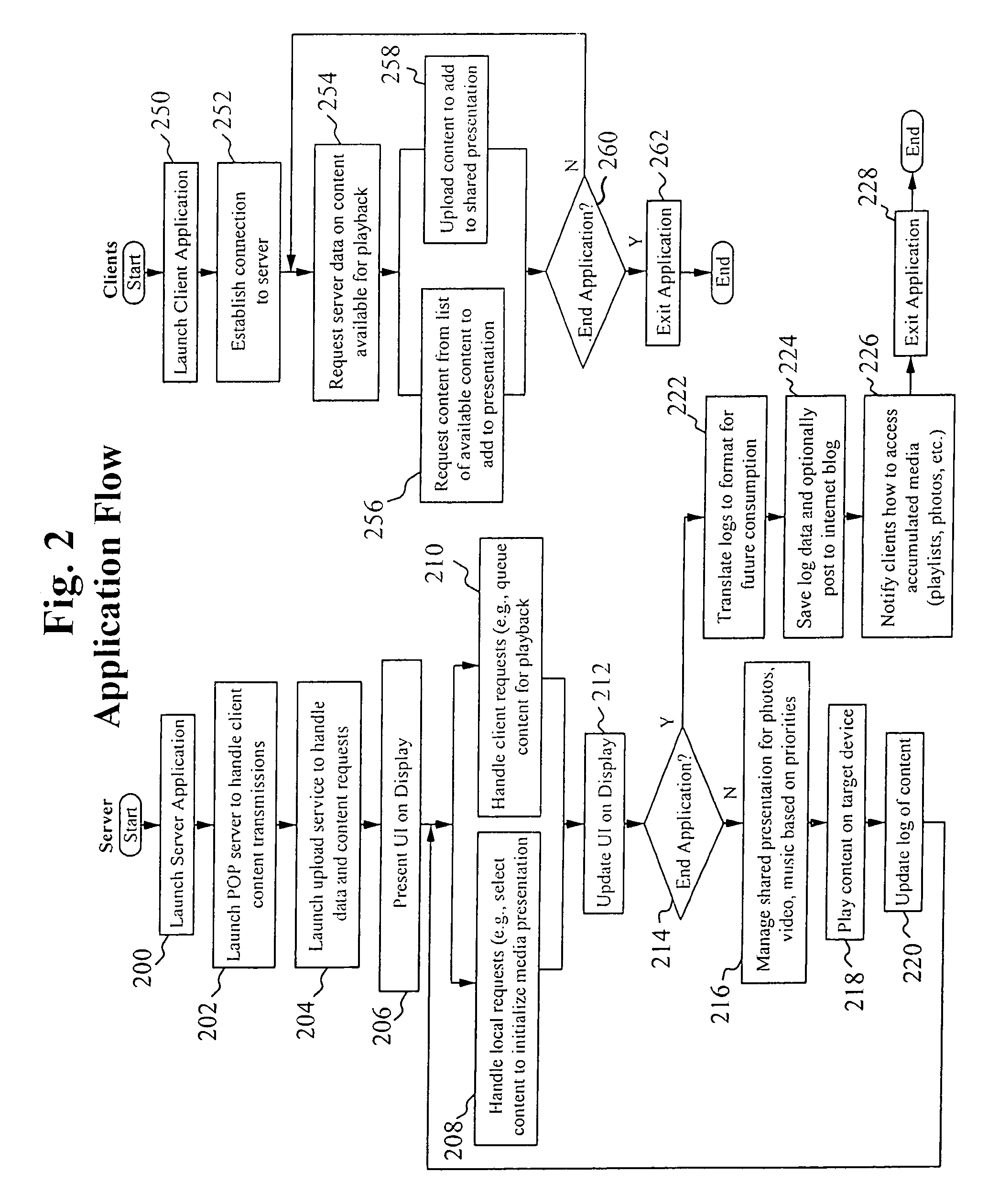
Figure 3
Abstract
Description
FIELD OF THE INVENTION
[0001] The present invention relates to the field of computing. More specifically, the present invention relates to digital media presentation and playback.BACKGROUND OF THE INVENTION
[0002] Most digital media solutions are designed for personal rather than social consumption, yet in many situations, people want to share the media consumption experience. Today's solutions for social consumption are mostly located on devices (e.g. Microsoft Media Center Edition on a PC) that typically are not in physical locations in the home conducive to multi-user consumption. Another approach to sharing content is entirely physical, where people literally pass around small devices with screens, such as cell phones. As better solutions emerge to make that content easily available on large screens such as televisions, people will want to share control of the presentation of content without having to take turns using a single device such as a remote control or an attached PC.
[0003] ...
Examples
Embodiment Construction
[0017]The shared home media platform is a new system in the home for enabling multiple people to share a common application context for media presentation / playback, with the presentation resulting from input from the set of active participants, and blending a set of media types (e.g. music, associated artwork, visualizations, photos and text messages). The participants use their personal devices to couple to the system and control the application. The presentation offers a common view, for instance, on a television screen that the participants are able to view together, as well as output of the complete presentation or of parts (e.g. only the music or the photos) to additional devices like a home audio system or other networked devices, or even the Internet. The application on the client devices that are coupled to the system includes data reflecting the state of the system in the home, providing a common context for the application across the devices. The data includes the status o...