
Allergy Skin Test Devices with Surrounding Pain-Reduction Structures
- Summary
- Abstract
- Description
- Claims
- Application Information
AI Technical Summary
Benefits of technology
Problems solved by technology
Method used
Image

Examples
Embodiment Construction
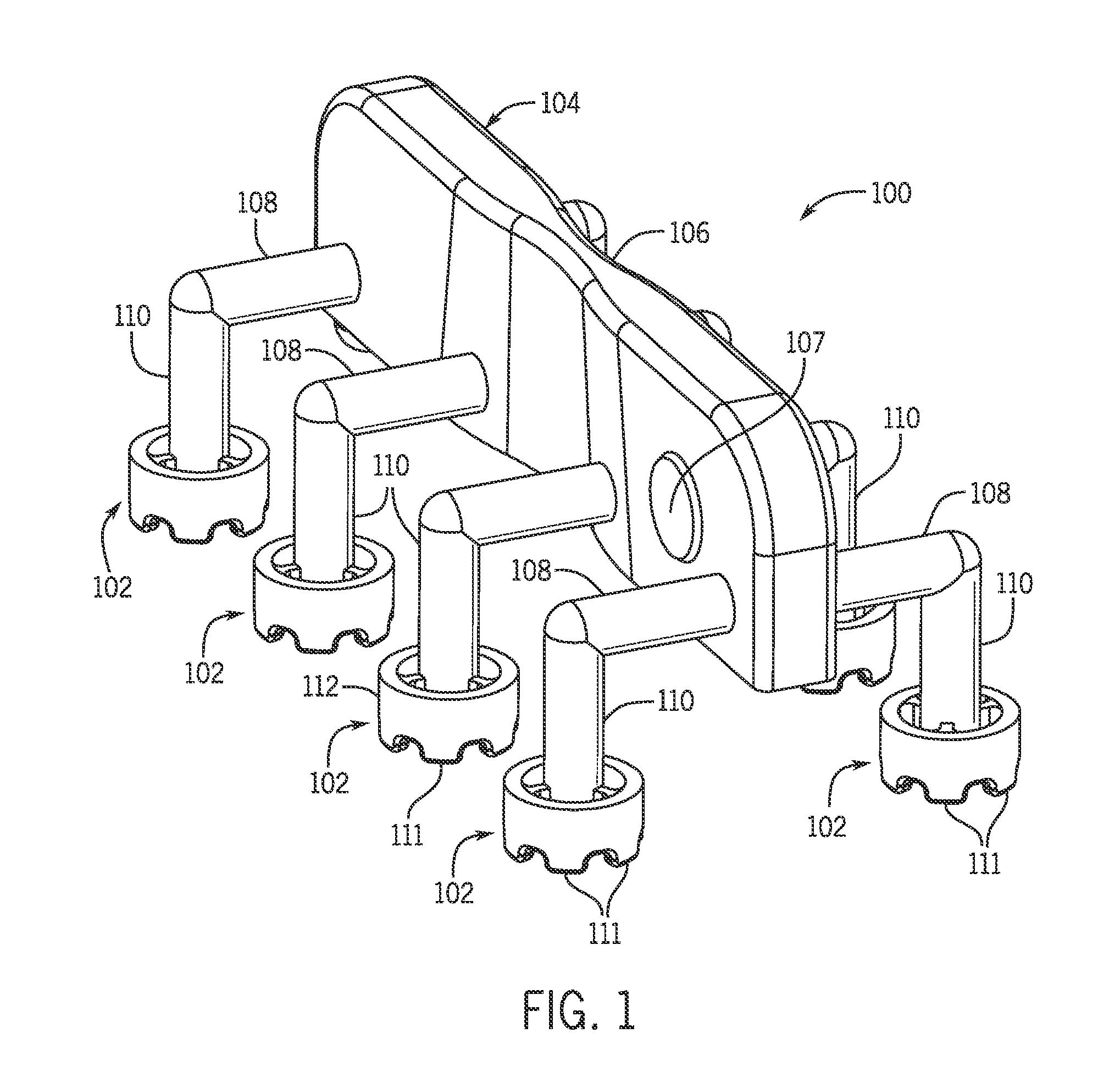
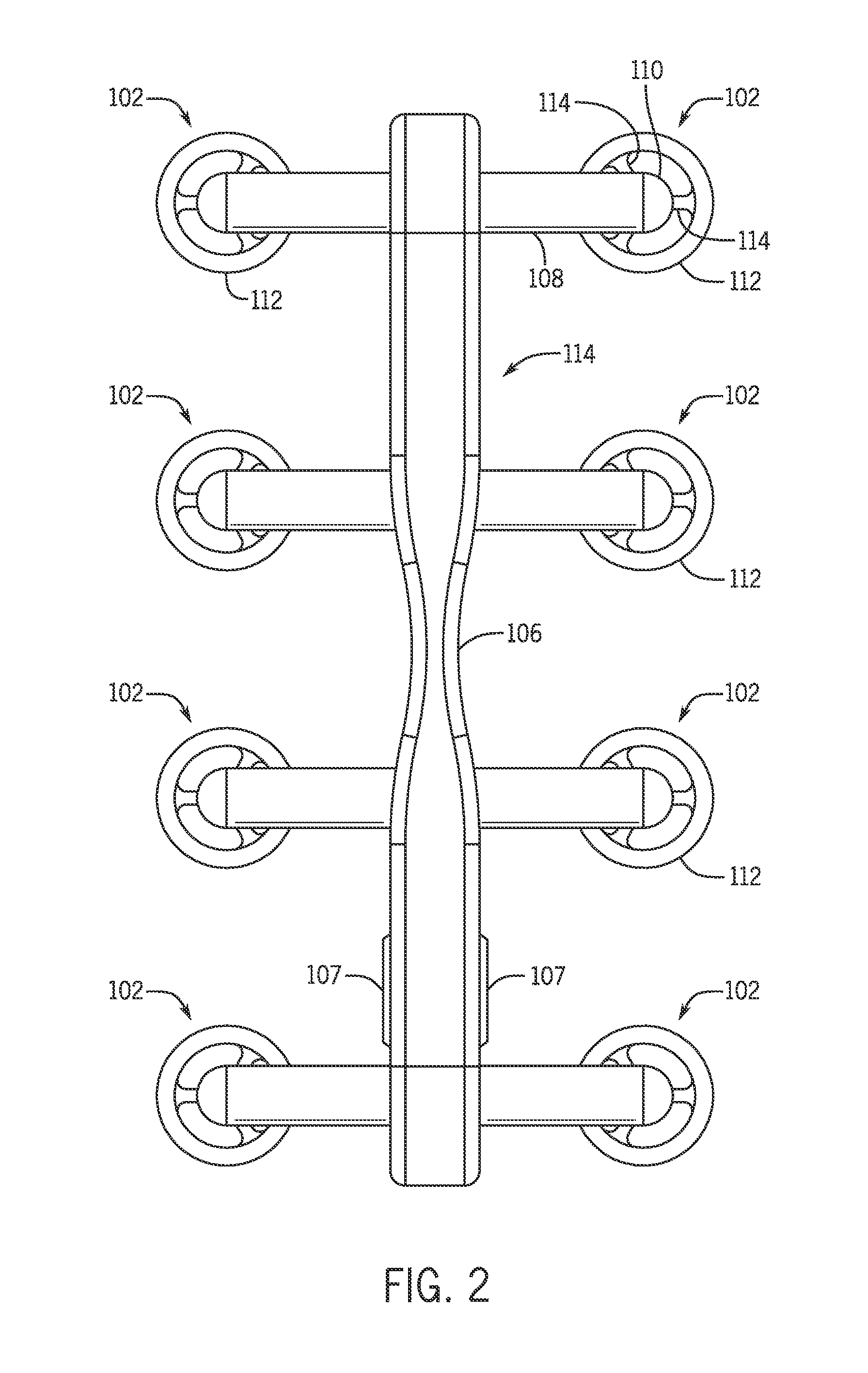
[0081]With reference to FIG. 1, a multiple allergy skin test device 100 of the invention is shown. This device 100 has eight test heads 102, for example. Other embodiments of such “multi-test” devices could have 2, 3, 4, 5, 6, 7, 9, or 10 test heads, for example. Or, a single test head projecting from the end of a suitable handle can be used (see, for example, FIG. 40).
[0082]The device 100 has a body 104, which has a gripping portion 106. The gripping portion is shown as a narrowing of the body 104. In other embodiments, the gripping portion can have a surface texture that enhances gripping, such as a stipple pattern, or a ridged pattern, for example. The device 100 also can also have an orientation indicator 107 on each side of the body 104, such as the raised circular areas 107. These raised circular areas 107 can resemble the eyes of a multi-legged animal, which can make the device more friendly for use with children.
[0083]The device also has one leg per test head 102, and so in ...
PUM
 Login to View More
 Abstract
Description
Claims
Application Information
 Login to View More