
Method and apparatus for enhancing electronic reading by identifying relationships between sections of electronic text
a technology of electronic text and relationships, applied in the field of information processing and display by computers, human-machine interfaces for computers, etc., can solve the problems of not being able to automatically identify, not being able to search, not being able to achieve automatic identification, etc., to achieve enhanced functionality and flexibility
Patent Information
- Authority / Receiving Office
- US · United States
- Patent Type
- Patents(United States)
- Current Assignee / Owner
- Publication Date
- 2014-11-04
- Estimated Expiration
- Not applicable · inactive patent
Smart Images
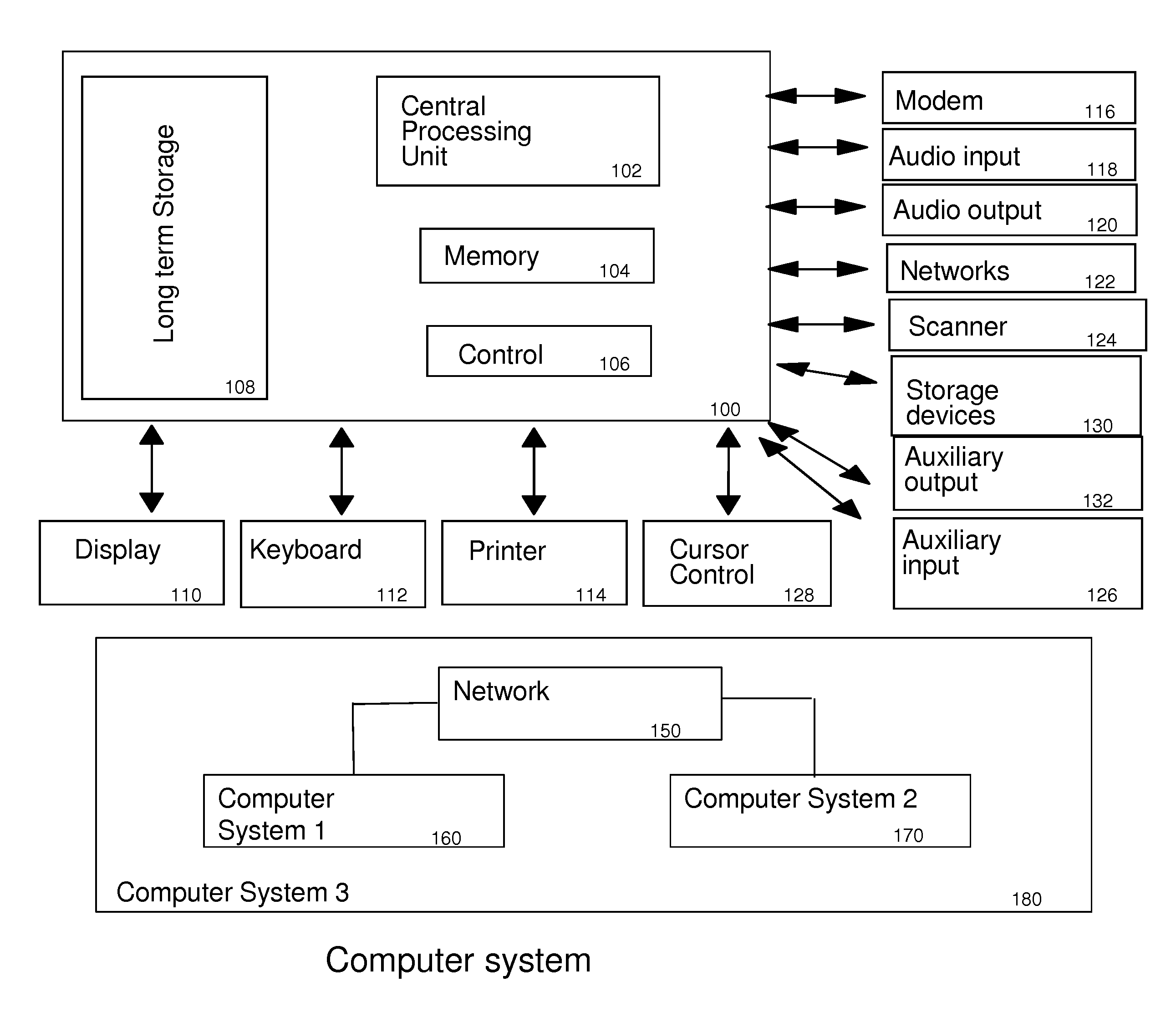
Figure 1 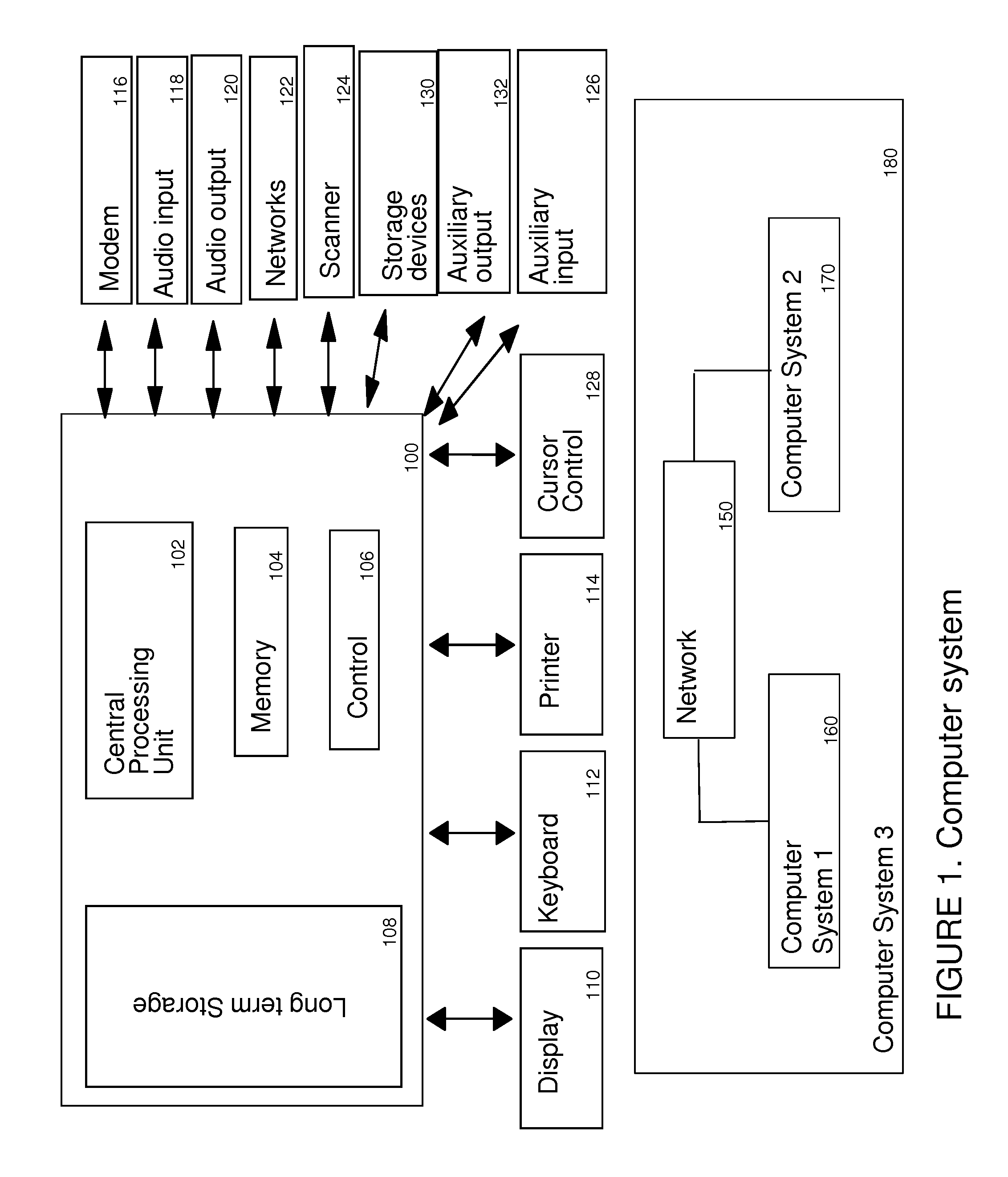
Figure 2 
Figure 3
Abstract
Description
RELATED APPLICATIONS
[0001] This application is a continuation of application Ser. No. 13 / 154,393, filed Jun. 6, 2011 is now U.S. Pat. No. 8,275,776, which was a continuation of application Ser. No. 12 / 422,981, filed Apr. 13, 2009, now U.S. Pat. No. 7,958,138, which was a continuation of application Ser. No. 11 / 554,570, filed Oct. 30, 2006, now U.S. Pat. No. 7,526,477, which was a continuation of application Ser. No. 09 / 524,590, filed Mar. 14, 2000, now U.S. Pat. No. 7,143,348, which was a continuation-in-part of application Ser. No. 09 / 015,660, filed Jan. 29, 1998, which was based on and claimed priority to Provisional Application No. 60 / 036,305 filed Jan. 29, 1997.BACKGROUND OF THE INVENTION
[0002] This invention relates generally to the fields of information processing and display by computers, and human-machine interfaces for computers, and more particularly to a computer-implemented method for detecting relationships within one or more electronic texts and presenting those relation...
Examples
Embodiment Construction
[0047]Reference will now be made in detail to the present preferred embodiments of the invention, examples of which are illustrated in the accompanying drawings. The steps required to practice this invention are readily accomplished by a person of ordinary skill in the art of computer programming, with reference to this description and the accompanying drawings.
[0048]The invention is described in the context of a computer system (100), as pictured in FIG. 1, which consists of at least one Central Processing Unit (102), memory (104, which may be random-access or read only memory), a Control function (106), and optionally random access long-term storage such as a hard disk or other disk drives (108). In addition, such systems may contain additional means for input such as storage devices (130), a keyboard (112), one or more cursor control devices (128), auxiliary input (126), scanners (124), audio input such as a microphone (118), for output such as storage devices (130), amplified lo...