
Projector with enhanced security camcorder defeat
一种放映机、便携式的技术,应用在放映设备领域,能够解决恶化观看图像非法拷贝、恶化预定观众观看感受、不会提供电影识别等问题
Patent Information
- Authority / Receiving Office
- CN · China
- Patent Type
- Patents(China)
- Current Assignee / Owner
- Publication Date
- 2008-10-15
- Estimated Expiration
- Not applicable · inactive patent
Smart Images
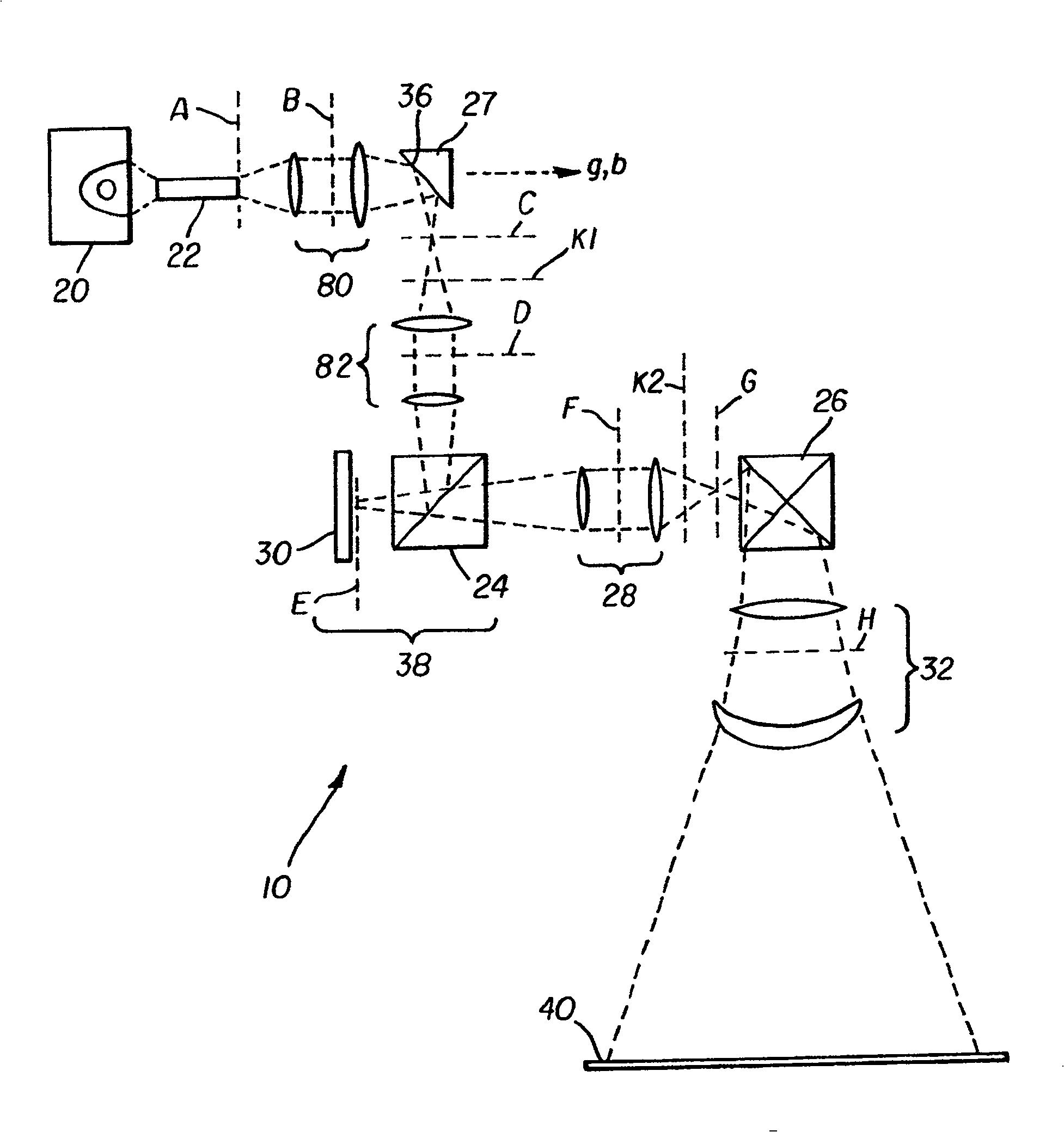
Figure 1 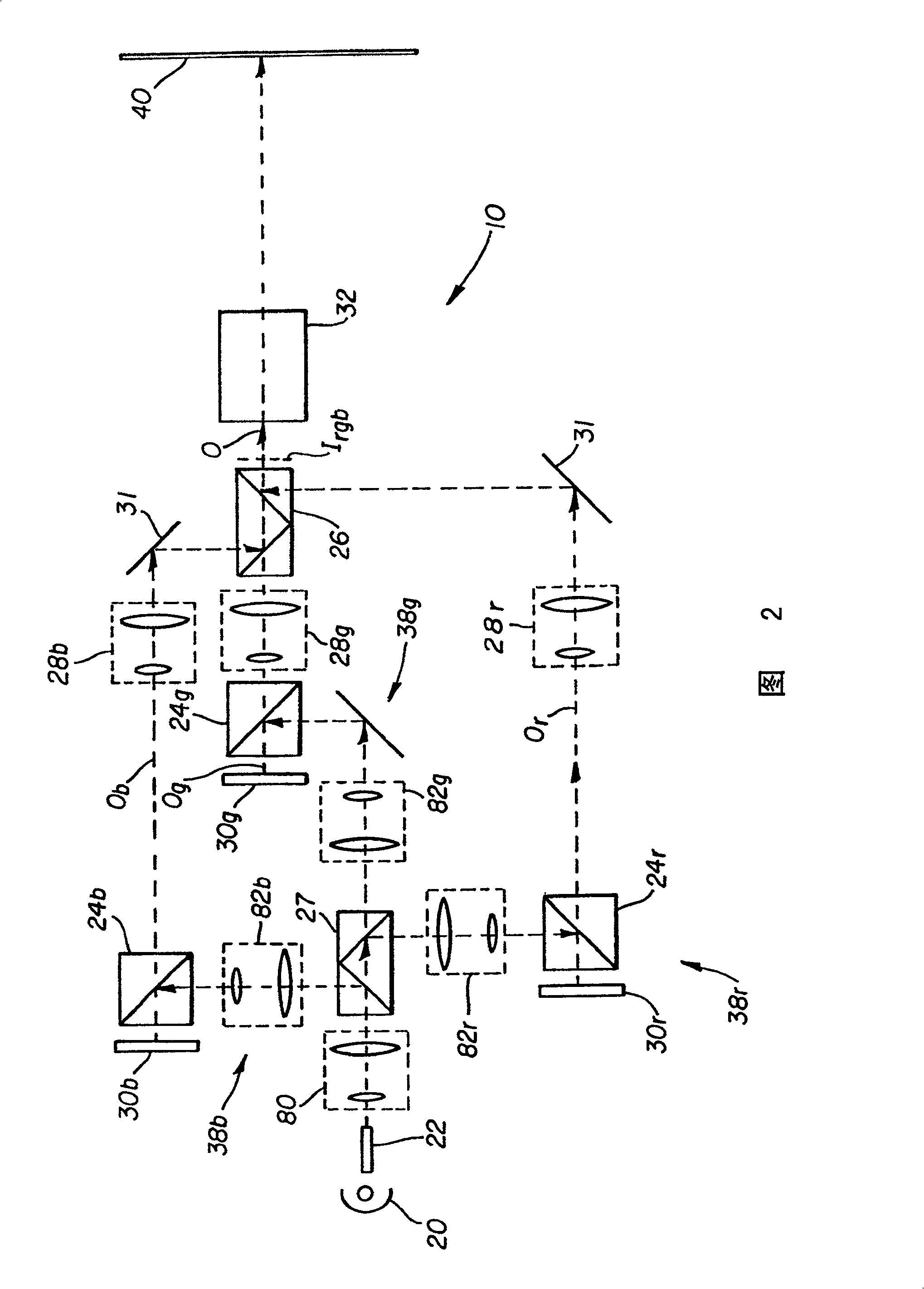
Figure 2 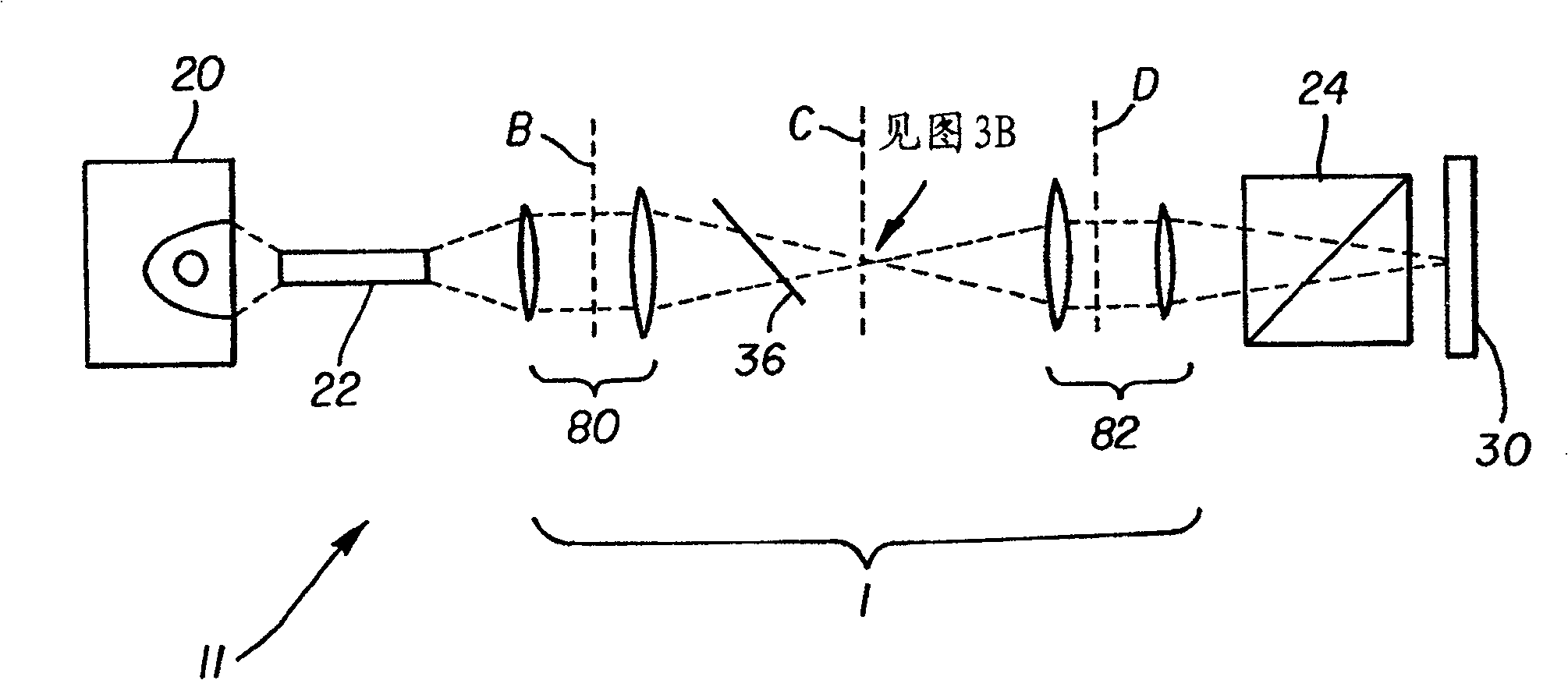
Figure 3
Abstract
Description
technical field
[0001] The present invention relates generally to a projection apparatus that utilizes a spatial light modulator to form a color image from digital data, and more particularly to the anti-counterfeiting capability that the projection apparatus enables to achieve while maintaining the source illumination and the telecentric optical path of the modulated light . Background technique
[0002] In order to be considered a suitable replacement for conventional film projectors, a digital projection system must meet the required requirements with respect to image quality. This is especially true for multicolor film projection systems. In order to provide a competing alternative to conventional film-quality projection , digital projectors must meet high performance standards to provide high resolution, wide color gamut, high brightness, and a contrast ratio of more than 1000:1 frame-to-plane sequence. In addition to these requirements, some steps need to be taken to e...
Examples
Embodiment Construction
[0042] This description is particularly aimed at components forming part of, or more directly cooperating with, the device according to the invention. It is to be understood that components not specifically shown or described may take the form known to those skilled in the art. form.
[0043] Studies have shown that the sensitivity of the human visual system to sinusoidal intensity oscillations decreases dramatically at higher temporal frequencies. See Kelly, D.H., "Visual Responses to Time-Dependent Stimuli: Measures of Amplitude Sensitivity", Journal of the Optical Society of America, Vol. 51, No. 4 , pp. 422; and Kelly, D.H., "Visual Responses to Time-Dependent Stimuli: III Specific Variations," Journal of the Optical Society of America, Vol. The range of -30 cycles / second is the largest, it drops rapidly above 30 cycles / second, and continues to decline with the increase of time frequency. For the time frequency above the cut-off frequency, there is basically no feeling of ...