
Regulation based dynamic service triggering method for IMS network
A business and rule technology, applied in the field of communication, can solve problems such as reducing IMS network service quality, reducing system throughput, increasing end-to-end session establishment delay, etc.
Patent Information
- Authority / Receiving Office
- CN · China
- Patent Type
- Patents(China)
- Current Assignee / Owner
- Publication Date
- 2010-12-15
- Estimated Expiration
- Not applicable · inactive patent
Smart Images
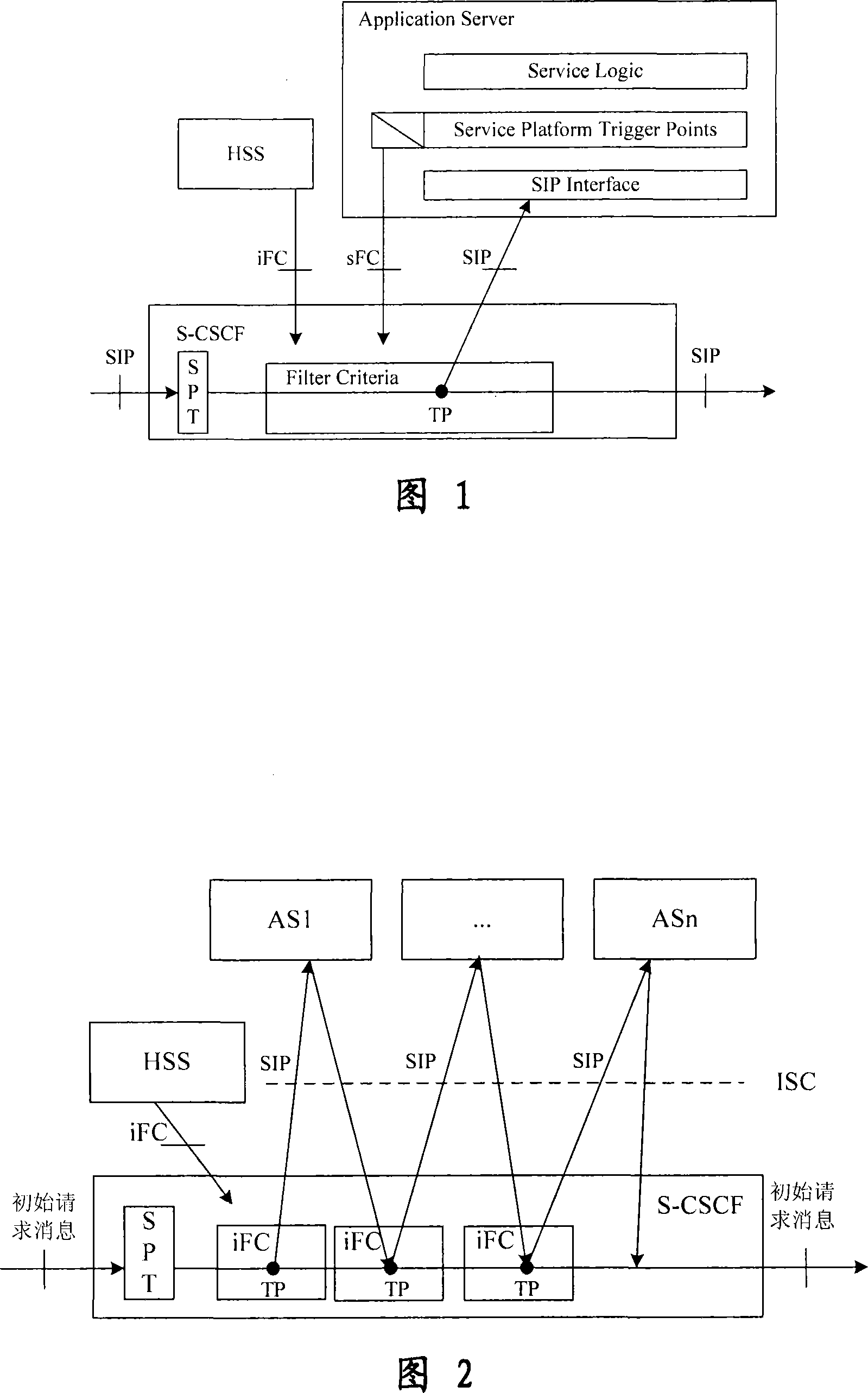
Figure 1 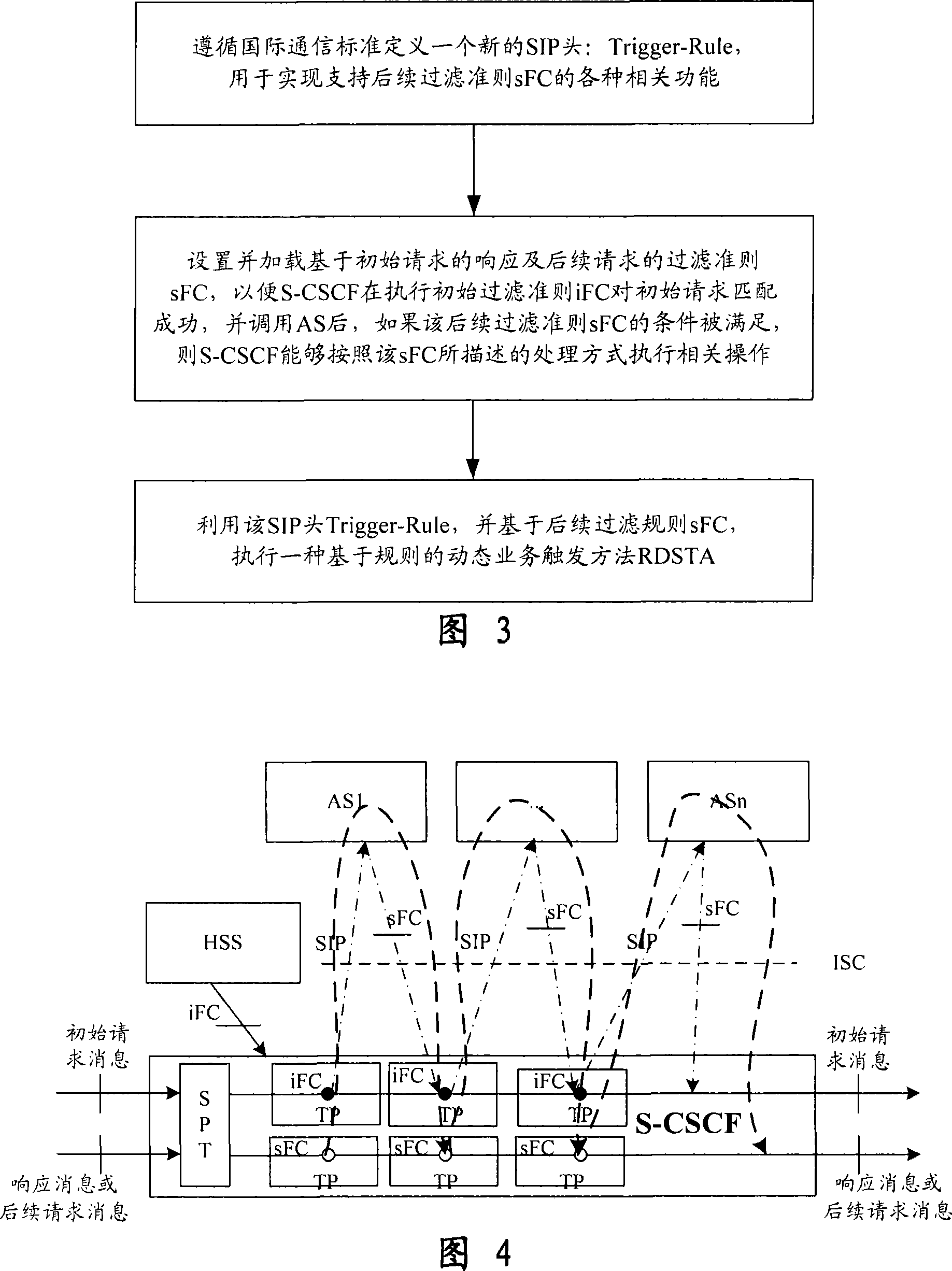
Figure 2 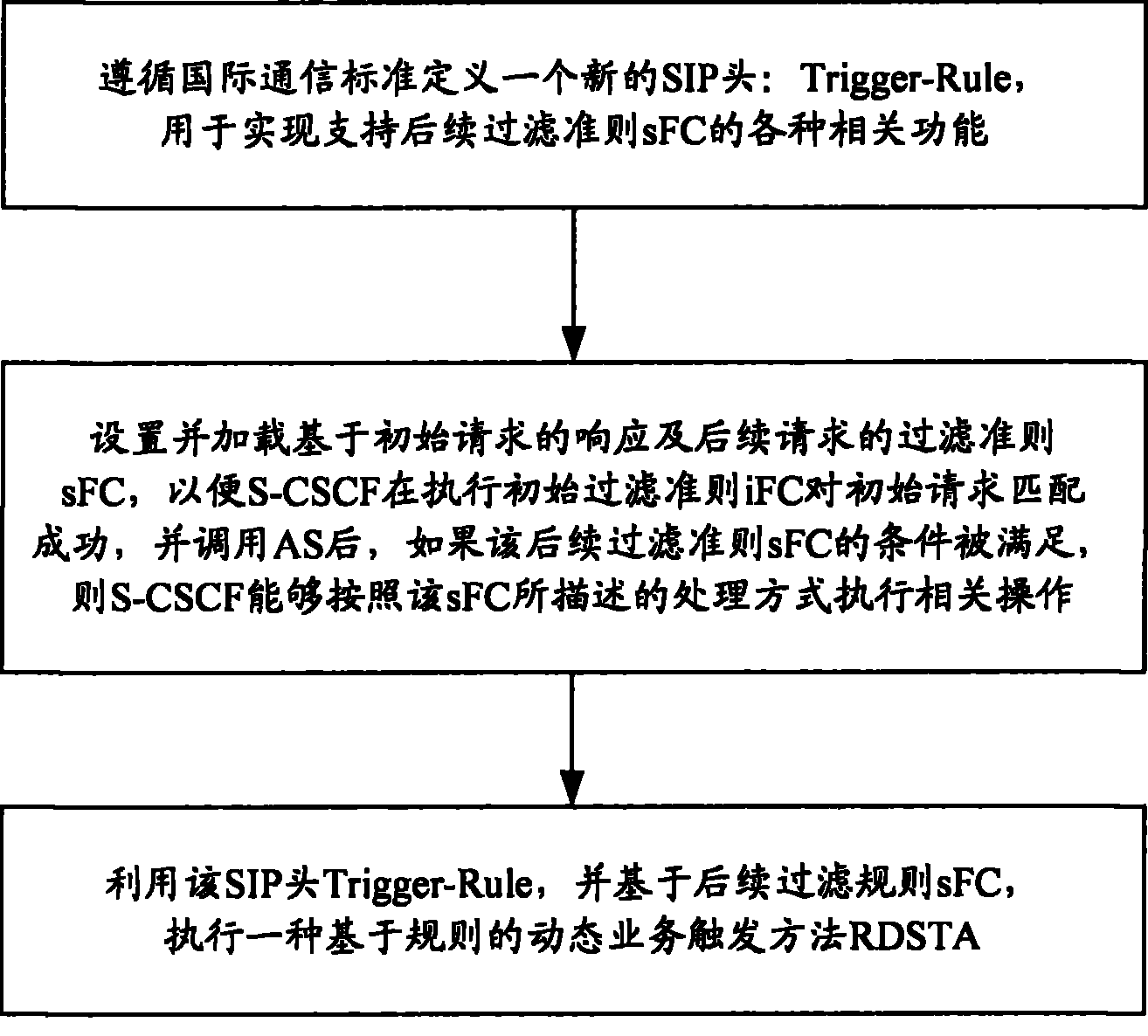
Figure 3
Abstract
Description
technical field
[0001] The invention relates to a rule-based dynamic service triggering method for an IMS network, belonging to the technical field of communication. Background technique
[0002] The IP Multimedia Subsystem IMS (IP Multimedia Subsystem) is a new core network domain of an all-IP architecture proposed by the 3GPP (3rd Generation Partnership Project). The difference between the IMS service provision method and the traditional public switched telephone network PSTN (Public Switched Telephone Network) and the public land mobile network PLMN circuit domain service provision method is that in the IMS network, the control layer and the service layer are completely separated, and the control layer It does not provide services, it only provides the necessary triggering, routing, billing and other functions of the business layer, and the business is completely provided by the business layer. In the IMS network, the home network provides service execution, that is, whe...
Examples
Embodiment Construction
[0056] In order to make the object, technical solution and advantages of the present invention clearer, the present invention will be further described in detail below in conjunction with the accompanying drawings.
[0057] see image 3 , introducing three operation steps of a rule-based dynamic service triggering method for an IMS network of the present invention:
[0058] (1) Follow the RFC 3261 international standard to define a new SIP header. The name of the SIP header is: Trigger-Rule, which is used to implement various related functions that support subsequent filtering criteria sFC;
[0059] (2) Set and load the filtering criterion sFC based on the response of the initial request and subsequent requests, so that after the serving S-CSCF of the home network executes the initial request successfully matching the initial filtering criterion iFC and invokes the application server AS, if the subsequent If the condition of the filter criterion sFC is met, the S-CSCF can per...