
Method and device for preventing interrupt of traffics in aggregation link
A technology for link aggregation and traffic interruption, applied in the field of communication, can solve problems such as traffic loss, achieve good load sharing, ensure uninterrupted forwarding, and realize the effect of load sharing
Patent Information
- Authority / Receiving Office
- CN · China
- Patent Type
- Patents(China)
- Current Assignee / Owner
- Publication Date
- 2011-11-16
Smart Images
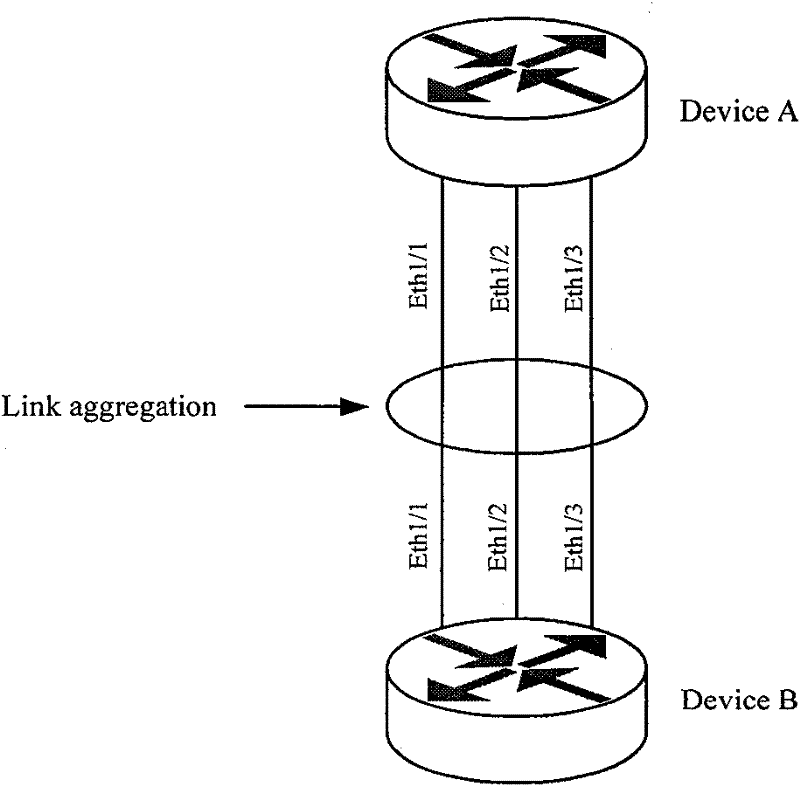
Figure 1 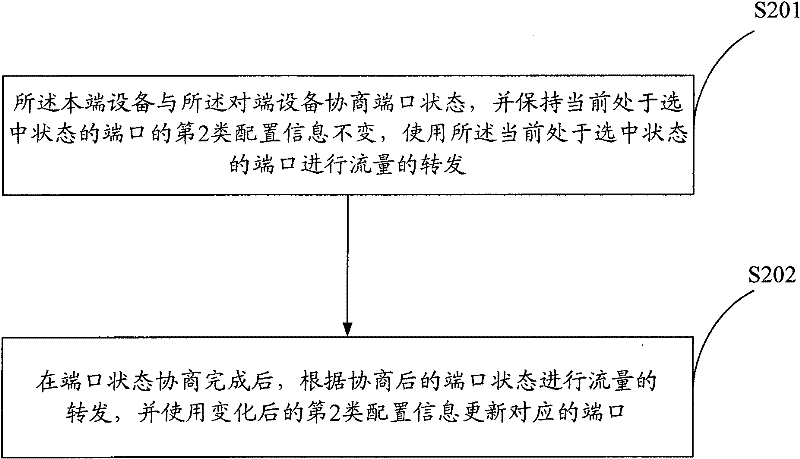
Figure 2 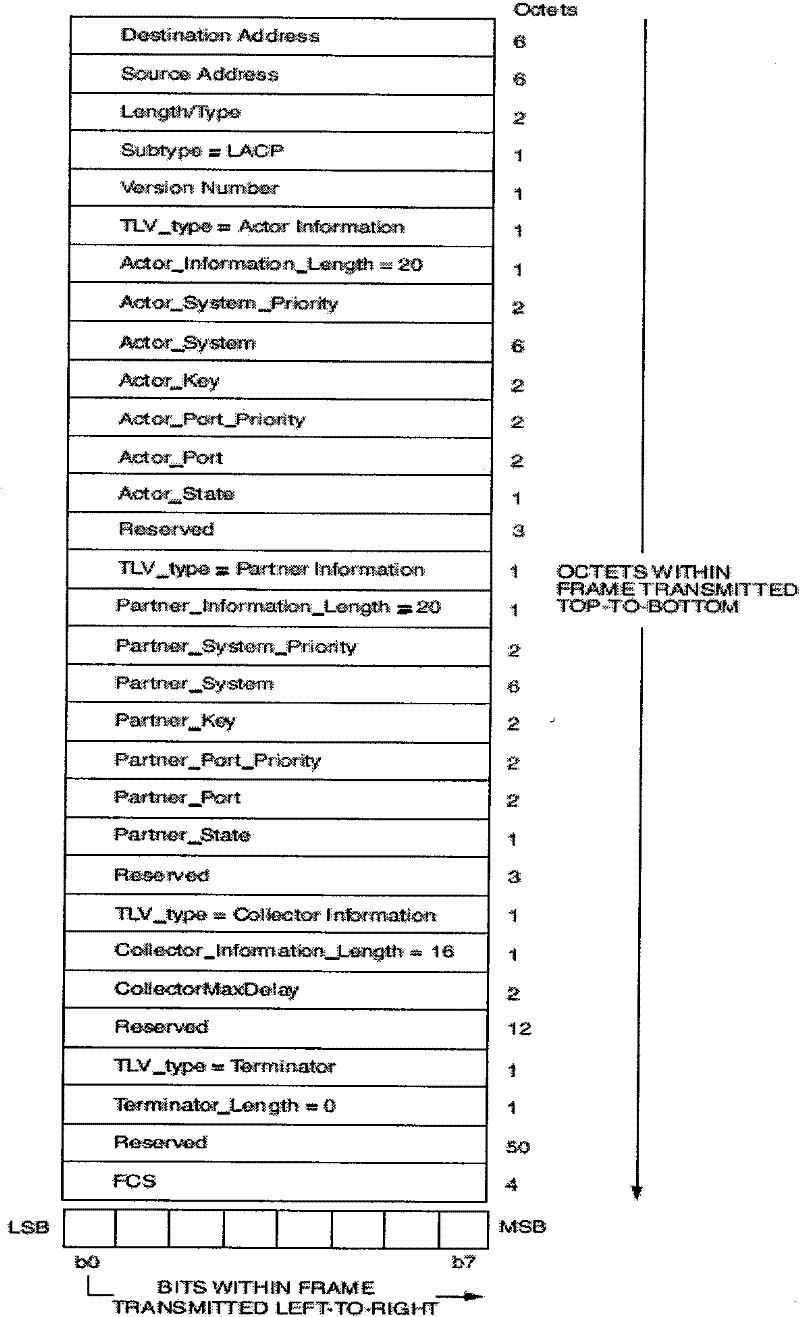
Figure 3
Abstract
Description
technical field
[0001] The invention relates to the field of communication technologies, in particular to a method and device for preventing traffic interruption in aggregation links. Background technique
[0002] Aggregation link is to aggregate multiple physical Ethernet ports together to form a logical aggregation group. The upper layer entity using the aggregation link service regards multiple physical links in the same aggregation group as a logical link. Among them, the aggregation link can realize the load sharing between the member ports in the aggregation group to increase the bandwidth; at the same time, the member ports of the same aggregation group are dynamically backed up with each other, which improves the connection reliability.
[0003] Specifically, the aggregated link is implemented based on LACP (Link Aggregation Control Protocol, Link Aggregation Control Protocol), which is a protocol for realizing link dynamic aggregation and de-aggregation, and through...
Examples
Embodiment Construction
[0050] The basic idea of the present invention is that when the second type configuration information of the port in the selected state changes, the second type configuration information is not immediately updated to the selected port, but the second type configuration information is temporarily saved, and Enter the transfer state, in the transfer state, because the second type configuration information of the selected port has not been updated, the selected port can be used to continue forwarding data. When the type 2 configuration information changes, the local device and the peer device will negotiate to obtain the port status again. After the acquisition is completed, they will exit the transit state. At this time, data can be forwarded according to the new port state. The type 2 configuration information of the port has changed. In the reacquired port state, the selected port will no longer be the selected port, and there is no need to use this port for data forwarding, ...