
Self-adaptive home base station power control method
A home base station, power control technology, applied in power management, wireless communication, electrical components and other directions, can solve the performance limitations of micro cells, difficult to adapt to the requirements of interference suppression, can not give full play to HeNB and other problems
Patent Information
- Authority / Receiving Office
- CN · China
- Patent Type
- Patents(China)
- Current Assignee / Owner
- Publication Date
- 2015-05-27
- Estimated Expiration
- Not applicable · inactive patent
Smart Images
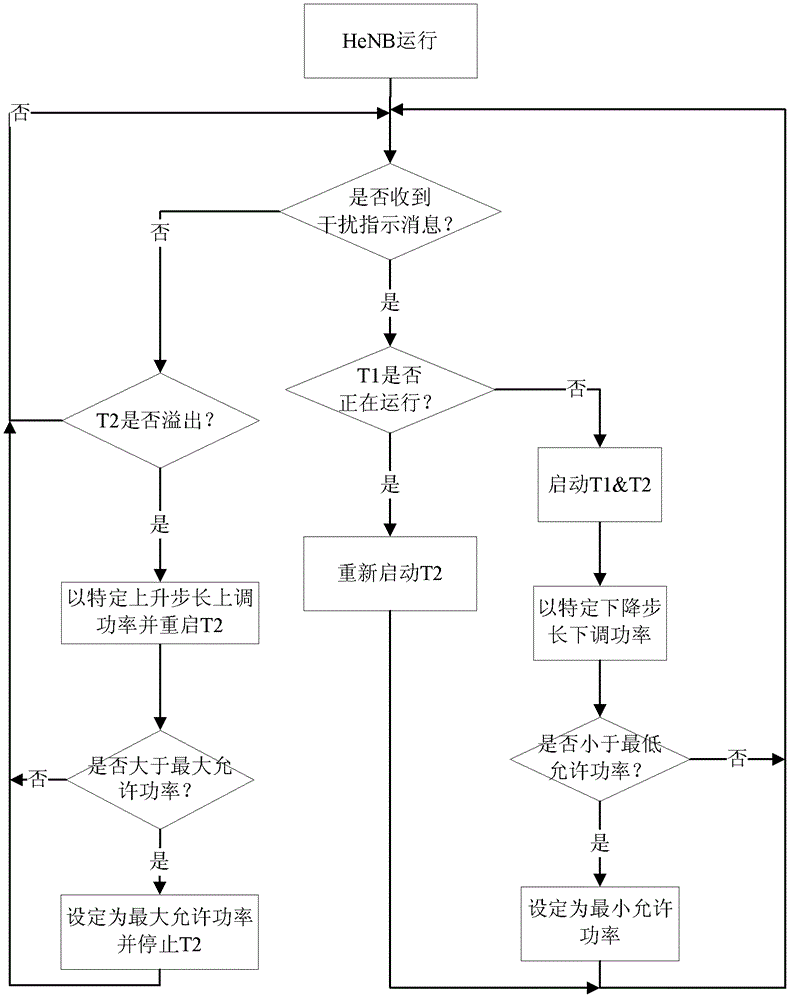
Figure 1 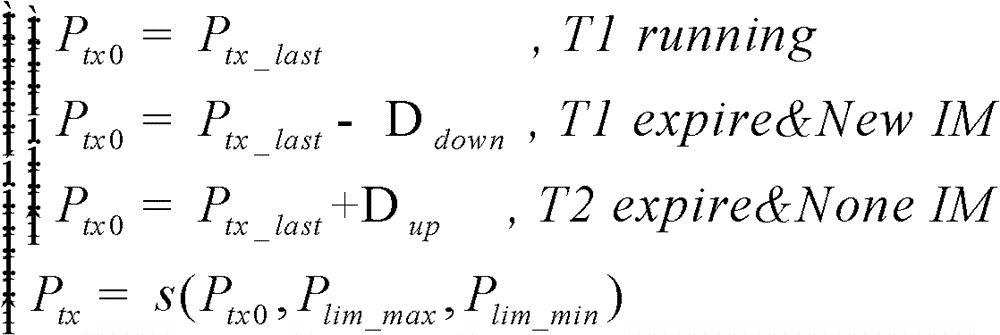
Figure 2
Abstract
Description
technical field
[0001] The invention belongs to the technical field of cross-layer interference suppression in a long-term evolution LTE heterogeneous network, and in particular relates to a power control method of a HeNB in an LTE network. Background technique
[0002] ITU has identified LTE-Advanced (including TD-LTE-Advanced) and 802.16m as the new generation of mobile communications (4G) international standards. As an evolution of LTE, LTE-Advanced allows operators to use new and wider frequency spectrum, providing higher data rate than 3G network, lower delay and flat IP architecture network. In order to further improve system performance at a lower cost, 3GPP has been committed to making improvements in various aspects within the LTE-Advanced framework, including higher-order MIMO technology, carrier aggregation technology and heterogeneous networks. Because in the enhanced 3G version and LTE network, the performance of the wireless link is already close to its theo...
Examples
Embodiment Construction
[0012] Adaptive HeNB power control includes the following steps:
[0013] Step 1: After the HeNB is turned on, determine the maximum allowable transmit power and the minimum allowable transmit power, and use the maximum allowable transmit power to configure the initial transmit power;
[0014] Step 2: HeNB identifies whether the interference indication message has been received. The reception of the interference message can be realized by identifying the interference registration request sent by the interfered non-CSG UE or the uplink interference measurement information. If yes, go to step 2; if not, go to step 4;
[0015] Step 3: When the HeNB receives the interference indication message, it judges whether the timer T1 is running. If so, the HeNB maintains the current transmission power and restarts the timer T2; otherwise, the power is lowered by a specific step size Δ on the existing basis. down dB, restart timers T1 and T2, when the adjusted power is less than the minimu...