
A Semi-Supervised Method for Decomposing Variable Factors of Speech Features
A speech feature and semi-supervised technology, applied in the direction of instruments, character and pattern recognition, computer components, etc., can solve the problems of recognition rate impact, difficult to distinguish, poor recognition effect, etc., to avoid mutual interference and improve recognition accuracy Effect
Patent Information
- Authority / Receiving Office
- CN · China
- Patent Type
- Patents(China)
- Current Assignee / Owner
- Publication Date
- 2017-02-15
Smart Images
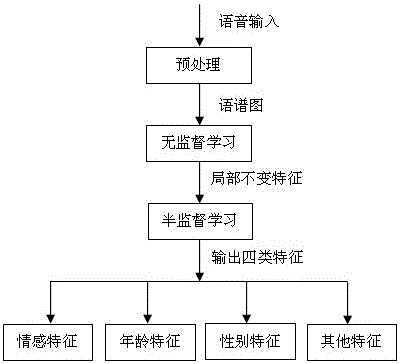
Figure 1 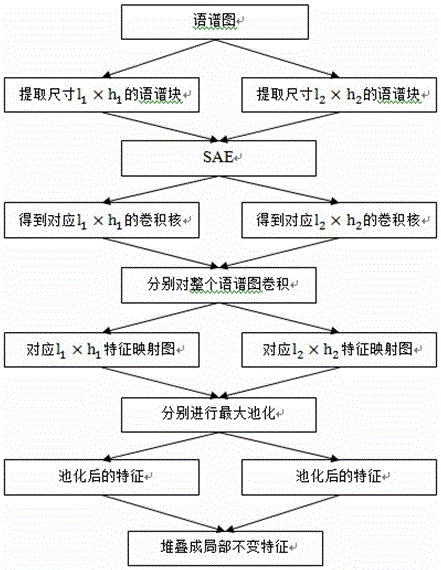
Figure 2 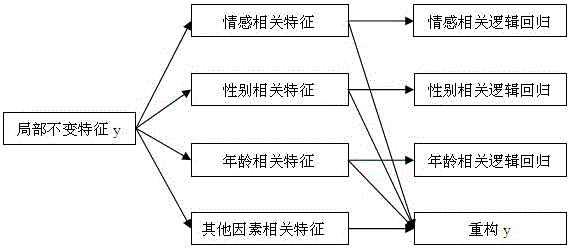
Figure 3
Abstract
Description
technical field
[0001] The invention belongs to the field of speech recognition, and in particular relates to a method for decomposing speech features. Background technique
[0002] As computers penetrate into every corner of life, various types of computing platforms need easier input media, and voice is one of the best choices for users. Generally speaking, speech includes various information such as the speaker, the content of the speech, the emotion of the speaker, gender, age, etc. In recent years, with the continuous improvement of some applications, the development of speech signal-based recognition technology for human emotions, gender, age, speech content, etc. has been promoted. For example, traditional call centers usually randomly connect waiters to provide customers with telephone consultation, but cannot provide personalized services based on the user's emotion, gender and age, which prompts whether it is possible to judge the customer's emotion through the vo...
Examples
Embodiment Construction
[0015] figure 1 The general idea of the method of the present invention is given. First, the speech is preprocessed to obtain the spectrogram, and the spectrogram blocks of different sizes are input into the unsupervised feature learning network SAE, and the convolution kernels of different sizes are obtained through pre-training, and then after convolution , pooling operation to form a local invariant feature y. y is used as the input of the semi-supervised convolutional neural network, and y is decomposed into four types of features by minimizing four different loss function terms.
[0016] The preprocessed speech signal is divided into l i× h i Spectral blocks of different sizes, i represents the number of spectral blocks, different sizes of spectral blocks are input into the unsupervised feature learning network SAE, pre-trained to obtain convolution kernels of different sizes, and then use convolution kernels of different sizes to compare the entire language Convolve...