
Method for Melting Nickel-Based Alloy in Non-vacuum Induction Furnace
A non-vacuum induction furnace, nickel-based alloy technology, applied in the field of metallurgy, can solve the problems of complex structure, difficult operation, high price, etc., and achieve the effect of improving comprehensive mechanical properties, strong deoxidation and degassing ability, and reducing scrap rate.
Patent Information
- Authority / Receiving Office
- CN · China
- Patent Type
- Patents(China)
- Current Assignee / Owner
- Publication Date
- 2016-08-24
Smart Images
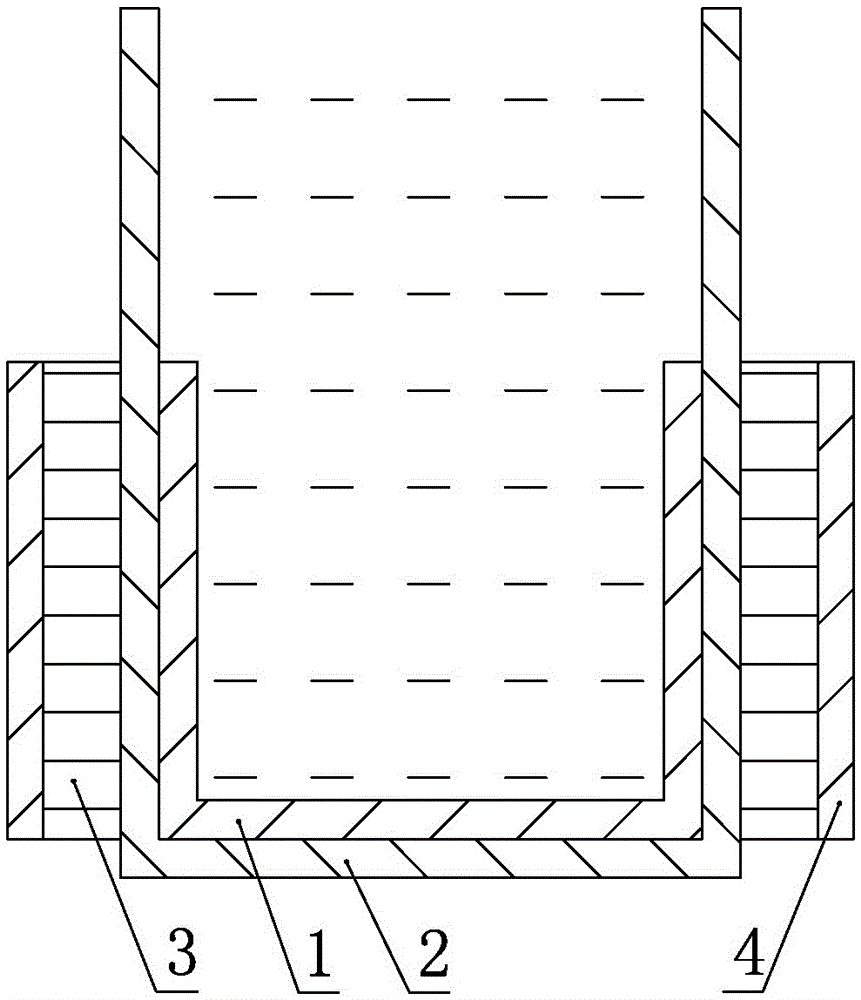
Figure 1
Abstract
Description
technical field
[0001] The invention relates to the technical field of metallurgy, in particular to a method for melting nickel-based alloys in a non-vacuum induction furnace. Background technique
[0002] The intermediate frequency induction furnace belongs to the non-vacuum induction furnace. The intermediate frequency induction furnace is equipped with a furnace for melting materials. The induction coil is wound on the outer wall of the furnace. The material is smelted under the high temperature conditions of the intermediate frequency induction furnace. The molten metal melt after melting It is poured into the mold shell to form the nickel base alloy part. During the smelting process, the molten metal will be oxidized and gettered. Even if a covering agent is used to cover the surface of the molten metal during the smelting process, the oxidation and gettering cannot be well alleviated, which will lead to nickel-based alloys. There are a large number of pores in the par...
Examples
Embodiment 1
[0014] In this embodiment, the material of smelting 95kg is taken as an example for illustration, such as figure 1 As shown, a crucible 1 is set in the furnace 2 of the intermediate frequency induction furnace, the height ratio of the crucible 1 to the height of the furnace 2 is 0.4:1, the induction coil 3 is wound on the outer wall of the furnace 2 and the height of the induction coil 3 is not higher than The height of the crucible 1, the load quality factor of the induction coil 3 is 20, the number of turns of the induction coil 3 is 18 turns, the distance between each turn is 2.9mm, the ratio of the height of the induction coil 3 to the diameter of the induction coil 3 is 1:0.65 , the induction coil 3 is also covered with a crucible cover 4; then 95kg of material to be smelted is put into the crucible 1 for melting, and the liquid level height of the melted molten metal will be higher than the height of the induction coil 3. This implementation In the example, the liquid le...
Embodiment 2
[0016] In this embodiment, smelting 100kg of material is taken as an example for illustration, such as figure 1 As shown, a crucible 1 is set in the furnace 2 of the intermediate frequency induction furnace, the height ratio of the crucible 1 to the height of the furnace 2 is 0.51:1, the induction coil 3 is wound on the outer wall of the furnace 2 and the height of the induction coil 3 is not higher than The height of the crucible 1, the load quality factor of the induction coil 3 is 20, the number of turns of the induction coil 3 is 18 turns, the spacing between each turn is 3mm, the height of the induction coil 3 and the diameter ratio of the induction coil 3 are 1:0.712, The induction coil 3 is also provided with a crucible cover 4; then 100kg of material to be smelted is put into the crucible 1 for melting, and the liquid level height of the melted molten metal is higher than the height of the induction coil 3. In this embodiment, In the process, the liquid level of the me...
Embodiment 3
[0018] In this embodiment, the material of smelting 105kg is taken as an example for illustration, such as figure 1 As shown, a crucible 1 is set in the furnace 2 of the intermediate frequency induction furnace, the height ratio of the crucible 1 to the height of the furnace 2 is 0.6:1, the induction coil 3 is wound on the outer wall of the furnace 2 and the height of the induction coil 3 is not higher than The height of the crucible 1, the load quality factor of the induction coil 3 is 20, the number of turns of the induction coil 3 is 18 turns, the distance between each turn is 3.1mm, and the ratio of the height of the induction coil 3 to the diameter of the induction coil 3 is 1:0.75 , the induction coil 3 is also covered with a crucible cover 4; then 105kg of material to be smelted is put into the crucible 1 for melting, and the liquid level height of the melted molten metal will be higher than the height of the induction coil 3. This implementation In the example, the liq...