
Operating control method based on wall outlet and wall outlet
A technology for controlling signals and information, which is applied to the parts of the connection device, the connection/disconnection of the connection device, and electrical components, etc., which can solve the problems of wasting time and achieve the effects of increasing flexibility, saving time, and saving waiting time
Patent Information
- Authority / Receiving Office
- CN · China
- Current Assignee / Owner
- Publication Date
- 2015-01-21
- Estimated Expiration
- Not applicable · inactive patent
Smart Images
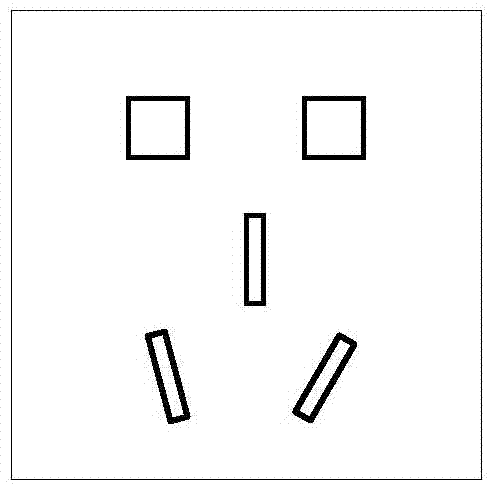
Figure 1 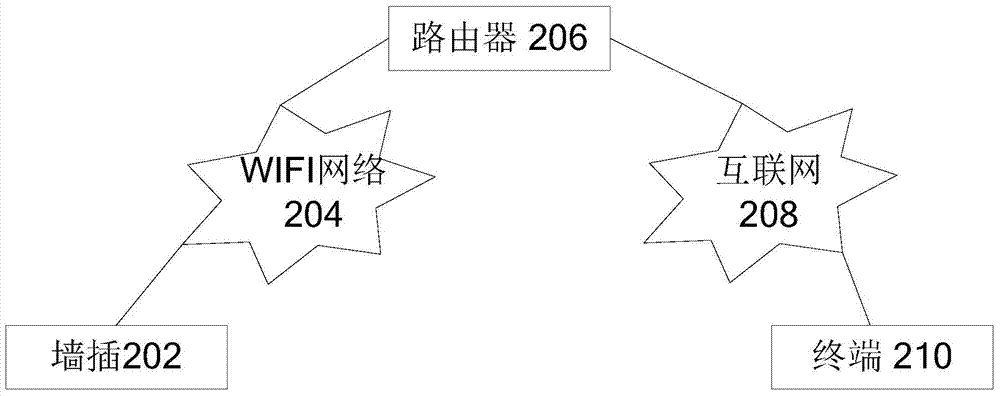
Figure 2 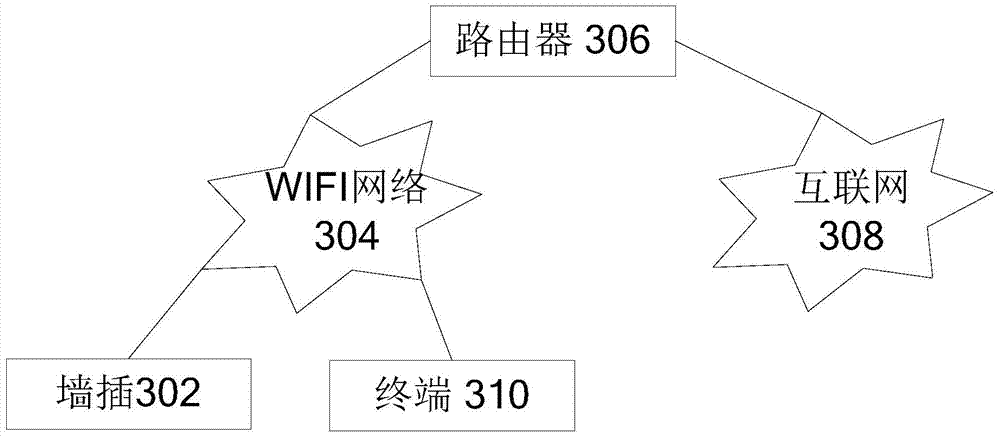
Figure 3
Abstract
Description
technical field
[0001] The invention relates to the field of electronic circuits, in particular to an operation control method based on a wall plug and the wall plug. Background technique
[0002] At present, in order to connect electrical appliances to the power supply, wall plugs (also known as sockets) are usually installed on the indoor wall. The wall plugs are generally provided with a two-hole socket and a three-hole socket, such as figure 1 shown. When the electrical appliance is being used, the plug of the electrical appliance is inserted into a wall socket, so that the electrical appliance is connected to a power supply (for example, 220V commercial power). When the electric appliance is stopped, the plug of the electric appliance needs to be pulled out from the wall socket to disconnect the electric appliance from the power supply.
[0003] It can be seen that, in order to start or stop the electrical appliance, the user needs to manually insert the plug of the e...
Examples
Embodiment 1
[0021] figure 2 A schematic diagram of an optional wall plug-based network of this embodiment is shown. Such as figure 2 As shown, the wall plug 202 is connected to the router 206 through the WIFI network 204, and the router 206 is connected to the terminal 210 through the Internet 208 (or Internet). In various embodiments of the present application, the terminal (for example, figure 2 The shown terminal 210) may be, but not limited to, one of a mobile phone, a tablet computer, a desktop computer, and a notebook computer.
[0022] exist figure 2 In the shown network, the router 206 can be, but not limited to, a home router, which can be connected to the Internet 208 through a network cable, so that a terminal 210 (for example, a mobile phone used by a user) that is also connected to the Internet 208 can connect to the router through the Internet 208 206 to perform data interaction. In addition, the router 206 can provide the WIFI network 204 through the antenna, and t...
Embodiment 2
[0057]According to an embodiment of the present invention, a wall plug is also provided. The applicable network of the wall plug can be but not limited to Figure 2-Figure 4 any of the networks. Such as Image 6 shown, this wall plug includes:
[0058] 1) The WIFI communication component 602 is located in the above-mentioned wall plug, and is used to receive the control signal sent by the terminal through the network; figure 2 For example, the WIFI communication component in the wall plug 202 is connected to the router 206 through the WIFI network 204, and the router 206 is connected to the Internet 208 through a network cable, and the terminal 210 (for example, a mobile phone) connected to the Internet 208 also performs data interaction with the router 206 through the Internet 208 In this way, the terminal 210 sends the control signal to the router 206 through the Internet 208, and the router 206 sends the control signal to the WIFI communication component in the wall plug...