
Polypyrrole modified by isoazaindene nitrogen oxide free radical and its preparation method and application
An indene nitrogen oxide and free radical technology is applied in the field of isoazindene nitrogen oxide radical modified polypyrrole and its preparation, which can solve the problem that energy density and cycle stability are difficult to meet application requirements, poor solubility and processing performance, electrical problems such as low chemical doping, to achieve the effects of good dissolution and processing performance, high power density, and long cycle life
Patent Information
- Authority / Receiving Office
- CN · China
- Patent Type
- Patents(China)
- Current Assignee / Owner
- Publication Date
- 2016-11-16
- Estimated Expiration
- Not applicable · inactive patent
Smart Images
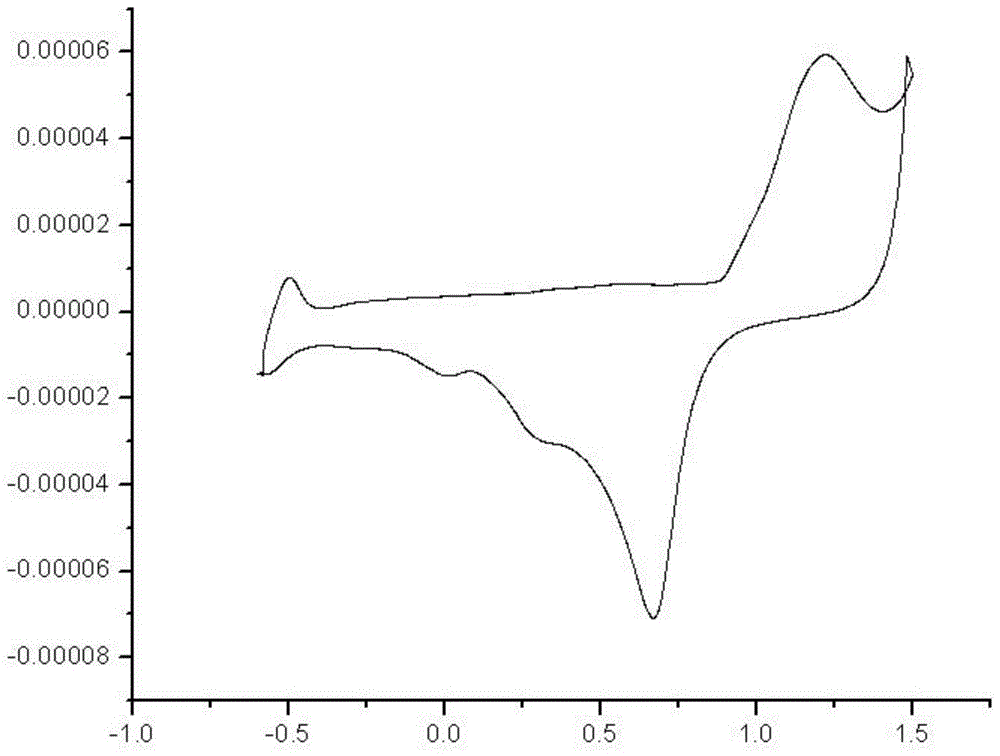
Figure 1 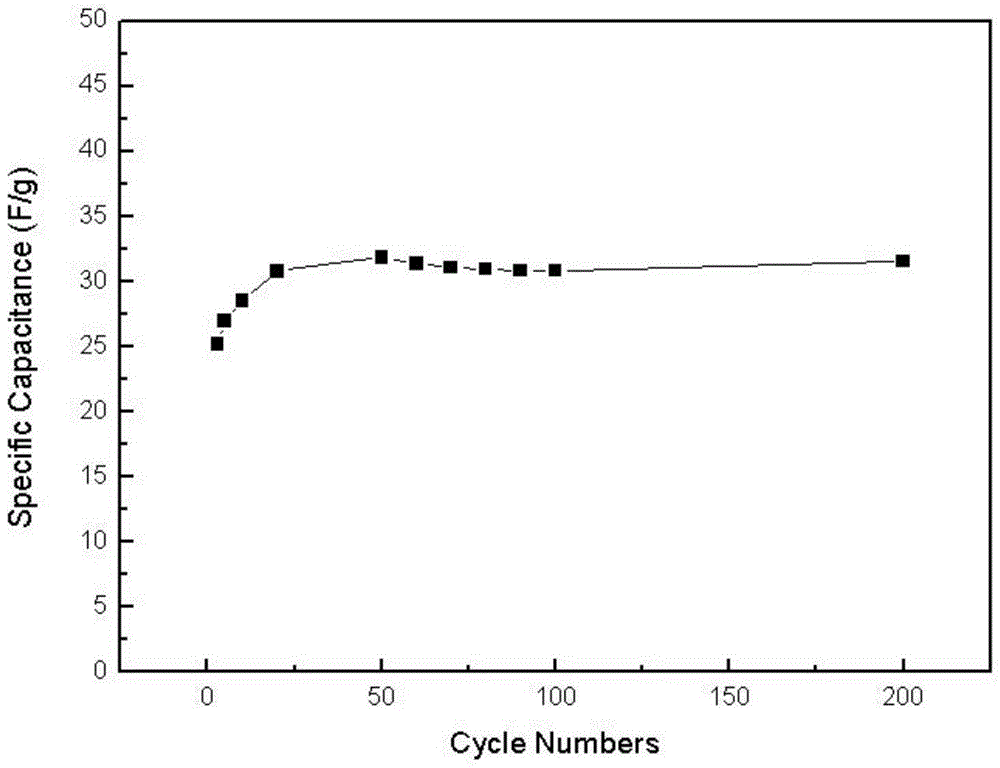
Figure 2 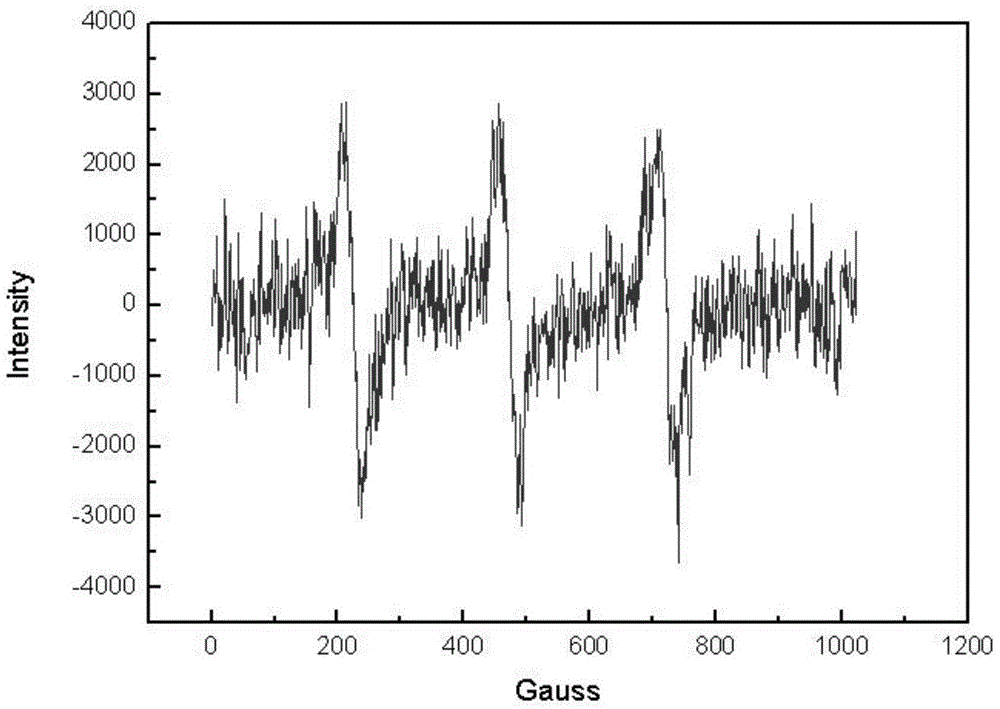
Figure 3
Abstract
Description
technical field
[0001] The invention belongs to the technical field of conductive polymer materials, and in particular relates to polypyrrole modified by isoazepine nitrogen oxide radicals, a preparation method and application thereof. Background technique
[0002] Conductive polymers are a new research field developed in the 1970s. They have broad application prospects in electrode materials for chemical power sources, modified electrodes, enzyme electrodes, and electrochromic displays. Among them, conductive polymers with conjugated double bonds have high conductivity. Compared with other conductive polymers, molecular polypyrrole has attracted more and more attention due to its advantages of high conductivity, easy film formation, softness, and non-toxicity due to its convenient synthesis and good oxidation resistance.
[0003] Polypyrrole (PPy), a conductive polymer material with broad application prospects. Pyrrole (Py) monomer can be oxidatively polymerized into PPy r...
Examples
Embodiment 1
[0043] poly(3,4-diisoazindene nitroxide radical amine-pyrrole)
[0044] Under ice bath conditions, dissolve a certain amount of FeCl in 100mL deionized water 3 .6H 2 O and dopant, fully stirred to dissolve the solid, (tert-butoxycarbonyl)-aminotriisopropylchlorosilylpyrrole (0.5g, 1.5mmol) was added to the above solution, continued to stir, and passed N 2 Protect. React at room temperature for 6 hours, filter, remove the solvent and water under reduced pressure, and dry in vacuo to obtain poly(tert-butoxycarbonyl)-amino-triisopropylchlorosilylpyrrole.
[0045] Add 1.0 mL of trifluoroacetic acid to poly(tert-butoxycarbonyl)-amino-triisopropylchlorosilylpyrrole (0.168 g, 0.5 mmol) in dichloromethane (1.5 mL) and anisole (1.0 mL) After the reaction, the reaction solution was poured into 10 mL of saturated sodium bicarbonate solution and stirred at room temperature for 1 h, and the solvent and water were removed under reduced pressure. Vacuum drying gave polyamino-triisopropyl...
Embodiment 2
[0050] Poly(3-isozaindene nitroxide radical vinyl-pyrrole)
[0051] (2,5-dibromopyrrole-3-methylene)-phosphate (0.117g, 0.3mmol) was dissolved in DMF (5mL), and sodium methoxide (0.016g in 2mL DMF) was added to the reaction under ice cooling in the liquid. 5-formaldehyde-1,1,3,3-tetramethylisozaindene nitrogen oxide radical (0.059 g, 0.27 mmol) was added to the reaction solution for 30 minutes of reaction. After the reaction, the solution was poured into ice water, extracted with ether, washed with water, dried over anhydrous magnesium sulfate, filtered, the solvent was removed in vacuo, purified by column chromatography, the solvent was removed under reduced pressure, and dried in vacuo to obtain the free radical modified pyrrole.
[0052] Free radical modified pyrrole (0.053g, 0.12mmol) was dissolved in 5mL tetrahydrofuran, dried under nitrogen, CH 3 MgBr (0.06mL, 0.12mmol, 2.1mol / L ether solution) was added dropwise to the reaction flask, and Ni(dppp)Cl 2 (0.07mg, 1%) wa...
Embodiment 3
[0054] (3-Isozaindene nitroxide radical vinyl-pyrrole)-pyrrole copolymer
[0055] (2,5-dibromopyrrole-3-methylene)-phosphate (0.117g, 0.3mmol) was dissolved in DMF (5mL), and sodium methoxide (0.016g in 2mL DMF) was added to the reaction under ice cooling in the liquid. 5-formaldehyde-1,1,3,3-tetramethylisozaindene nitrogen oxide radical (0.059 g, 0.27 mmol) was added to the reaction solution for 30 minutes of reaction. After the reaction, pour the solution into ice water, extract with ether, wash with water, dry over anhydrous magnesium sulfate, filter, remove the solvent under reduced pressure, purify by column chromatography (dichloromethane), remove the solvent under reduced pressure, and dry in vacuo to obtain free radical modification pyrrole.
[0056] Free radical modified pyrrole (0.053g, 0.12mmol) and 2,5-(3-butyltin)pyrrole (0.077g, 0.12mmol) were dissolved in 3mL THF, Pd 2 (dba) 3 (0.0025g, 0.0028mmol), CuI (0.002g, 0.013mmol) and AsPh 3 (0.0016g, 0.005mmol) wa...