
CT-(MIO) modified polyphosphazene as well as synthesis method and application thereof
A technology of indene nitrogen oxide and free radicals, which is applied in the field of isoazaindene nitrogen oxide radical modification polyphosphazene and its synthesis, which can solve the problems of difficult energy density and cycle stability, poor solubility and processability, and charge-discharge ratio Low capacity and other issues, to achieve the effect of good dissolution and processing performance, high power density, high charge storage density
Patent Information
- Authority / Receiving Office
- CN · China
- Current Assignee / Owner
- Publication Date
- 2015-04-01
- Estimated Expiration
- Not applicable · inactive patent
Smart Images
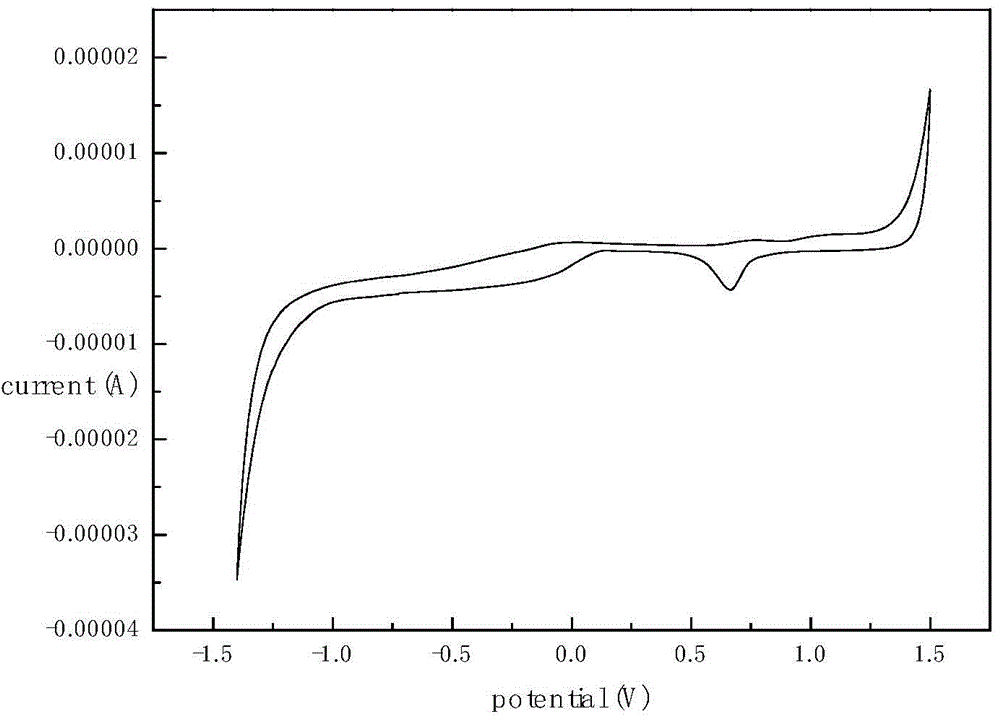
Figure 1 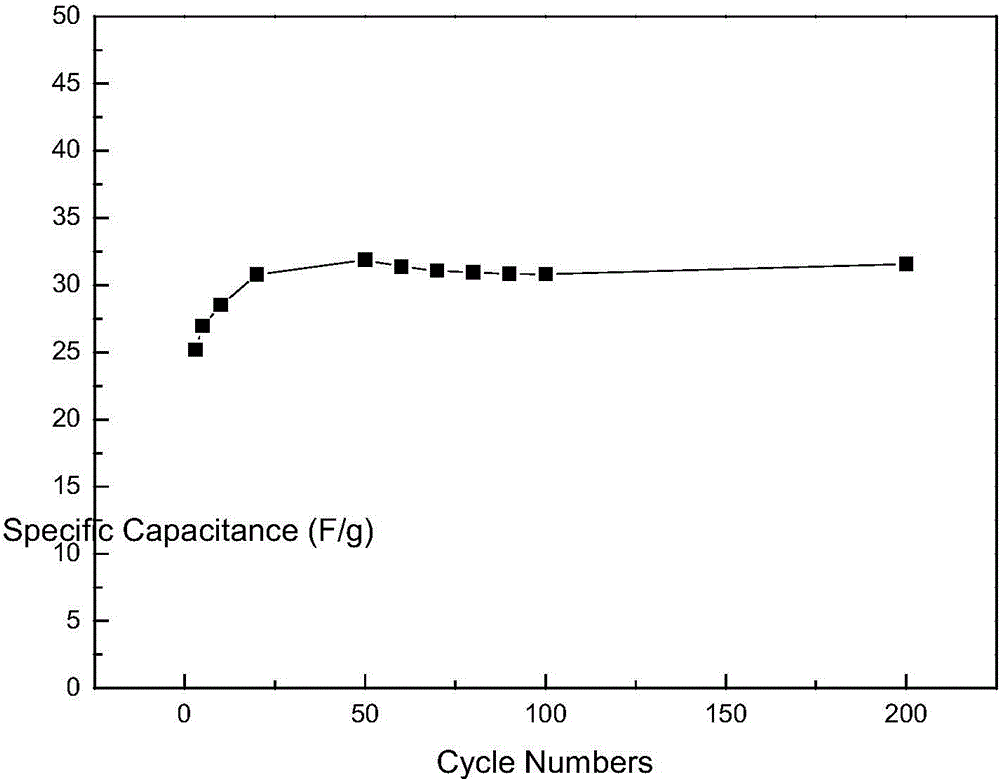
Figure 2 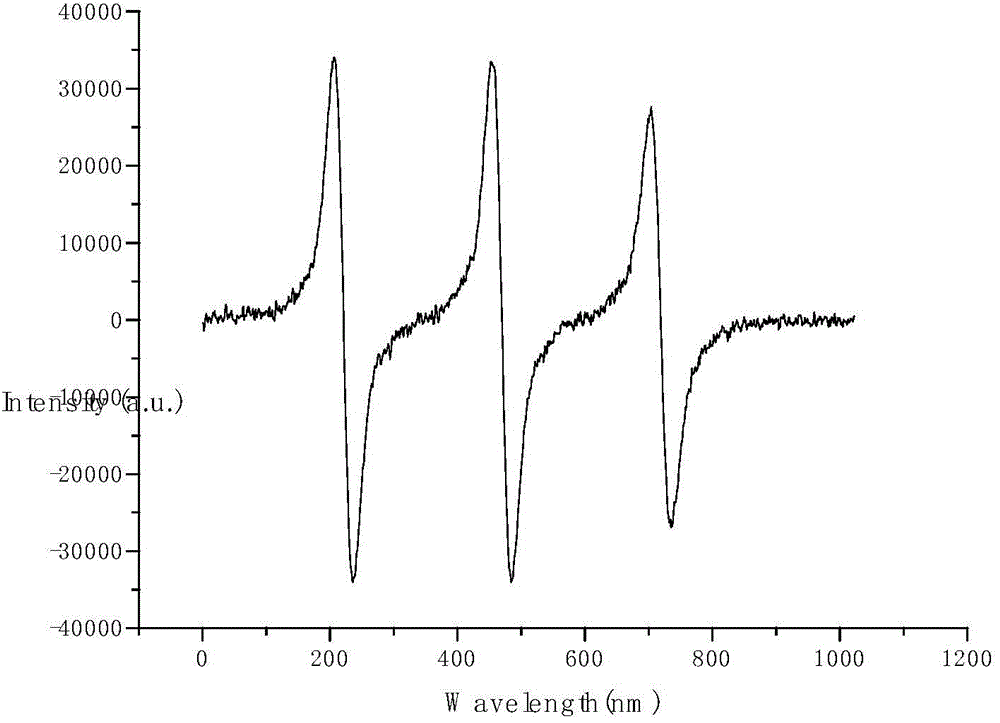
Figure 3
Abstract
Description
technical field
[0001] The invention belongs to the field of conductive polymer materials, and in particular relates to a kind of polyphosphazene modified by isozaindene nitrogen oxide radical, its synthesis method and application. Background technique
[0002] Polyphosphazene (polyphosphazene) is a kind of elemental organic polymer whose skeleton is alternately arranged with phosphorus and nitrogen single and double bonds, and the side group is composed of organic groups. It mainly includes two types of cyclic and linear polyphosphazenes. Polyphosphazene is widely used in heat-resistant and flame-retardant materials, while linear polyphosphazene is more widely used. In the linear polyphosphazene structure, the flexibility of the main chain formed by alternating single and double bonds of phosphorus and nitrogen is very good. By changing the side groups, polyphosphazene can form different types of polymers such as rubber, plastics, and fibers. Water can also be hydrophobic,...
Examples
Embodiment 1
[0045] Poly(diisozaindene nitroxide radical aminophosphazene)
[0046] In a single-necked flask of 250 mL of sulfamic acid (0.1165 g, 1.2 mmol), calcium sulfate dihydrate (0.1033 g, 0.6 mmol), ammonium chloride (20.0 g, 0.374 mmol), phosphorus pentachloride (66.0 g, 0.317 mmol) mmol) and 1,2,4-trichlorobenzene (23mL), quickly heated up to 210°C for 0.5h, then cooled to 190°C for 3h, cooled to room temperature after the reaction, filtered, reprecipitated with petroleum ether, and then used Tetrahydrofuran was dissolved in petroleum ether to reprecipitate, and the oil pump was vacuum-dried at room temperature to obtain polydichlorophosphazene.
[0047] Under nitrogen protection, polydichlorophosphazene (0.058g, 1mmol), tetrahydrofuran (10mL), triethylamine (0.193mL) were added dropwise with 5-amino-1,1,3,3-tetramethyliso A tetrahydrofuran (3ml) solution of azaindene nitroxide radical (0.218, 1mmol) was added dropwise and reacted at room temperature for 12 hours. After the react...
Embodiment 2
[0051] Poly(isozaindene nitroxide radical amine-anilino-phosphazene)
[0052] In a single-necked flask of 250 mL of sulfamic acid (0.1165 g, 1.2 mmol), calcium sulfate dihydrate (0.1033 g, 0.6 mmol), ammonium chloride (20.0 g, 0.374 mmol), phosphorus pentachloride (66.0 g, 0.317 mmol) mmol) and 1,2,4-trichlorobenzene (23mL), quickly heated up to 210°C for 0.5h, then cooled to 190°C for 3h, cooled to room temperature after the reaction, filtered, reprecipitated with petroleum ether, and then used Tetrahydrofuran was dissolved in petroleum ether to reprecipitate, and the oil pump was vacuum-dried at room temperature to obtain polydichlorophosphazene.
[0053] Under nitrogen protection, polydichlorophosphazene (0.058g, 1mmol), tetrahydrofuran (10mL), triethylamine (0.193mL) were added dropwise with 5-amino-1,1,3,3-tetramethyliso Azaindene nitrogen oxide radical (0.109, 0.5mmol) and aniline (0.047g, 0.5mmol) in tetrahydrofuran (3mL) solution, after the dropwise addition, react at...
Embodiment 3
[0055] Poly(diisozaindene nitroxide radical vinyl phosphazene)
[0056] Put 3g of hexachlorocyclotriphosphazene monomer into a clean polymerization tube that has been dried with an alcohol blowtorch. After the polymerization tube is connected to a vacuum and inert gas device, turn on the pump to pump for 30 minutes, and then pass in nitrogen to pump. vacuum. After repeating three to four times, close the valve. Melt the hexachlorocyclotriphosphazene in the polymerization tube, cool it down to room temperature, re-evacuate for about 3 hours, and then seal the tube with an alcohol torch. Put the sealed polymerization tube into an oil bath at 250°C for polymerization. During the polymerization, observe the situation in the polymerization tube at any time. Take the polymerization tube out of the oil bath, put it in a glove box filled with nitrogen, and break the polymerization tube. The polymer was taken out from the tube, shredded and put into a round bottom flask, and dry pet...