
Multi-tenant request processing method, device and equipment
A request processing and multi-tenant technology, applied in the computer field, can solve the problem of low efficiency of request scheduling
Patent Information
- Authority / Receiving Office
- CN · China
- Current Assignee / Owner
- Publication Date
- 2017-06-27
Smart Images
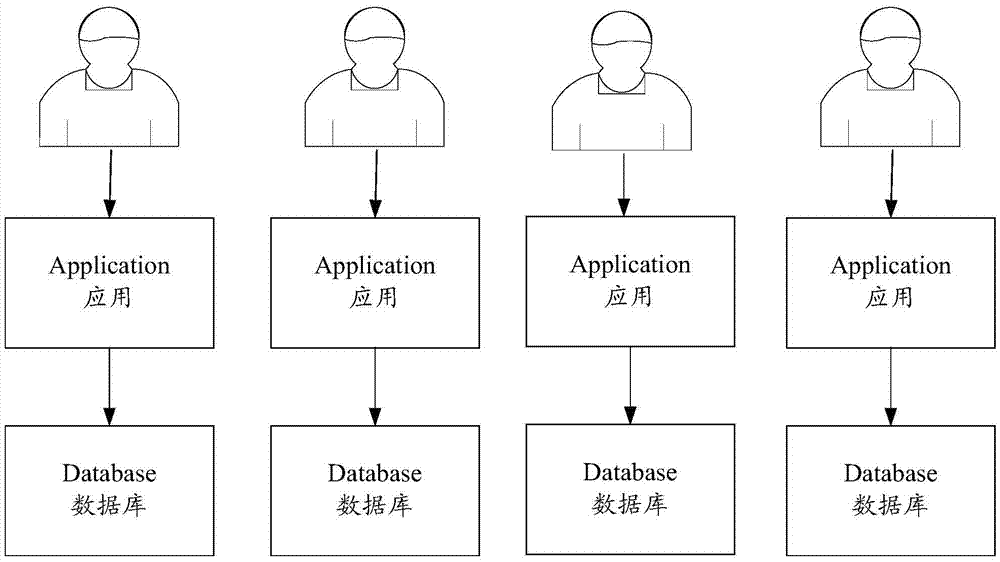
Figure 1 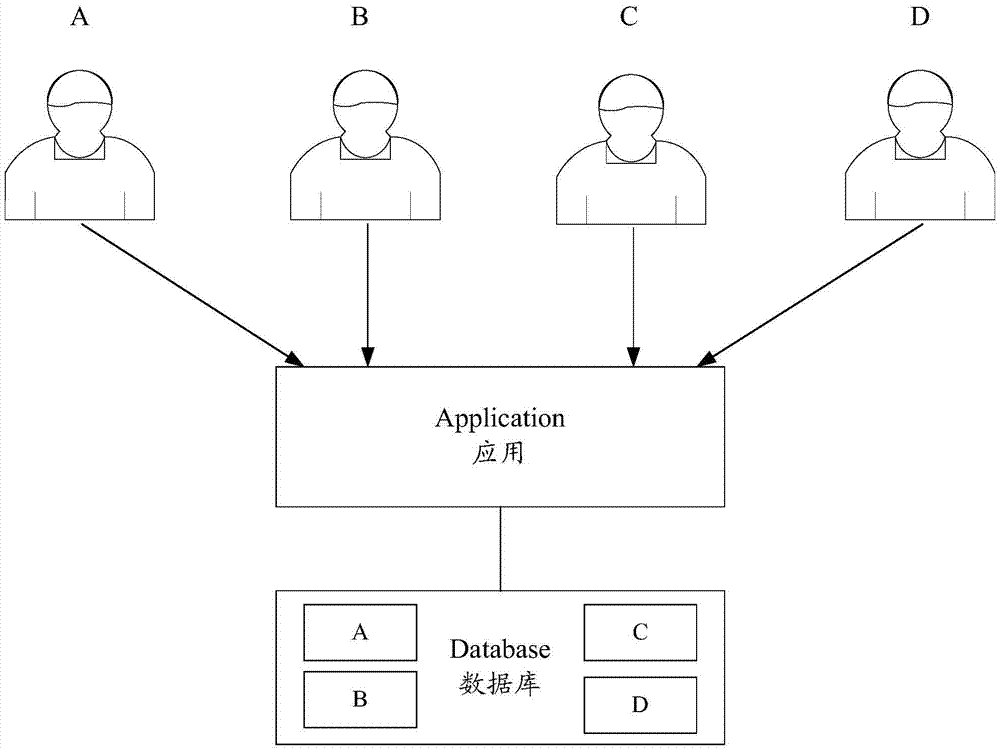
Figure 2 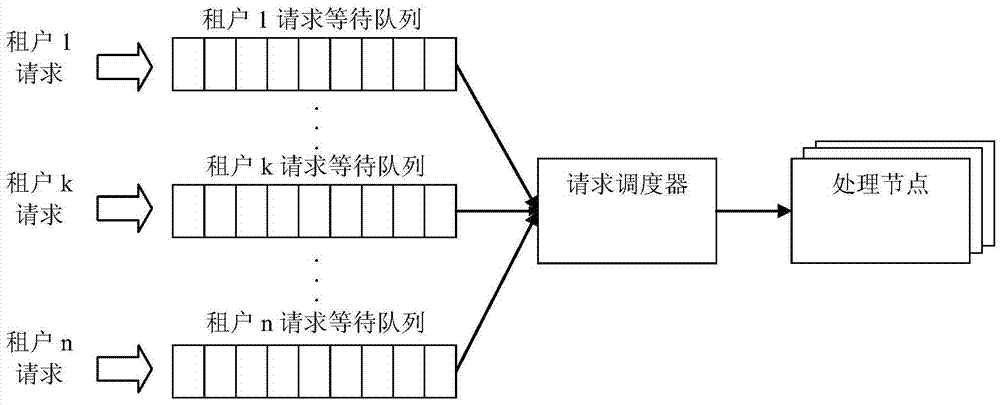
Figure 3
Abstract
Description
technical field
[0001] The present invention relates to the field of computer technology, in particular to a multi-tenant request processing method, device and equipment. Background technique
[0002] Software as a Service (Software as a Service, SaaS) is a software delivery model. In this delivery model, the cloud centrally hosts the software and its related data, and users only need to use the software through the Internet without installing it.
[0003] SaaS usually has two technical implementations: "single-tenant SaaS" and "multi-tenant SaaS". Wherein, the tenant here refers to a SaaS customer, and a tenant usually corresponds to an organization, such as a company, a school, and the like.
[0004] 1. Single-tenant SaaS
[0005] The architecture of single-tenant SaaS is shown in Figure 1(a). Each tenant creates its own software application and supporting environment independently. Single-tenant SaaS is widely used in scenarios where tenants need to support customizat...
Examples
Embodiment 1
[0172] refer to Image 6 As shown, the buffer manager provided by the embodiment of the present invention for a specific processing process of a new request:
[0173] S601: Receive a new request.
[0174] S602: Analyze the new request, and determine the sum of the resource requirement of the new request, the tenant ID corresponding to the new request, and the resource requirement of the first request waiting queue corresponding to the tenant.
[0175] S603: Determine whether the new request is smaller than a preset threshold, if so, execute S604, otherwise, execute S606.
[0176] S604: Determine whether the sum of the resource needs of the first request waiting queue corresponding to the tenant is greater than or equal to the second threshold, if so, perform S605, otherwise, perform S606.
[0177] S605: Put the new request into the second request waiting queue corresponding to the tenant in the buffer, and continue to execute S607.
[0178] S606: Put the new request into th...
Embodiment 2
[0202] Embodiment 2 is the processing procedure of the request scheduler for the request for bundling using the first bundling identifier.
[0203] Wherein, the first bundle identifier is used to indicate that the request added with the first bundle identifier and the next request adjacent to the request added with the first bundle identifier belong to the same request group.
[0204] Table 2
[0205] parameter name set value second threshold 5 seconds preset threshold 5 milliseconds binding threshold 5 milliseconds first threshold 3 seconds
[0206] Refer to Table 2 for parameter values of various thresholds or thresholds. Suppose the buffer manager receives a request R t , parsing the request R t , determine that the tenant ID corresponding to the request is "A", and the request type is "GET". According to Table 3, the resource requirement of the request type "GET" is 1 millisecond, which is less than the preset threshold of 5...
Embodiment 3
[0220] Embodiment 3 is a processing procedure of the request scheduler for binding requests using the second binding identifier.
[0221] Wherein, the second bundle identifier is used to indicate that the request added with the second bundle identifier and the previous request adjacent to the request added with the second bundle identifier belong to the same request group.
[0222] The parameters in Table 2 are still used here. refer to Figure 10 As shown, the buffer manager will R t After being put into the second request waiting queue of tenant A in the buffer, it is determined that the second request waiting queue also includes: {R t-1 , R t-2 , R t-3 , R t-4}.
[0223] The buffer manager further determines that the second request is waiting in the queue except R t The latest request to arrive outside R t-1 , and to determine R t-1 The request group you are in is the request group to be added {R t-1 , R t-2}. Specifically, the buffer manager determines that R ...