
A Calculation Method of Canopy Reflectance of Broad-leaved Vegetation
A technology of vegetation canopy and calculation method, applied in the direction of calculation, reasoning method, design optimization/simulation, etc., can solve problems such as limited physical model
Patent Information
- Authority / Receiving Office
- CN · China
- Patent Type
- Patents(China)
- Current Assignee / Owner
- Publication Date
- 2018-02-27
Smart Images
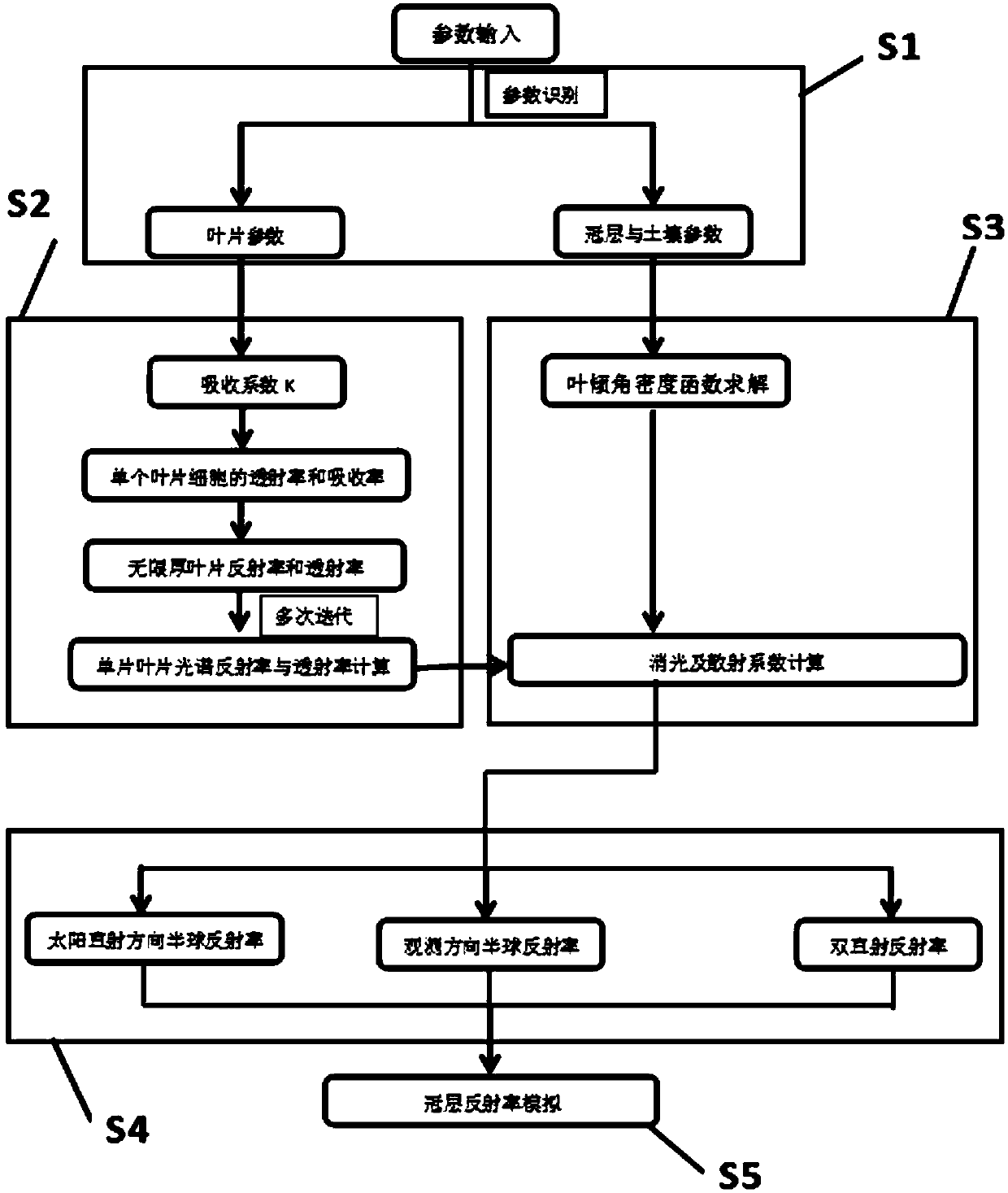
Figure 1 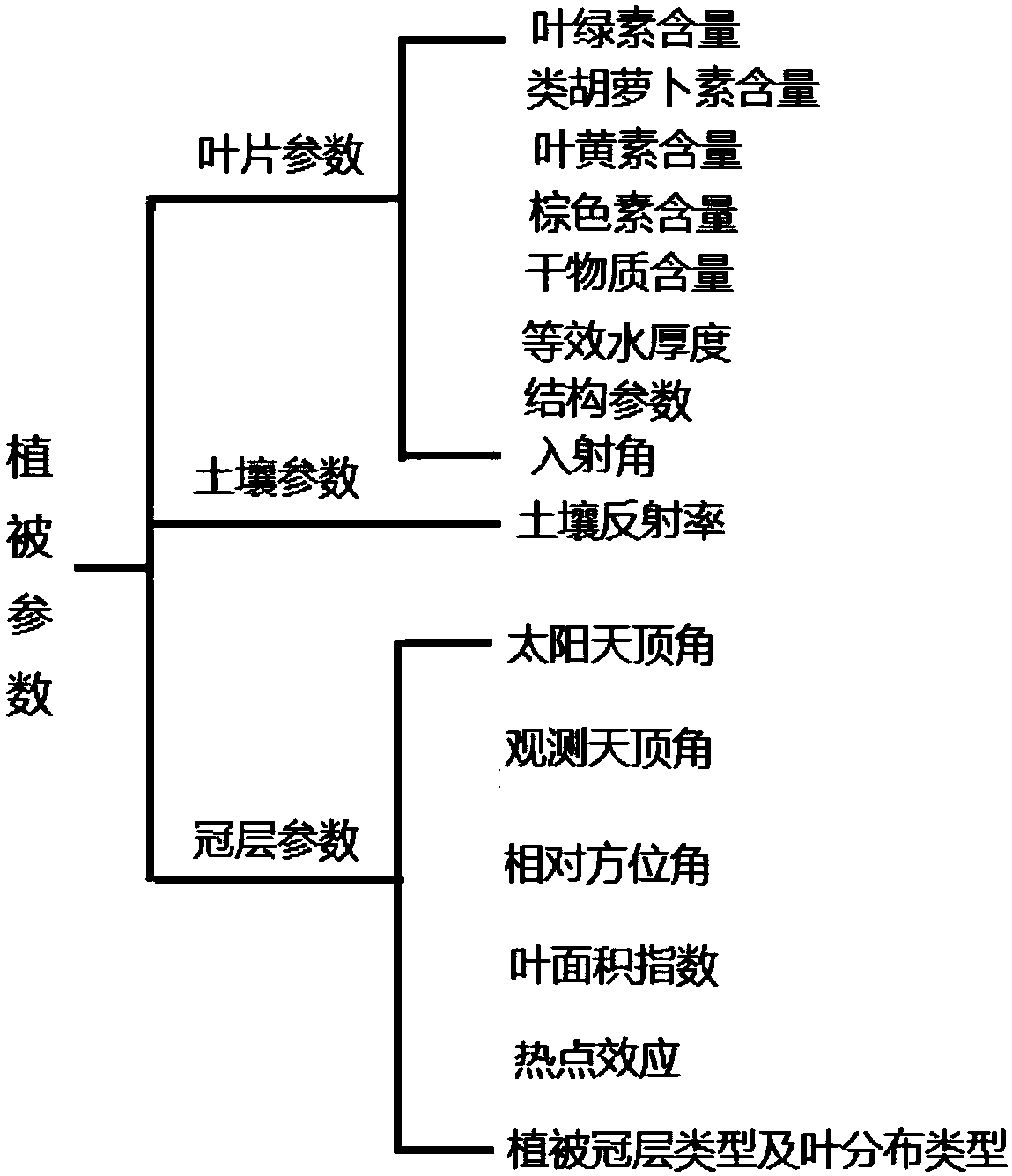
Figure 2 
Figure 3
Abstract
Description
technical field
[0001] The invention relates to the evaluation of the health status of vegetation in road areas of high-grade highways, in particular to a calculation method and model for the reflectivity of broad-leaved vegetation canopies. Background technique
[0002] Vegetation information inversion has always been the most promising research field of quantitative remote sensing, which provides a favorable basis for the development of vegetation ecological environment monitoring and evaluation research. Scholars at home and abroad have proposed many vegetation parameter inversion models, which can be mainly divided into two categories: statistical models and physical models. Among them, the physical model is favored for its excellent wide applicability and stability. The physical inversion model of vegetation information has a fairly strong physical basis and does not depend on the specific types of vegetation and changes in the background environment. However, the accu...
Examples
Embodiment Construction
[0166] The present invention will be further described below in conjunction with the accompanying drawings.
[0167] The present invention adopts the improved SAILH canopy model based on the hot spot effect, firstly classifies the given parameters, and divides them into two parts: leaf parameters and canopy parameters, and then uses the physical and chemical parameters of the leaves to calculate the basic absorption of the leaves, and then The reflectance and transmittance of a single-layer flat plate are derived from the calculation of the transmittance under the action of no interface absorption, and finally the spectral information of the leaves under the given structural parameters is derived by using the layering theory; at the same time, for the canopy parameters, the given leaf inclination angle is first used The distribution model parameters are used to calculate the leaf type distribution elements, and then combined with the calculated geometric elements to calculate t...