
Ultra-high rate ultra-dense wave-division multiplexing optical signal-to-noise ratio monitoring method and system
An ultra-dense, wavelength-division multiplexing technology, applied in electromagnetic wave transmission systems, transmission systems, electrical components, etc., can solve problems such as inapplicability and errors, and achieve the effect of reducing errors and realizing accurate testing
Patent Information
- Authority / Receiving Office
- CN · China
- Current Assignee / Owner
- Publication Date
- 2017-10-20
Smart Images
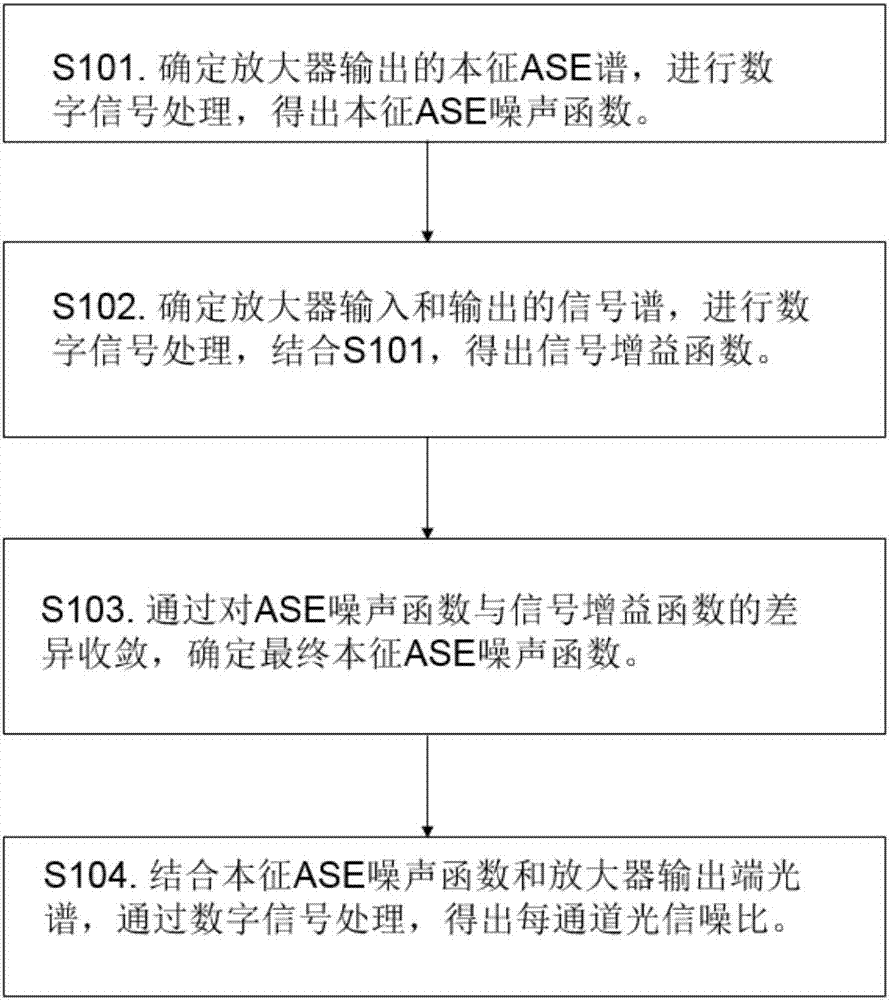
Figure 1 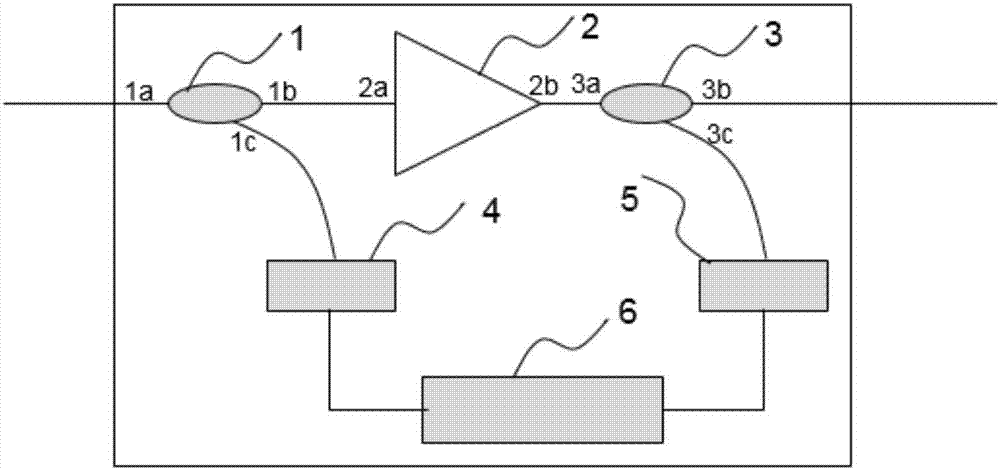
Figure 2 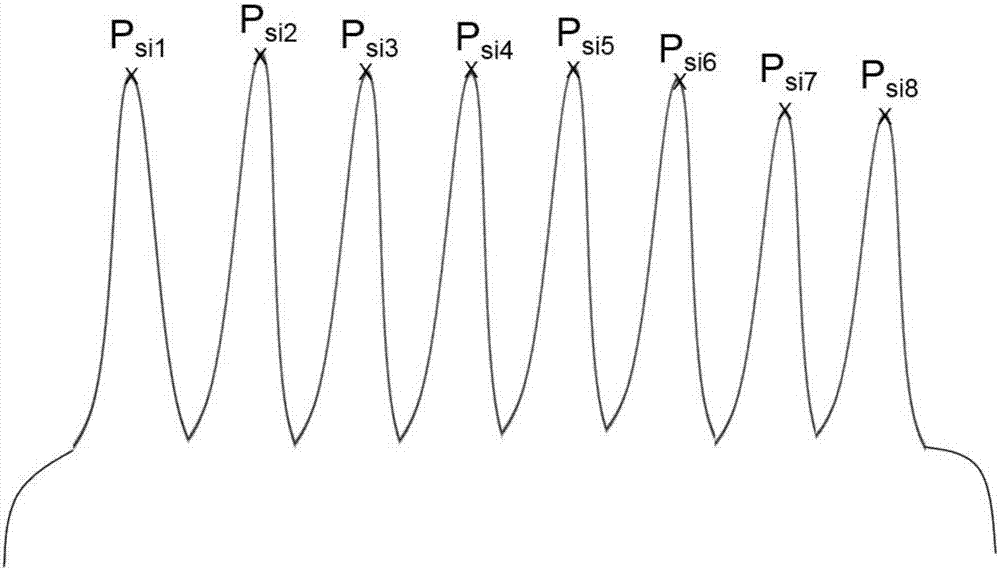
Figure 3
Abstract
Description
technical field
[0001] The invention relates to an optical signal-to-noise ratio monitoring method and system, in particular to an ultra-high rate ultra-dense wavelength division multiplexing optical signal-to-noise ratio monitoring method and system. Background technique
[0002] With the rapid increase of business traffic, the original 2.5G, 10G and 40G services can no longer meet the current application requirements. 100G has been commercialized on a large scale, and 200G and 400G services have begun to be gradually commercialized. Increasing the number of channels by increasing the interval between them can significantly increase the transmission capacity of the system. Currently, the most widely used channel intervals are 100GHz (corresponding to 0.8nm) interval and 50GHz (corresponding to 0.4nm) interval, and 37.5GHz (corresponding to 0.3nm) interval It has also been gradually commercialized.
[0003] The optical signal-to-noise ratio (OSNR) is one of the key performa...
Examples
Embodiment
[0046] In order to make the object, technical solution and advantages of the present invention clearer, the present invention will be further described in detail below in conjunction with the accompanying drawings and embodiments. It should be understood that the specific embodiments described here are only used to explain the present invention, not to limit the present invention.
[0047] In order to illustrate the technical solutions of the present invention, specific examples are used below to illustrate.
[0048] figure 1 It shows the test flow of the accurate monitoring of optical signal to noise ratio proposed by the present invention.
[0049] In the first step, when the optical amplifier has no input light, turn on the pump laser to make the amplifier work, and test the optical power Pase3b of the straight-through port 3b of the output end and the optical power Pase3c of the monitoring port 3c respectively. And get the ASE intrinsic spectral function F(λ) of the monito...