
CVT
A transmission and hydraulic technology, applied in transmissions, belts/chains/gears, fluid transmissions, etc., can solve the problem that the adaptability of working conditions is difficult to break through the limitation of power source capacity, the transmission range of mechanical structure is limited, and the overall structure requirements are relatively high. Advanced problems, to enhance the effect of overcoming overturning moment, large processing capacity and high transmission efficiency
Patent Information
- Authority / Receiving Office
- CN · China
- Patent Type
- Patents(China)
- Current Assignee / Owner
- Publication Date
- 2021-02-23
Smart Images
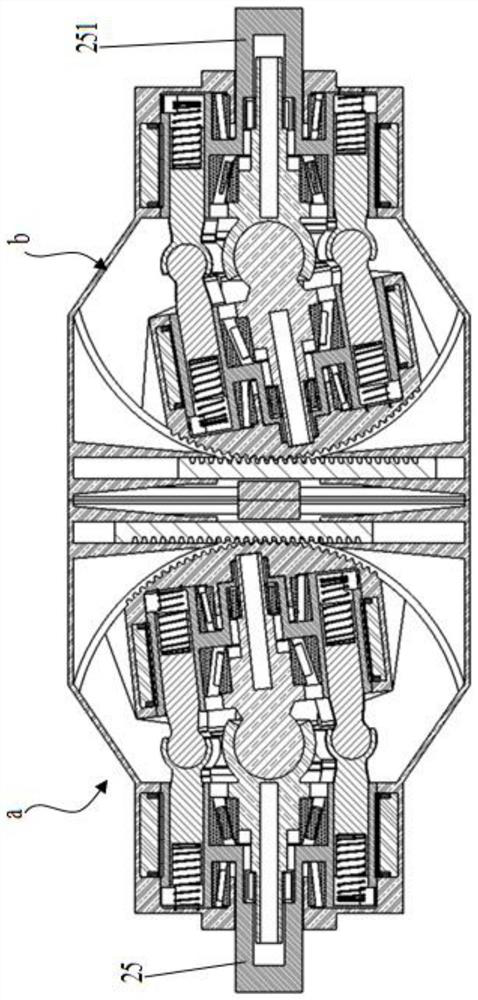
Figure 1 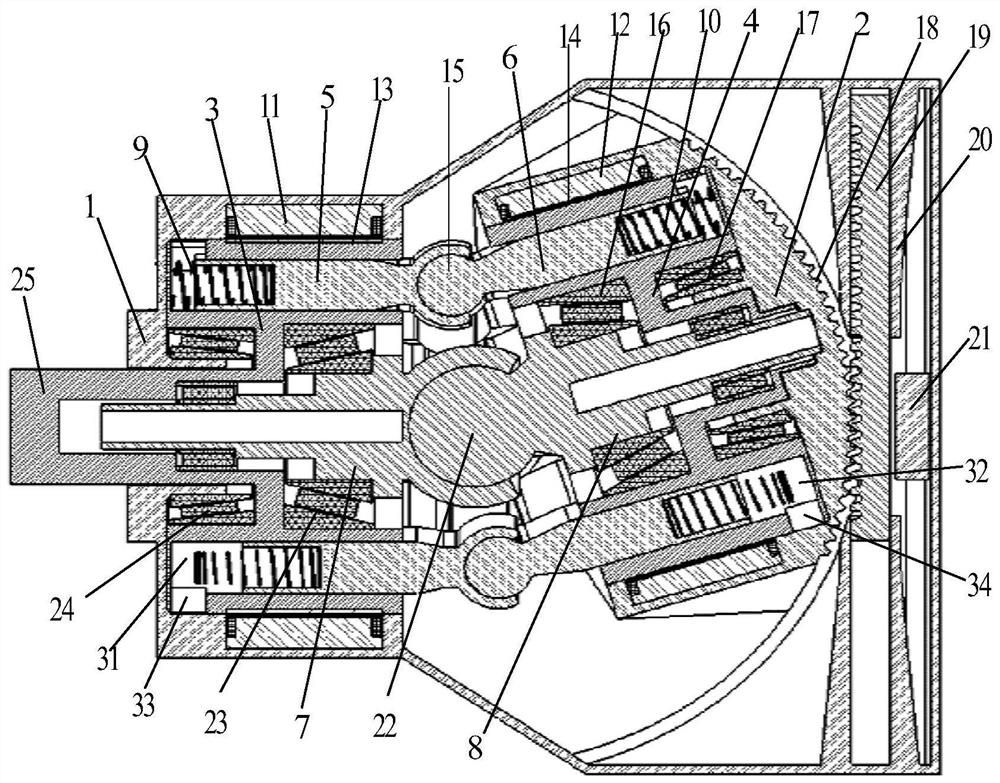
Figure 2 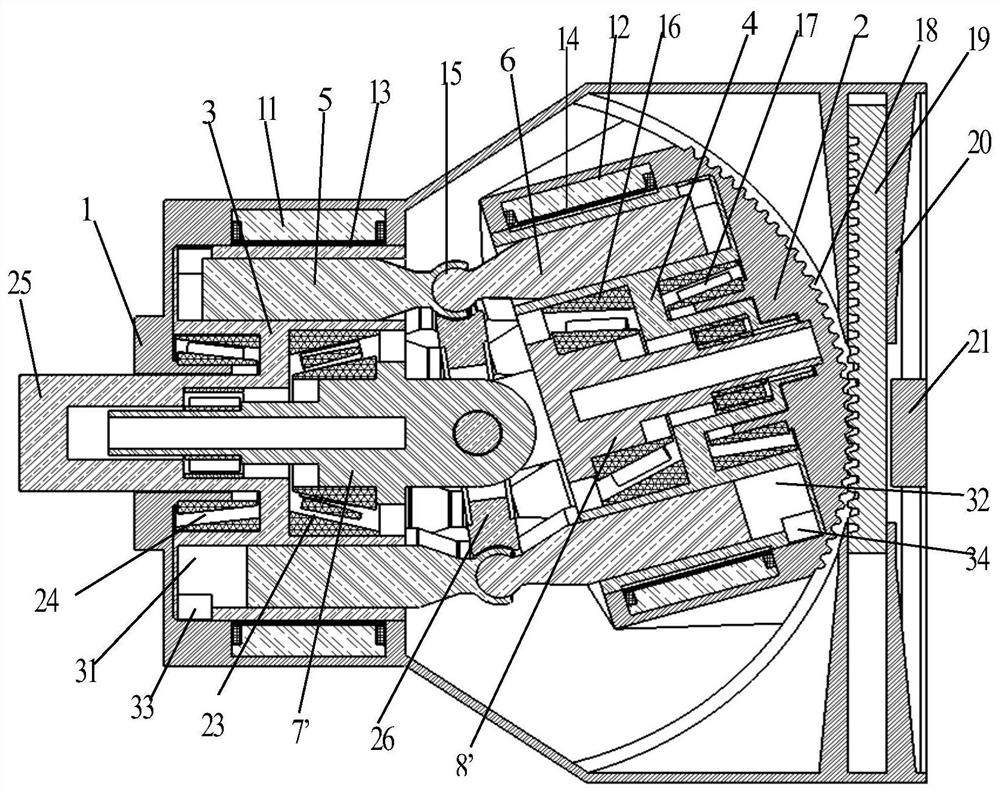
Figure 3
Abstract
Description
Technical field
[0001] The invention relates to the transmission drive field, in particular to a stepless hydraulic transmission.Background technique
[0002] Transmission is one of the necessary equipment in the field of mechanical transmission, including vehicles, machine tools and so on. In the prior art, transmissions include manual transmissions and automatic transmissions; automatic transmissions are commonly used due to simple operation, strong comfort and ease of operation; automatic transmissions have many types, but they all tend to change gears without frustration It has high comfort and high transmission efficiency. In the prior art, a representative automatic transmission with higher comfort is a CVT structure, but compared with other commonly used automatic transmissions, the transmission efficiency does not have an advantage. The gearbox of mechanical structure has limited transmission range, high maintenance and use cost, and is limited to mechanical transmission. It has a...
Examples
Embodiment Construction
[0037]As shown in the figure, the continuously variable hydraulic transmission of the present invention includes an active pump a and a driven motor b. Both the active pump a and the driven motor b include a first base 1 and a second base 2. The first base 1 and the second base body 2 are correspondingly provided with a first accommodating cavity and a second accommodating cavity, and a first rotor cylinder and a second rotor cylinder are correspondingly rotatably arranged in the first accommodating cavity and the second accommodating cavity, The first rotor cylinder block and the second rotor cylinder block are respectively eccentrically provided with a first plunger cavity and a second plunger cavity; as shown in the figure, the first rotor cylinder block 3 and the second rotor cylinder block 4 respectively pass through corresponding The bearings (including angular contact bearings or thrust bearings) are arranged on the corresponding first base body 1 and second base body 2 throu...