

Optical sensor-embedded type artificial muscle and use thereof and preparation method
An optical sensor and artificial muscle technology, applied in the field of soft pneumatic artificial muscles, can solve the problems of increasing the complexity of the design, increasing the size and load of the wearer, and achieving high reusability, light weight, and reduced volume and load. Effect
Patent Information
- Authority / Receiving Office
- CN · China
- Current Assignee / Owner
- Publication Date
- 2020-11-24
Smart Images
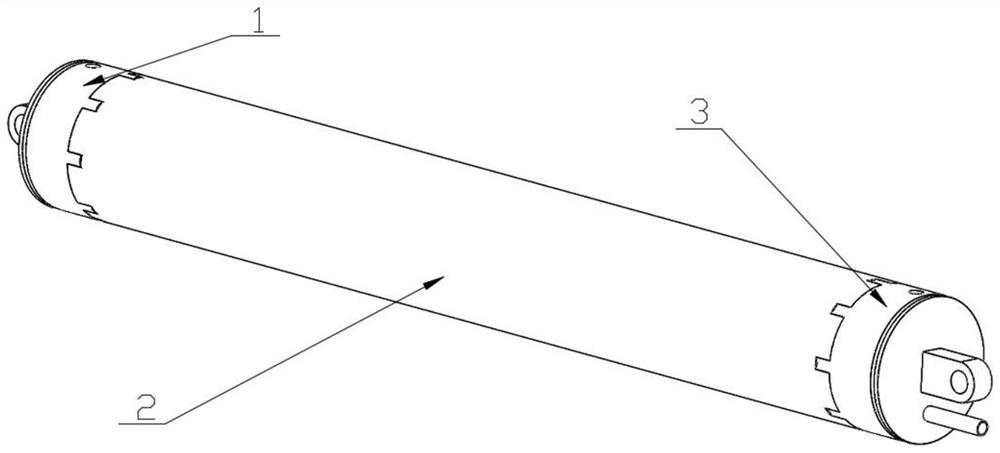
Figure 1 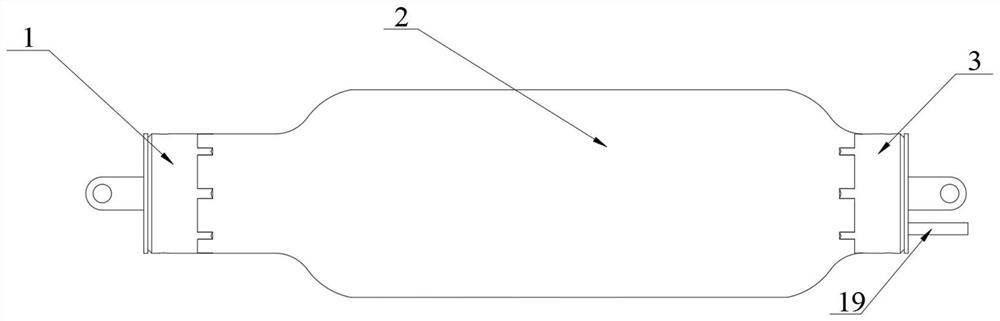
Figure 2 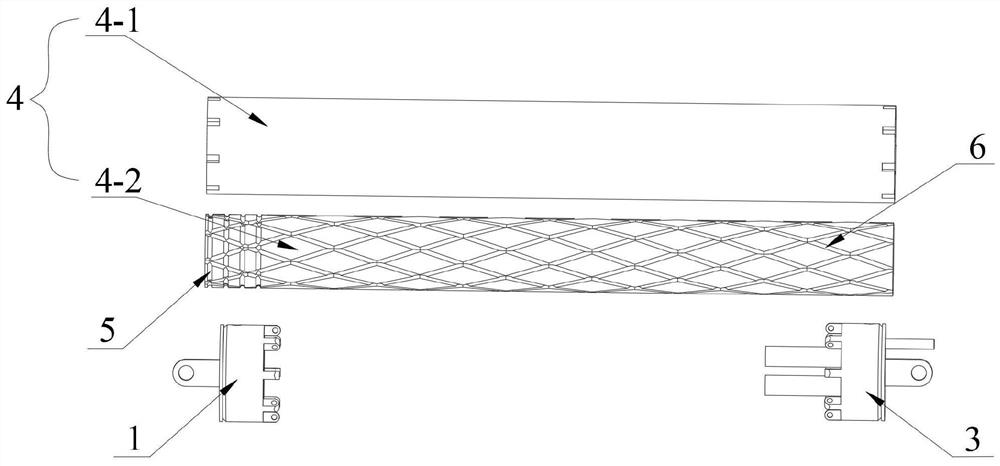
Figure 3
Abstract
Description
technical field
[0001] The invention belongs to the technical field of soft robots, and in particular relates to a soft pneumatic artificial muscle embedded with an optical sensor. Background technique
[0002] The field of soft robotics is well-positioned for wearable devices and human-robot interaction due to their light weight and compliance. For such applications, position and force perception are crucial to enhance human-computer interaction, and implementing these functions in soft-body systems is a challenge due to the nonlinear properties of soft-body materials. Current feedback control of pneumatic muscle drive systems mainly relies on the use of external pressure sensors and position sensors or encoders. While this works for some robotic systems, additional sensing hardware adds complexity to the design and negates the advantages of soft robots in terms of light weight, compliance, and more. Especially in the case of wearable devices, external sensing may add bul...
Examples
Embodiment Construction
[0043] The present invention will be further described below in conjunction with accompanying drawing.
[0044] Such as figure 1 and 2 As shown, a soft pneumatic artificial muscle embedded with an optical sensor includes an optical pressure detection end cap 1 , an artificial muscle matrix 2 and an optical length detection end cap 3 . The artificial muscle matrix 2 is cylindrical, and will expand radially and shorten in length after being filled with gas. The two ends of the artificial muscle matrix 2 are the pressure detection end and the length detection end respectively. The optical pressure detection end cap 1 and the optical length detection end cap 3 are installed on the pressure detection end and the length detection end of the artificial muscle matrix 2 respectively, and are used to detect the internal pressure and the overall length of the artificial muscle matrix 2 respectively.
[0045] Such as image 3 and 4a As shown, the artificial muscle matrix 2 includes a...