
Path following control method, device and storage medium adapting to unknown dynamic space
A technology of following control and path, applied in non-electric variable control, two-dimensional position/channel control, vehicle position/route/altitude control, etc., can solve the problem of increasing the difficulty of path planning, destroying the optimality of the path, and reducing the search efficiency. and other issues to ensure the vehicle control ability and effect, high planning efficiency, and strong path realization ability.
Patent Information
- Authority / Receiving Office
- CN · China
- Patent Type
- Patents(China)
- Current Assignee / Owner
- Publication Date
- 2022-08-05
Smart Images
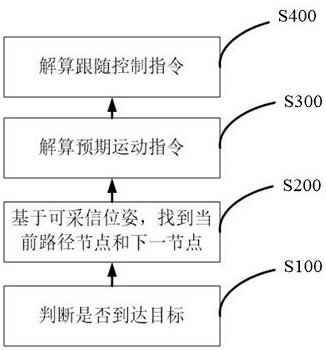
Figure 1 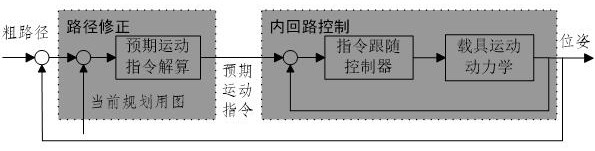
Figure 2 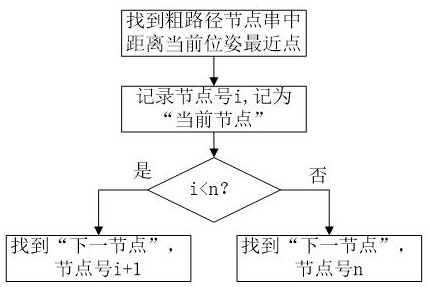
Figure 3
Abstract
Description
technical field
[0001] The present invention relates to automatic driving technology, in particular to a path following control method, device and storage medium adapting to unknown dynamic space. Background technique
[0002] After the path planning is completed, when the vehicle realizes the path, due to the limitation of the vehicle's own motion capability, the path smoothing process is usually performed. The path obtained by planning the path based on dense grid points, after the path is smoothed to meet the limitations of the vehicle's motion capability, usually destroys the optimality of the path, or even makes the path infeasible. It greatly increases the difficulty of path planning and reduces the search efficiency. The method of directly planning the path and directly following the planning result is not suitable for path realization in unknown dynamic space. SUMMARY OF THE INVENTION
[0003] In view of the above situation, the present invention provides a path ...
Examples
Embodiment 1
[0043] The path following control method of the embodiment of the present application mainly includes the steps:
[0044] (1) Determine whether the vehicle has reached the target, stop if it does, and continue if it does not. Set the reaching target judgment threshold d_end, if the current admissible pose distance from the end node of the rough path node string is less than the threshold, the target is considered to be reached; otherwise, it is considered that the target has not been reached. The end node is also the target point of path planning.
[0045] (2) Based on the admissible pose, find the current node and the next node in the rough path node string. Among them, the admissible pose can be the result of certain operations after being directly acquired by various sensors, or it can be the comprehensive result obtained after pose fusion processing. The current node is the node closest to the admissible pose in the rough path node string. The next node in the rough pat...
Embodiment 2
[0060] combined with Figure 5 The above structural block diagram further describes the path following control device adapted to the unknown dynamic space according to the embodiment of the present application.
[0061] The path following control device of this example includes a judgment module, a node module, an expectation module, and a control module connected in sequence.
[0062] Specifically, the judging module judges whether the vehicle has reached the target: if it reaches it, it stops, and if it does not reach it, it continues to execute; when the judgment result of the judging module is that the target has not been reached, the node module is based on the acceptable pose and poses in the rough path node string. Find the current node and the next node; the expectation module uses the artificial potential field method to solve the expected motion command based on the acceptable pose and the current planning graph; the control module uses the expected motion command to...
Embodiment 3
[0067] This example provides a computer-readable storage medium on which a computer program is stored, and when the computer program is run by a processor, the device where the storage medium is located is controlled to execute the path following control method adapted to the unknown dynamic space of the first embodiment.