
Discriminative feature learning method and system for micro-expression recognition
A feature learning and micro-expression technology, applied in the field of micro-expression recognition and artificial intelligence, can solve the problem of insufficient extraction of micro-expression discriminative features
Patent Information
- Authority / Receiving Office
- CN · China
- Current Assignee / Owner
- Publication Date
- 2021-05-14
Smart Images
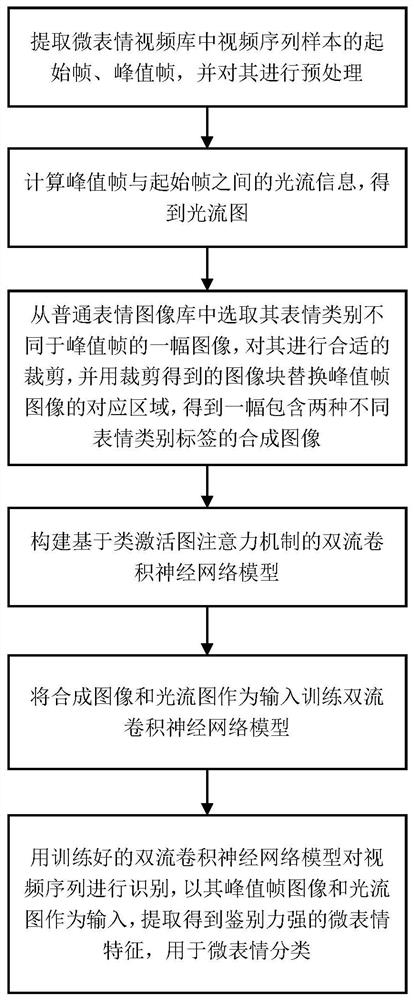
Figure 1 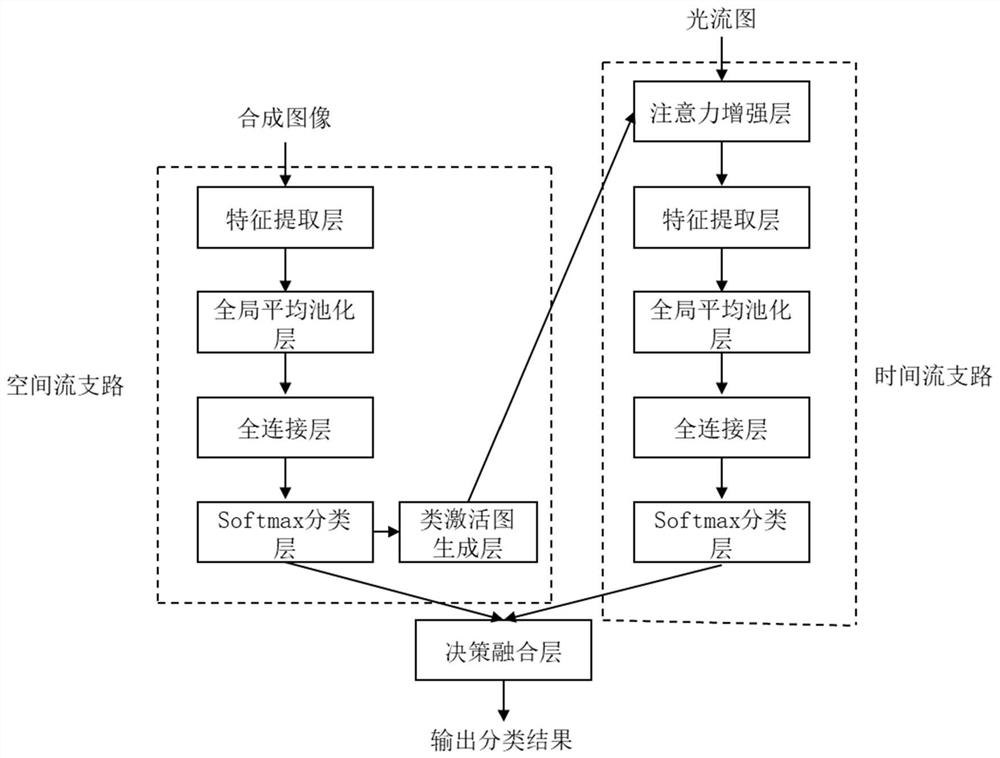
Figure 2 
Figure 3
Abstract
Description
technical field
[0001] The invention relates to a discriminative feature learning method and system for micro-expression recognition, belonging to the field of micro-expression recognition and artificial intelligence. Background technique
[0002] Expression is a non-verbal behavior for humans to express their emotions, and it is also an important way for robots to intelligently understand human emotions. General facial expressions are shown by people when their emotional expression is not suppressed, and the range of facial movements is often large and lasts for a long time. But in some cases, people will deliberately suppress and hide their emotions, and these suppressed emotions will be expressed spontaneously through extremely fast facial expressions. This type of expression is called micro-expression. The duration of micro-expressions is extremely short, less than 0.2 seconds, and the changes in facial movements are so subtle that the accuracy of human recognition of m...
Examples
Embodiment Construction
[0083] The present invention will be further described below in conjunction with the accompanying drawings and specific embodiments.
[0084] Such as figure 1 As shown, a discriminative feature learning method for micro-expression recognition disclosed in the embodiment of the present invention specifically includes the following steps:
[0085] Step (1): Extract the start frame and peak frame of the video sequence samples in the micro-expression video library. The present embodiment uses the SMIC II database as a data source to extract the start frame and peak frame of each micro-expression video sequence sample, which specifically includes the following substeps:
[0086] (1.1) The first frame F of the micro-expression video sequence 1 , as the starting frame of the micro-expression image sequence;
[0087] (1.2) Set the total number of frames of the micro-expression video sequence as k, and subtract each frame image from the first frame image from the second frame to obt...