
Transformer excitation surge current identification method based on improved symbol sequence entropy method
A technology of symbol sequence and excitation inrush current, which is applied in the direction of transformer testing, electrical components, emergency protection circuit devices, etc., can solve the problem of magnetic saturation point reduction, achieve the effects of less number, prevention of misoperation, and simple calculation
Patent Information
- Authority / Receiving Office
- CN · China
- Patent Type
- Applications(China)
- Current Assignee / Owner
- Publication Date
- 2021-06-29
Smart Images
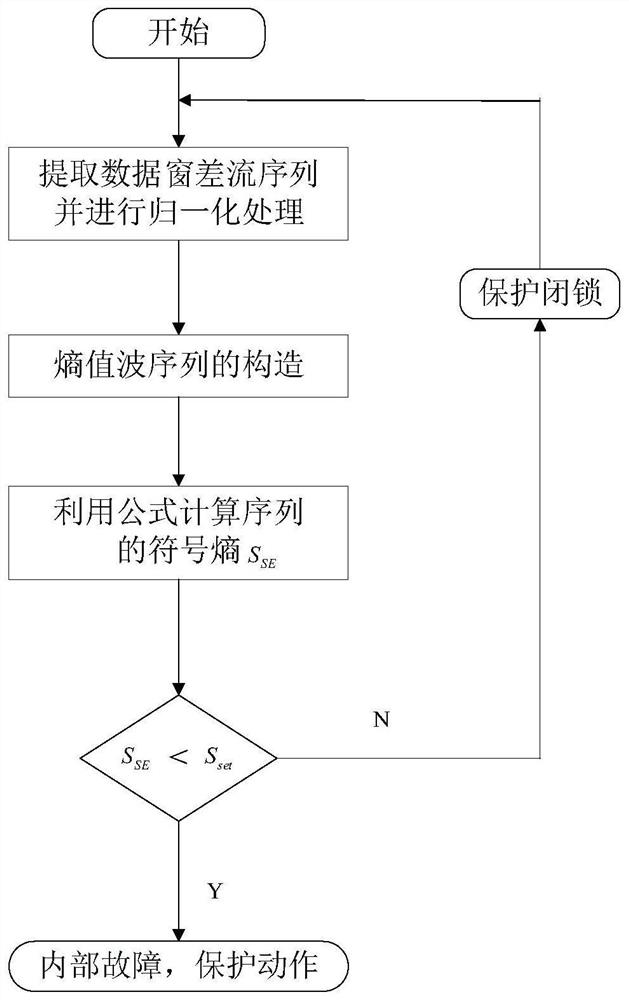
Figure 1 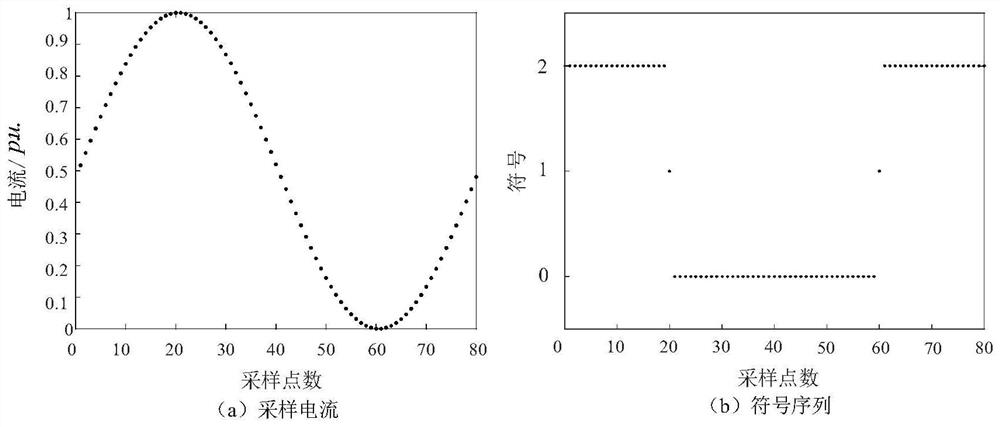
Figure 2 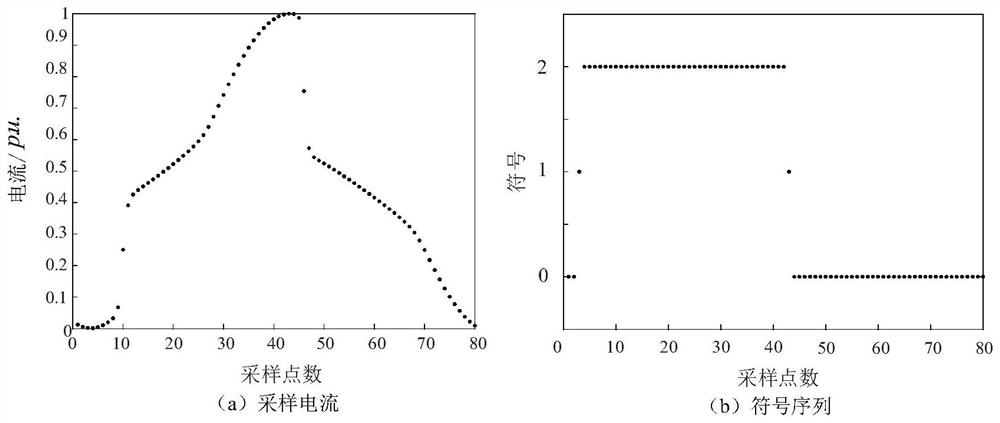
Figure 3
Abstract
Description
technical field
[0001] The invention belongs to the technical field of transformer differential protection, in particular to a transformer excitation inrush current identification method based on an improved symbol sequence entropy method. Background technique
[0002] In recent years, the power industry has made great progress. With the continuous production of ultra-high voltage, ultra-high voltage and large-capacity power transformers in my country, more and more long-distance power transmission systems are built and operated, so the requirements for the safety, stability and reliability of power systems are getting higher and higher. The power transformer is one of the most critical power equipment in the power system, especially the large power transformer is not only expensive, but also has serious failure losses, and its normal operation will affect the safe and stable operation of the entire power system.
[0003] In the field work, most of the transformers in opera...
Examples
Embodiment Construction
[0057] The transformer excitation inrush current identification method based on the improved symbolic sequence entropy method includes the following steps:
[0058] Step 1: At a certain sampling frequency, according to N points per cycle, collect the secondary current of the current transformers on both sides of the differential protection of the transformer, and form a differential current signal sequence I 1 ={I 1 (1), I 1 (2),...,I 1 (k),...I 1 (N)}, k=1,2,...,N;
[0059] Step 2: Identify the differential current signal sequence I in step 1 1 Whether the value exceeds the setting value of the differential protection starting element, if it exceeds, the starting criterion is used to judge the fault differential current and the excitation inrush current;
[0060] Step 3: Initial signal sequence I for differential flow 1 Perform normalization processing so that all sampling points fall within the [0,1] interval, and obtain the differential flow signal sequence I 2 ={I ...