
Lycium chinense picking vehicle
A wolfberry and frame technology, which is applied in the field of wolfberry picking vehicles, can solve the problems of high fruit damage rate, low fruit picking efficiency and low fruit collection efficiency, so as to improve the harvesting rate, reduce the damage rate and impurity rate, The effect of reducing the breakage rate
Patent Information
- Authority / Receiving Office
- CN · China
- Current Assignee / Owner
- Publication Date
- 2021-07-23
Smart Images
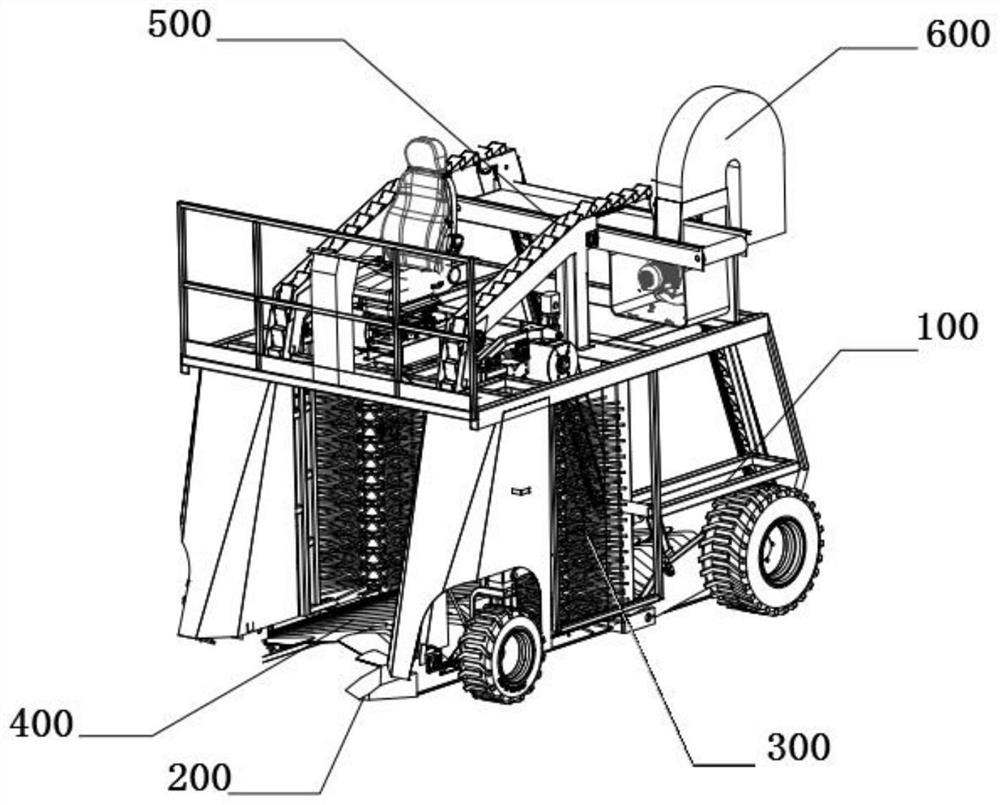
Figure 1 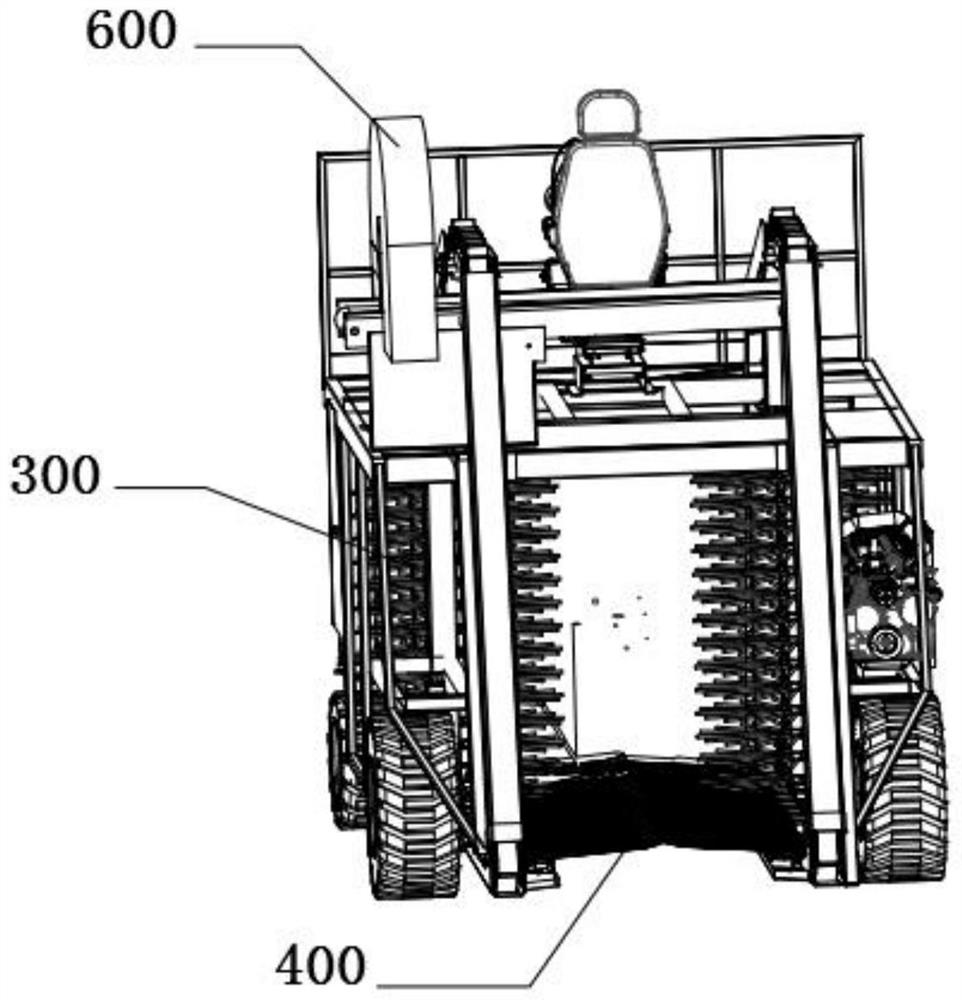
Figure 2 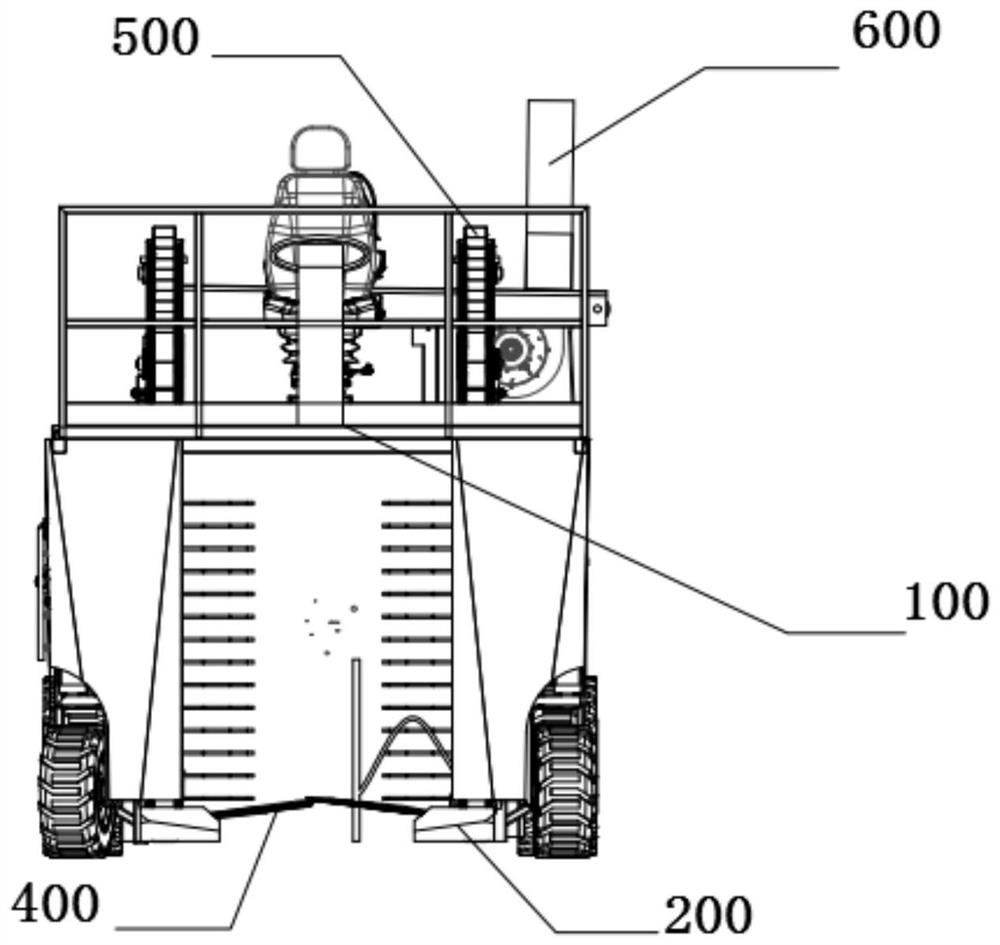
Figure 3
Abstract
Description
technical field
[0001] The invention relates to the field of agricultural machinery design, in particular to a wolfberry picking vehicle. Background technique
[0002] Lycium barbarum has good medicinal and health value, and has been favored by mass consumers in recent years. However, wolfberry picking has always been mainly done manually. Due to the thin peel and rich juice of wolfberry, it is very easy to be damaged during picking, and the fruit is small. The picking period is short, and the picking workload is very large. The method of manually picking wolfberry has high labor intensity and low work efficiency.
[0003] There are also some mechanized or semi-mechanized picking devices on the market. The current wolfberry fruit picking machines mainly have the following harvesting methods. One is a small hand-held picking device. The picking device is simple in structure and low in cost, but the picking efficiency is low , Compared with manual picking, the efficiency has ...
Examples
Embodiment Construction
[0068] The specific implementation manners of the present invention will be further described in detail below in conjunction with the accompanying drawings and embodiments. The following examples are used to illustrate the present invention, but are not intended to limit the scope of the present invention.
[0069] In the description of this application, it is to be understood that the terms "center", "upper", "lower", "front", "rear", "left", "right", "vertical", "horizontal", The orientations or positional relationships indicated by "top", "bottom", "inner", "outer", etc. are based on the orientations or positional relationships shown in the drawings, and are only for the convenience of describing the application and simplifying the description, rather than indicating or implying References to devices or elements must have a particular orientation, be constructed, and operate in a particular orientation and therefore should not be construed as limiting the application.
[0...