

Rivet, riveting structure capable of realizing synchronous and uniform interfering along axial direction and riveting process
A riveting structure and rivet technology, applied in rivets, connecting components, screws, etc., can solve the problems of poor interference fit and low fatigue life of fastening holes, and achieve the effect of improving the effect of fatigue strengthening
Patent Information
- Authority / Receiving Office
- CN · China
- Patent Type
- Applications(China)
- Current Assignee / Owner
- Publication Date
- 2022-02-01
Smart Images
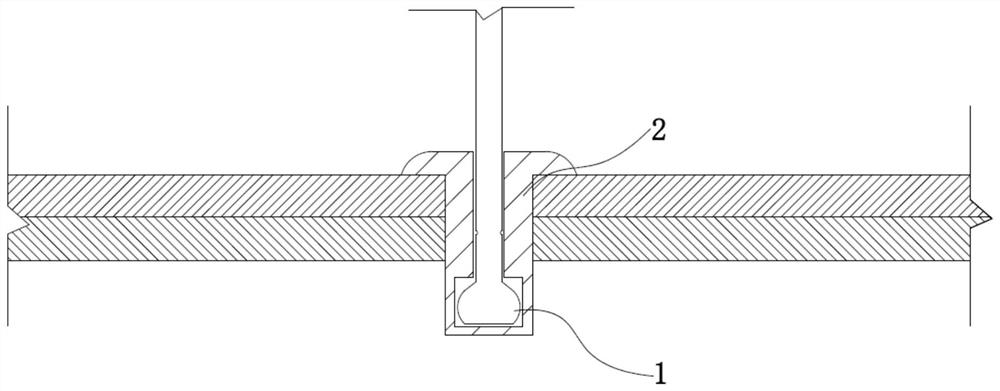
Figure 1 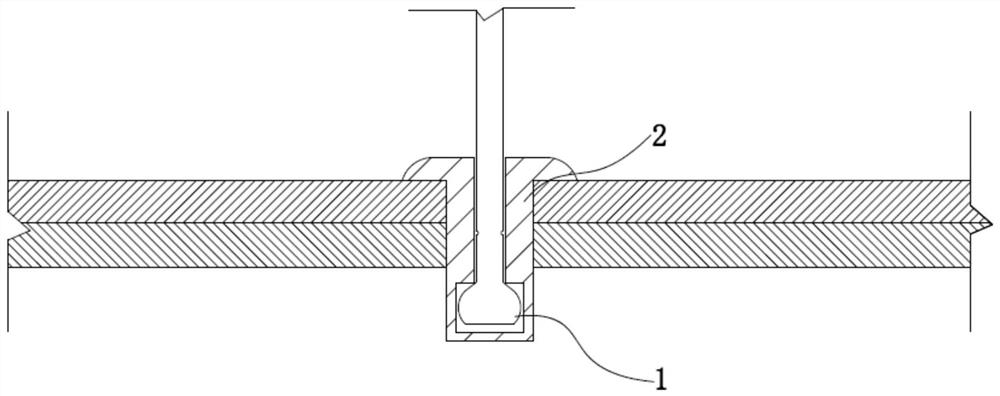
Figure 2 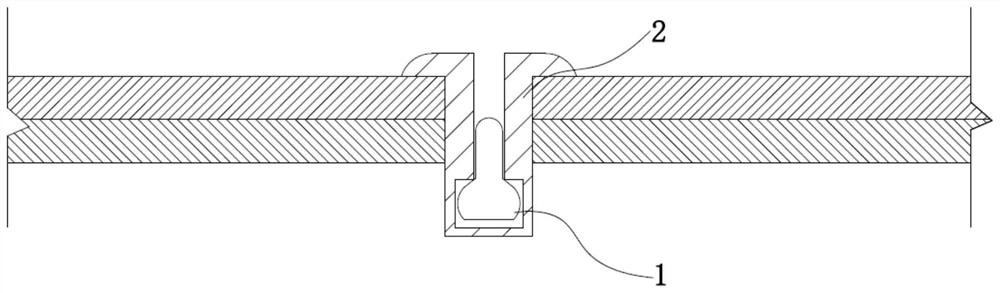
Figure 3
Abstract
Description
technical field
[0001] The present disclosure relates to the technical field of mechanical connection, and in particular, to a rivet, a riveting structure with synchronous and uniform interference along the axial direction, and a riveting process. Background technique
[0002] The fastening hole is a typical structure that is prone to local stress concentration. Fatigue cracks are easy to occur under the action of alternating loads, which affects the fatigue life of the fastening hole, and then affects the safety, reliability and service life of the structural parts.
[0003] The principle of interference fatigue strengthening is to form a certain supporting force between the fastener and the fastening hole of the matrix, so that the local fatigue stress amplitude around the hole is reduced, and the purpose of fatigue strengthening is achieved. Riveting is a common type of fastening hole connection, and the connection between components is realized by installing fasteners su...
Examples
Embodiment Construction
[0037] Example embodiments will now be described more fully with reference to the accompanying drawings. Example embodiments may, however, be embodied in many forms and should not be construed as limited to the embodiments set forth herein; rather, these embodiments are provided so that this disclosure will be thorough and complete, and will fully convey the concept of example embodiments to those skilled in the art. The same reference numerals in the drawings denote the same or similar structures, and thus their detailed descriptions will be omitted. Furthermore, the drawings are merely schematic illustrations of the present disclosure and are not necessarily drawn to scale.
[0038] Although relative terms such as "upper" and "lower" are used in this specification to describe the relative relationship of one component of an icon to another component, these terms are used in this specification only for convenience, for example, according to the description in the accompanyin...