
Strong-robustness minimum-variance ultrasonic beam forming method based on subspace oblique projection
A minimum variance, subspace technology, applied in the re-radiation of sound waves, radio wave measurement systems, instruments, etc., can solve the problems of poor robustness of the feature space minimum variance algorithm, suppression of useful signals, image distortion, etc. Robustness, reduction of variance in background regions, effect of guaranteed contrast and resolution
Patent Information
- Authority / Receiving Office
- CN · China
- Patent Type
- Applications(China)
- Current Assignee / Owner
- Publication Date
- 2022-04-29
Smart Images
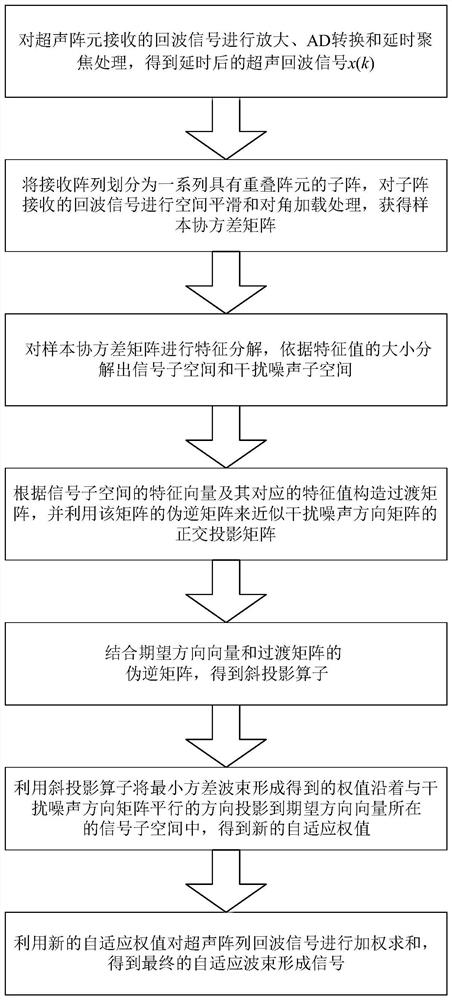
Figure 1 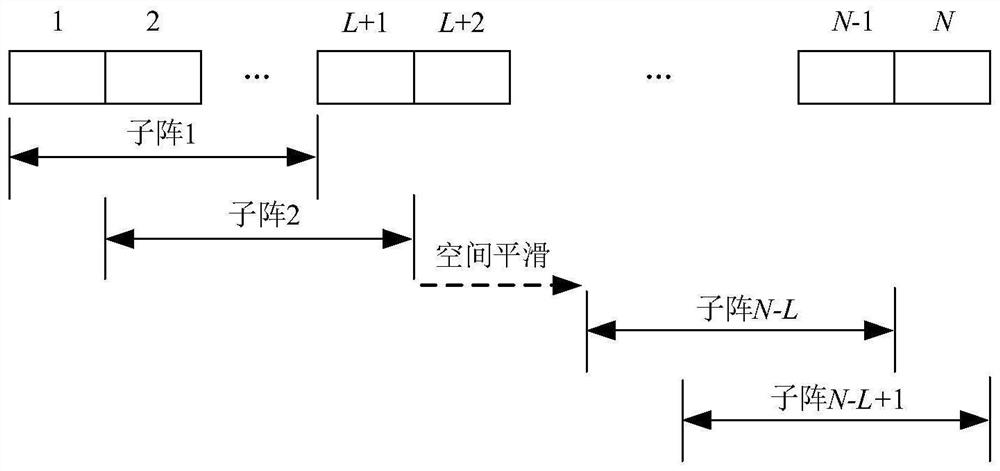
Figure 2 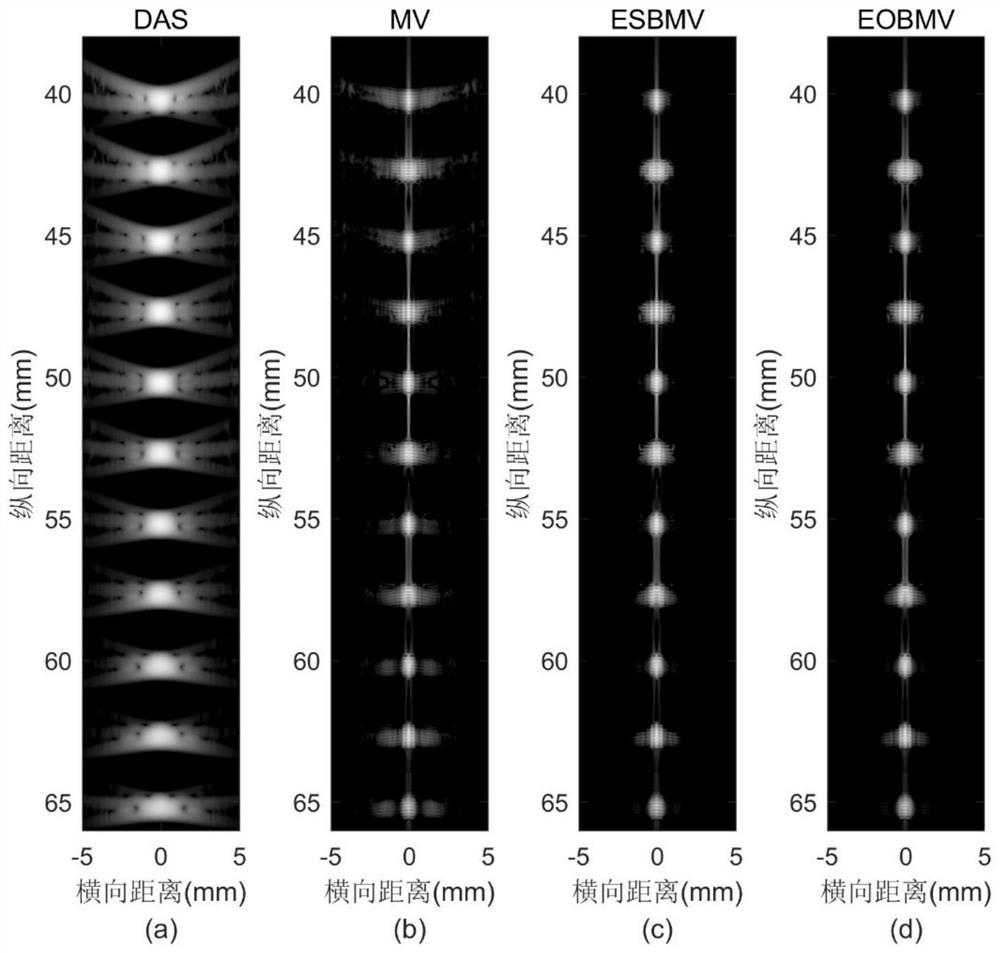
Figure 3
Abstract
Description
technical field
[0001] The invention belongs to the technical field of ultrasonic imaging, and relates to a strong robustness minimum variance ultrasonic beam forming method based on subspace oblique projection. Background technique
[0002] Ultrasound imaging is widely used in various detection fields due to its advantages of non-invasiveness, safety, convenience and low cost. The core content of ultrasonic imaging is the beamforming technology. The most widely used beamforming technology is the Delay And Sum algorithm (DAS), which delays the received echo signal according to the geometric position relationship of the array element channel. When , the data is aligned and superimposed. The traditional DAS algorithm is simple in principle and fast in imaging speed, but due to the weighting of the fixed window function, the width of the main lobe increases, the resolution is low, and the imaging quality is poor.
[0003] The Minimum Variance (MV) adaptive beamforming algorit...
Examples
Embodiment Construction
[0051] Embodiments of the present invention are described below through specific examples, and those skilled in the art can easily understand other advantages and effects of the present invention from the content disclosed in this specification. The present invention can also be implemented or applied through other different specific implementation modes, and various modifications or changes can be made to the details in this specification based on different viewpoints and applications without departing from the spirit of the present invention. It should be noted that the diagrams provided in the following embodiments are only schematically illustrating the basic concept of the present invention, and the following embodiments and the features in the embodiments can be combined with each other in the case of no conflict.
[0052] see Figure 1 ~ Figure 4 , figure 1 Be the algorithm flowchart of the present invention, as figure 1 As shown, the present invention has designed a ...