
Soft weighted multi-stage network model applied to semantic segmentation
A semantic segmentation and network model technology, applied in biological neural network models, character and pattern recognition, instruments, etc., can solve the problems of not making full use of multi-scale information, not alleviating the irreversible loss of coding, etc.
Patent Information
- Authority / Receiving Office
- CN · China
- Current Assignee / Owner
- Publication Date
- 2022-05-31
Smart Images
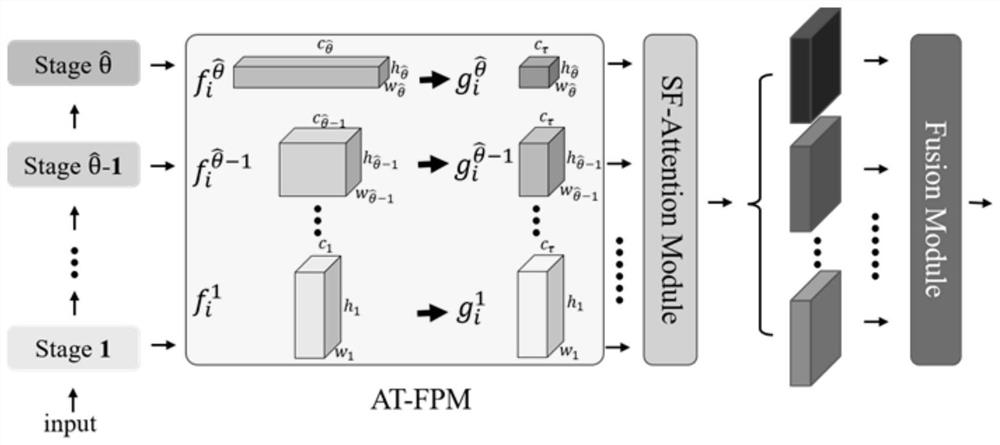
Figure 1 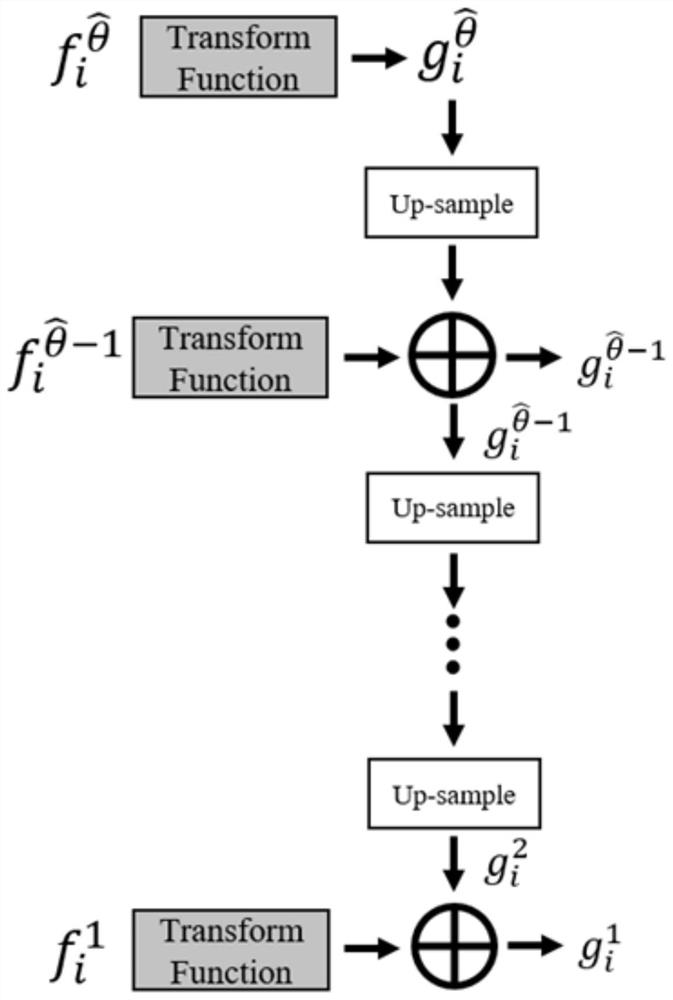
Figure 2 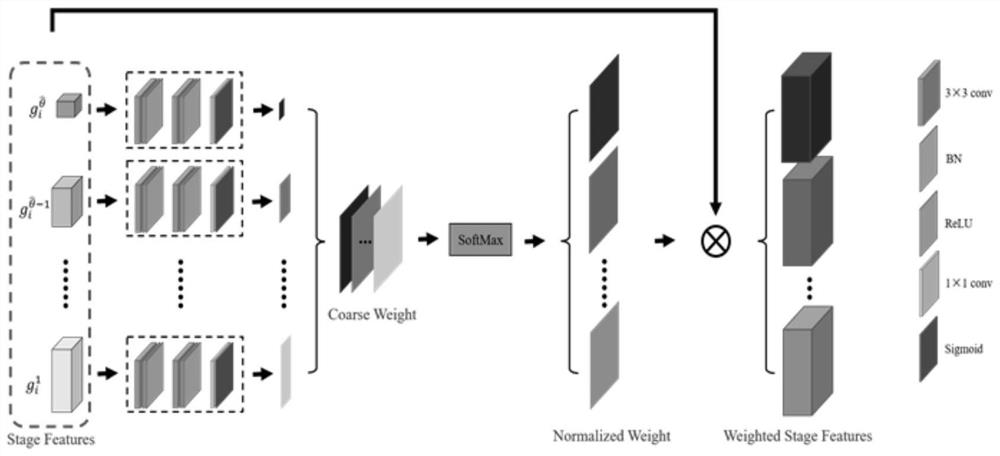
Figure 3
Abstract
Description
technical field
[0001] The invention relates to the field of semantic segmentation, relates to a multi-scale target segmentation network for urban street view images, and in particular to a soft-weighted multi-stage network model applied to semantic segmentation. Background technique
[0002] In recent years, with the rapid development of vehicle cameras, surveillance cameras and other equipment, a large number of images of urban street scenes have been generated. Understanding the semantic information contained in these images is an important basis for urban applications such as autonomous driving and intelligent services.
[0003] Multi-scale object segmentation in complex scenes such as city streets has always been a challenging problem in semantic segmentation tasks. This kind of image has the problem that the size difference between objects is too large, which makes the network unable to extract the features of objects at various scales while maintaining timeliness. ...
Examples
Embodiment Construction
[0018] Technical terms:
[0019] Atrous Transformation Feature Pyramid Module (AT-FPM);
[0020] Stage Feature Attention Module (StageFeatureAttention, SF-Attention);
[0021] Feature Pyramid Module (Feature PyramidModule, FPM);
[0022] Atrous Spatial Pyramid Pooling.
[0023] The design concept of the present invention is to propose a soft weighted multi-stage feature network composed of an atrous transform feature pyramid module (AT-FPM) and a stage feature attention module (SF-Attention). In AT-FPM, a concept of adopting different transformation functions for different stage features is proposed. Specifically, for deep stage features, the adaptive feature transformation function of the feature pyramid module is replaced by hollow space pyramid pooling, which expands the overall receptive field of the network and better extracts the features and global information of large-scale targets; while for the shallow layer features, the adaptive transformation function is used ...