
Electrostatic spinning guide wire transmission mechanism
A transmission mechanism, electrospinning technology, applied in the direction of conveying filamentous materials, thin material processing, transportation and packaging, etc., can solve the problems of increasing the labor intensity of users, unable to meet the needs of use, and reducing the efficiency of the wire guide, etc. Improve practical performance, uniform force, and ensure stable performance
Patent Information
- Authority / Receiving Office
- CN · China
- Patent Type
- Applications(China)
- Current Assignee / Owner
- Publication Date
- 2022-07-22
Smart Images
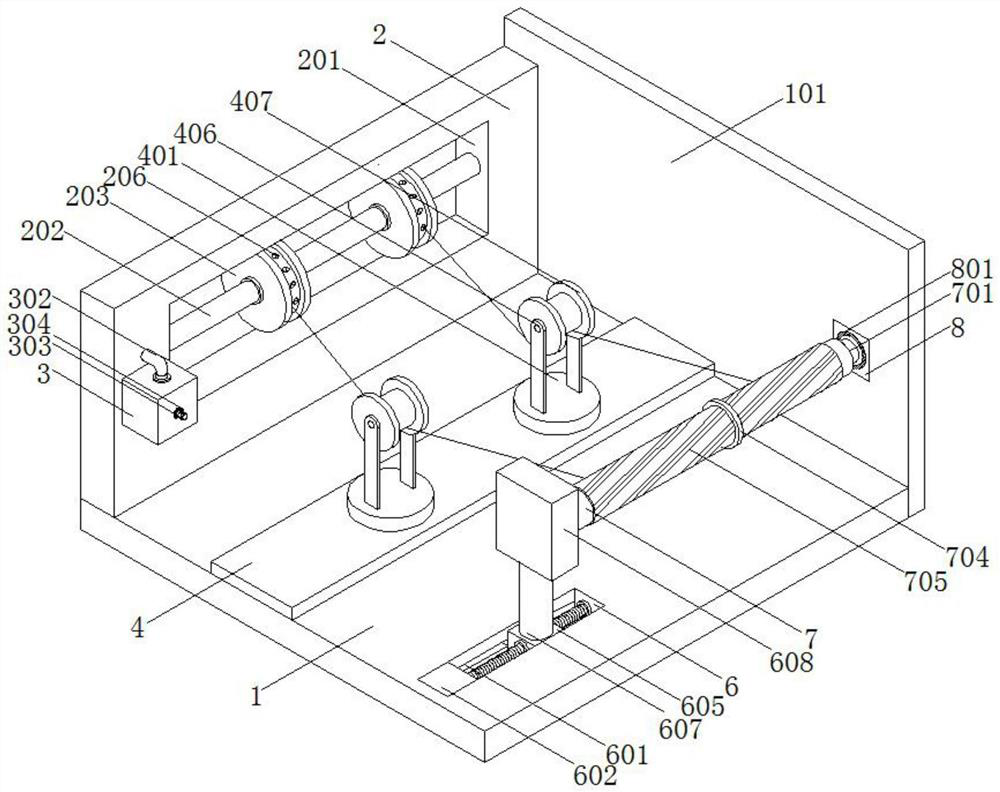
Figure 1 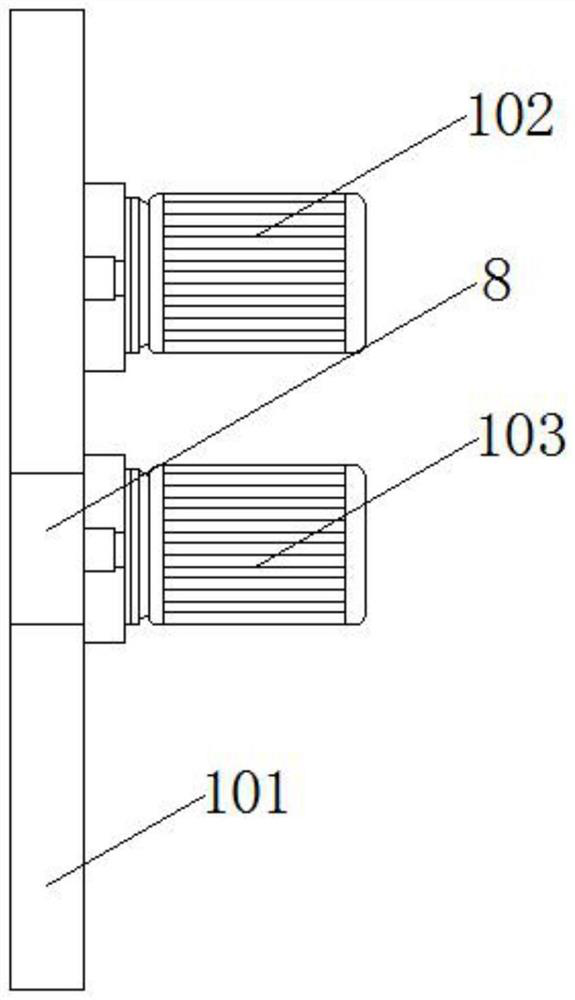
Figure 2 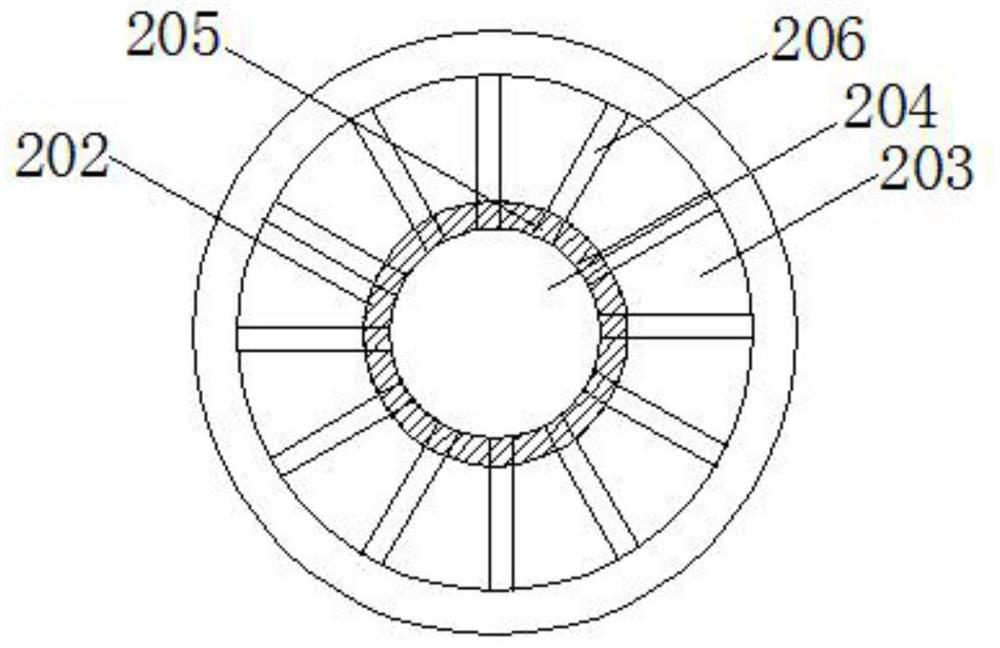
Figure 3
Abstract
Description
technical field
[0001] The invention relates to the technical field of electrospinning production, in particular to an electrospinning guide wire transmission mechanism. Background technique
[0002] Electrospinning is a special form of electrostatic atomization of polymer fluids. At this time, the atomized and split substances are not tiny droplets, but tiny polymer jets, which can run for a long distance and finally solidify into fibers. The technical preparation of nanofiber materials is one of the most important academic and technical activities in the field of material science and technology in the world in the past ten years. It has become one of the main ways to effectively prepare nanofiber materials. After the guide wire is produced, a guide wire transmission mechanism is required to wind the guide wire.
[0003] The defects of the guide wire transmission mechanism in the prior art are:
[0004] 1. The patent document CN211895458U discloses a spinning and winding ...
Examples
Embodiment Construction
[0042] The technical solutions in the embodiments of the present invention will be clearly and completely described below with reference to the accompanying drawings in the embodiments of the present invention. Obviously, the described embodiments are only a part of the embodiments of the present invention, rather than all the embodiments. Based on the embodiments of the present invention, all other embodiments obtained by those of ordinary skill in the art without creative efforts shall fall within the protection scope of the present invention.
[0043] In the description of the present invention, it should be noted that the terms "upper", "lower", "inner", "outer", "front end", "rear end", "two ends", "one end" and "the other end" The orientation or positional relationship indicated by etc. is based on the orientation or positional relationship shown in the accompanying drawings, which is only for the convenience of describing the present invention and simplifying the descrip...