
Ultraviolet-C (UV-C) mercury discharge tube irradiated forced airflow face shield
Patent Information
- Authority / Receiving Office
- US · United States
- Current Assignee / Owner
- Publication Date
- 2022-01-18
Smart Images
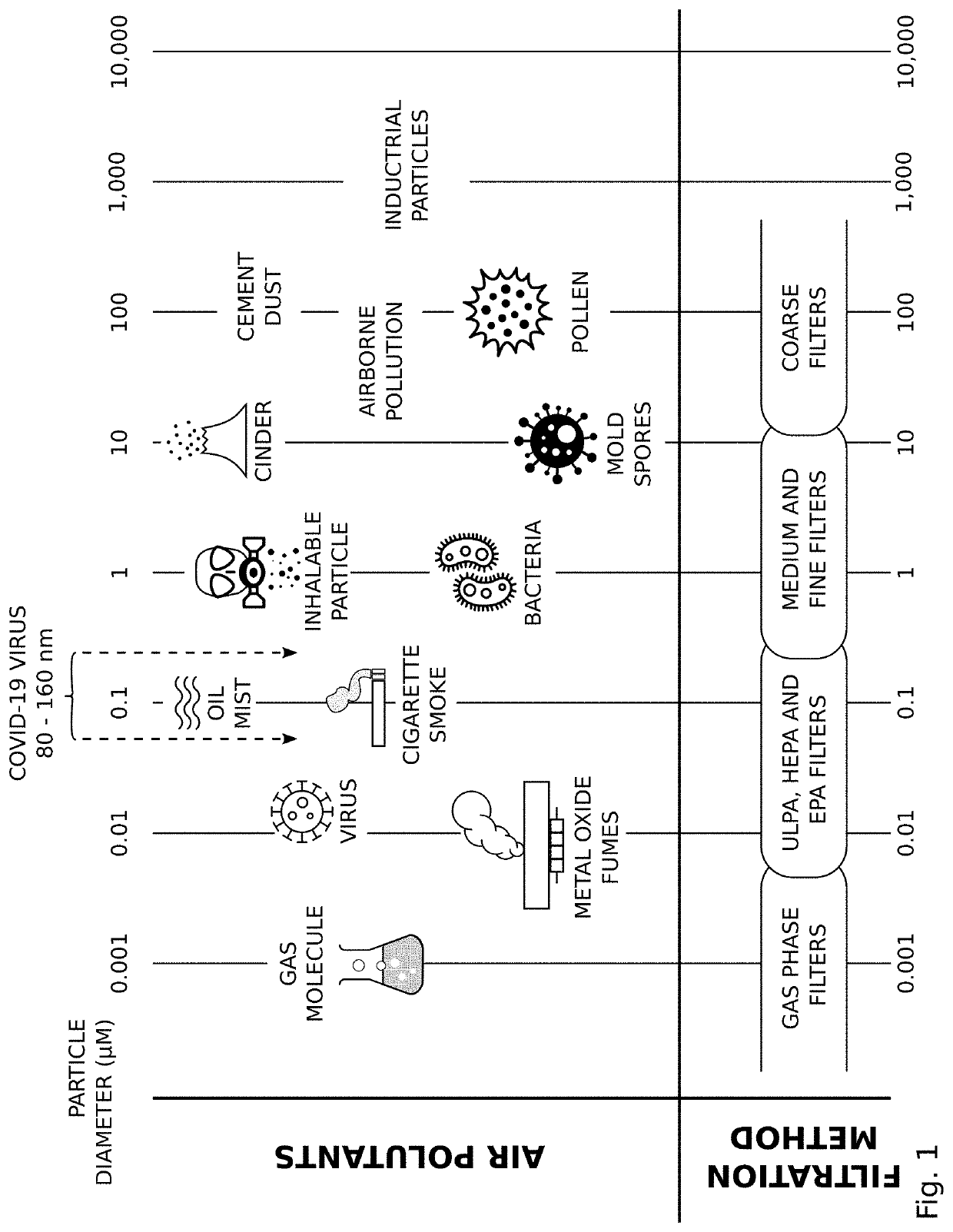
Figure 1 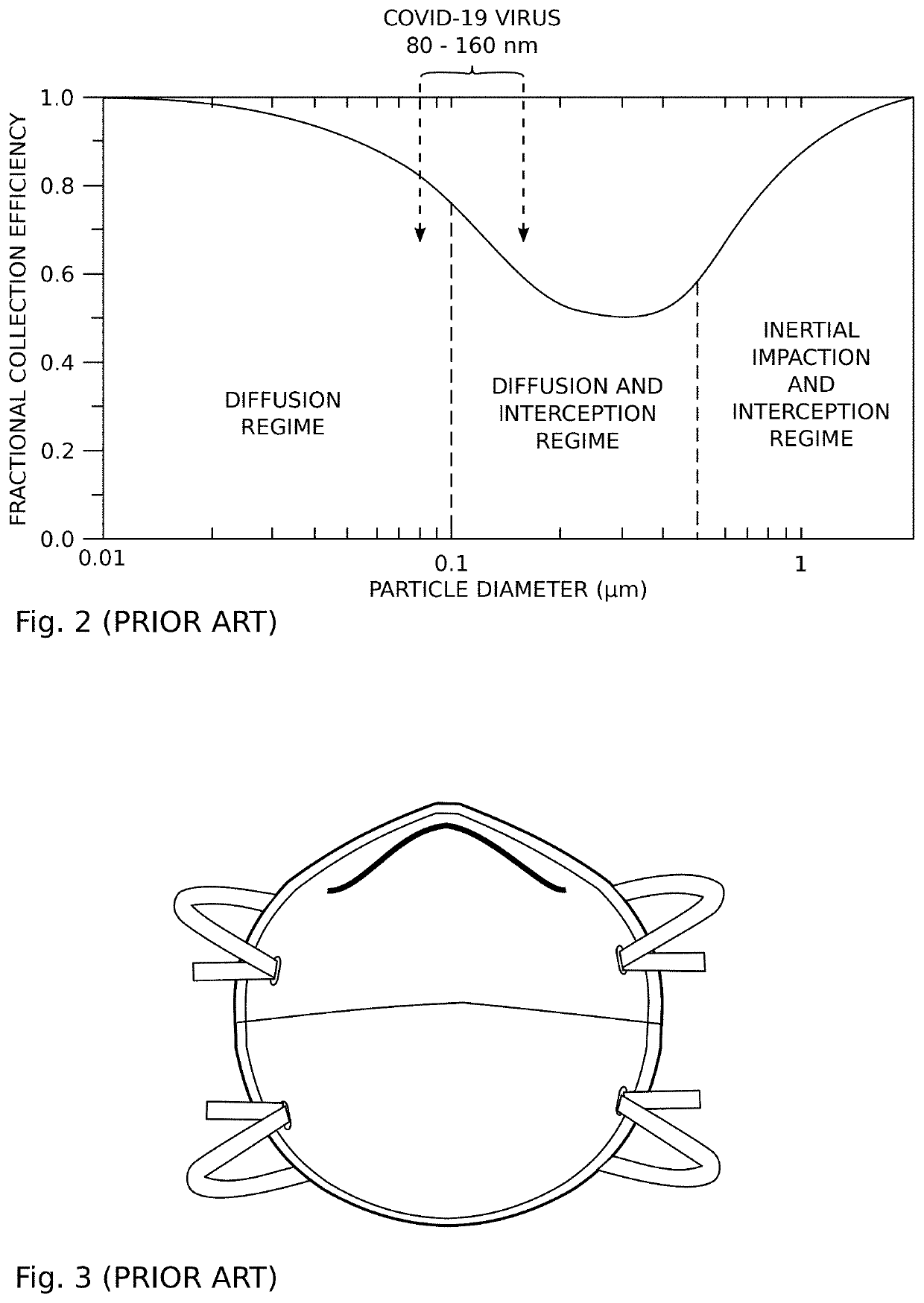
Figure 2 
Figure 3
Abstract
Description
BACKGROUND OF THE INVENTION1. Field of the Invention
[0001] This invention generally relates to respirator masks and, more particularly, to a face shield using irradiated forced air to provide protection against airborne disease.2. Description of the Related Art1.0. Introduction
[0002] Respiratory infections can be transmitted through droplets of different sizes. When the droplet particles are greater than 5-10 microns rpm) m diameter they are referred to as respiratory droplets, and when then are less than 5 pan in diameter, they are referred to as droplet nuclei or microdroplas. According to current evidence, the COVID-19 virus, which is also referred to as the SARS CoV-2 virus, is primarily transmitted between people through respiratory droplets and contact routes. Droplet transmission occurs when a person is in close contact (within 1 meter (m)) with someone who has respiratory symptoms (e.g., coughing or sneezing) and is therefore at risk of having their mucosae (mouth and nose) or...
Examples
Embodiment Construction
Theoretical Background for the Invention and the Technical Issues with Masks
[0158]The devices disclosed herein are based on tailoring the UV-C irradiated airflow around the face of a human and UV-C irradiation calculations performed in a confined airflow. Therefore, an understanding of basic fluid dynamics principles is required, coupled with UV-C radiation related calculations in a quantitative level. In addition to discomfort, the reasoning for not wearing a mask can also be answered with the basic fluid dynamics principles as well. In addition to that, identifying the degradation of the surgical mask performance based upon the way it is worn can also be quantified with basic fluid dynamics principles. Therefore, it is a good idea to start the detailed explanation of the disclosed face shield with a basic introduction to fluid dynamics. This is followed by an explanation of how the UV-C radiation related calculations are applied for the design of the Ultra-Violet Germicidal Irradi...