
High quality, low memory bandwidth motion estimation processor
a motion estimation and low memory bandwidth technology, applied in the field of video motion estimation, can solve the problems of reducing external memory bandwidth, buffering, consuming very low external memory bandwidth, etc., and achieve the effect of low memory bandwidth, low memory bandwidth, and minimizing search memory siz
Patent Information
- Authority / Receiving Office
- US · United States
- Patent Type
- Applications(United States)
- Current Assignee / Owner
- Publication Date
- 2005-01-20
- Estimated Expiration
- Not applicable · inactive patent
Smart Images
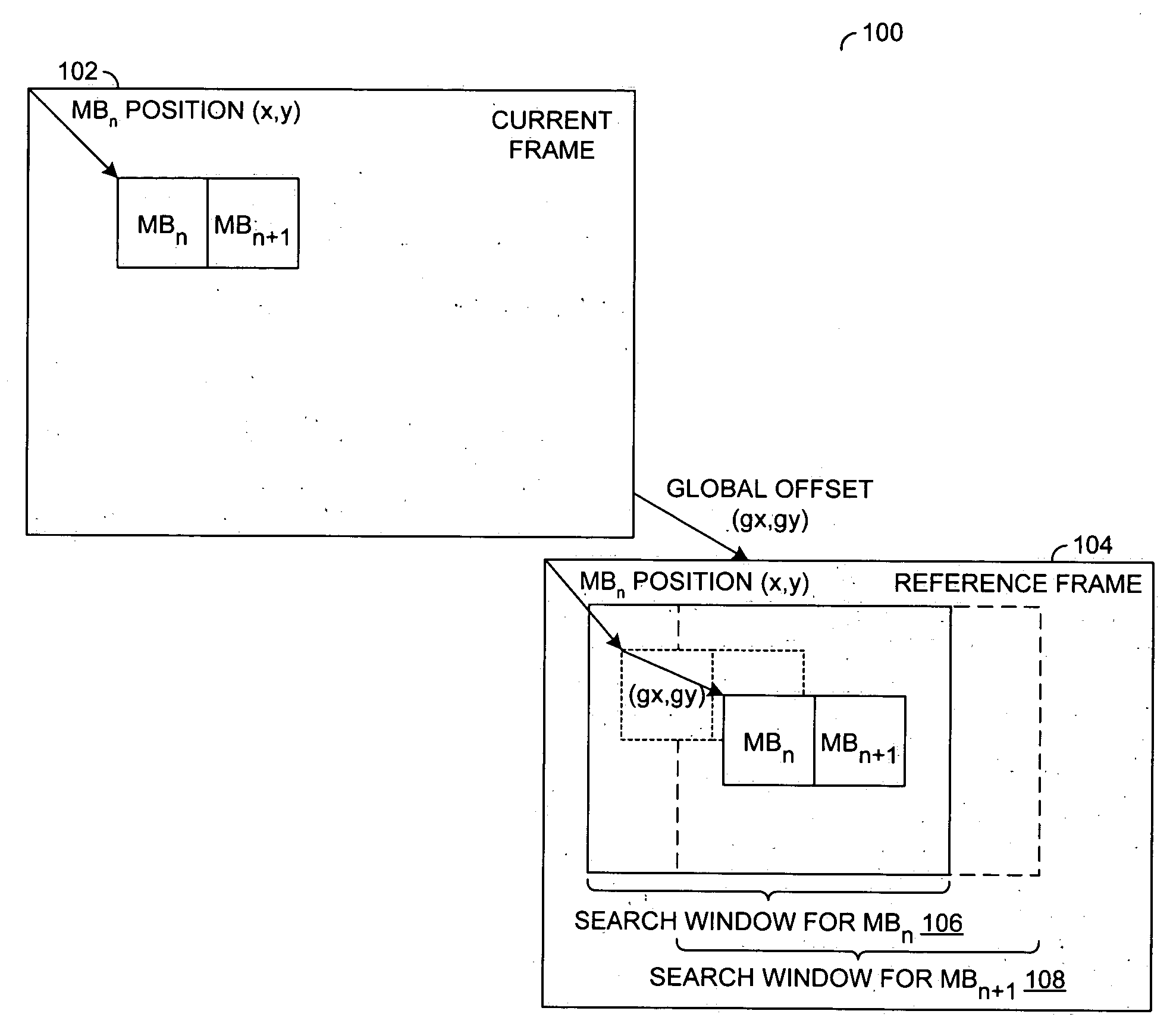
Figure 1 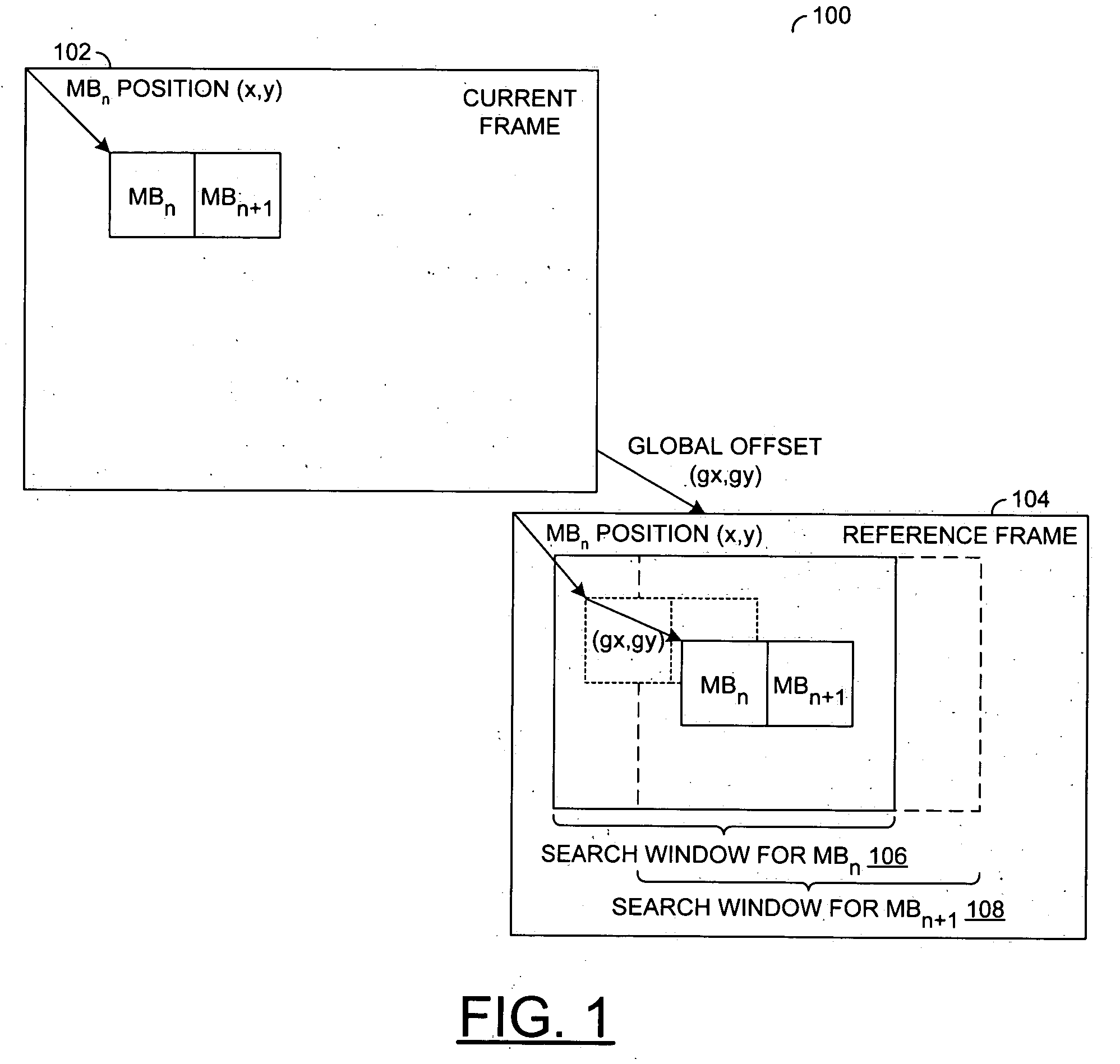
Figure 2 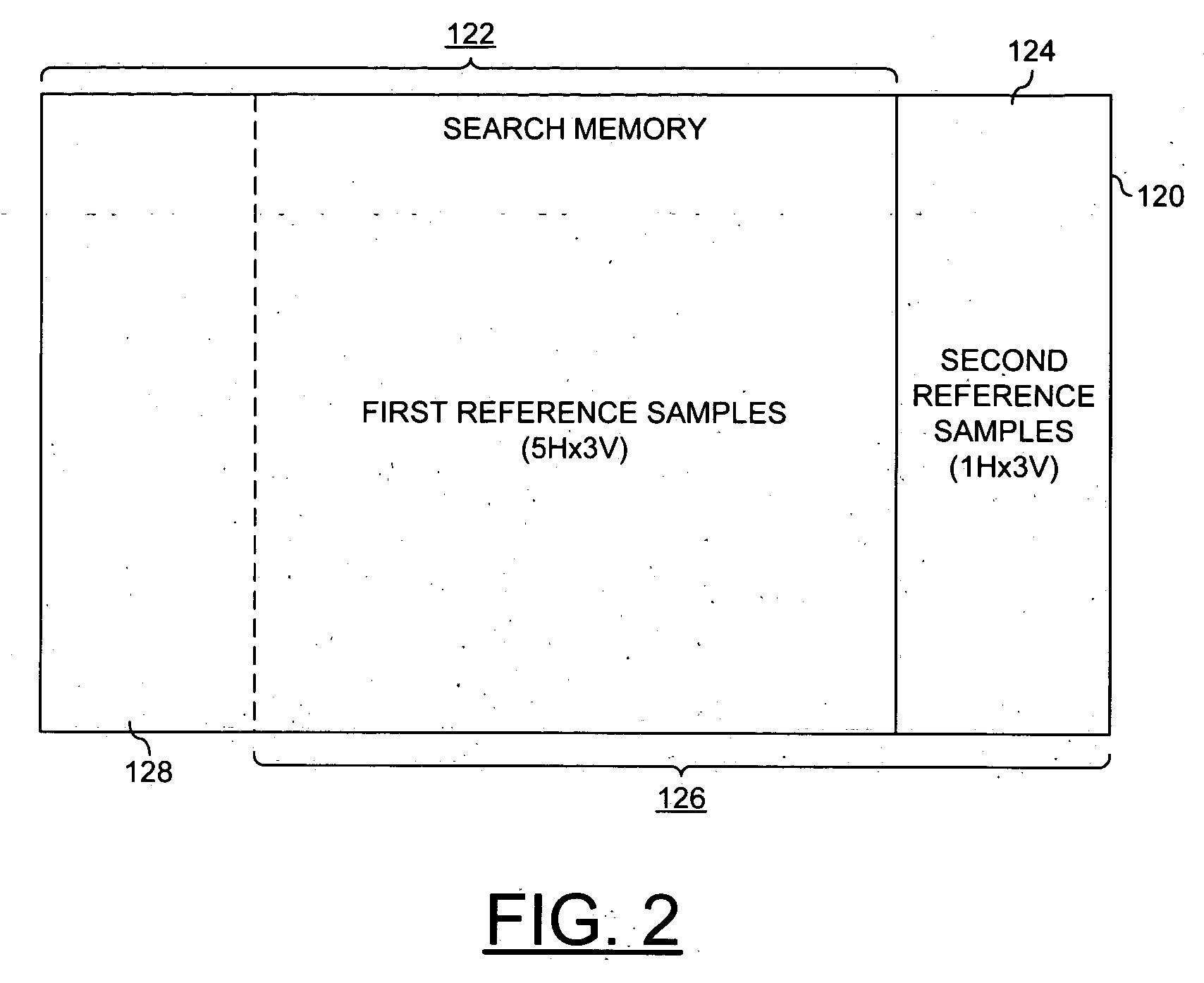
Figure 3
Abstract
Description
[0001] This application claims the benefit of U.S. Provisional Application No. 60 / 487,643, filed Jul. 15, 2003, which is hereby incorporated by reference in its entirety.
[0002] This application is related to co-pending applications Ser. No. 10 / 196,731, filed Jul. 16, 2002, Ser. No. 10 / 669,930, filed Sep. 24, 2003, Ser. No. 10 / 682,631, filed Oct. 9, 2003 and Ser. No. 10 / ______ ,______ (Attorney Reference no. 03-00986 / 1496.00339), filed Oct. 22, 2003, which are hereby incorporated by reference in their entirety.FIELD OF THE INVENTION
[0003] The present invention relates to a video motion estimation generally and, more particularly, to a high quality, low memory bandwidth motion estimation processor. BACKGROUND OF THE INVENTION
[0004] Designing a motion estimation approach for a very large scale integration implementation that yields high picture quality (i.e., DVD quality) while consuming very low external memory bandwidth poses several challenges. Using a large search area for the m...
Examples
Embodiment Construction
[0014] The present invention may realize the benefits of a large search area without using high external memory bandwidth by using two small independent “boxcar” search windows. Each search window size may be set to + / −40, 32, 24 or 16 horizontal (H) integer pels by + / −24, 16 or 8 vertical (V) integer pels. Each search window may be placed within a reference frame independently of each other (e.g., each with an individual (x, y) offset). When no large motion is detected in a sequence of video frames, the search windows may be placed adjacent or adjoining each other horizontally or vertically. When fast motion is detected, one of the windows may be placed near a center of a target current macroblock to capture static background and small motion while the other search window may be placed at an appropriate position to cover the large motion. The positioning, or offsets, are generally determined once per frame. Other update rates for the offsets may be implemented to meet the criteria ...