
Multilayer textile reinforcement web
Patent Information
- Authority / Receiving Office
- US · United States
- Current Assignee / Owner
- Publication Date
- 2005-01-27
- Estimated Expiration
- Not applicable · inactive patent
Smart Images
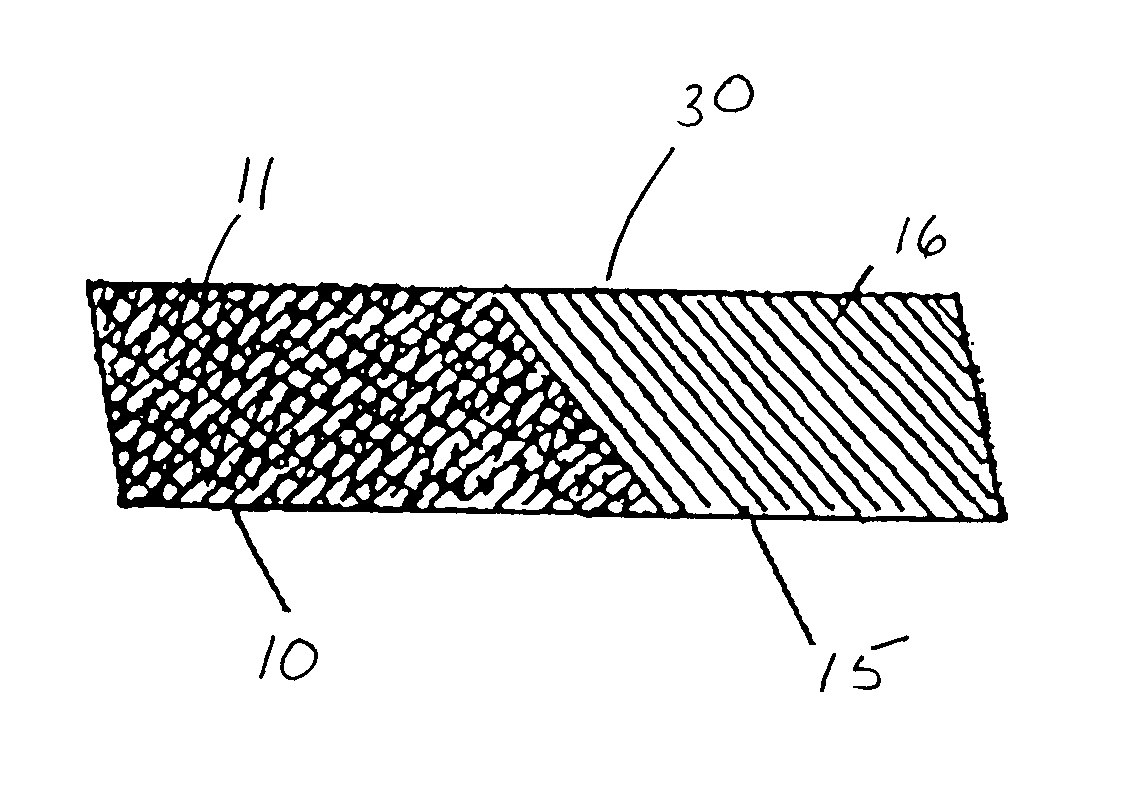
Figure 1 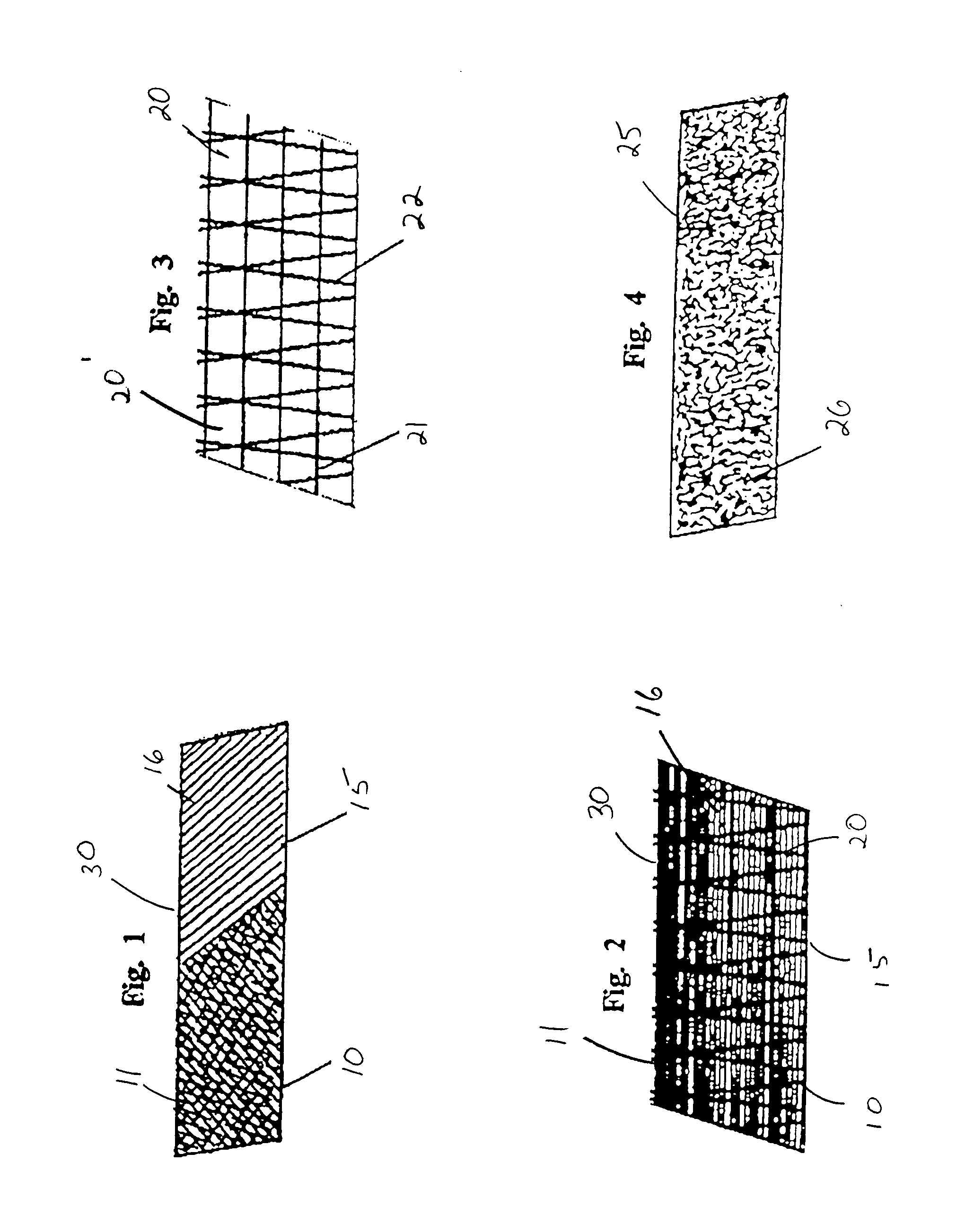
Figure 2 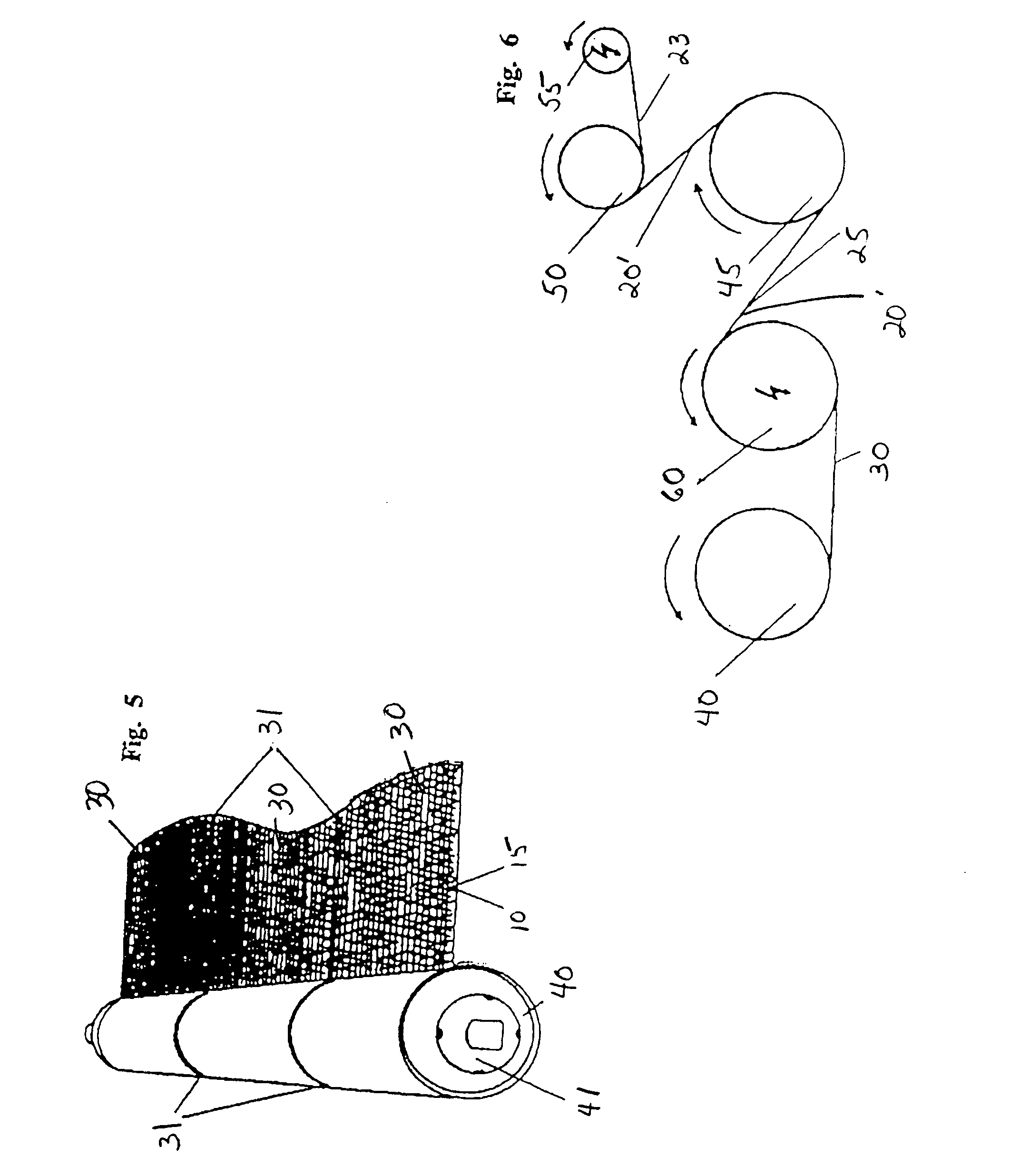
Figure 3
Abstract
Description
BACKGROUND OF THE INVENTION
[0001] This invention relates to reinforcing articles, and in particular to multilayer textile reinforcement webs.
[0002] Uni-directional and multi-directional textile webs have proven themselves particularly as outstanding reinforcements. Currently manufactured textile webs, comprised of parallel oriented fiber bundles, are available only in limited web widths. The possible applications are, however, limited when large parts must be fabricated (especially with the use of glass fibers) for example, in railcars, marine vessels, or in buildings, especially facades and roofs. The largest possible web widths are desired by web users, for example, in construction applications, in order to minimize costs and obtain maximum total strength over large surfaces without the use of butt joints.
[0003] The most significant drawbacks of limited reinforcement web width are: (i) the inevitable occurrence of gaps between adjacent webs that prevent a consistently strong co...
Examples
Embodiment Construction
[0013] Referring to the drawings in detail wherein like elements are indicated by like numerals, the purpose of the present invention is to overcome drawbacks that accrue from both limited web widths and limited web connection strength. To achieve this, two single webs 10, 15 are glued together. In other embodiments of the invention, more than two single webs may be used. FIG. 1 illustrates two single webs 10, 15 attached to each other, the first web 10 having fiber strands 11 in ±45° fiber orientations and the second web 15 having fiber strands 16 arranged in parallel. FIG. 2 illustrates two single webs 10, 15 having fiber strands 11, 16 arranged in parallel. The chosen single webs 10, 15 are then glued together with adhesive threads 20. As may be best seen in FIG. 3, an adhesive thread grid 20 with longitudinal threads 21 and transverse threads 22 may be used. The threads 21, 22 may be composed of glass, carbon, aramid, polyester, spun rayon and similar fibers. The single webs 10,...