
Detecting electromechanical oscillations in power systems
Patent Information
- Authority / Receiving Office
- US · United States
- Current Assignee / Owner
- Publication Date
- 2005-08-25
Smart Images
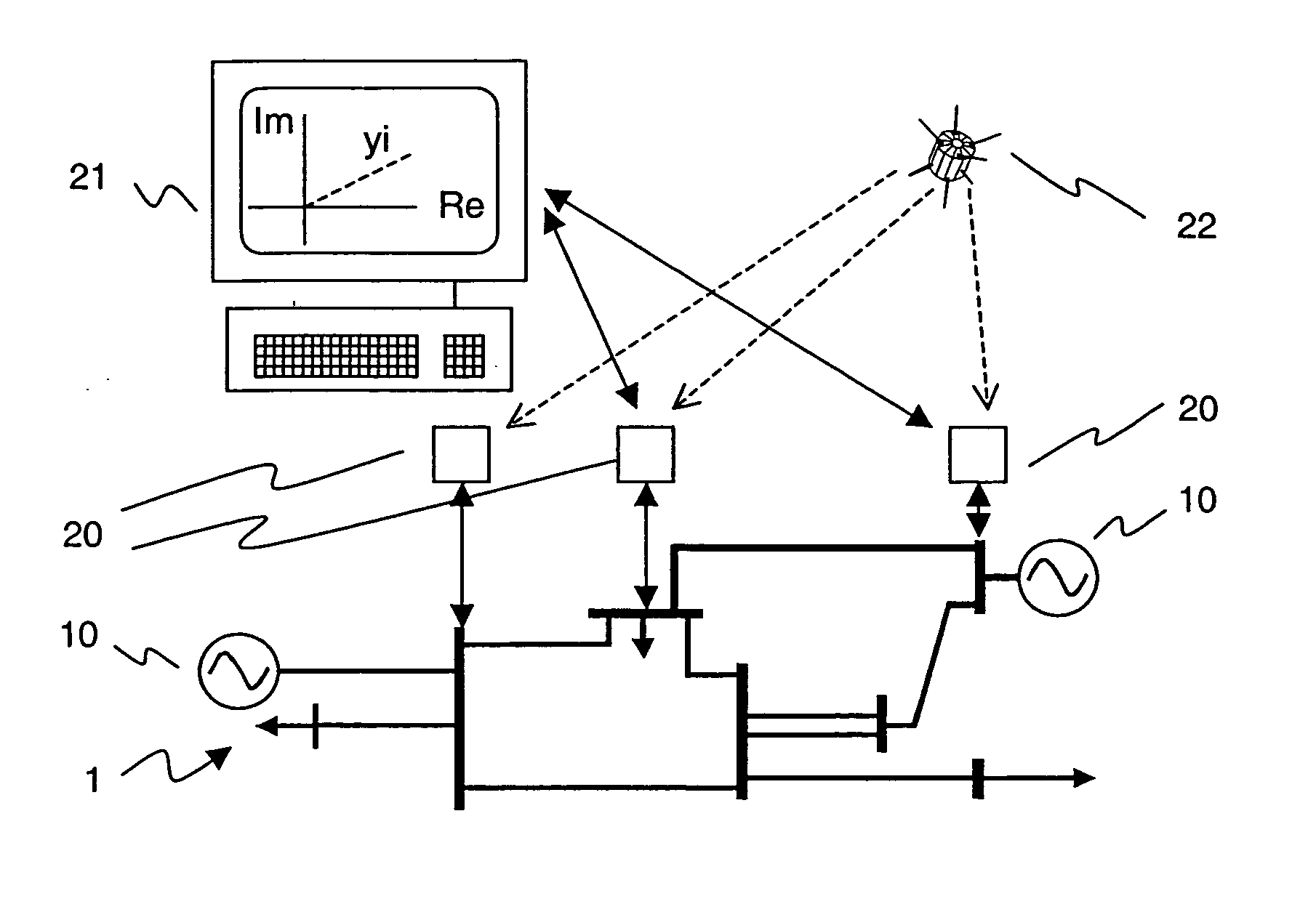
Figure 1 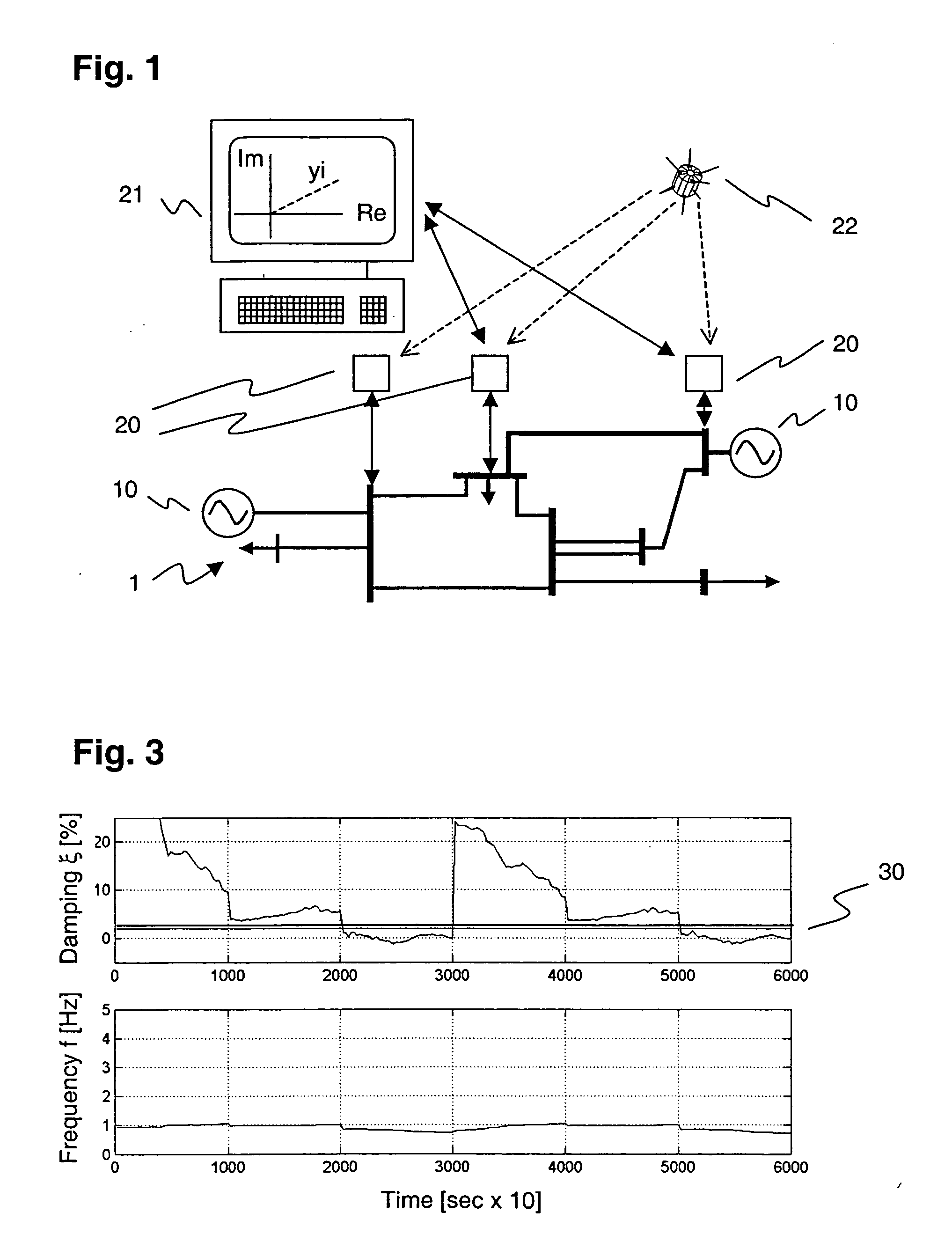
Figure 2 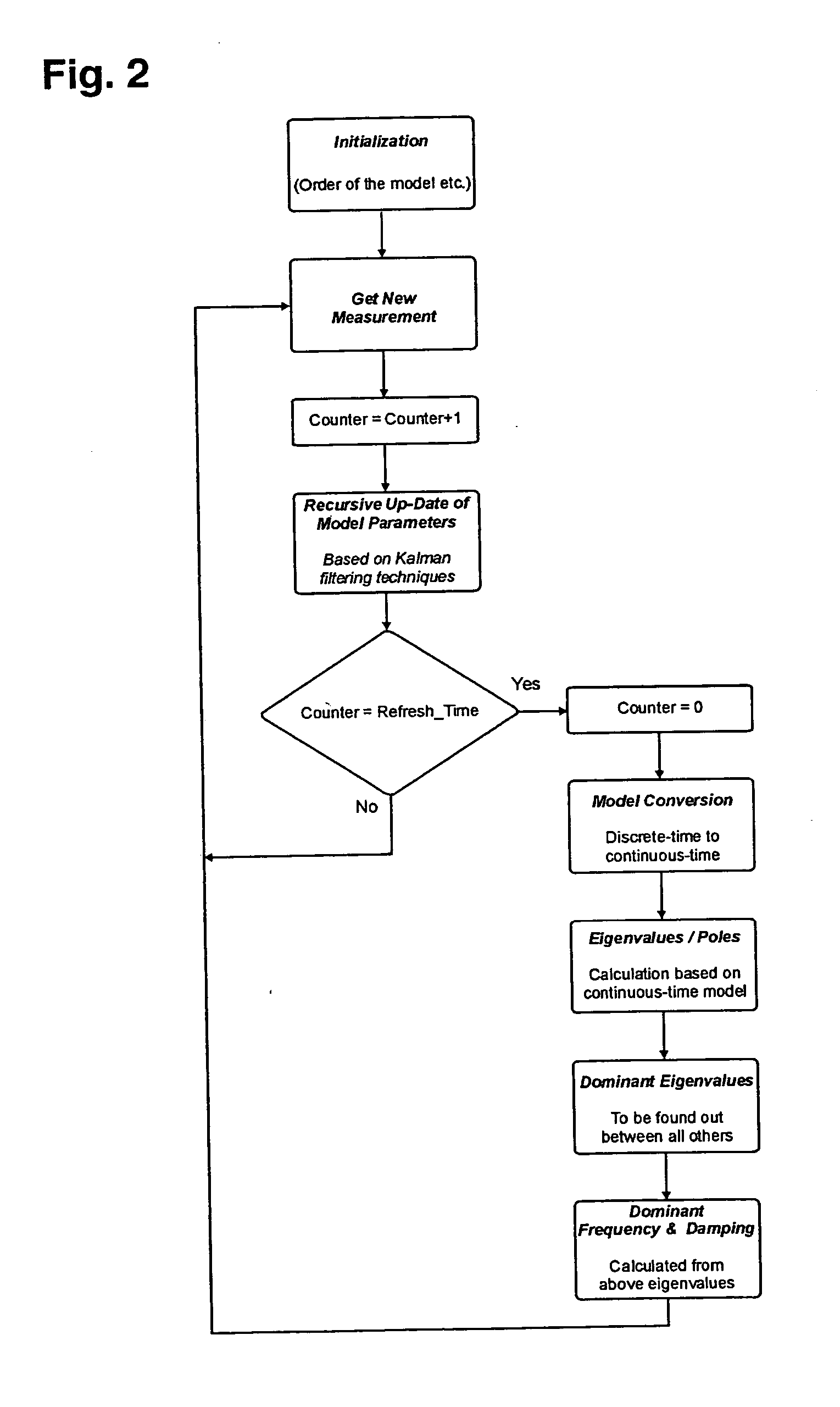
Figure 3
Abstract
Description
FIELD OF THE INVENTION
[0001] The invention relates to the field of electric power transmission networks interconnecting a plurality of generators. It departs from a method for detecting electromechanical oscillations in power systems as described in the preamble of claim 1. BACKGROUND OF THE INVENTION
[0002] In the wake of the recent and still ongoing deregulations of the electric power markets, load transmission and wheeling of power from distant generators to local load consumers has become common practice. As a consequence of the competition between utilities and the emerging need to optimize assets, substantially increased amounts of power are transmitted through the existing networks, invariably causing transmission bottlenecks and oscillations of parts of the power transmission systems.
[0003] Interconnected alternating current generators remain in synchronism because of the self-regulating properties of their interconnection. Hence, if a first generator deviates from its syn...
Examples
Embodiment Construction
[0007] It is therefore an objective of the invention to enable an operator of an electric power transmission network to identify in real-time electromechanical oscillations. This objective is achieved by a method, system and computer program for detecting electromechanical oscillations in power systems according to claims 1, 9 and 10. Further preferred embodiments are evident from the dependent patent claims.
[0008] According to the invention, a system quantity or signal such as e.g. amplitude or angle of the voltage or current at a selected node of the network is sampled, i.e. measured at discrete time intervals, and a series comprising several of the measured values of said system quantity is generated. From this series, the parameters of a parametric model representing the behaviour of a power transmission system, or a particular aspect thereof, are estimated. This process is carried out in an adaptive manner, i.e. every time a new value of the system quantity is measured, the pa...