
Advanced thermal sensor
a technology of thermal sensors and integrated circuits, applied in the field of advanced thermal sensors, can solve the problems of increasing the complexity of integrated circuits such as microprocessors, increasing the amount of heat generated within the circuit, and increasing the power that is typically consumed by these integrated circuits. to achieve the effect of reducing the complexity and size of thermal sensors
Patent Information
- Authority / Receiving Office
- US · United States
- Patent Type
- Applications(United States)
- Current Assignee / Owner
- Publication Date
- 2006-07-13
Smart Images
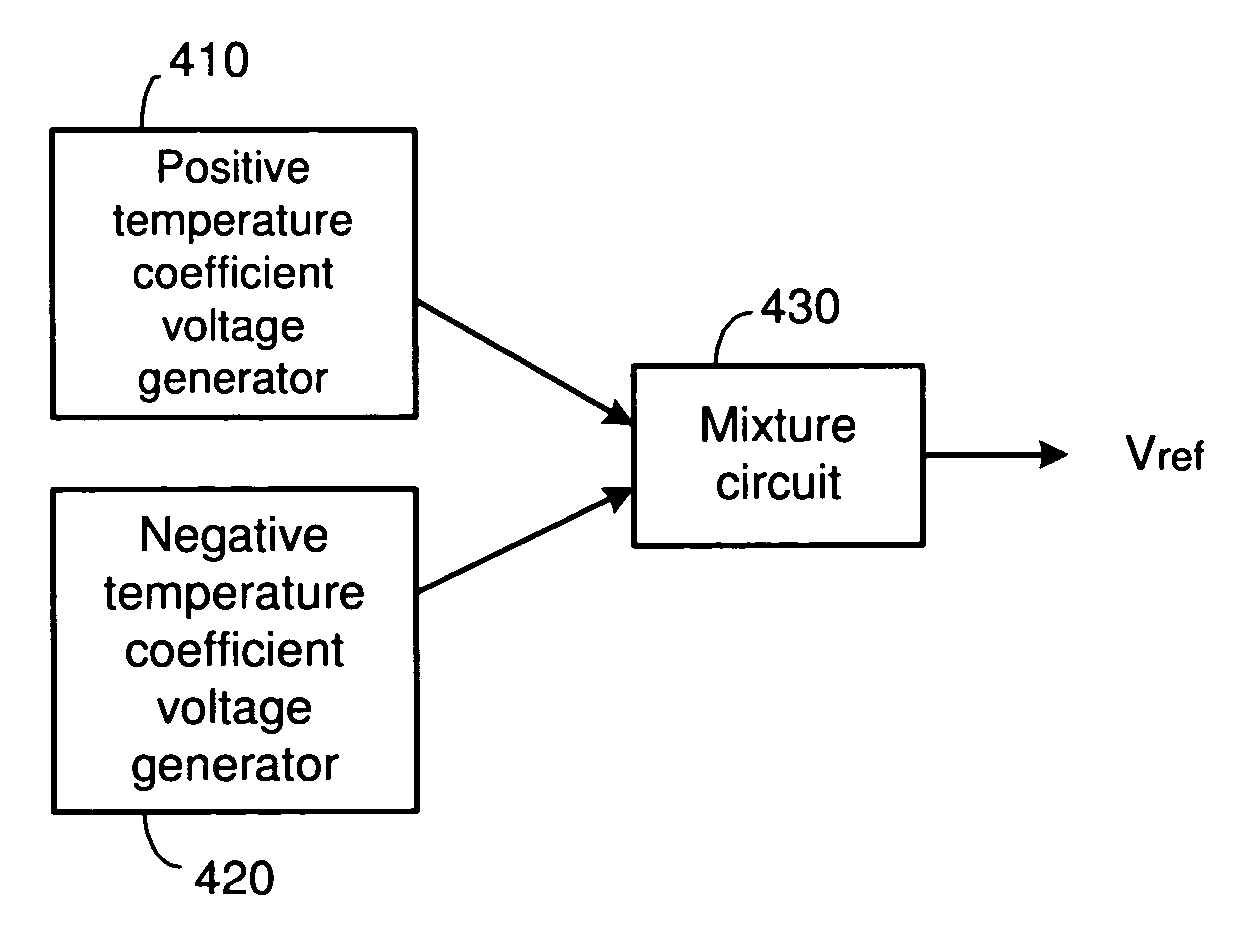
Figure 1 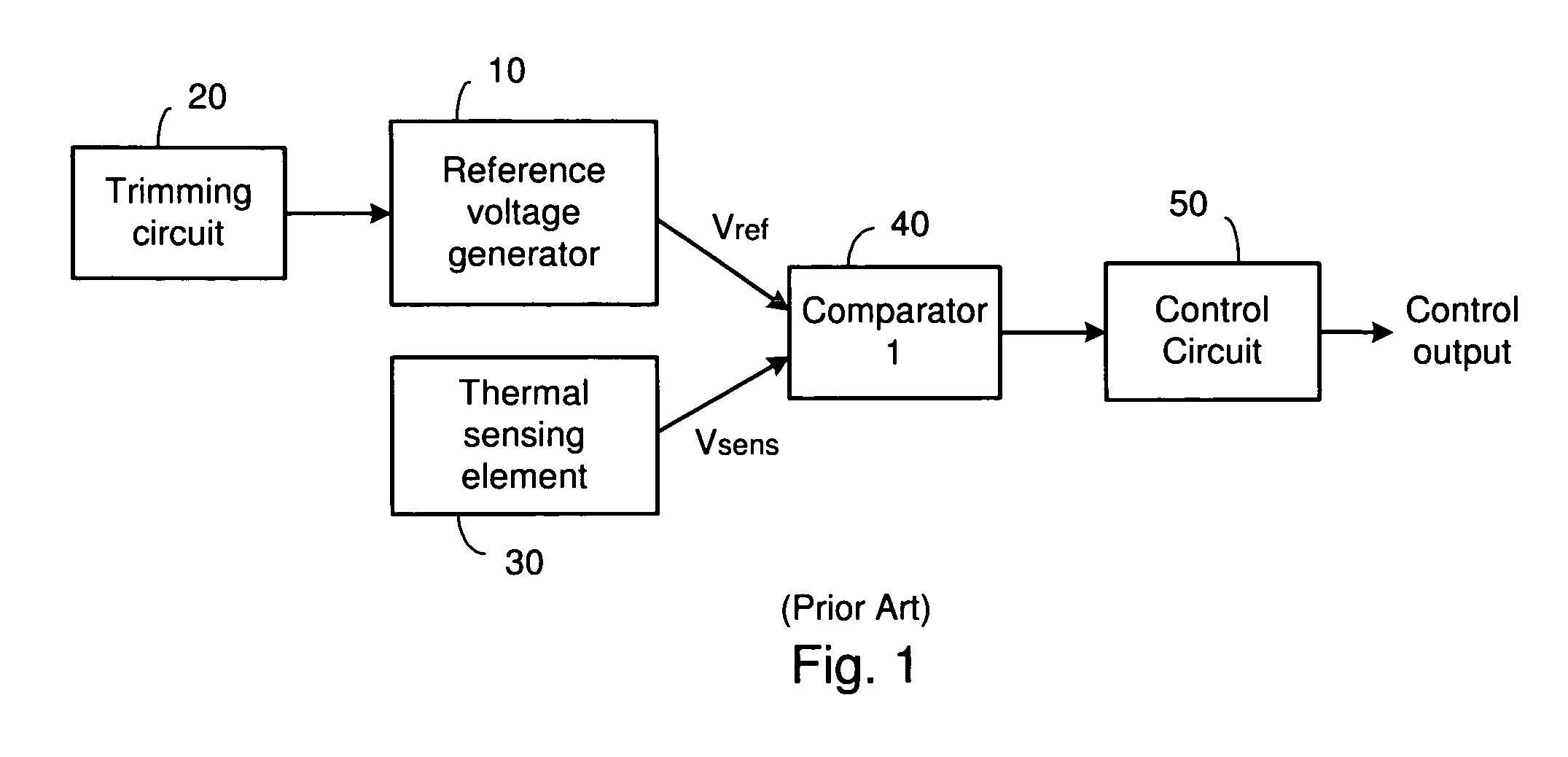
Figure 2 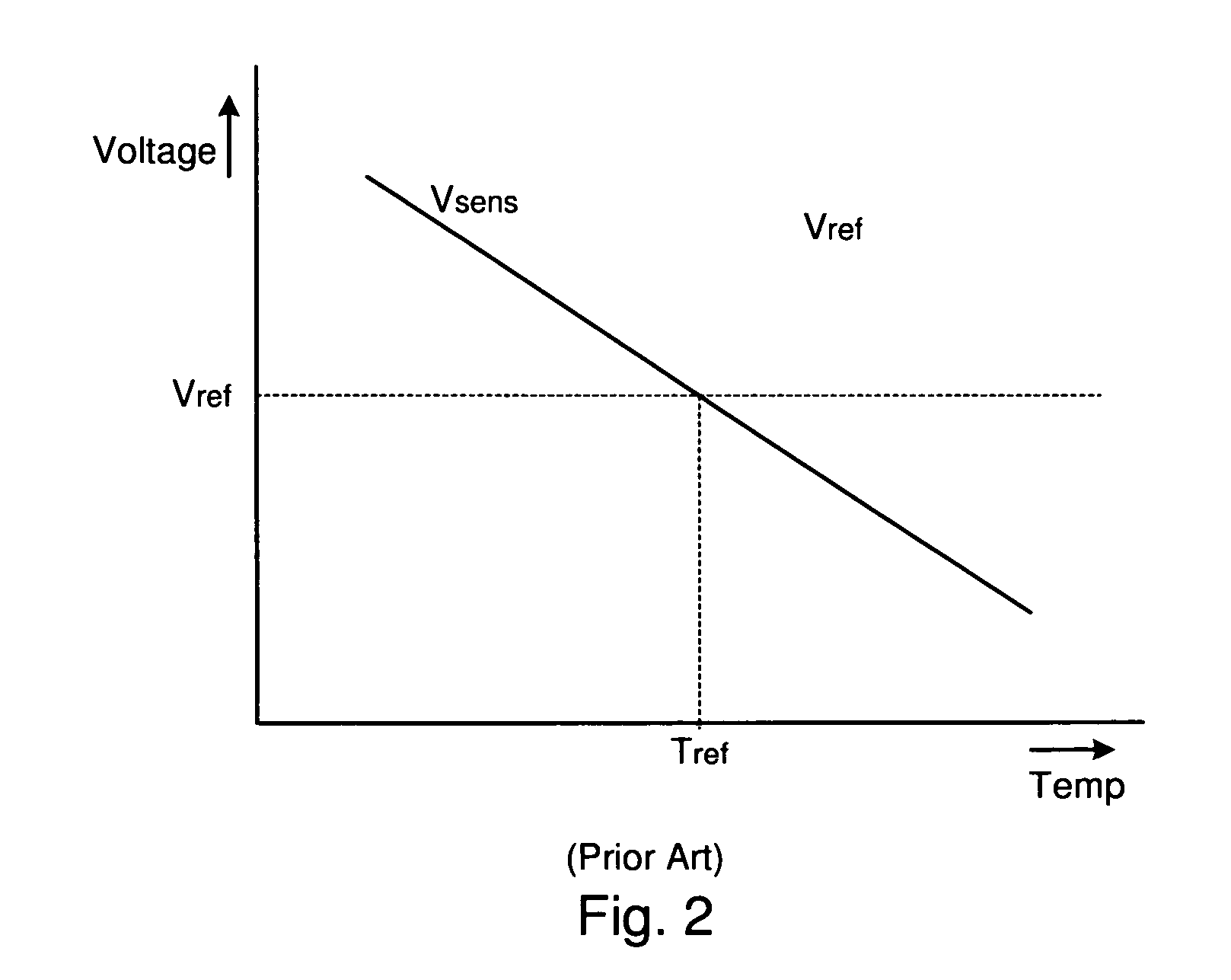
Figure 3
Abstract
Description
RELATED APPLICATIONS
[0001] This application is related to U.S. patent application Ser. No. ______, entitled “______,” filed on ______ by ______ (attorney docket 83396.0009).BACKGROUND
[0002] 1. Field of the Invention
[0003] The present invention relates generally to electronic devices, and more particularly to systems and methods for sensing the temperature of devices such as integrated circuits.
[0004] 2. Related Art
[0005] Integrated circuits such as microprocessors are becoming increasingly complex. The circuit components (e.g., transistors, diodes, resistors and the like) that form these devices are, at the same time, becoming increasingly small so that more and more functions may be performed by a particular integrated circuit. As the number of circuit components and functions grows, the amount of power that is typically consumed by these integrated circuits typically also increases. With the increased power consumption of the circuits, the amount of heat generated within the ...
Examples
Embodiment Construction
[0032] One or more embodiments of the invention are described below. It should be noted that these and any other embodiments described below are exemplary and are intended to be illustrative of the invention rather than limiting.
[0033] Broadly speaking, the invention includes systems and methods for reducing the complexity and size of thermal sensors, where the voltage of a thermally sensitive device is compared to a reference voltage that varies as a function of temperature, rather than being constant. In one embodiment, a diode is used to generate a first voltage that decreases as a function of temperature. One or more reference voltages that increase as functions of temperature are also generated. The first voltage is then compared to the reference voltages. When the first voltage is equal to one of the reference voltages, the temperature of the diode and the reference voltage generation circuit(s) is equal to a known temperature. This known temperature is different for each of ...