
Dental implants having anatomical emergence
a technology of anatomical emergence and dental implants, which is applied in the field of dental implants having anatomical emergence, can solve the problems of difficult to obtain primary stability and placement precision of cylindrical press-fit implants, and the gap between implants and sockets is small. achieve the effect of improving strength, maximizing inter-implant distance, and desirable aesthetics
Patent Information
- Authority / Receiving Office
- US · United States
- Current Assignee / Owner
- Publication Date
- 2006-07-13
- Estimated Expiration
- Not applicable · inactive patent
Smart Images
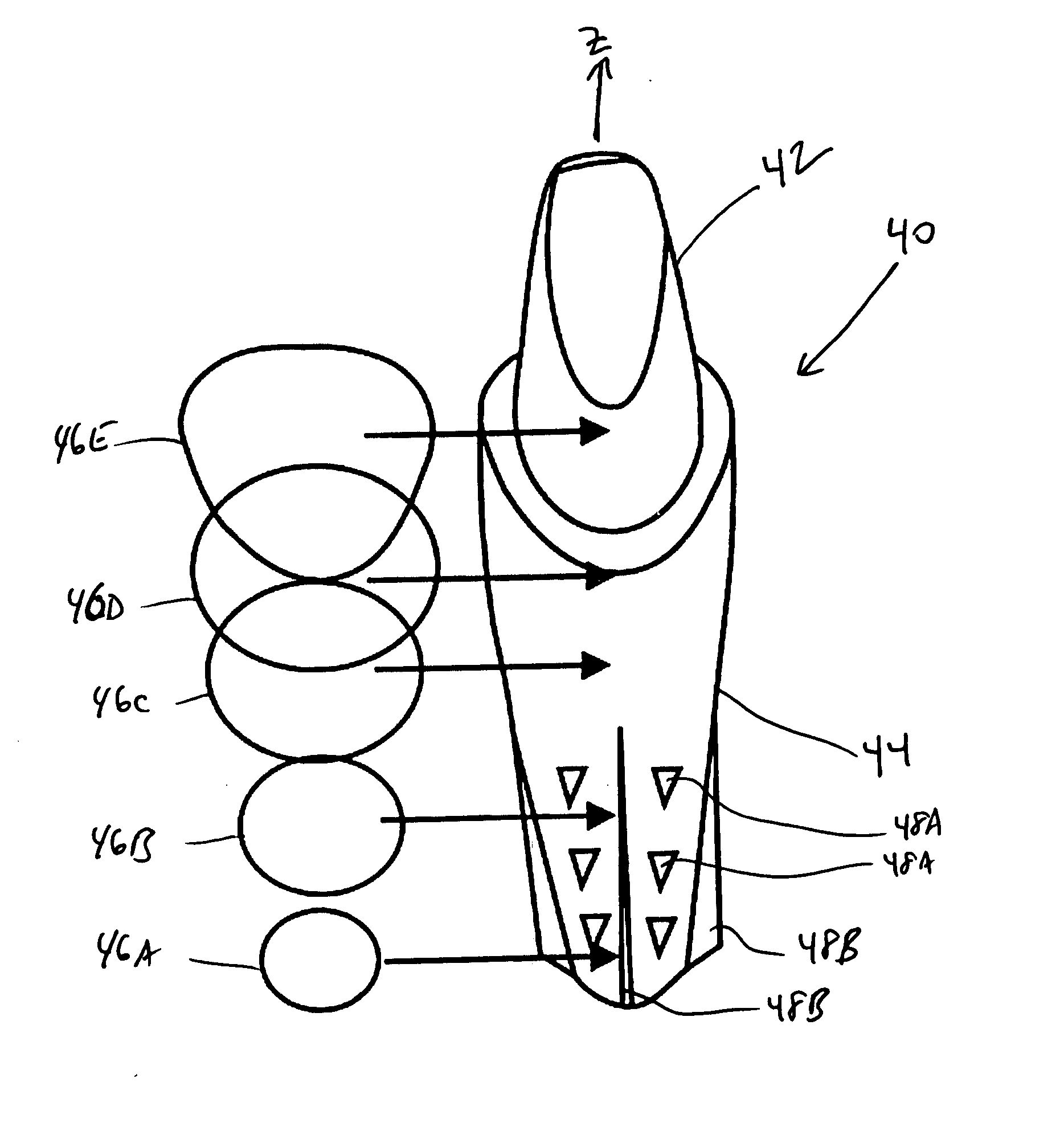
Figure 1 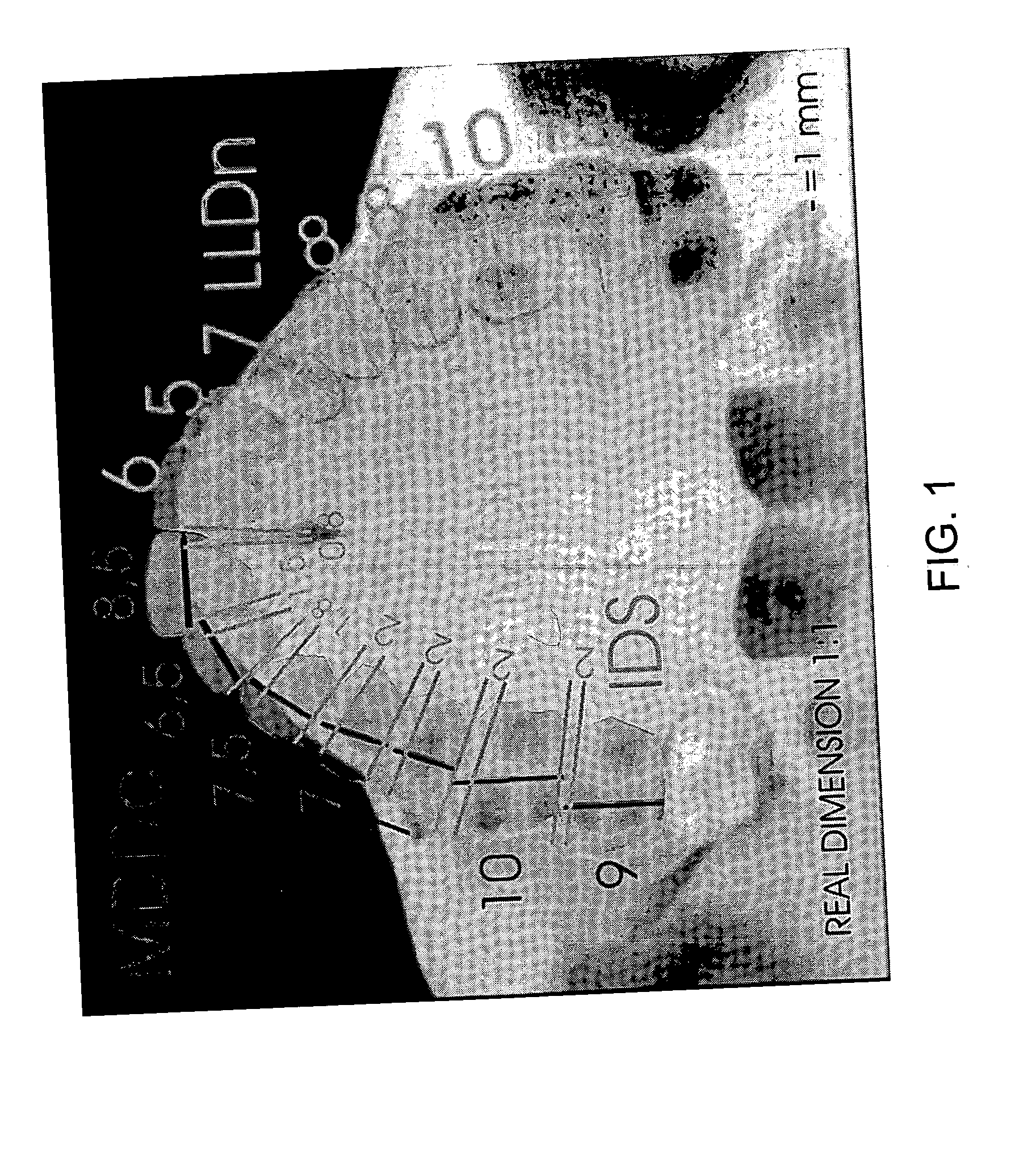
Figure 2 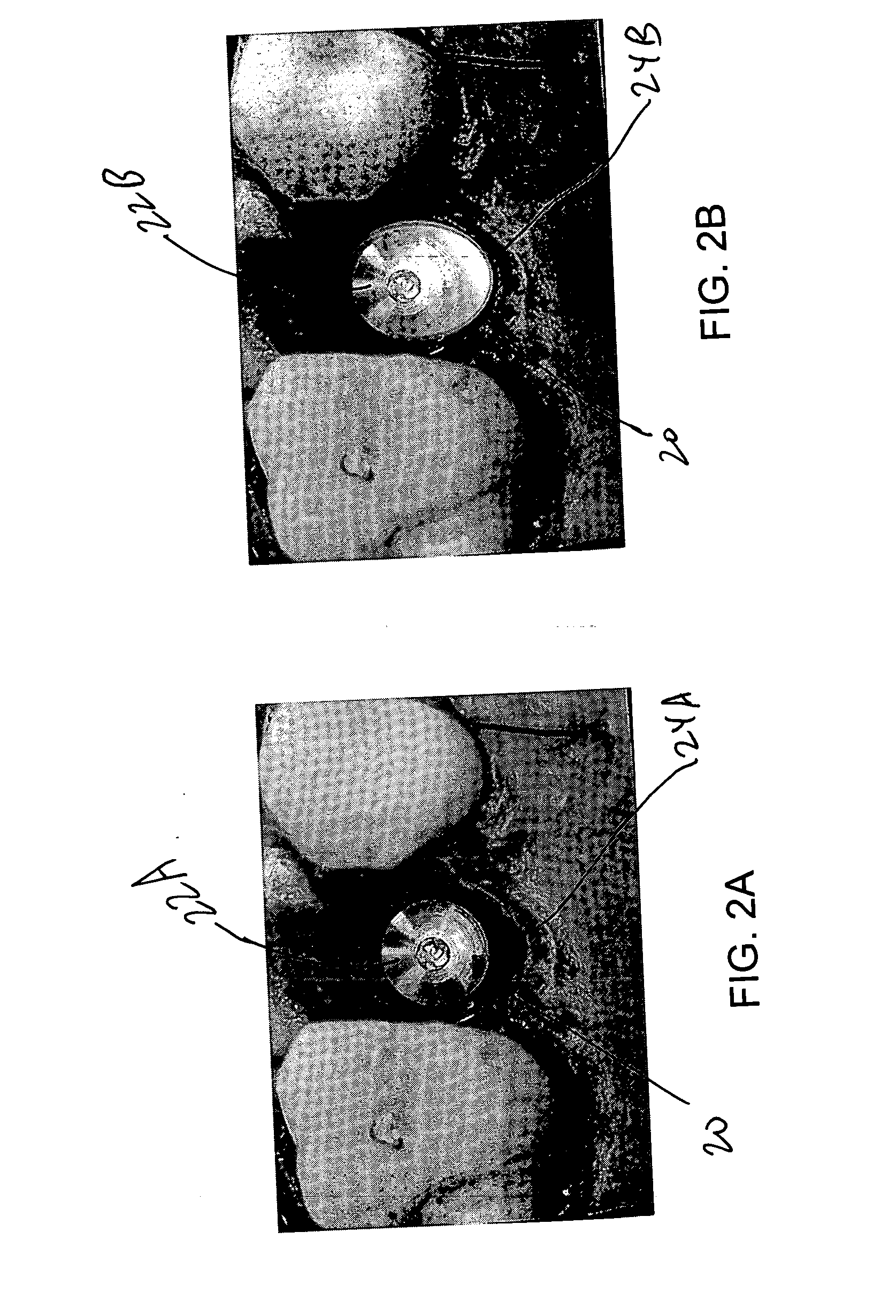
Figure 3
Abstract
Description
CROSS-REFERENCE TO RELATED APPLICATIONS
[0001] The subject matter disclosed and claimed herein is related to the subject matter disclosed and claimed in U.S. patent application Ser. No. 10 / 887,053, filed Jul. 8, 2004, entitled “Systems And Methods For Characterizing And Designing Implants For Dental Prostheses.” The disclosure of the above-referenced U.S. patent application is incorporated herein by reference in its entirety.FIELD OF THE INVENTION
[0002] Generally, the invention relates to dental prostheses. More particularly, the invention relates to dental implants having anatomical emergence. Such implants may include stabilizing devices and may be suitable for implantation into ideal sites. BACKGROUND OF THE INVENTION
[0003] Biomechanical and aesthetic considerations play a role in the selection of a dental implant for the substitution of a natural abutment. From the biomechanical standpoint, the occlusal surface of a natural tooth is the major recipient of the occlusal loads. H...
Examples
Embodiment Construction
[0030]FIG. 1 depicts a typical anatomical specimen of dentate maxillae. As shown, the teeth of both maxillae have been extracted, except for the third molar. Typically, extracted third molars are not replaced, and therefore, are unlikely candidates for ideal rehabilitation. The extracted teeth are depicted in phantom so that the sockets formed by extraction of the teeth may be seen in the figure. The outlines shown on the right maxilla (which is depicted on the left side of FIG. 1) represent the respective shapes of the sockets at the emergence.
[0031] Certain measurements, which are described in Ash, Dental Anatomy, Physiology, and Occlusion, 6th ed., 1984, are indicated on the anatomical specimen. Typical values are provided for crown-level mesiodistal diameter MDDc, neck-level mesiodistal diameter MDDn, and neck-level labiolingual diameter LLDn. Typical interdental space (IDS) values are also provided. All values are provided in millimeters. It should be understood that the inter...