
Spark plug
a technology of spark plugs and spark plugs, which is applied in the manufacture of spark plugs, spark plugs, machines/engines, etc., can solve the problems of increasing the risk of breaking the insulator due to a reduction in strength, difficulty in packing talc or the like into the interior of the crimp portion, and difficulty in reducing the diameter of the insulator, so as to prevent the eccentricity of the insulator and improve the production yield. , the effect of improving
Patent Information
- Authority / Receiving Office
- US · United States
- Patent Type
- Applications(United States)
- Current Assignee / Owner
- Publication Date
- 2007-02-22
- Estimated Expiration
- Not applicable · inactive patent
Smart Images
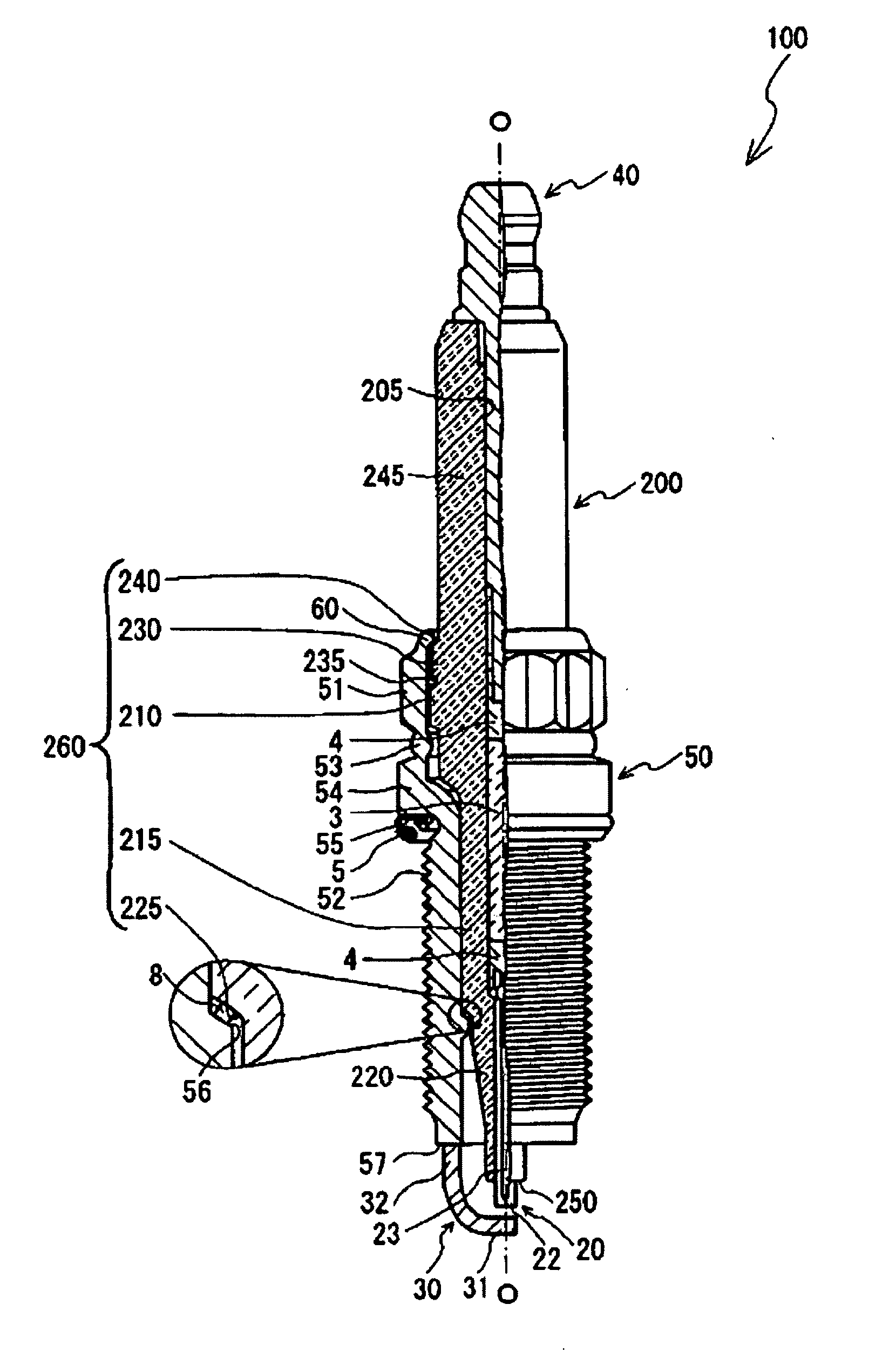
Figure 1 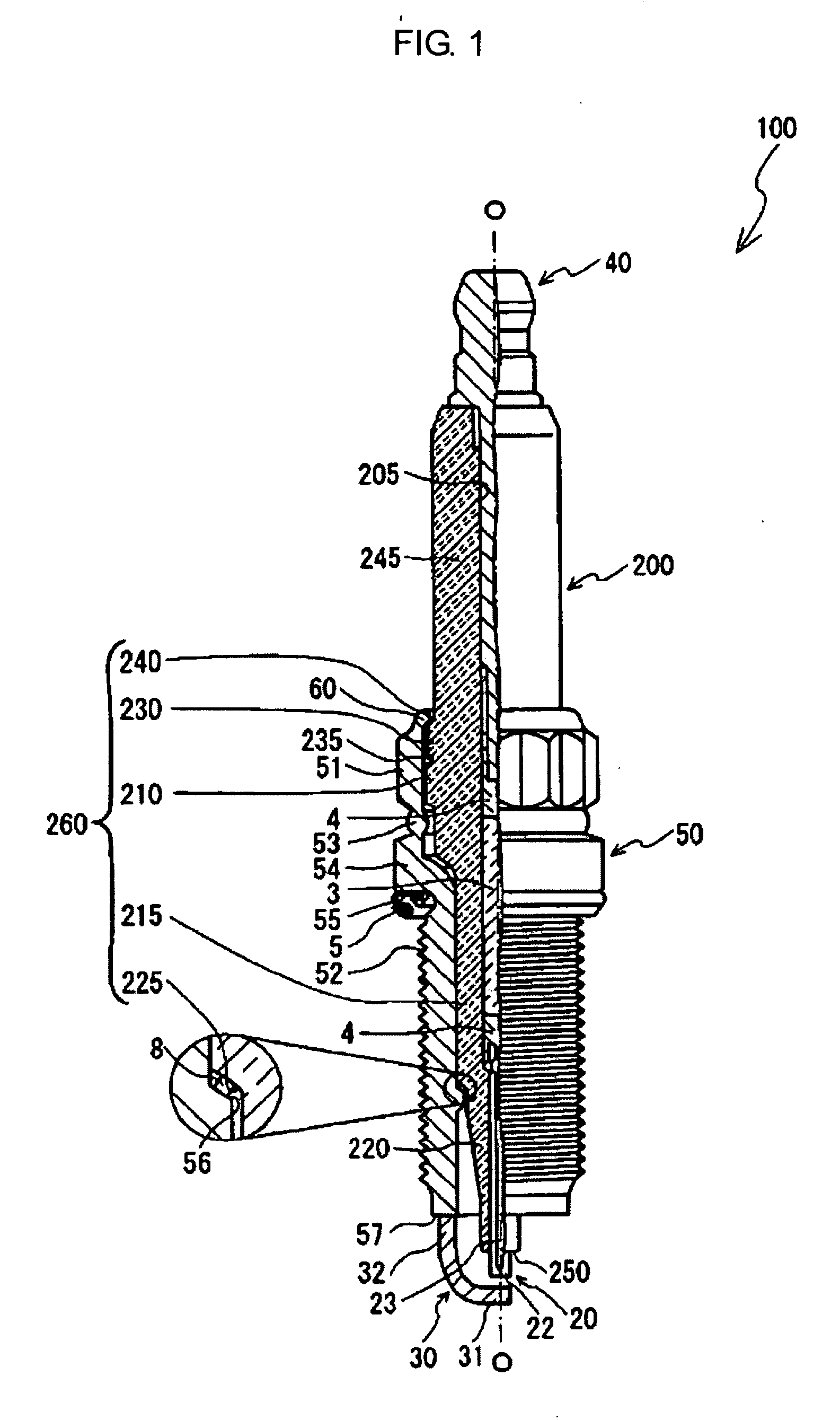
Figure 2 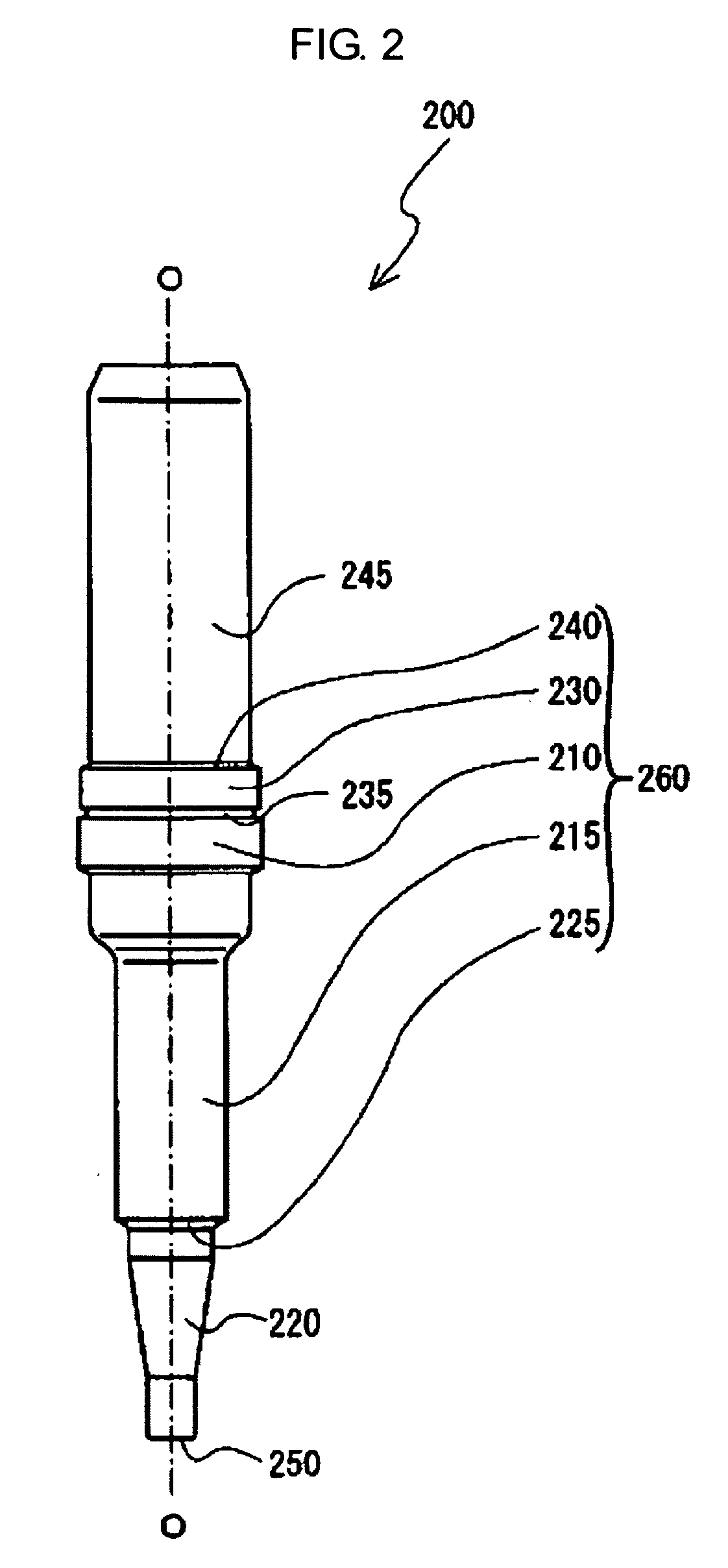
Figure 3
Abstract
Description
BACKGROUND OF THE INVENTION
[0001] 1. Field of the Invention
[0002] The present invention relates to a spark plug having a metallic shell that is crimped so as to integrally fix an insulator thereto.
[0003] 2. Description of the Related Art
[0004] Conventionally, a spark plug is used for ignition of an internal combustion engine. A spark plug typically includes a metallic shell holding an insulator into which a center electrode is inserted, and a ground electrode welded to a front end portion of the metallic shell. The distal end of the ground electrode faces the front end of the center electrode, thereby forming a spark discharge gap therebetween. Spark discharge occurs between the center electrode and the ground electrode. In such a spark plug, in which a step portion formed on an outer circumferential surface of the insulator is supported by a step portion formed on a front-end-side inner circumferential surface of the metallic shell, the insulator is crimped by a crimp portion p...
Examples
example 1
[0051] An evaluation test was performed in order to confirm the effect attained by making the outer diameter B of the maximum diameter portion 210 greater than the outer diameter A of the intermediate diameter portion 230. In this evaluation test, five samples were prepared for each of five types of insulators differing in radius between the outer diameter B of the maximum diameter portion and the outer diameter A of the intermediate diameter portion. The specific method used to prepare the samples is described below.
[0052] Insulators were fabricated such that after firing, the outer diameter A of the intermediate diameter portion and the outer diameter B of the maximum diameter portion had target values of 11.6 mm and 11.8 mm, respectively, and the intermediate diameter portion had a dimensional error of ±0.05 mm. Subsequently, the radius difference (B-A) / 2 of each insulator was measured; and the insulators were sorted by radius difference into five types or groups; i.e., a 0.03 m...