
Container With Peelable Seal Assembly and Method of Making
a technology of peelable adhesive and packaging, applied in the field of containers, can solve the problems of difficult to consistently create bags with the same low opening effort, the peelable adhesive thickness has an influence on the effort required to break the seal, and the bag seal is difficult to break, so as to eliminate the variation in the effort to open various bags. , the effect of easy control
Patent Information
- Authority / Receiving Office
- US · United States
- Patent Type
- Applications(United States)
- Current Assignee / Owner
- Publication Date
- 2007-05-10
- Estimated Expiration
- Not applicable · inactive patent
Smart Images
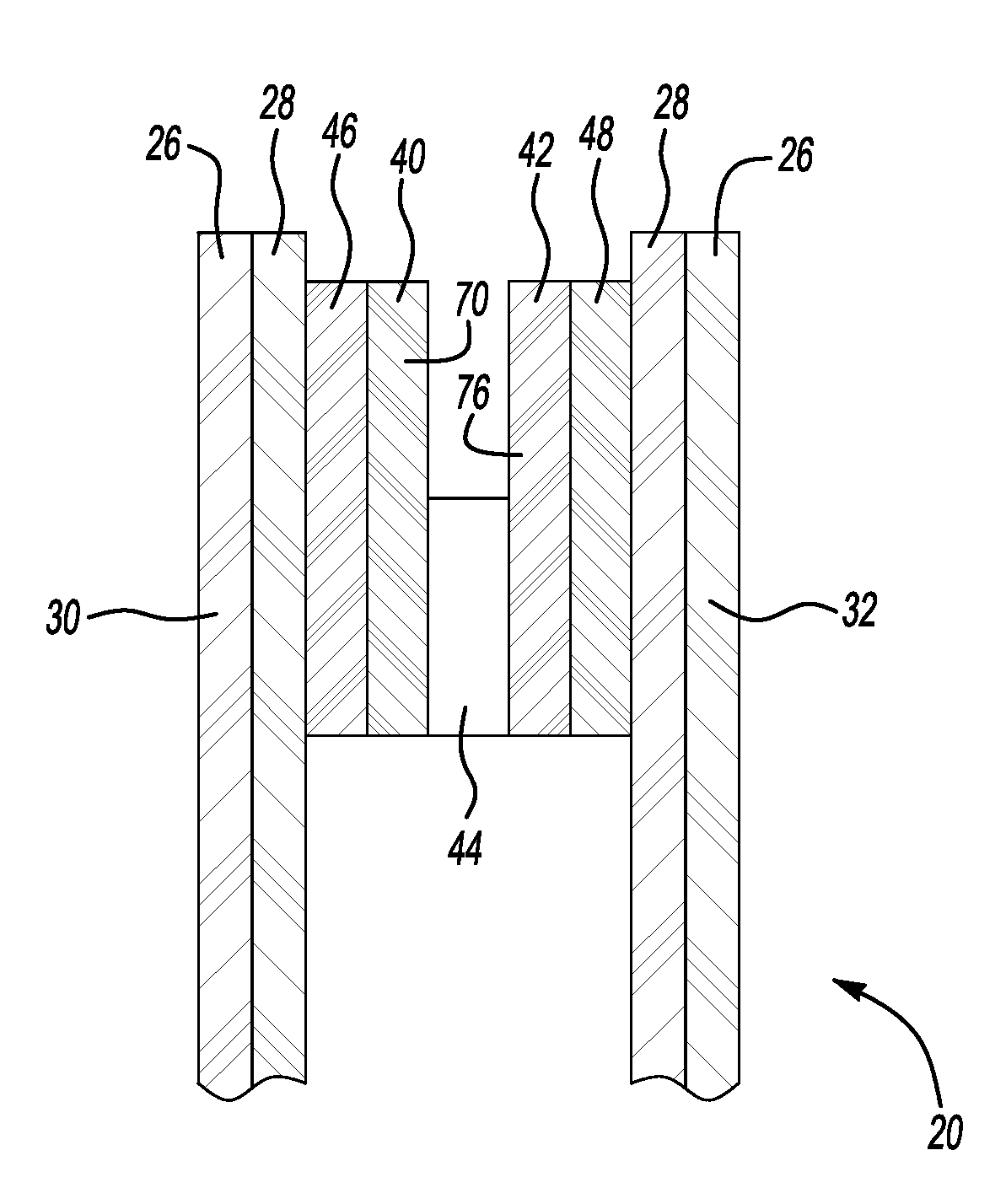
Figure 1 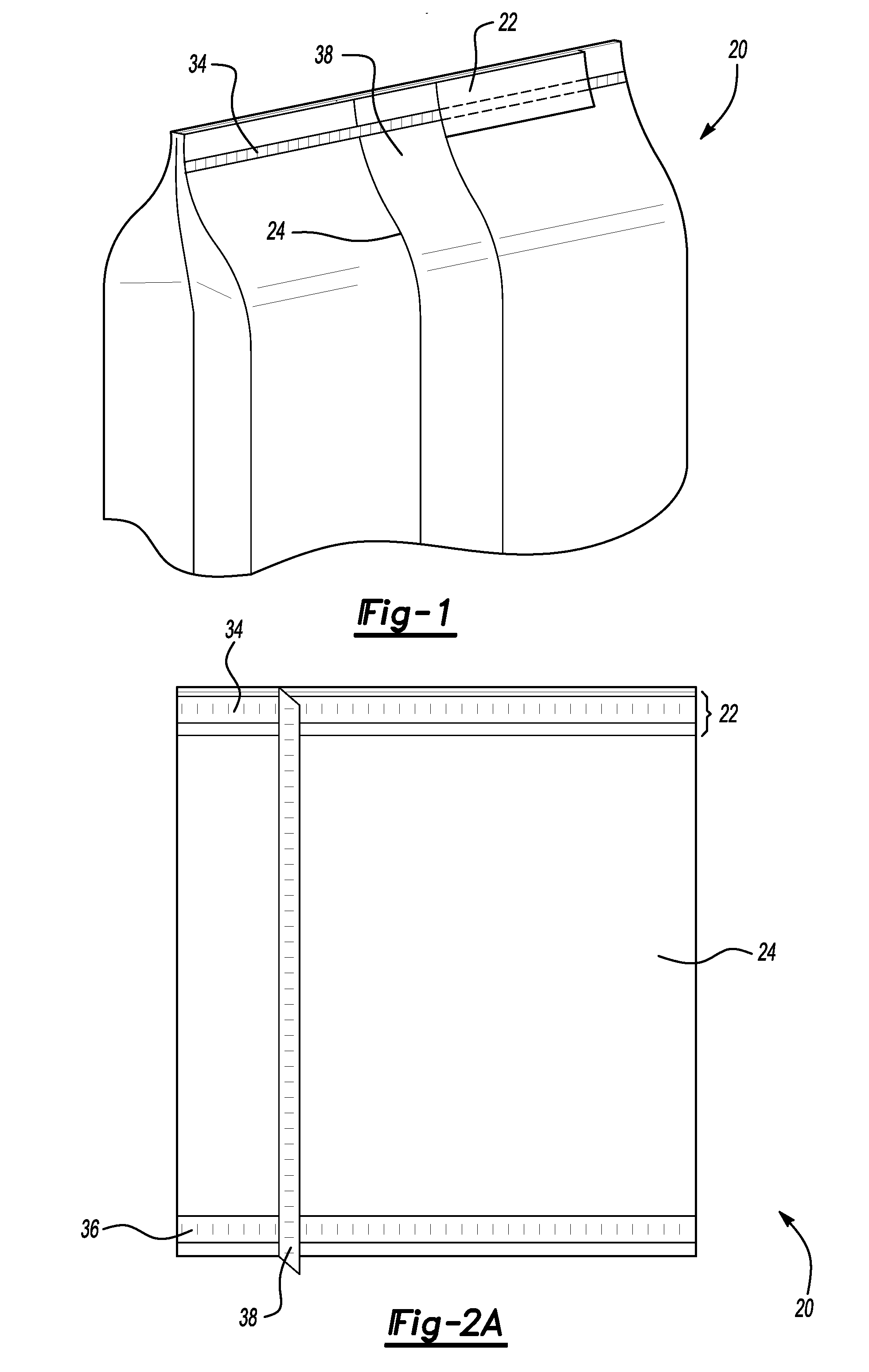
Figure 2 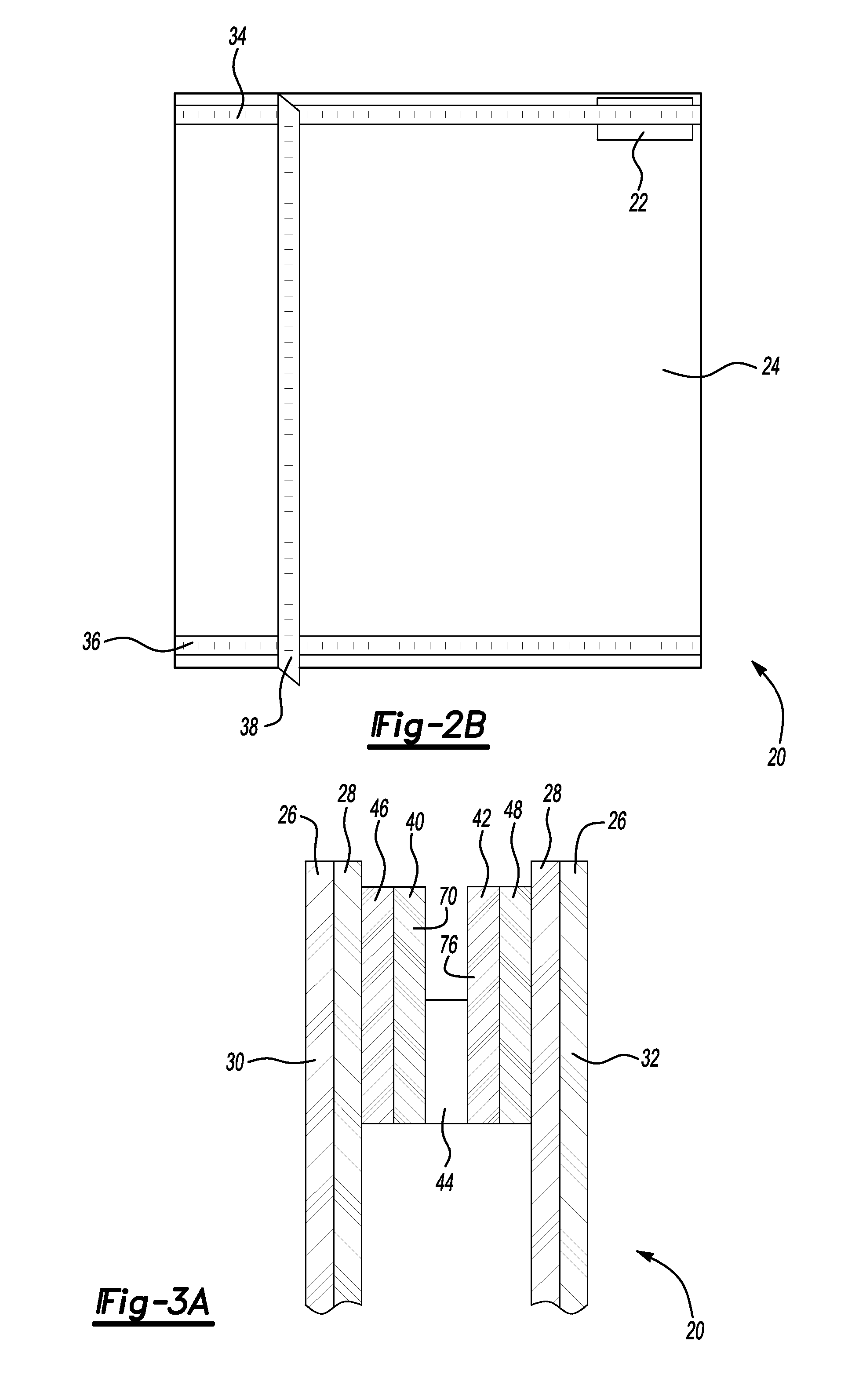
Figure 3
Abstract
Description
CROSS-REFERENCE TO RELATED APPLICATIONS
[0001] This application claims the benefit of U.S. Provisional Patent Application Ser. No. 60 / 735,452 for a FLEXIBLE BAG WITH PEELABLE SEAL ASSEMBLY AND METHOD OF MAKING, filed on Nov. 10, 2005, which is hereby incorporated by reference in its entirety.BACKGROUND OF THE INVENTION
[0002] 1. Field of the Invention
[0003] A container, particularly a flexible bag with a peelable seal assembly and a method of making the same as disclosed herein.
[0004] 2. Description of the Prior Art
[0005] Traditionally, containers and more particularly flexible bags are formed from a liner with a first side and a second side folded over the first side. The sides of the bag are heat sealed together to create a seal to enclose and seal contents within the bag. Such flexible bags are used for storing contents for a variety of goods such as for example food products and more specifically ready to eat breakfast cereals packages for crackers, cookies, candies, baking g...
Examples
Embodiment Construction
[0020] Referring to the Figures, wherein like numerals indicate corresponding parts throughout the several views, a flexible bag 20 with a peelable seal assembly 22 is shown.
[0021] The bag 20 is formed from a liner 24 which includes a first layer 26 and a second layer 28 coextruded with the first layer 26 (See FIGS. 1 and 3a). The first layer 26 is preferably high density polyethylene. The second layer 28 is a peelable adhesive, and is more preferably low density polyethylene with polybutylene. It will be understood by those of ordinary skill in the art that a peelable adhesive is an adhesive that has less adhesive strength allowing it to be peeled apart or opened. An example of a peelable adhesive is the use of an adhesive layer that has an additive mixed into the adhesive layer to lower the adhesive strength. Those of ordinary skill in the art commonly refer to this additive as a contaminant. The liner 24 is folded to define a first side 30 and a second side 32 such that the seco...