
Method For Estimating Distance Between Transmitter and Receiver, and Transmitter and Receiver Implementing Same
Patent Information
- Authority / Receiving Office
- US · United States
- Current Assignee / Owner
- Publication Date
- 2008-11-27
- Estimated Expiration
- Not applicable · inactive patent
Smart Images
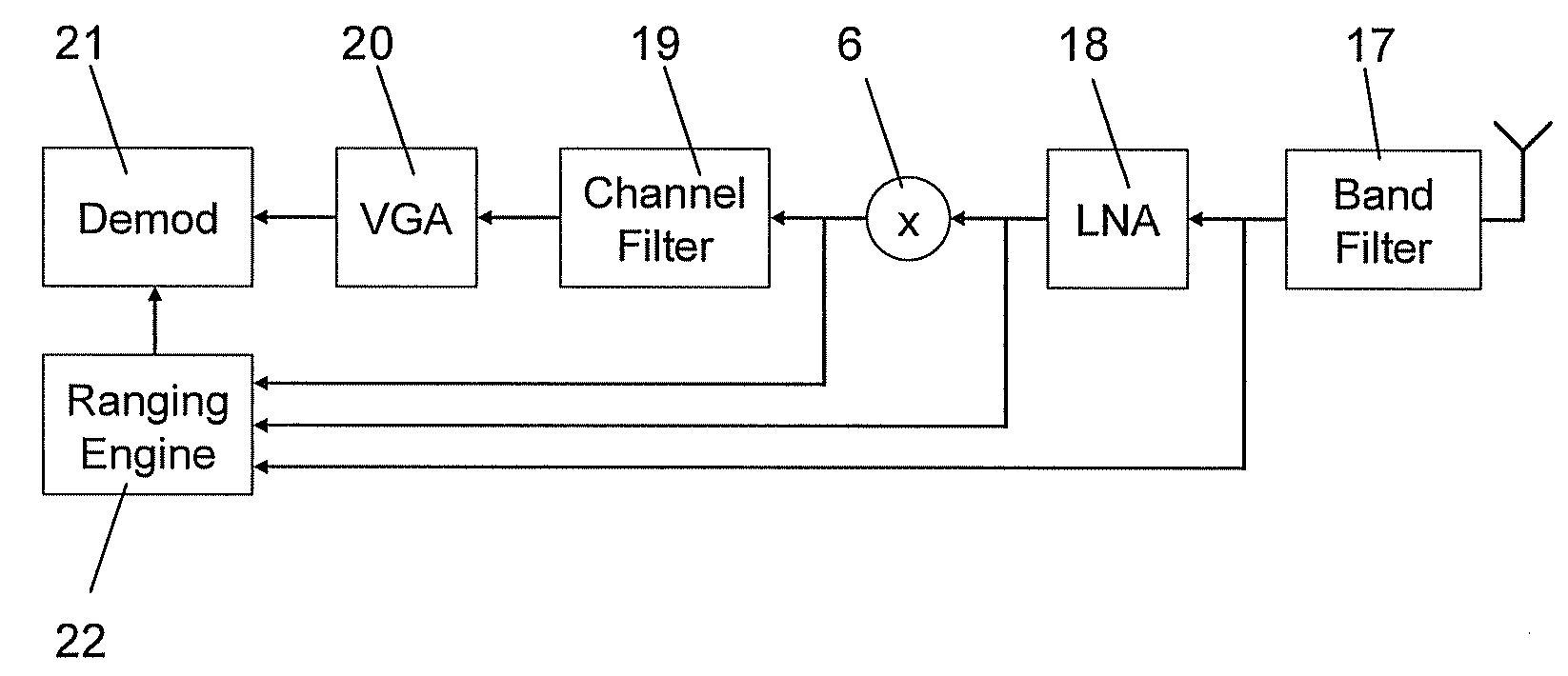
Figure 1 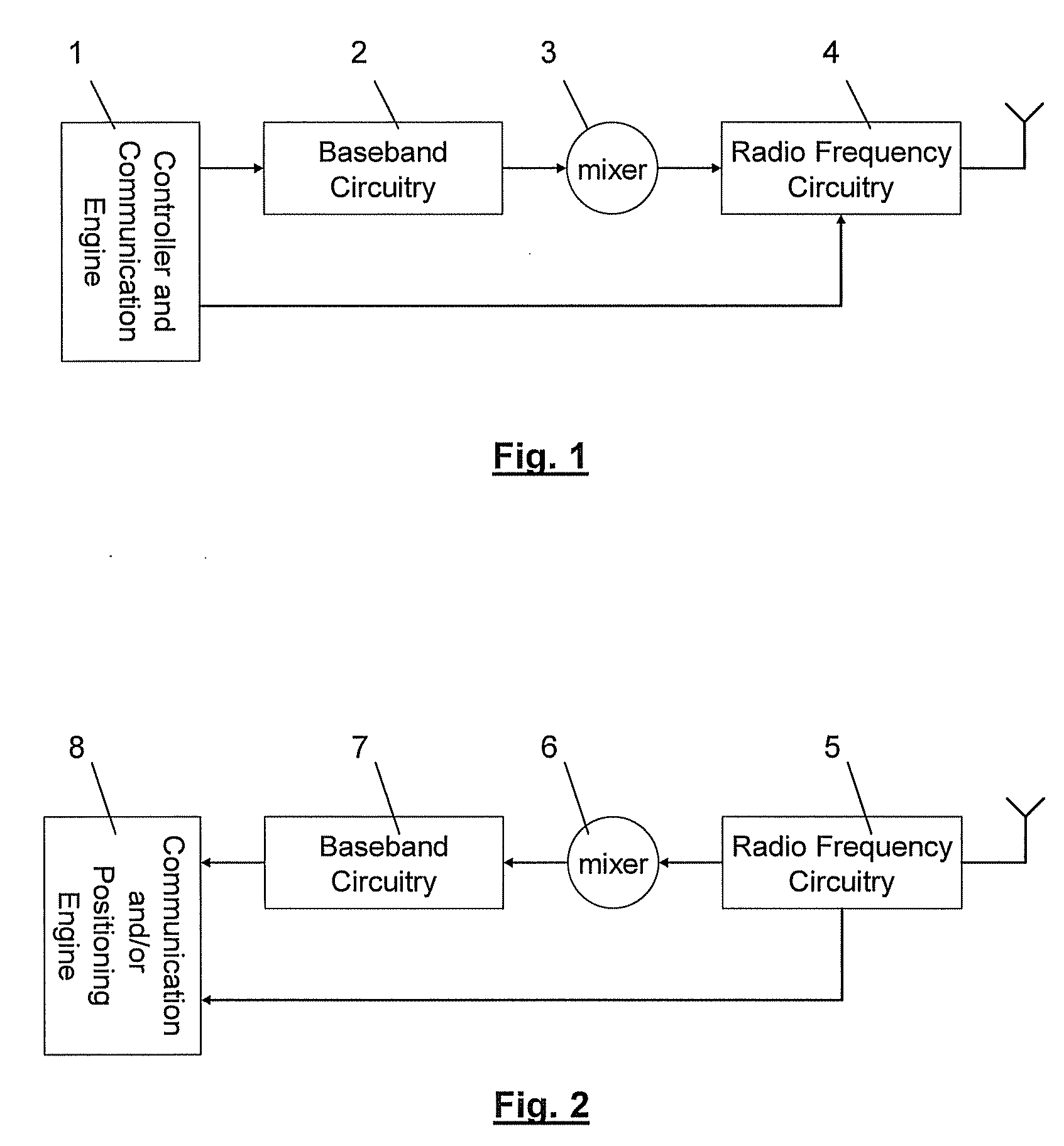
Figure 2 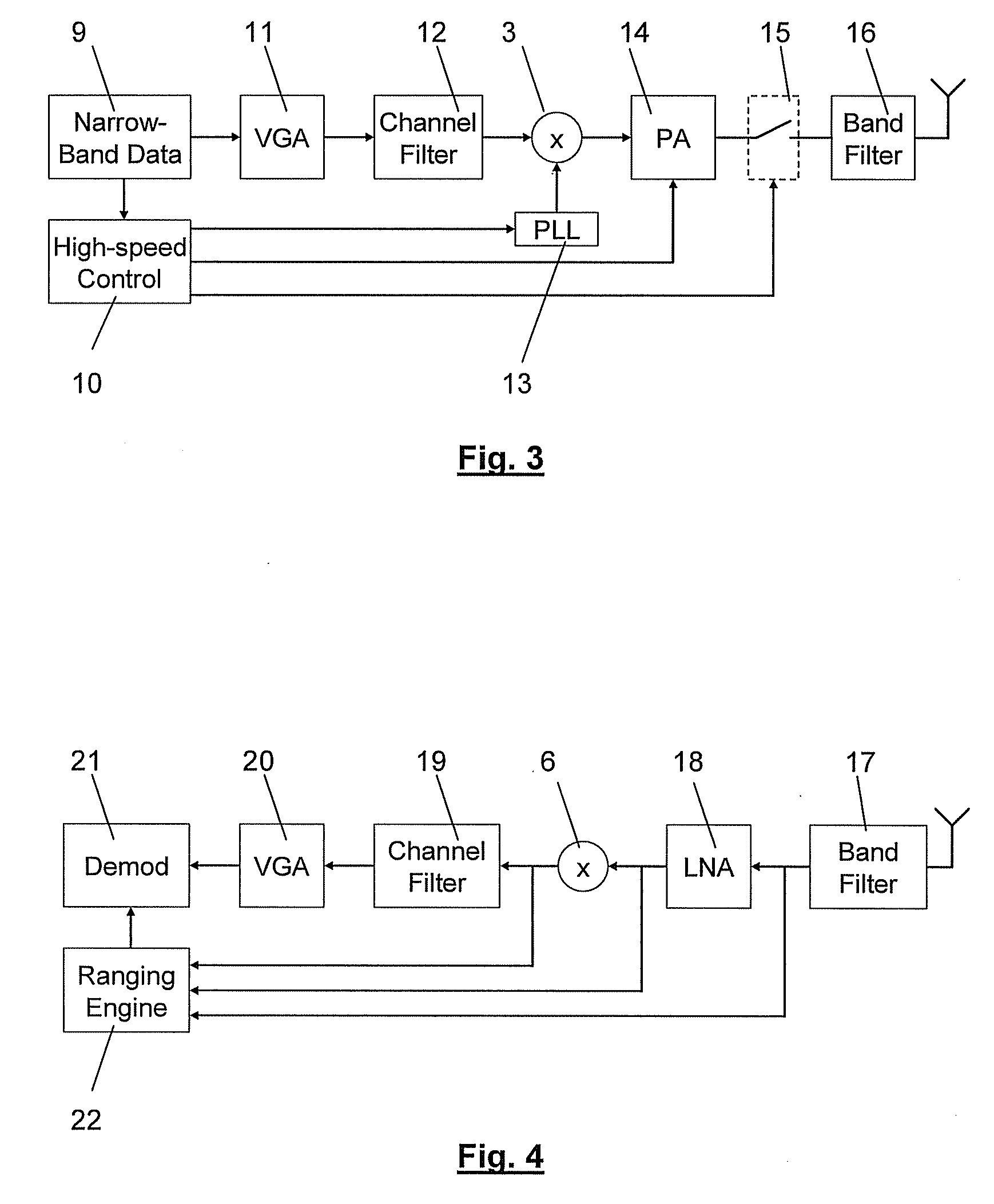
Figure 3
Abstract
Description
CROSS REFERENCE TO RELATED APPLICATIONS
[0001] This application is the entry into the United States of PCT Application Number PCT / EP2006 / 070040 filed Dec. 20, 2006 and claims priority from European Patent Application Number EP / 05112981.5 filed Dec. 23, 2005, the entirety of each of which are hereby incorporated by reference.BACKGROUND OF INVENTION
[0002] 1. Technical Field
[0003] The present invention relates to a method for estimating the distance (also referred to as range) between a transmitter and a receiver, and to a transmitter and a receiver in which the method is implemented.
[0004] 2. Background Art
[0005] Position determination is an important feature for many applications of wireless networks. It has been proposed either as an additional feature to add value to wireless communication networks (such as enhanced routing or ease in installation for wireless sensor networks) or as a stand-alone feature when location awareness is a goal in itself (such as asset or person tracking applic...
Examples
Embodiment Construction
[0033]The present invention will be described with respect to particular embodiments and with reference to certain drawings but the invention is not limited thereto but only by the claims. The drawings described are only schematic and are non-limiting. In the drawings, the size of some of the elements may be exaggerated and not drawn on scale for illustrative purposes. The dimensions and the relative dimensions do not correspond to actual reductions to practice of the invention.
[0034]Furthermore, the terms first, second, third and the like in the description and in the claims, are used for distinguishing between similar elements and not necessarily for describing a sequential or chronological order. The terms are interchangeable under appropriate circumstances and the embodiments of the invention can operate in other sequences than described or illustrated herein.
[0035]Moreover, the terms top, bottom, over, under and the like in the description and the claims are used for descriptiv...