
Method of manufacture of an energy absorbing tire cage
a cage and energy-absorbing technology, applied in the field of cage tires, can solve the problems of high speed, high cost, and high risk of split rim tires, and achieve the effect of reducing weight and size of the tire cage and being cost-effectiv
Patent Information
- Authority / Receiving Office
- US · United States
- Current Assignee / Owner
- Publication Date
- 2009-07-09
- Estimated Expiration
- Not applicable · inactive patent
Smart Images
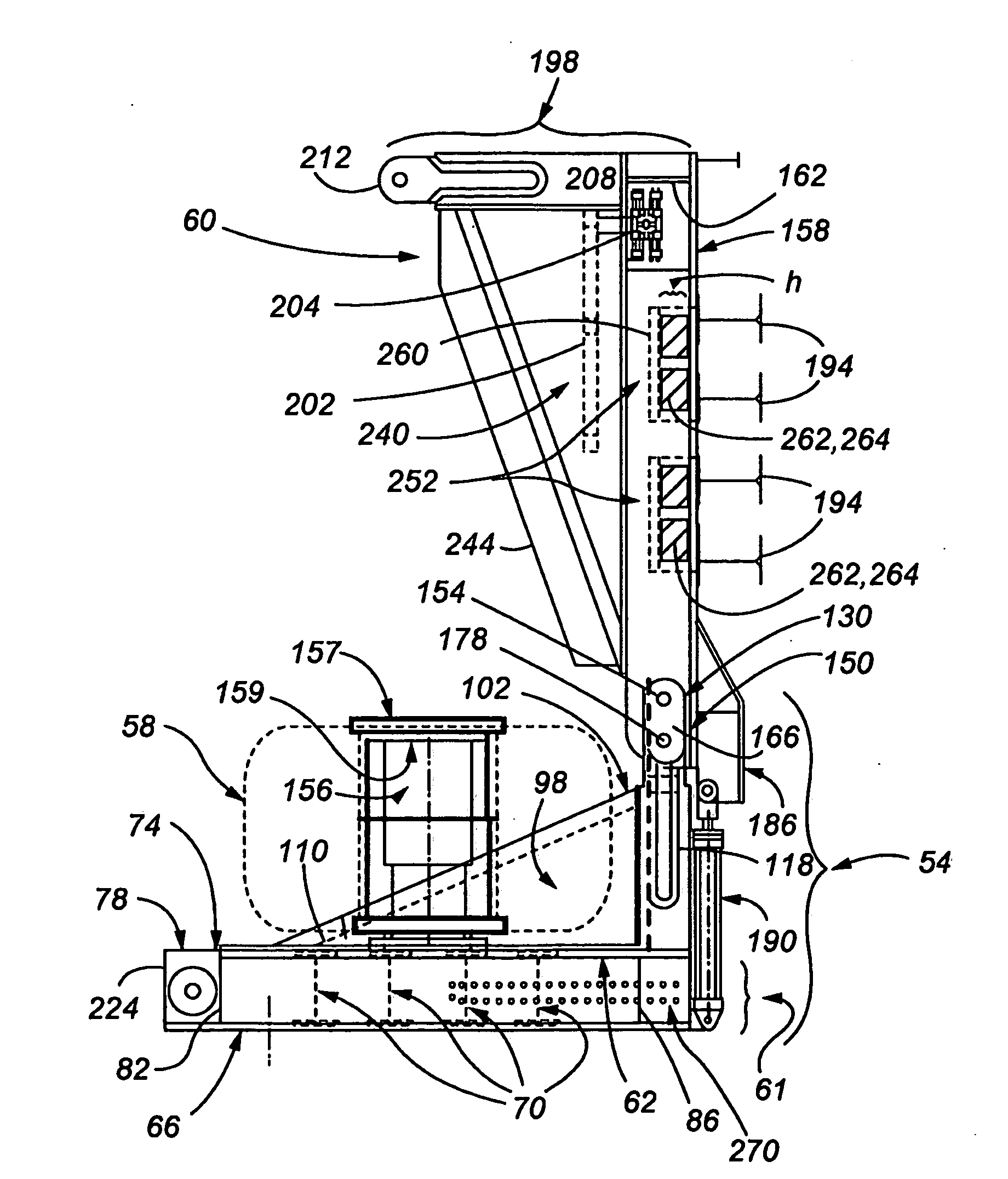
Figure 1 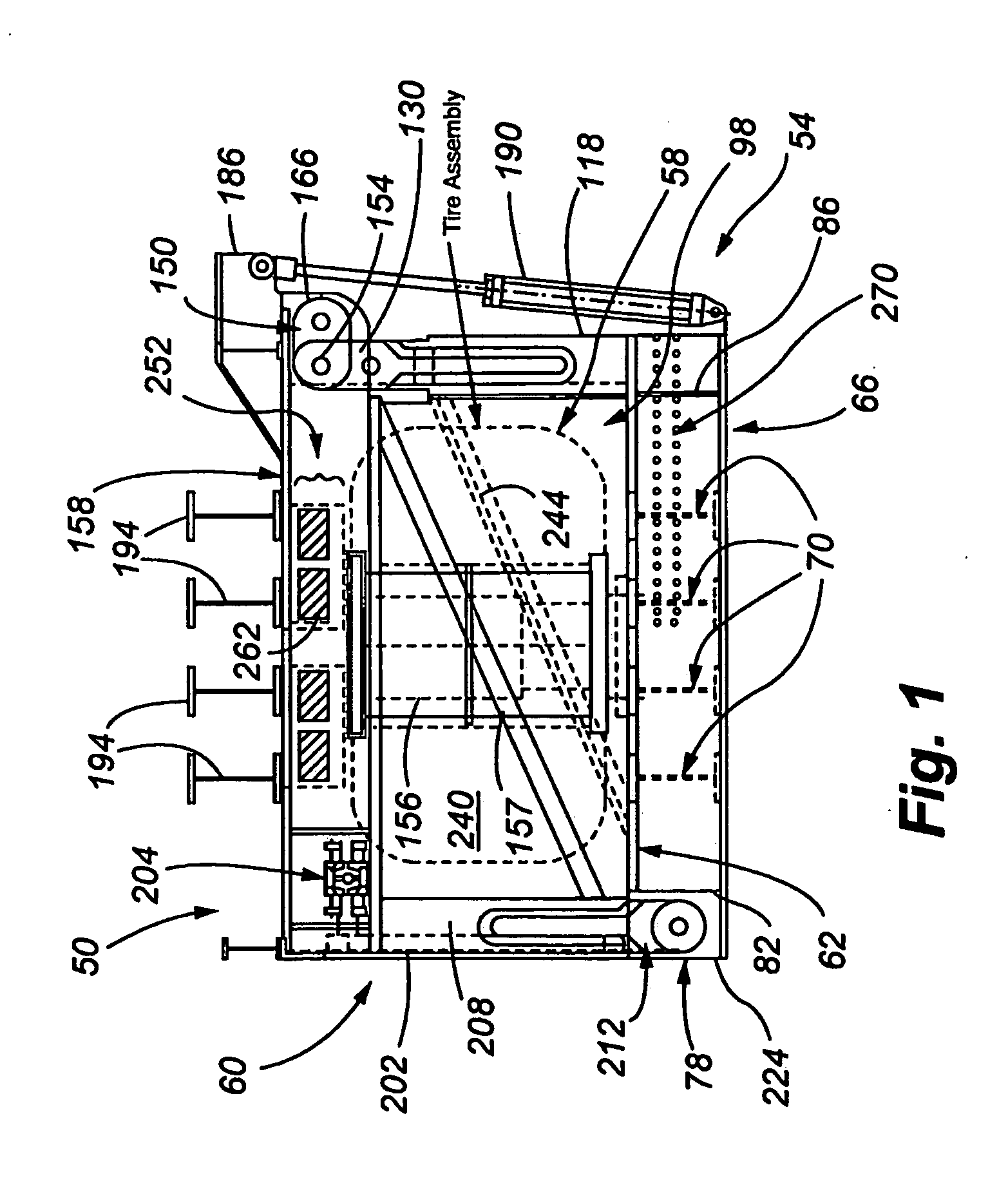
Figure 2 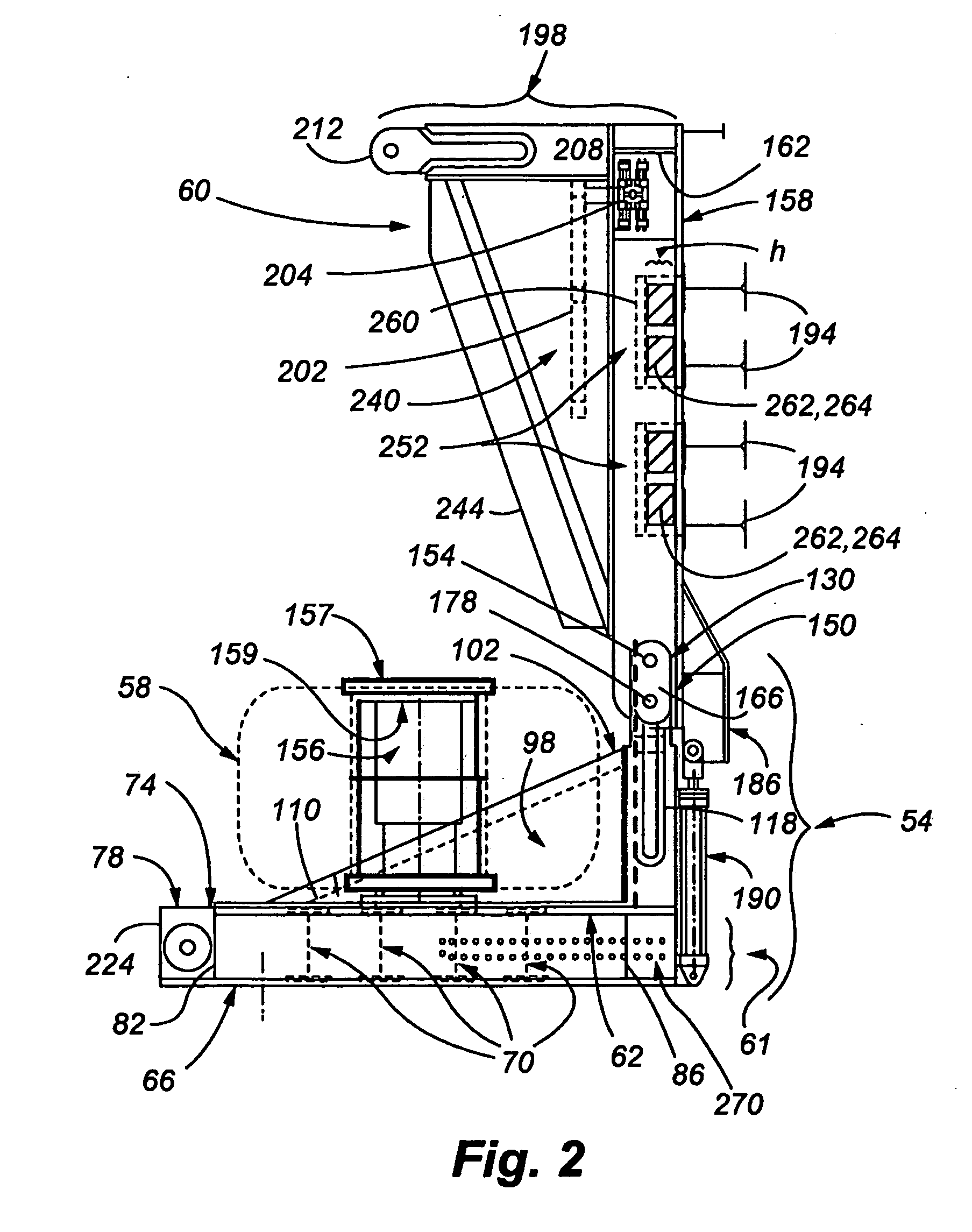
Figure 3
Abstract
Description
RELATED APPLICATION
[0001] The present application is a continuation of U.S. patent application Ser. No. 11 / 695,962, filed Apr. 3, 2007, entitled “METHOD OF MANUFACTURE OF AN ENERGY ABSORBING TIRE CAGE”, which is a divisional of U.S. patent application Ser. No. 10 / 971,819, filed Oct. 21, 2004, now U.S. Pat. No. 7,240,713 entitled “ENERGY ABSORBING TIRE CAGE AND METHOD OF USE”, each of the above-identified applications fully incorporated by reference herein.RELATED FIELD OF THE INVENTION
[0002] The present invention relates to a cage tire for containing tire explosions, and in particular, to tire cages for containing tire explosions of having a diameter in the range of 6 to 12 feet, and having stored energy, e.g., in a range of 500 kilojoules to 7500 kilojoules which is approximately 13-200 times the energy of a conventional truck / SUV tire.BACKGROUND
[0003] It is well known that inflation or deflation of certain tires can be hazardous to personnel performing such operations and to others n...
Examples
Embodiment Construction
[0025]The embodiments of the tire cage 50 illustrated in FIGS. 1-11, and described hereinbelow are particularly suitable for safely containing an explosion of a conventional heavy equipment 8 foot diameter tire, i.e., suitable for safely containing an explosive impact force of up to 3500 to 3700 kiloNewtons (kN) and 1160 kilojoules (kJ) of energy. Accordingly, for safely containing an explosion of a tire of a smaller or larger tire (more particularly, an explosion of a tire storing a substantially larger or smaller amount of energy) certain of the tire cage structural members described herein below, and the forces these members need to withstand may be substantially different from the dimensions provided herein. However, one of ordinary skill in the art will, from the description herein, be able to construct an embodiment of the tire cage 50 for such smaller or larger tires, bearing in mind that, in general, the energy stored in a tire exponentially increases with the diameter of th...