
Modification of audio signals for distribution in a room
a technology for audio signals and rooms, applied in the field of modification of audio signals for distribution in rooms, can solve the problems of large installation, wiring and maintenance expenditure, and the entailment of high power consumption of loudspeakers, and achieve the effects of reducing installation expenditure, reducing installation expenditure, and improving signal quality and volum
Patent Information
- Authority / Receiving Office
- US · United States
- Current Assignee / Owner
- Publication Date
- 2010-08-19
Smart Images
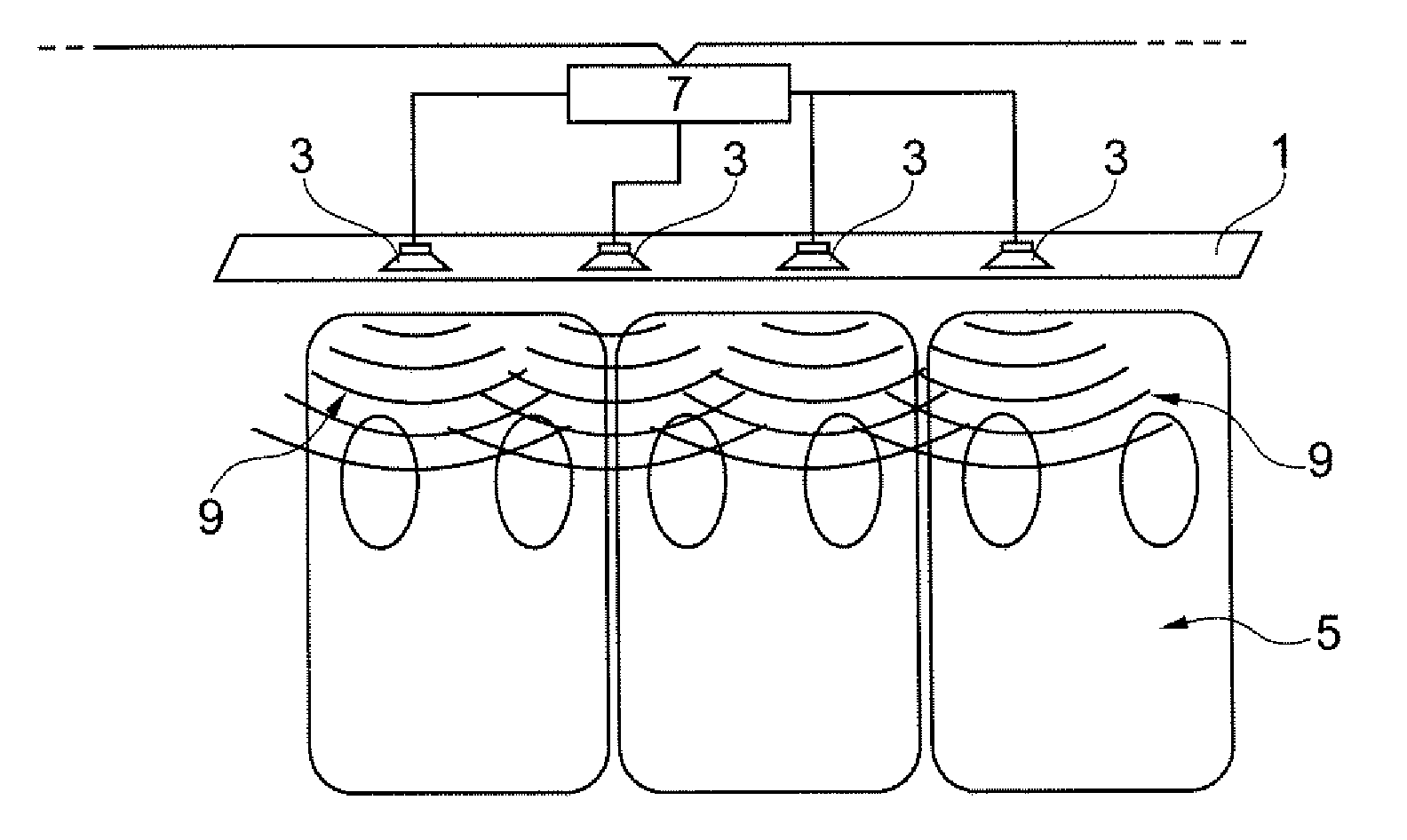
Figure 1 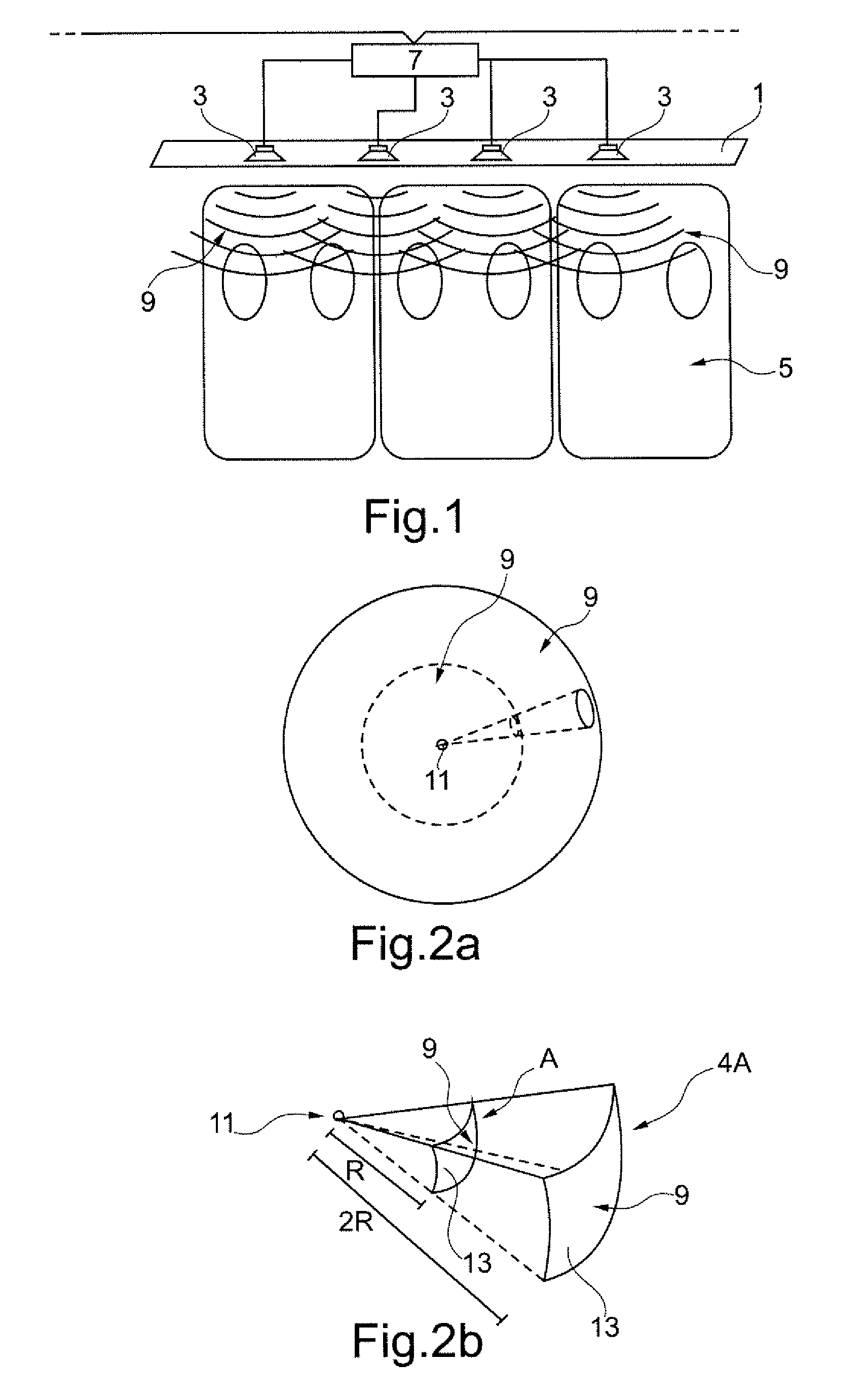
Figure 2 
Figure 3
Abstract
Description
CROSS-REFERENCE TO RELATED APPLICATIONS
[0001] This application claims the benefit of the filing date of U.S. Provisional Patent Application No. 61 / 207,906 filed Feb. 18, 2009, the disclosure of which applications is hereby incorporated herein by reference.FIELD OF THE INVENTION
[0002] The present invention relates to a device for modifying audio signals to be emitted within a room, in particular for modifying audio contents envisaged for distribution inside an aircraft cabin. In addition, the invention relates to an aircraft with a device according to the invention, a method for modifying audio information, a computer program element and a computer-readable medium.BACKGROUND OF THE INVENTION
[0003] In the area of distributing and feeding audio signals, many applications place great value on a high quality of the audio signals, and a good perceptibility of the latter at each point in a room. The quality and volume of audio contents can enhance the comfort of the listener depending on appl...
Examples
Embodiment Construction
[0057]FIG. 1 presents a diagrammatic view of a loudspeaker system in an aircraft according to prior art. An audio signal 7 is directly distributed to several loudspeakers. The loudspeakers are arranged or integrated in a passenger service unit (PSU) 1. The PSU 1 is situated over the heads of the passengers and the windows. The individual loudspeakers 3 act as nearly point sound sources. The wave fronts 9 of the signals emanating from the loudspeakers 3 propagate as spherical waves in the aircraft cabin 5, and can in the process be unfavorably superposed or even cancel each other out.
[0058]In order to illustrate the theoretical considerations, FIG. 2a provides a diagrammatic view of a theoretical model of sound wave propagation given a point sound source. The loudspeakers 3 from FIG. 1 can be approximated as point sound sources 11, for example. FIG. 2a shows two wave fronts 9. A spherical surface is known to be proportional to the square of the radius of the sphere. As a result, the ...