
6-vinyl pyrimidine and pyrimidinone derivatives and the use thereof
a technology of pyrimidine and pyrimidinone, which is applied in the field of6vinyl pyrimidine pyrimidinone derivatives, can solve the problems of inability to use the most common chemotherapies, death of infected cells, and inability to access antiretroviral therapy and other problems, to achieve the effect of inhibiting the activity of the rt of hiv-1
Patent Information
- Authority / Receiving Office
- US · United States
- Patent Type
- Applications(United States)
- Current Assignee / Owner
- Publication Date
- 2010-11-18
- Estimated Expiration
- Not applicable · inactive patent
Smart Images
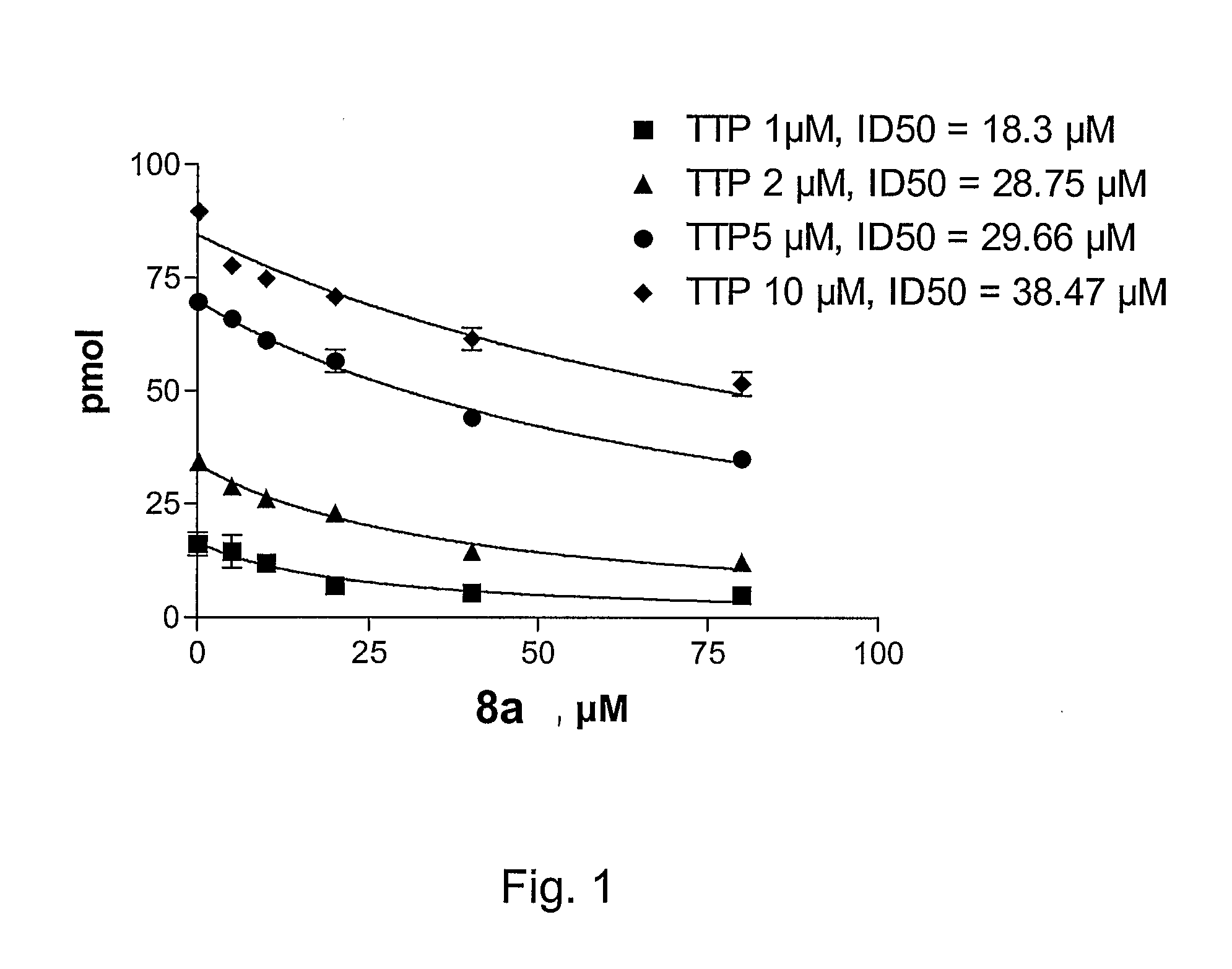
Figure 1 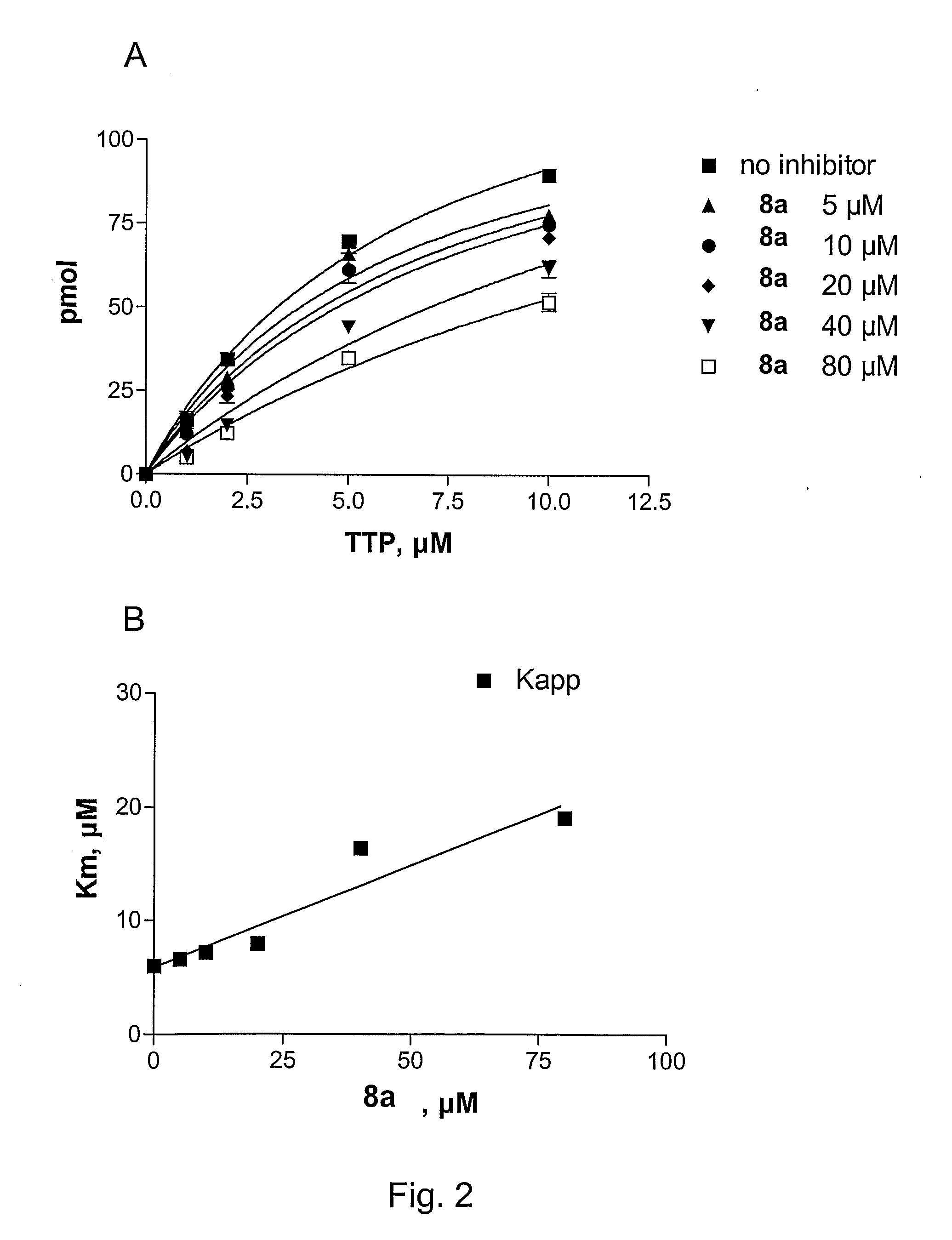
Figure 2 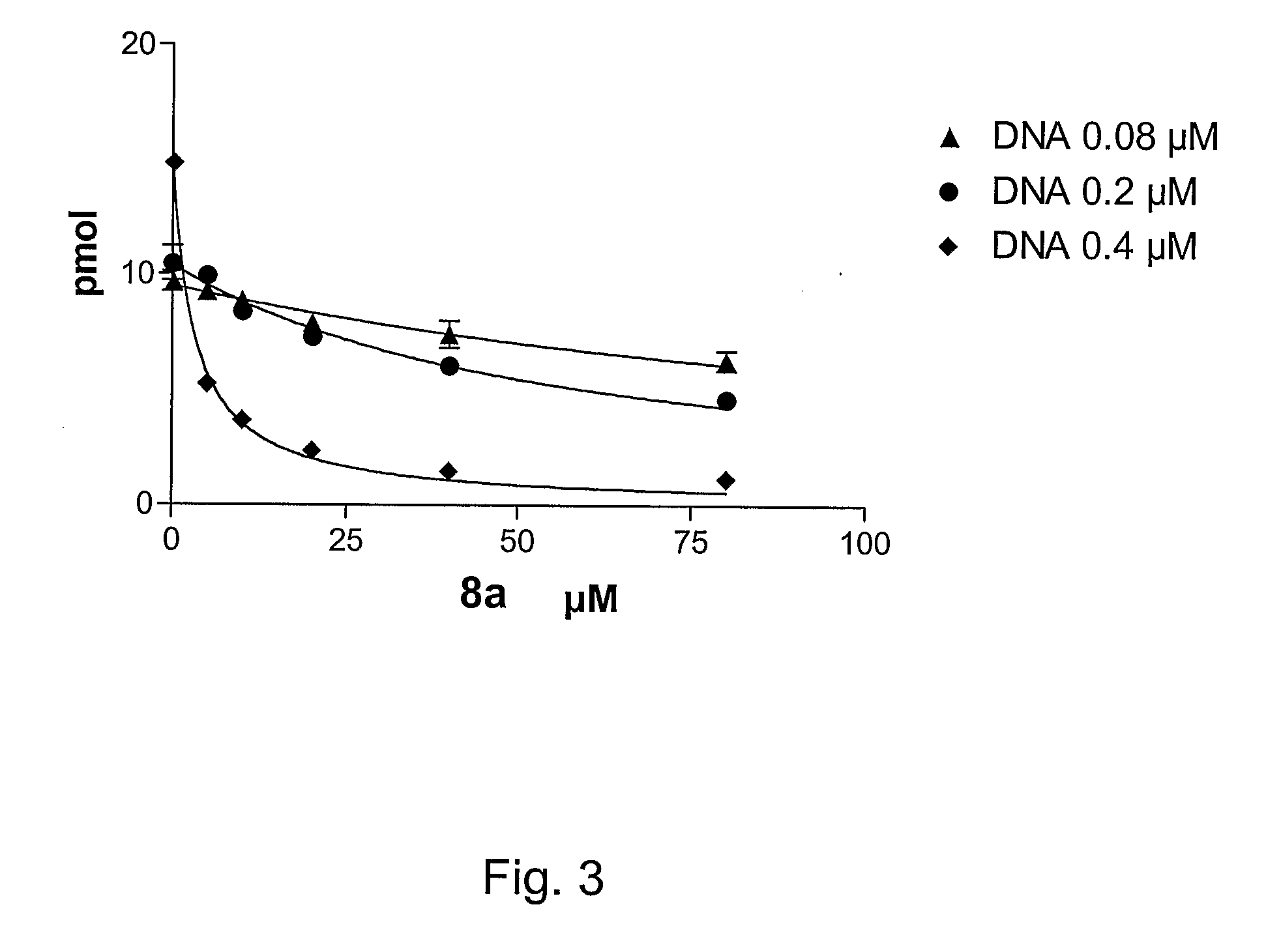
Figure 3
Abstract
Description
BACKGROUND TO THE INVENTION
[0001] The invention relates to 6-vinyl pyrimidine pyrimidinone derivatives and the use thereof as medicament in particular for the treatment of HIV infections, the use thereof for preparing pharmaceutical compositions and methods for the preparation thereof.PRIOR ART
[0002] Acquired immunodeficiency syndrome (AIDS) is a disease of viral origin for which so far no appropriate therapy has been developed. More than twenty years have passed since the US Center for Disease Control (CDC) reported AIDS for the first time (Gallo, R. C. Science 2002, 298, 1728.); a few years later HIV was identified as the aetiological agent of this pathology. Within a short space of time, AIDS assumed epidemic proportions throughout the world, to the point that today more than 40 million people are infected with AIDS and more than 3 million deaths from this disease were reported in 2003 alone (WHO (UNAIDS), June 2004).
[0003] In 1996, the development of highly active antiretroviral th...
Examples
example 2
[0136]Preparation of the Compound 14b:
[0137]c) react the product 13 (5.4 mmol) with NCS (10.8 mmol) in anhydrous DMF (25 mL) at MW (power max=200W) at 50° C. for 15 minutes;[0138]d) the DMF is evaporated in N2 and the obtained product is purified on a silica gel column by chromatography using a 9 / 1 mixture of CH2Cl2 / MeOH as an eluent (yield 54%).
[0139]1H-NMR (CD3OD): δ (ppm) 3.94-3.89 (t, J=6.49, 211); 3.02-2.95 (t, J=6.49, 2H); 2.55 (s, 3H).
[0140]m.p.: 168-170° C.
[0141]MS: m / z 243 [M+Na]+.
example 3
[0142]Preparation of the Compound 14c:
[0143]a) react the product 13 (5.4 mmol) with NBS (10.8 mmol) in anhydrous MeOH (25 mL) in the presence of DTBP (16.2 mmol) at ambient temperature for 1h;[0144]b) the solvent is evaporated at reduced pressure and the obtained product is purified on a silica gel column by chromatography using a 9 / 1 mixture of CH2Cl2 / MeOH as an eluent (yield 69%).
[0145]1H-NMR (CD3OD): δ (ppm) 3.92-3.87 (t, J=6.50, 2H); 3.03-2.97 (t, J=6.50, 2H); 2.55 (s, 3H).
[0146]m.p.:166-169° C.
[0147]MS: m / z 266 [M+1]+.
example 4
[0148]Preparation of the Compounds 15(a-d):
[0149]in which for 15a (X═I), 15b (X═Cl) and 15e (X═Br) and 15d (X═H)[0150]a) react the product 14a-c (13 if X═H) (5.4 mmol) with p-toluenesulphonyl chloride (6.5 mmol) and DMAP (8.1 mmol) in anhydrous DMF (20 mL) at MW (power max=200W) at 45° C. for 6 minutes;[0151]b) dilute with CH2Cl2 (20 mL), wash the mixture with a water solution of HCl 2N then with a saturate solution of NaCl;[0152]c) dry the organic phase on anhydrous Na2SO4, filter and evaporate the solvent at reduced pressure;[0153]d) purify the raw reaction through chromatography on silica gel using a 95 / 5 CH2Cl2 / MeOH mixture as an eluent providing the corresponding products 15a-d.
[0154]15a: X═I (yield 73%)
[0155]1H-NMR (CDCl3): δ (ppm) 7.95-7.83 (d, J=8.00, 2H); 7.46-7.38 (d, J=8.00, 2H); 3.92-3.88 (t, J=6.78, 2H); 2.89-2.77 (t, J=6.78, 2H); 2.44 (s, 3H); 2.35 (s, 3H).
[0156]m.p.:122-124° C.
[0157]MS: m / z 466 [M+1]+; 488 [M+Na]+.
[0158]15b: X═Cl (yield 70%)
[0159]1H-NMR (CDCl3): δ (pp...