
Efficient Logging for Asynchronously Replicating Volume Groups
a volume group and volume group technology, applied in the field of computer systems, can solve the problems of data loss, data stored on the storage device the device used in or by the computer system may experience a failure, so as to reduce memory and reduce memory. the effect of compactness and efficiency
Patent Information
- Authority / Receiving Office
- US · United States
- Current Assignee / Owner
- Publication Date
- 2011-04-28
Smart Images
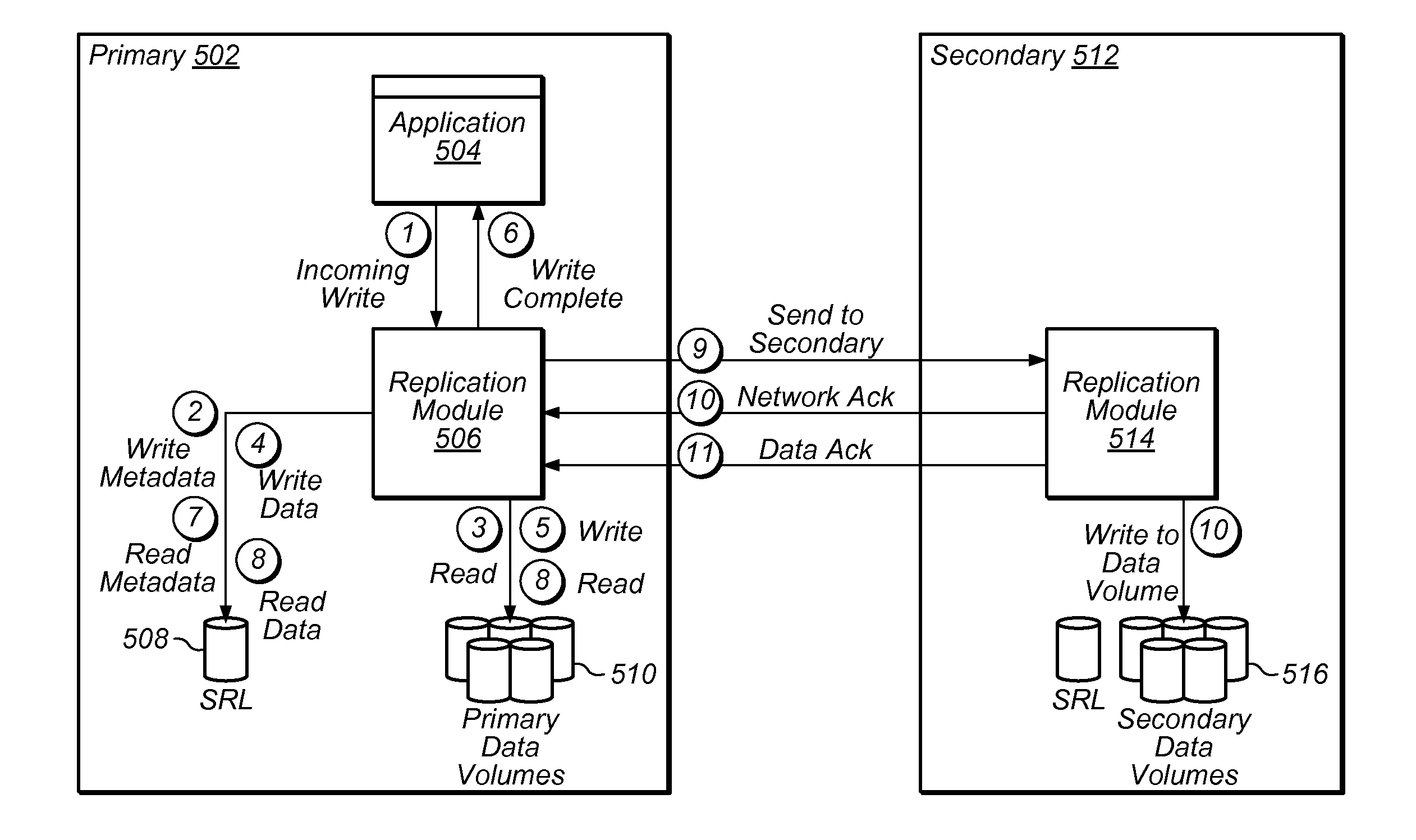
Figure 1 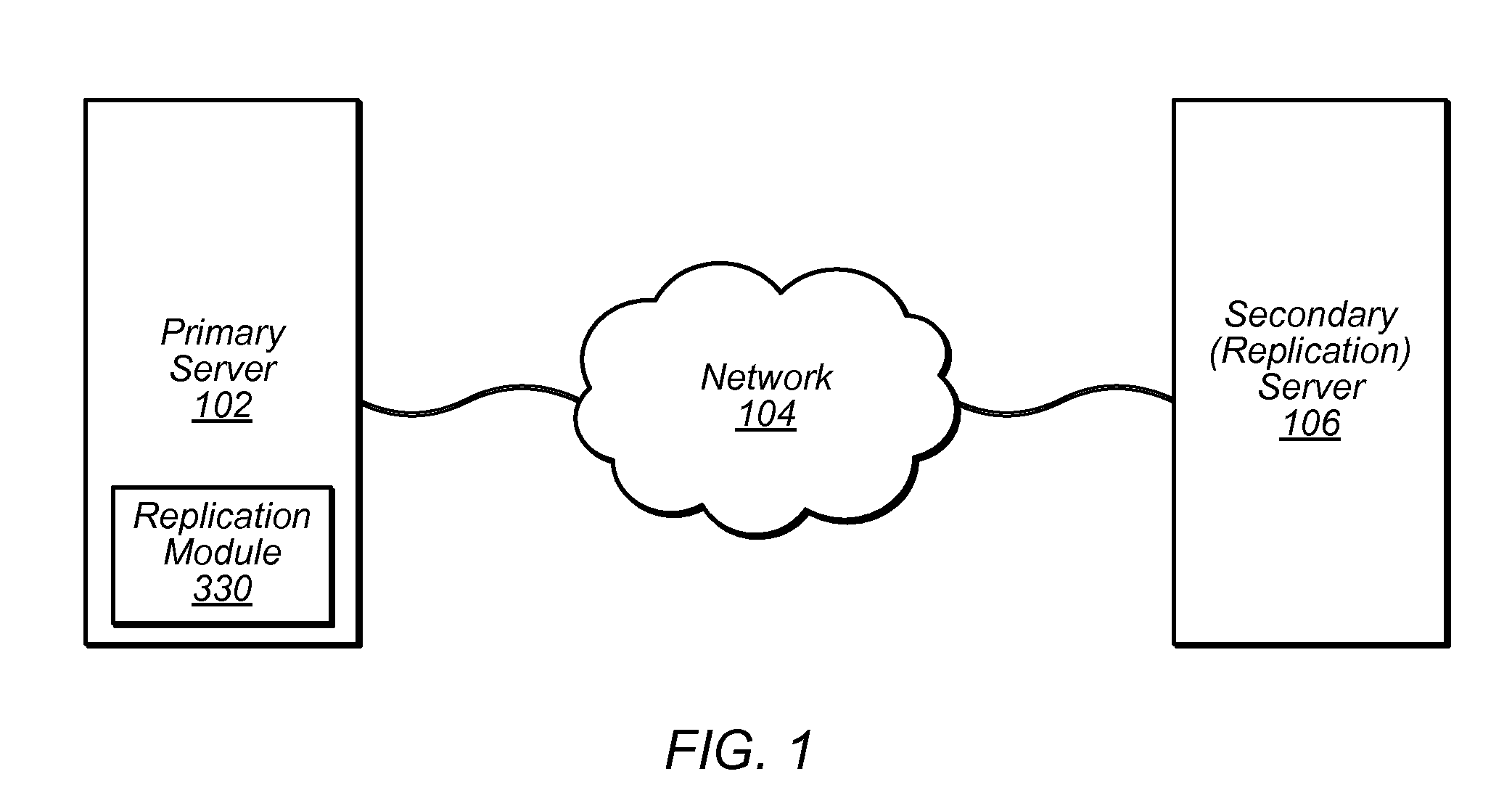
Figure 2 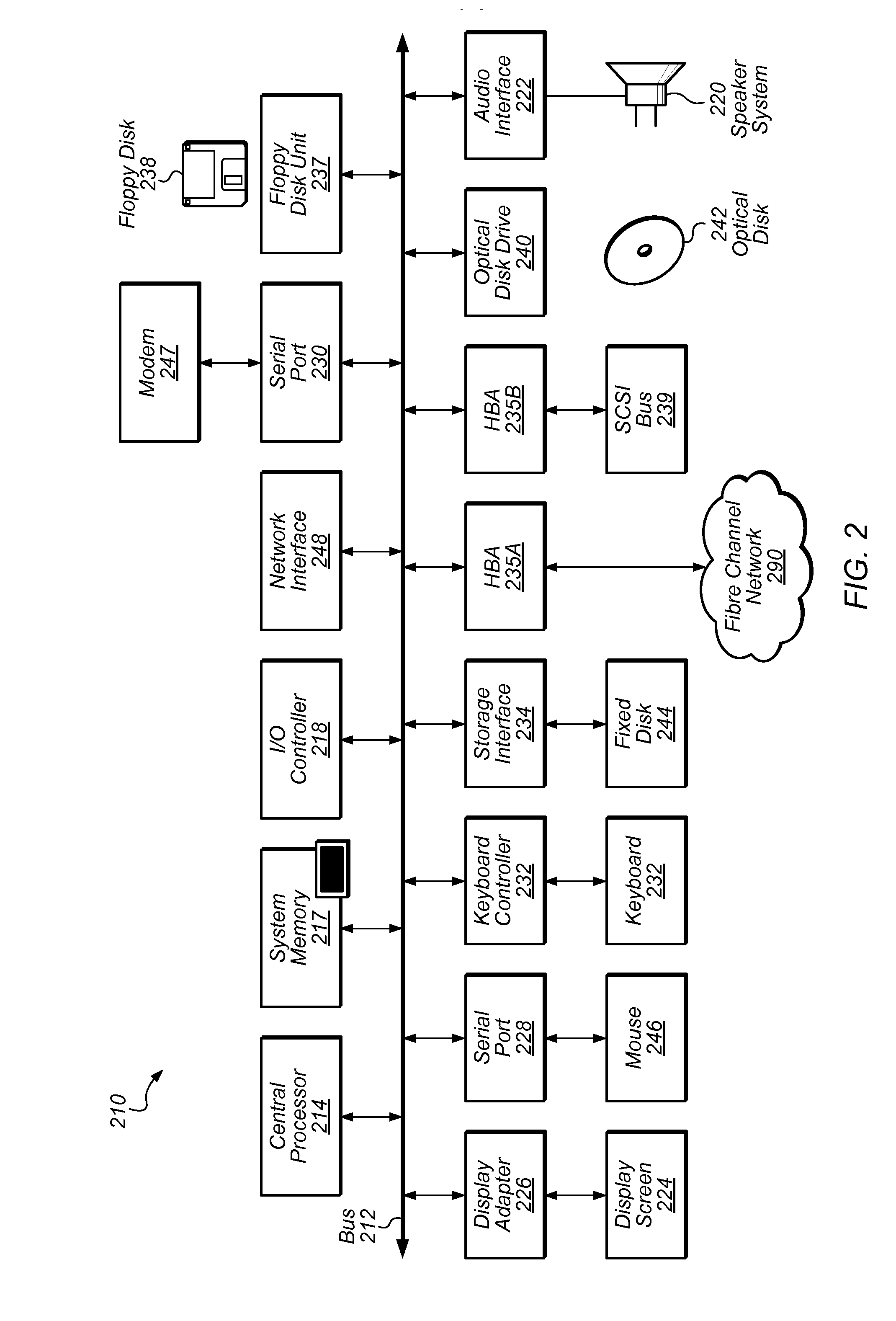
Figure 3
Abstract
Description
FIELD OF THE INVENTION
[0001] The present invention relates generally to computer systems and more particularly to a system and method for logging and replicating data in volume groups.DESCRIPTION OF THE RELATED ART
[0002] Many business organizations and governmental entities rely upon applications that access large amounts of data, often exceeding many terabytes of data, for mission-critical applications. Numerous different types of storage devices, potentially from multiple storage vendors, with varying functionality, performance and availability characteristics, may be employed in such environments.
[0003] Data storage required for applications such as file systems and databases are typically allocated from one or more storage devices that are maintained as a “volume”. The “volume” may serve as a logical interface used by an operating system to access data stored on one or more storage media using a single instance of a file system. Thus, a volume may act as an abstraction that essenti...
Examples
Embodiment Construction
[0028]This specification includes references to “one embodiment” or “an embodiment.” The appearances of the phrases “in one embodiment” or “in an embodiment” do not necessarily refer to the same embodiment. Particular features, structures, or characteristics may be combined in any suitable manner consistent with this disclosure.
[0029]Terminology. The following paragraphs provide definitions and / or context for terms found in this disclosure (including the appended claims):
[0030]“Comprising.” This term is open-ended. As used in the appended claims, this term does not foreclose additional structure or steps. Consider a claim that recites: “An apparatus comprising one or more processor units . . . .” Such a claim does not foreclose the apparatus from including additional components (e.g., a network interface unit, graphics circuitry, etc.).
[0031]“Computer System.” This term has its ordinary and accepted meaning in the art. In general, the term “computer system” can be broadly defined to...