
Fuel container for fuel cell
a fuel cell and container technology, applied in electrochemical generators, transportation and packaging, packaging goods types, etc., can solve the problems of uneven coating layer, peeling off the coating layer, and uneven coating layer, so as to reduce the amount of the partitioning member can slide smoothly, and the pressure needed to extrude the remaining fuel can be set low.
Patent Information
- Authority / Receiving Office
- US · United States
- Patent Type
- Applications(United States)
- Current Assignee / Owner
- Publication Date
- 2011-05-26
- Estimated Expiration
- Not applicable · inactive patent
Smart Images
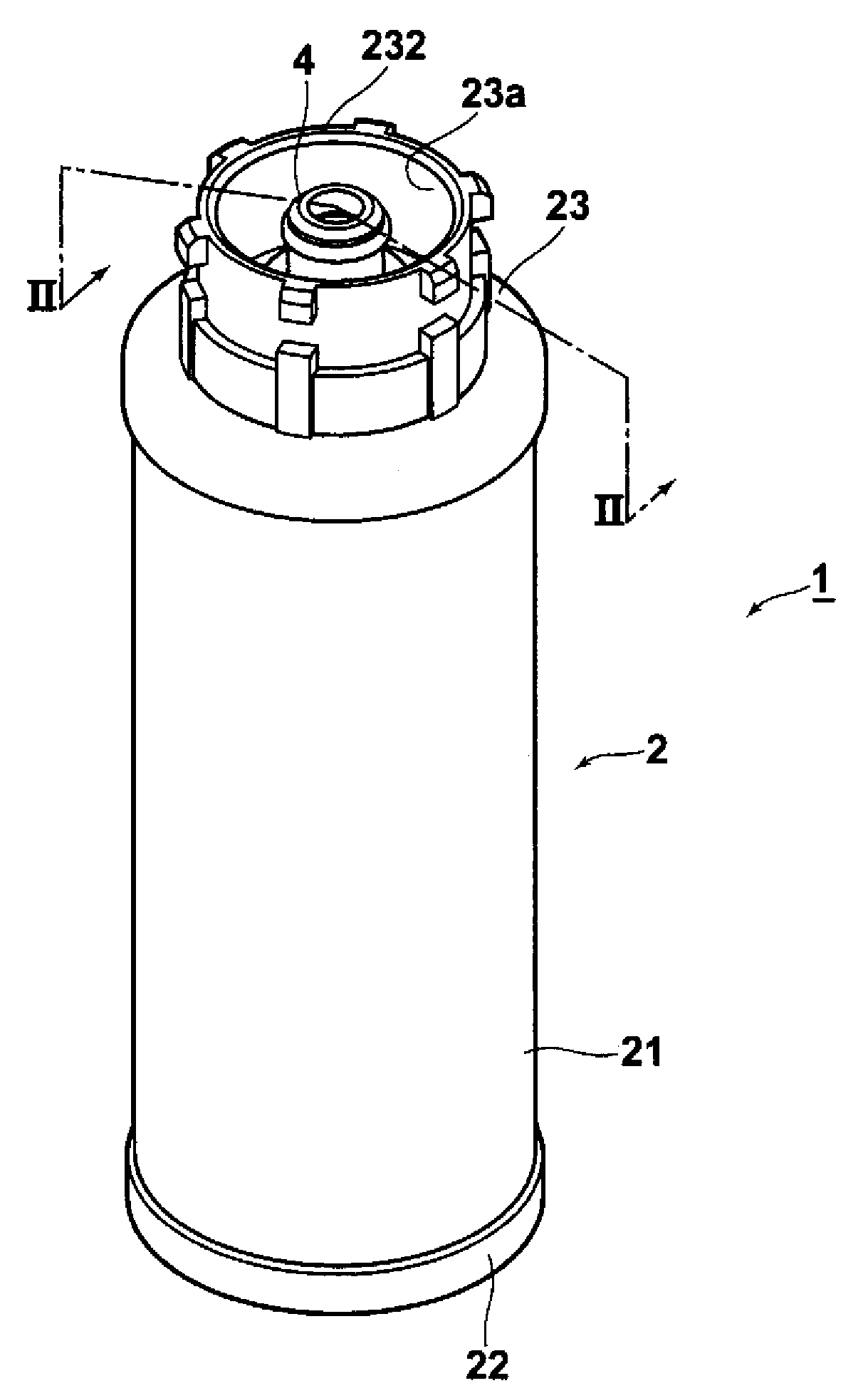
Figure 1 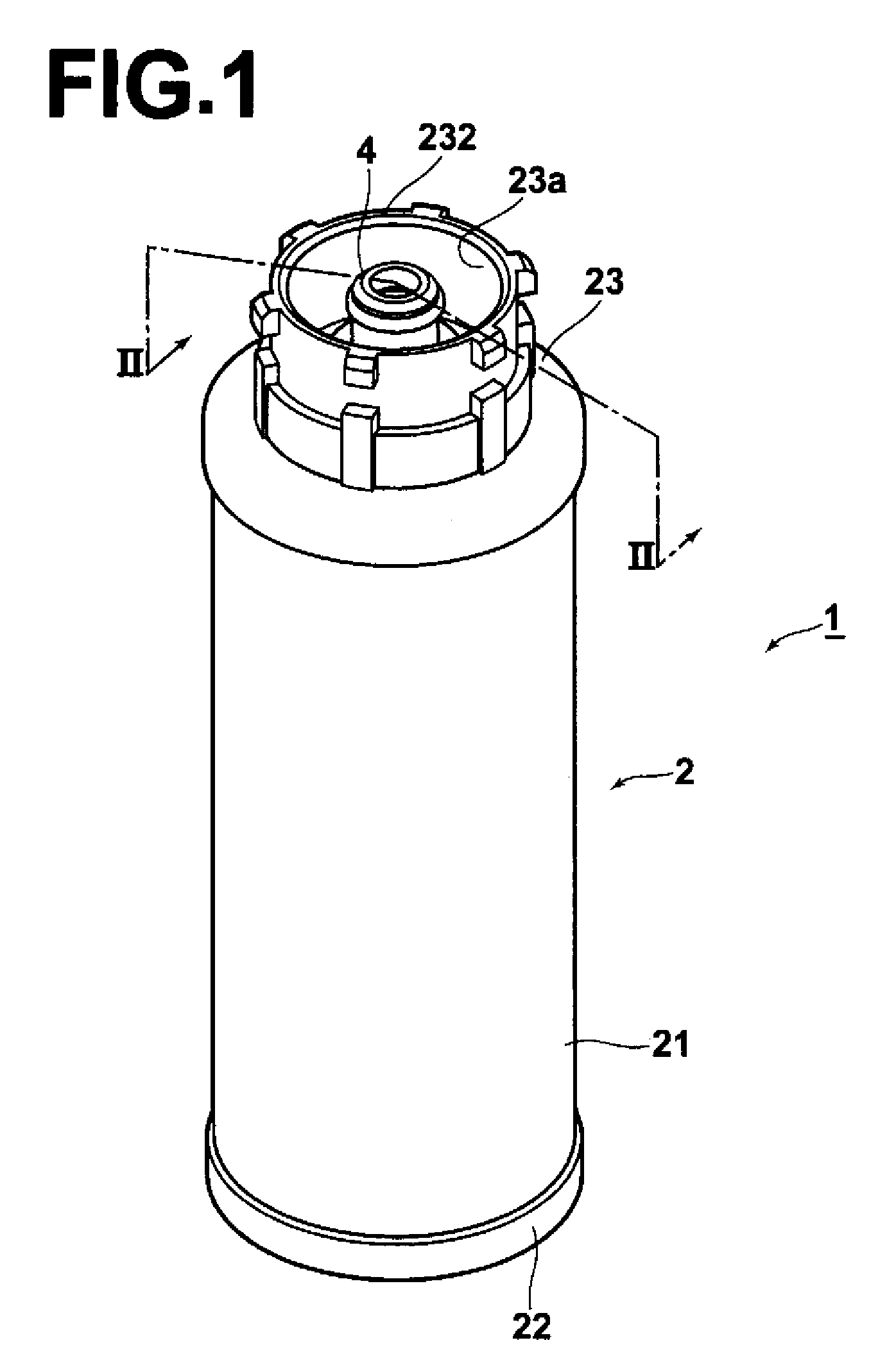
Figure 2 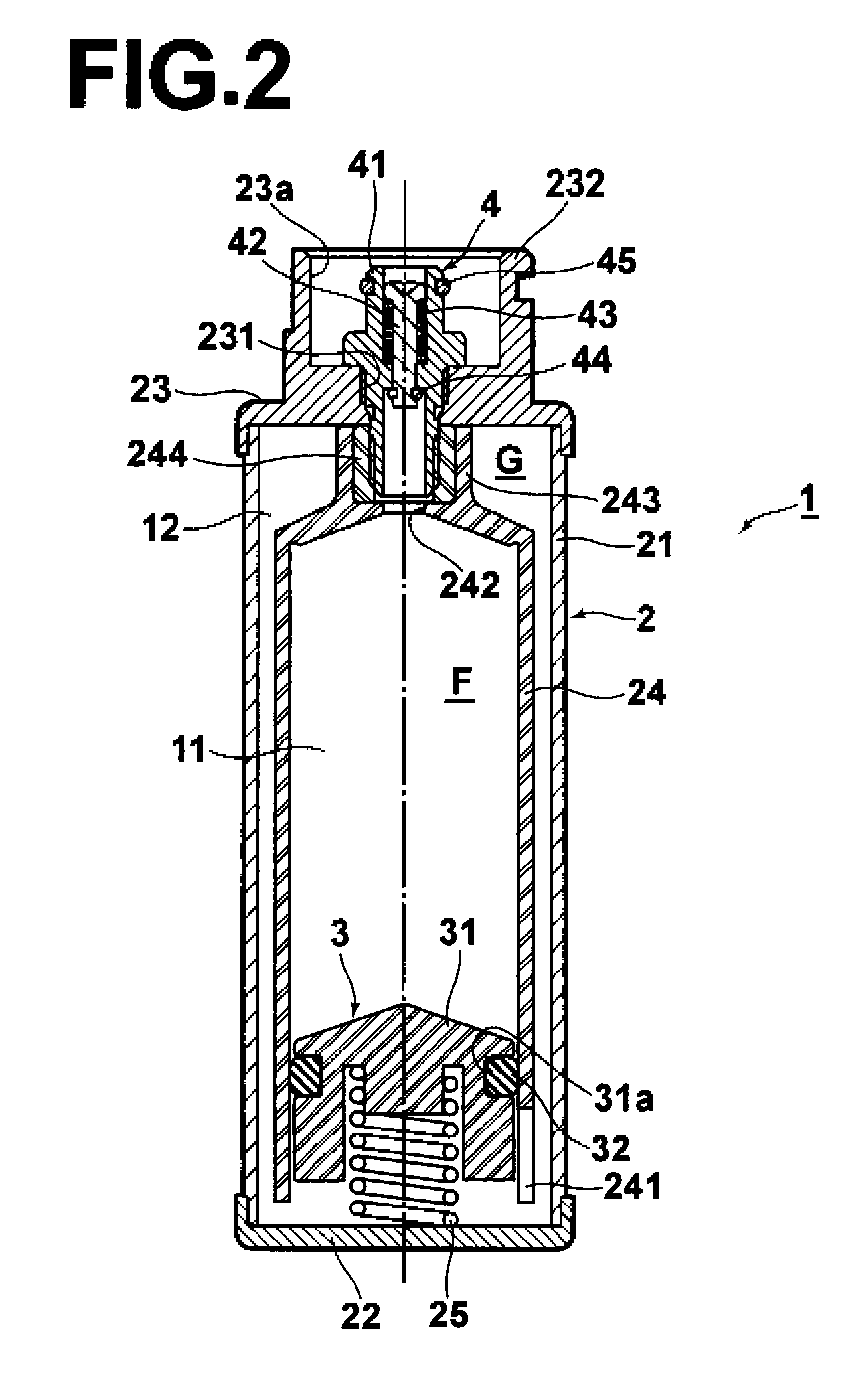
Figure 3
Abstract
Description
BACKGROUND OF THE INVENTION
[0001] 1. Field of the Invention
[0002] The present invention relates to a fuel container for fuel cells that houses liquid fuel for fuel cells, such as Direct Methanol Fuel Cells (DMFC's) and supplies the liquid fuel to the fuel cells. The present invention relates particularly to a partitioning member within the fuel container that partitions the liquid fuel and an extruding means for extruding the liquid fuel.
[0003] 2. Description of the Related Art
[0004] Recently, the use of fuel cells in miniature portable terminals, such as laptop computers and Personal Digital Assistants (PDA's), is being considered. Fuel containers (fuel cartridges, for example) have been proposed as a means of supplying fuel to the fuel cells.
[0005] Liquid fuels, such as mixtures of purified water and methanol, and mixtures of purified water and ethanol, are considered as fuels to fill the fuel containers.
[0006] It is desired that fuel supply pumps, remaining fuel amount detecting mechan...
Examples
embodiment 1
[0118]An endurance test was performed, utilizing the inner container 24, the partitioning member 3 (main body 31 and the O-ring 32), and the valve 4 as described in the above embodiment. The inner container 24 and the main body 31 were molded from PP, the O-ring was molded from EPDM, with a coating layer of parylene N having a film thickness of 1 μm.
[0119]1) First, the partitioning member 3 was positioned at the topmost portion of the inner container 24. The valve 4 was mounted into the aperture 242, and 2 ml of pure methanol was injected into the inner container 24. Thereafter, the partitioning member 3 was pressed from below, to expel the pure methanol via the valve 4. This operation was repeated twice, to expel gas from within the inner container 24.
[0120]2) Next, 6 ml of a mixture of purified water at 70% by weight and methanol at 30% by weight was injected into the inner container 24 via the valve 4.
[0121]3) After injection, the valve 4 was removed. Then, the partitioning membe...
embodiment 2
[0128]The same fuel container as that of Embodiment 1 was utilized to perform a test of deterioration over time. The testing method comprised steps 1 and 2 of the durability test above. Thereafter, the fuel container was left to stand in a 65° C. environment for a predetermined amount of time, at which point step 3 was performed.
[0129]5) After the value of frictional force was measured, the valve 4 was replaced, and the 30% methanol by weight solution was injected into the inner container 24 via the valve 4, thereby returning the fuel container to a state after step 2 of the durability test. Thereafter, the fuel container was left to stand in a 65° C. environment again for a predetermined amount of time, at which point step 3 was performed.
[0130]Step 5 was repeatedly performed, to measure changes in the sliding frictional force with the passage of time that the fuel container was left standing in the 65° C. environment. Note that the “Time Left Standing” in this test refers to the c...
embodiment 3
[0136]The same fuel container as that of Embodiment 1 was utilized to perform a test of seal failure. The testing method comprised steps 1 and 2 of the durability test above. Then, the 30% by weight methanol solution was caused to flow out via the valve at a rate of 6 ml / 60-120 min. Thereafter, the number of fuel containers in which gas had entered due to seal failure of the O-ring was counted.