
Method of Producing a Composite Component
a composite component and manufacturing method technology, applied in lamination, domestic applications, chemistry apparatus and processes, etc., can solve the problems of increasing the flow limit of the hollow section material, inability to produce a positive lock providing sufficient holding, and insufficient fixation of the two components relative to each other, so as to improve the material quality and the adhesion of the composite. , the effect of improving the internal high pressure of the hollow section
Patent Information
- Authority / Receiving Office
- US · United States
- Patent Type
- Applications(United States)
- Current Assignee / Owner
- Publication Date
- 2012-07-19
Smart Images
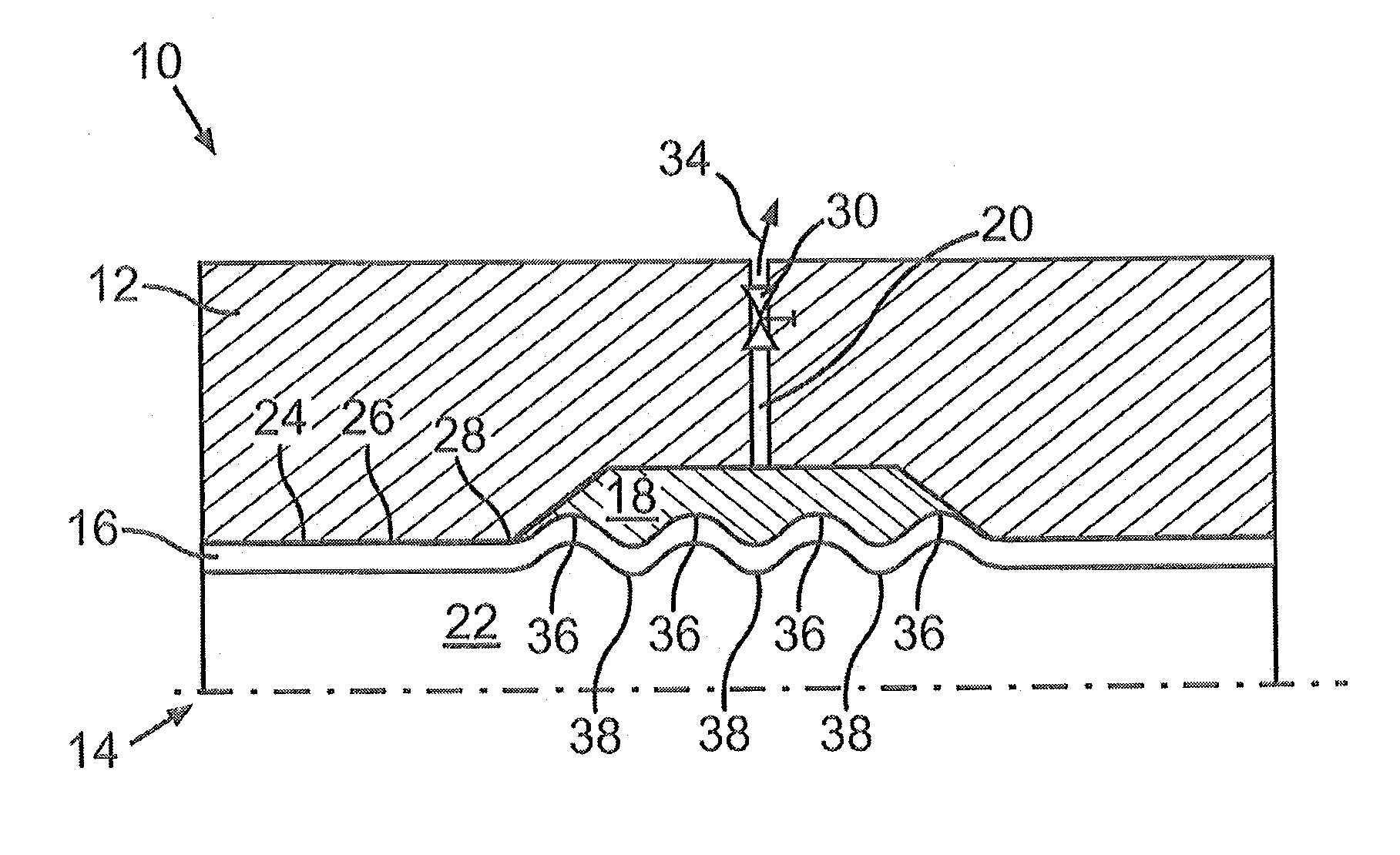
Figure 1 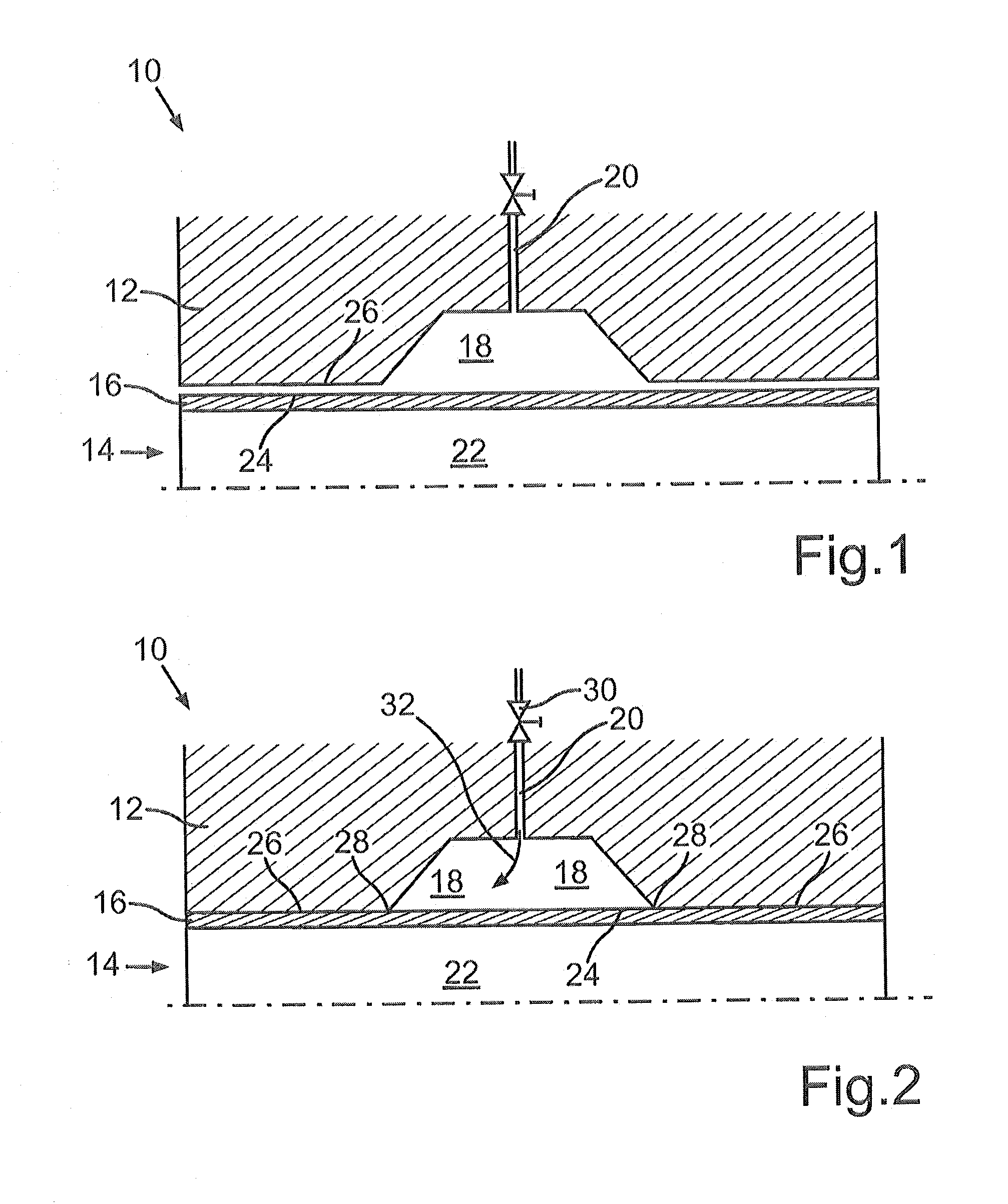
Figure 2 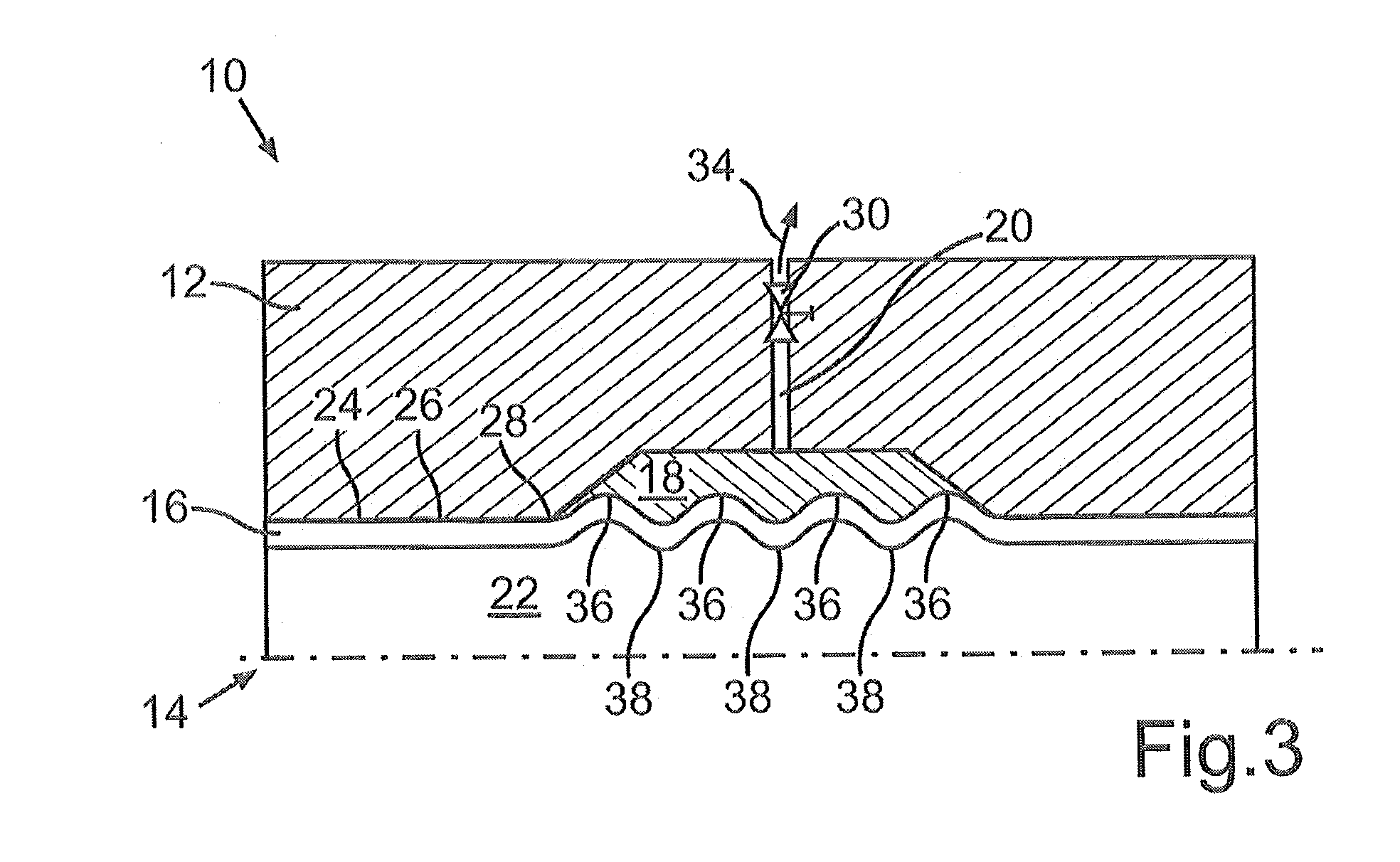
Figure 3
Abstract
Description
BACKGROUND AND SUMMARY OF THE INVENTION
[0001] The invention relates to a method of producing a composite component.
[0002] PCT International Publication No. WO 2008 / 125233 A1 discloses a method of producing a composite component in which a hollow section is expanded by internal high pressure and is simultaneously encapsulated with plastics material in a bulge region. The simultaneous expansion and encapsulation is intended to produce an improved positive lock.
[0003] With polymer hybrid components that are known per se, which are designed as a combination of an injection molded component and a hydroformed metal component, the composite adhesion between the two component parts of the component is brought about by an adhesion promoter or by a positive lock between the two components. The fixing of the two components relative to each other is, however, often inadequate despite these measures. Particularly in the case of hybrid components connected in positive manner, it is often not possibl...
Examples
Embodiment Construction
[0018]A combined injection molding and hydroforming mold, referenced 10 overall, of which one half of the mold partial region 12 is illustrated in FIG. 1, comprises a central cavity 14 for receiving a hollow section 16 and also a sprue cavity 18 into which an injection molding compound, in particular a plastics material, can be fed through a sprue line 20.
[0019]FIG. 1 shows the mold 10 with the hollow section 16 prior to carrying out the method. To produce the composite component, initially the inner void 22 of the hollow section 16 is acted upon by a pressure, which expands the hollow section 16, until the outer wall 24 thereof comes to lie against the wall 26 of the cavity 14 of the mold 10, and optionally also expands slightly into the mold region 18.
[0020]In particular, this, as can be seen in FIG. 2, brings the edge region 28 of the sprue cavity 18 into contact with the outer wall 24 of the hollow section 16. As soon as the outer wall 24 has come to lie against the edge region ...