
Electrochemical energy store comprising a separator
Patent Information
- Authority / Receiving Office
- US · United States
- Current Assignee / Owner
- Publication Date
- 2012-07-26
- Estimated Expiration
- Not applicable · inactive patent
Smart Images
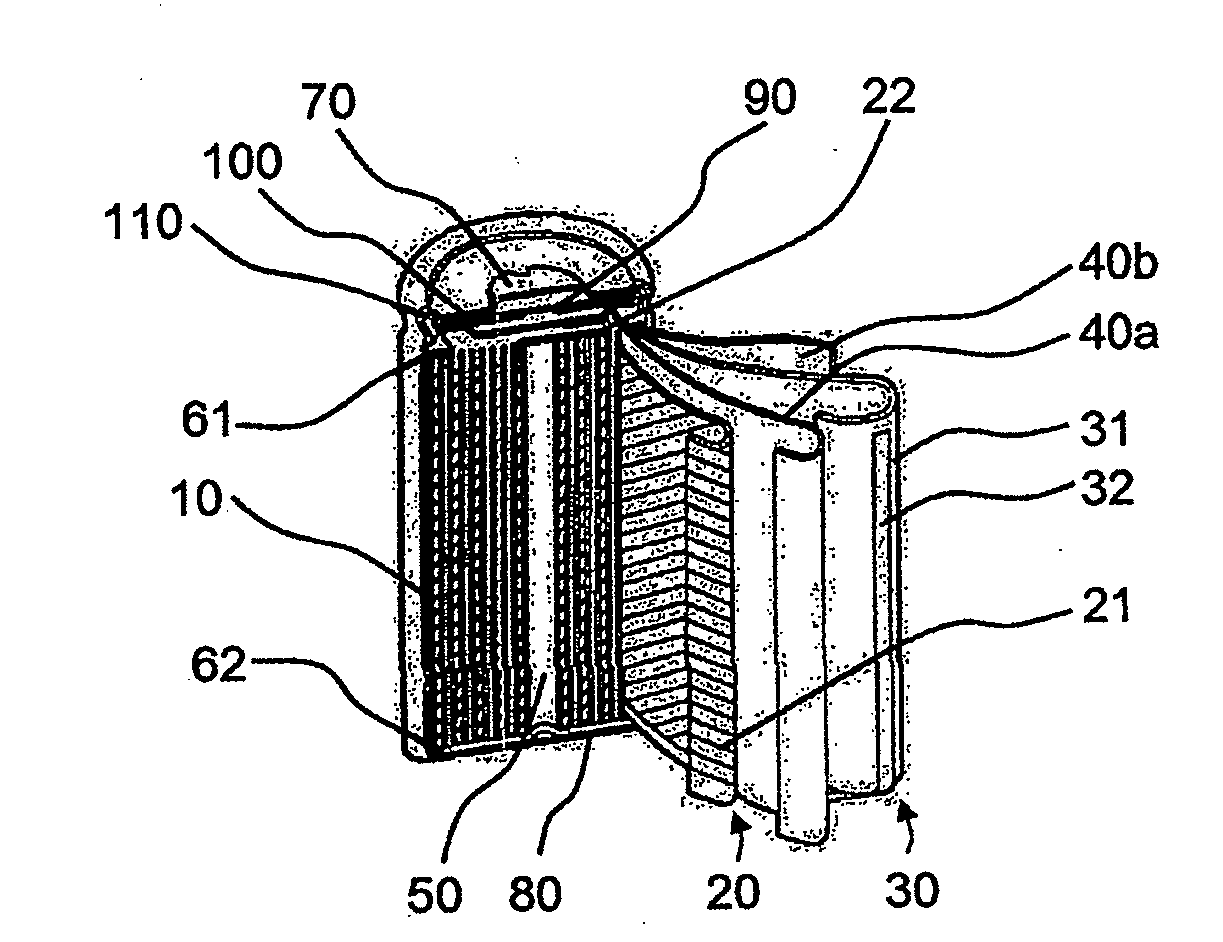
Figure 1 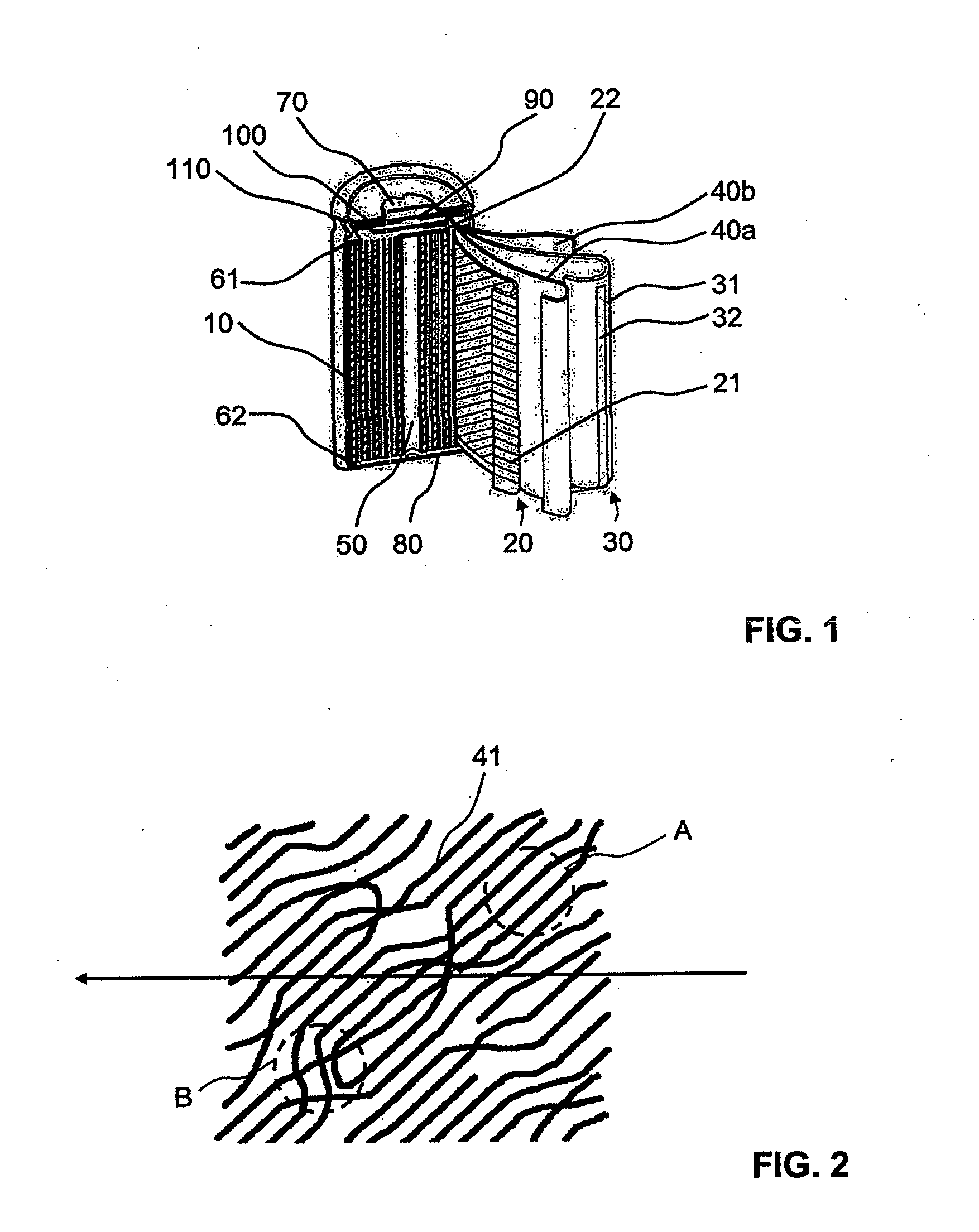
Figure 2 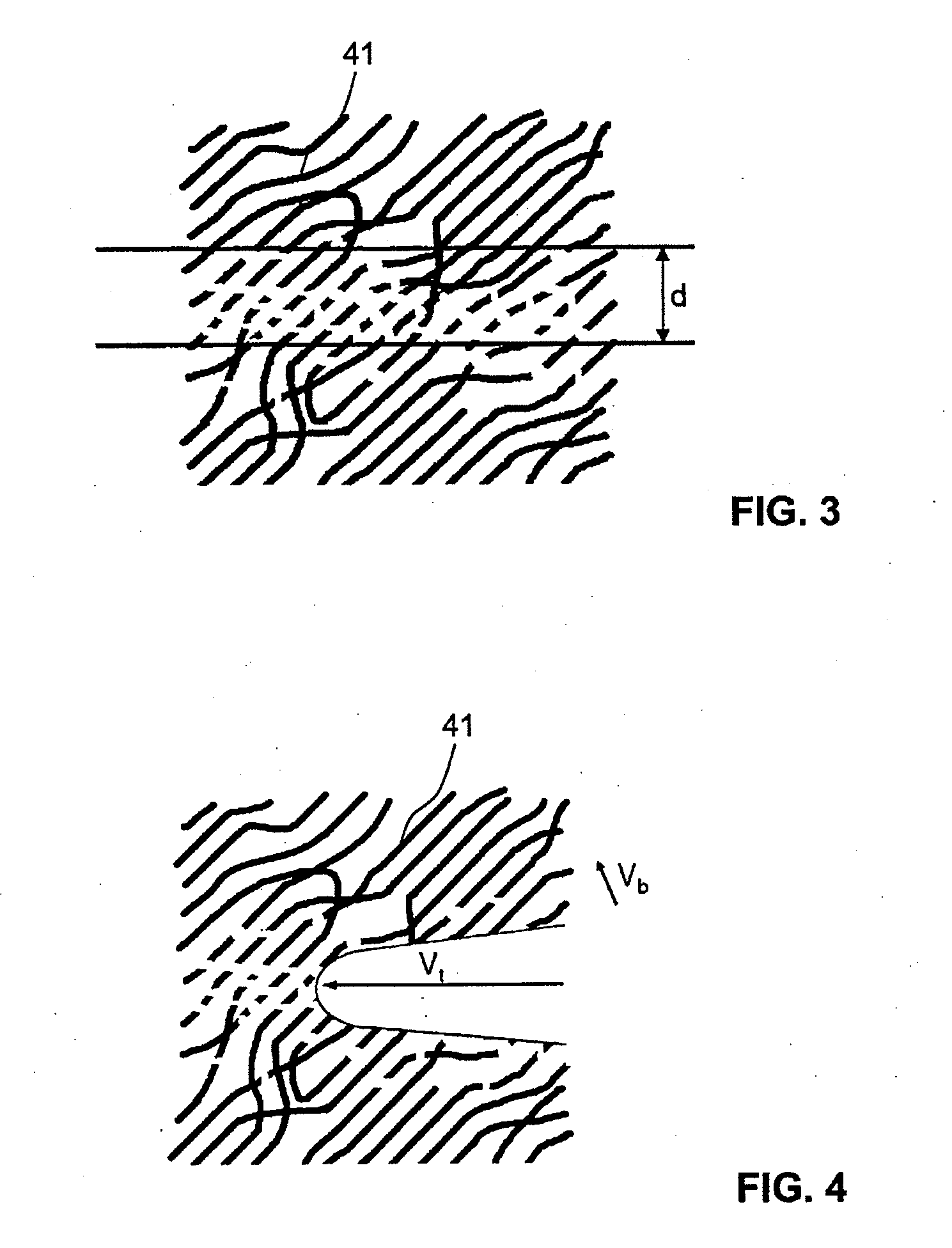
Figure 3
Abstract
Description
TECHNICAL FIELD
[0001] The present invention relates to an electrochemical energy store having a positively charged electrode, a negatively charged electrode and a porous separator. The porously designed separator is used to isolate the positively charged electrode and the negatively charged electrode from one another.PRIOR ART
[0002] The prior art discloses various types of electrochemical energy stores which are used to supply electrically operated appliances with power. Such energy stores are usually called batteries or accumulators. When the battery or accumulator is discharged, chemical energy is converted to electrical power by an electrochemical redox reaction. Said electrical power can be used in a wide variety of ways by an electrical load connected to the electrochemical energy store.
[0003] Electrochemical energy stores can generally be classified into a first group of nonchargeable primary batteries and a second group of rechargeable secondary batteries. In this case, secondar...
Examples
Embodiment Construction
[0042]FIG. 1 shows a perspective illustration of a preferred exemplary embodiment of an electrochemical energy store according to the invention. This electrochemical energy store, which is described below, is a secondary battery in the form of a lithium ion battery. However, this embodiment is only one possible example of an electrochemical energy store according to the invention. Self-evidently, the separator according to the invention can also be used in other electrochemical energy stores.
[0043]In this embodiment, the battery has an essentially cylindrical housing 10 having a circumferential side wall which contains, as the most important parts of the battery, a positively charged electrode 20 and a negatively charged electrode 30 isolated by porous separators 40a and 40b. In addition, the housing 10 contains an electrolyte which is in chemical contact with the two electrodes 20, 30 and which surrounds the two separators 40a, 40b, wetting them in the process. In this case, the ne...