
Electric Abrasive Sharpener
a technology of electric abrasives and sharpeners, which is applied in the field of electric powered abrasive sharpeners, can solve the problems of reducing the sharpening efficiency of electric abrasives, so as to achieve the effect of reducing the blade kickback, reducing the cost of electric abrasives, and reducing the risk o
Patent Information
- Authority / Receiving Office
- US · United States
- Patent Type
- Applications(United States)
- Current Assignee / Owner
- Publication Date
- 2012-10-11
Smart Images
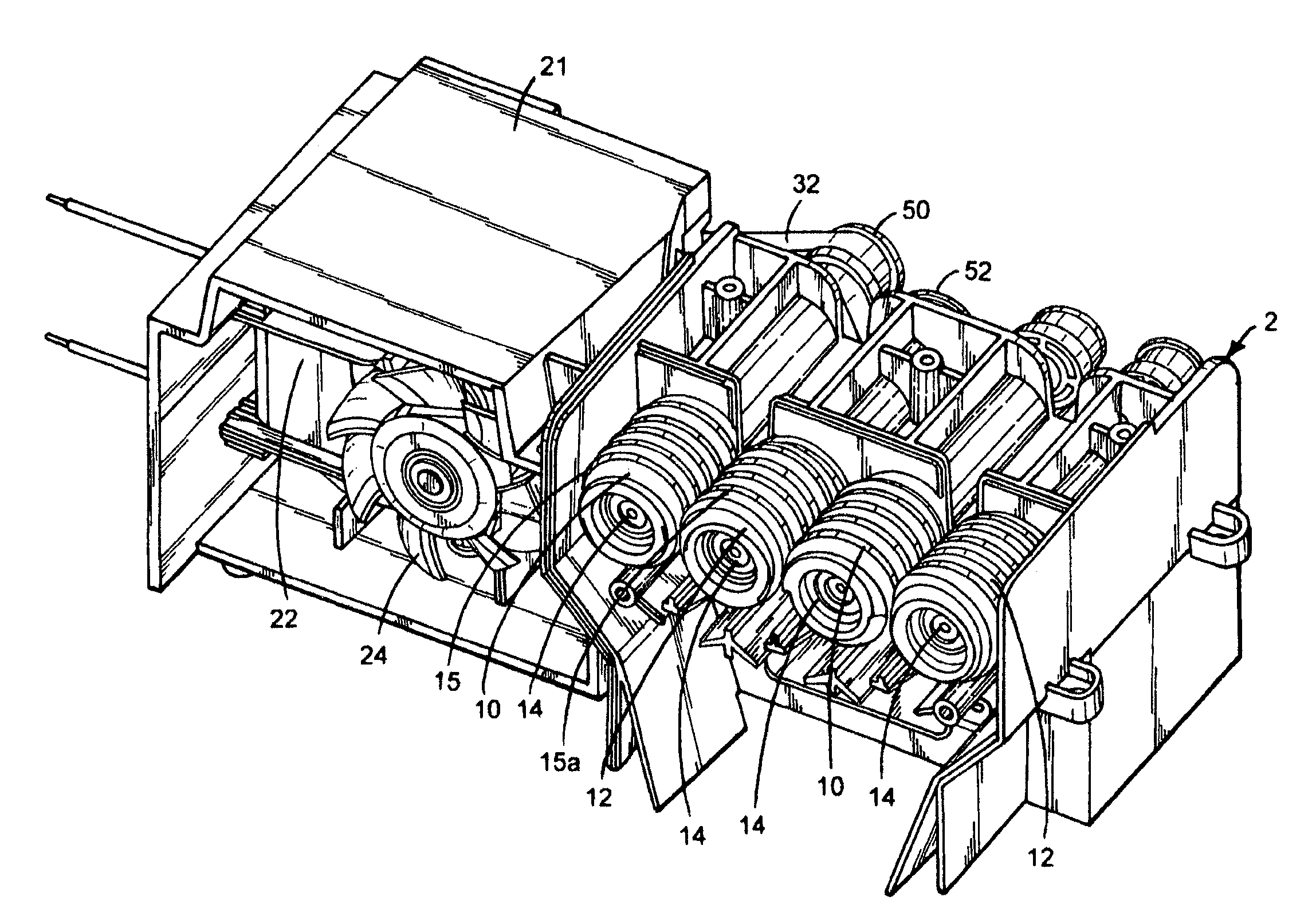
Figure 1 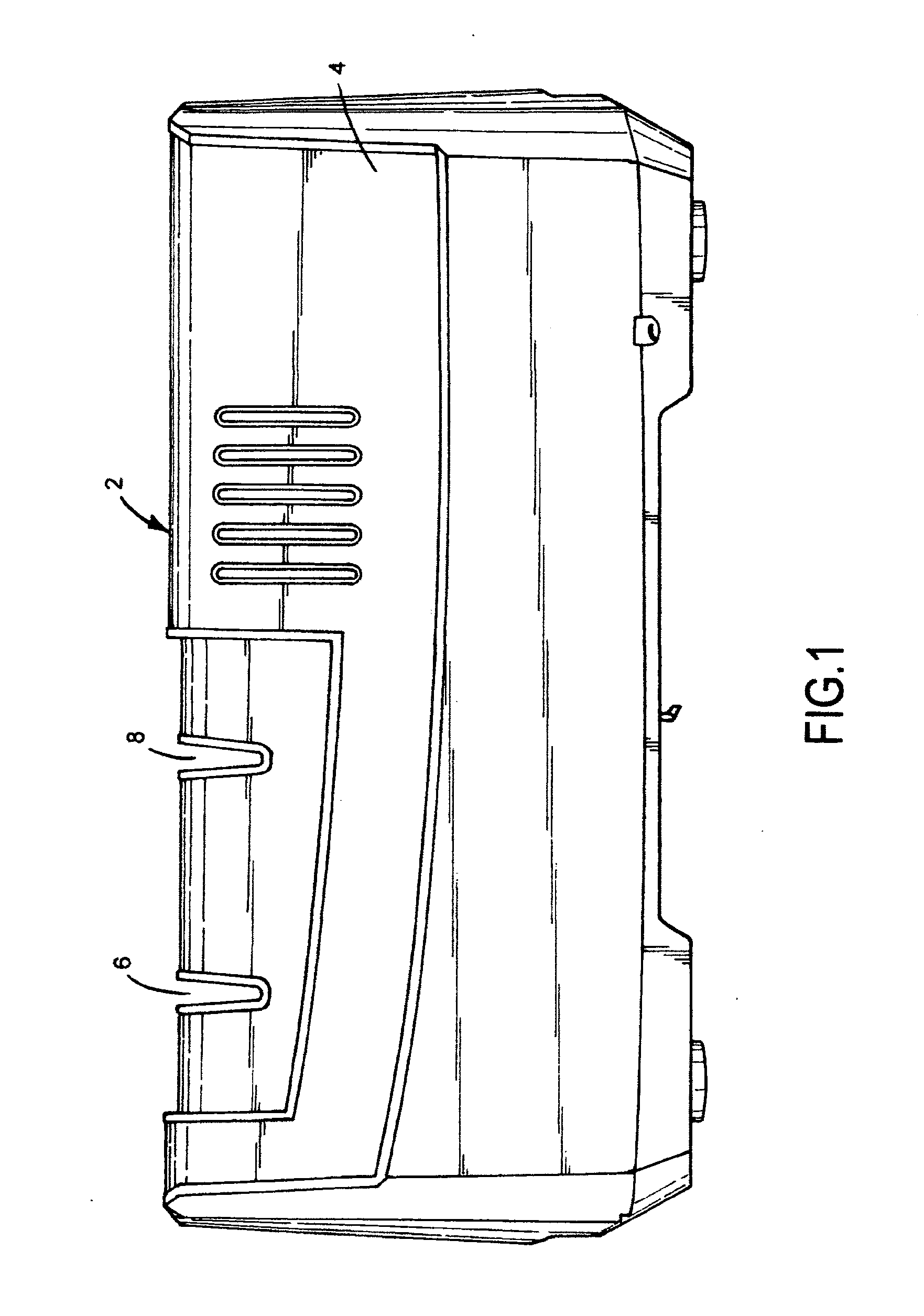
Figure 2 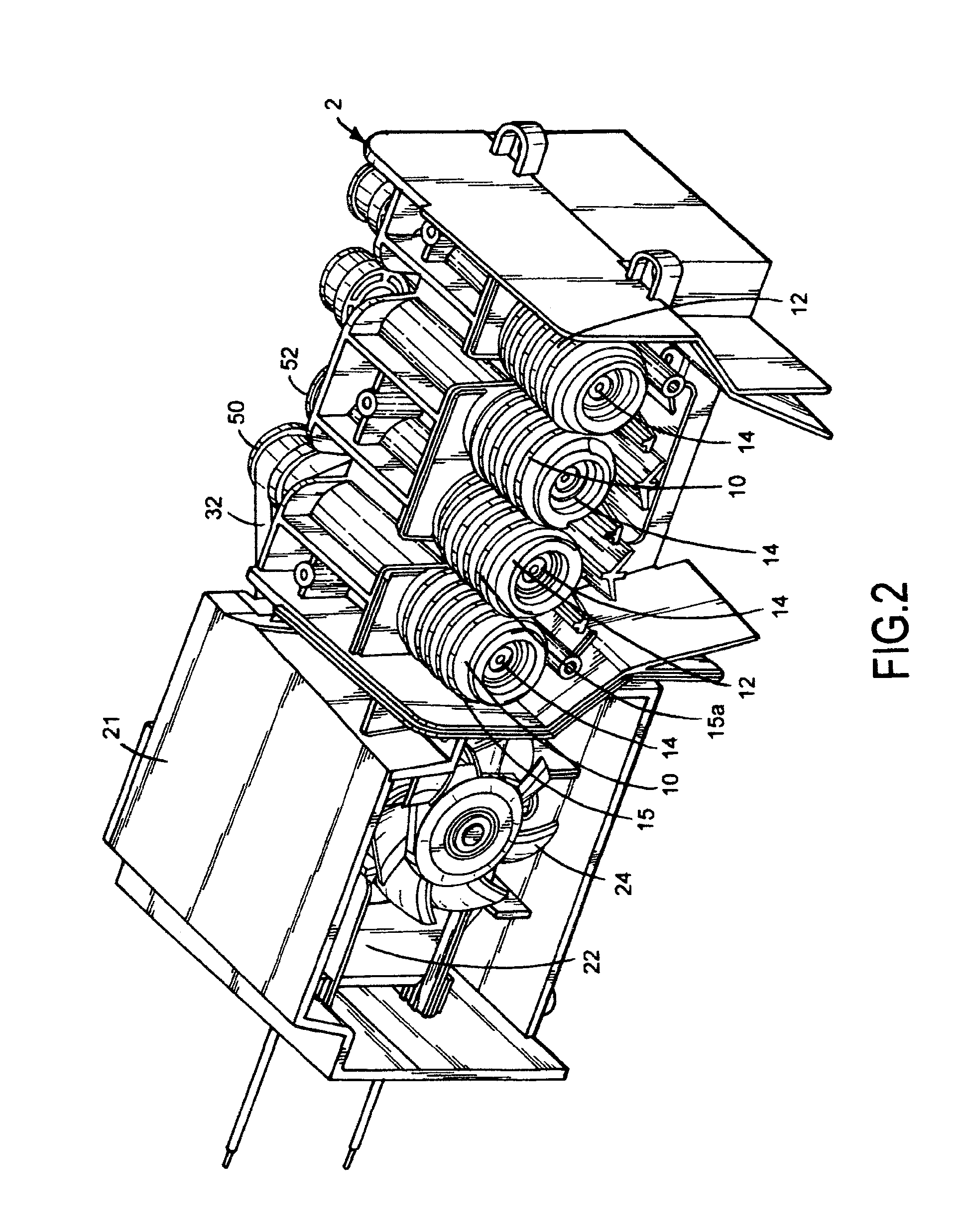
Figure 3
Abstract
Description
BACKGROUND OF THE INVENTION
[0001] This application is a continuation of copending application, Ser. No. 12 / 381,759 filed Mar. 16, 2009 which in turn claims priority to provisional application, Ser. No. 61 / 069,489 filed Mar. 14, 2008.FIELD OF THE INVENTION
[0002] This invention relates to abrasive sharpeners, and more particularly, to an electric powered abrasive sharpener having counter-rotating wheels.SUMMARY OF THE PRIOR ART
[0003] Numerous self-powered, electric abrasive sharpeners have been developed in the past. Although some past designs produce satisfactory results, the self-powered systems in the prior art are relatively expensive and must rely on the use of heavy duty electric motors for attaining adequate torque to satisfactorily drive the abrasive wheels. Another problem associated with known electric sharpeners is the danger and inconvenience to the user experiencing kick back of the blade being sharpened. In addition, prior designs of electric sharpeners do not provide an op...
Examples
Embodiment Construction
[0012]Referring now to FIGS. 1-7, there is illustrated the electric sharpener of the invention, generally designated by reference numeral 2. The sharpener 2 has a hollow housing 4 made of metal or plastic and the like. For purposes of manufacture, a combination of plastic and metal may be used effectively used to form housing 4. The housing 4 includes a pair of V-shaped slots 6 and 8 in which a pair of counter-rotating abrasive wheels 10 and 12, having a diamond abrasive or other suitable material is respectively mounted in sharpening slots 6 and 8. The wheels 10 and 12 have a central hub 14 respectively having integral helical ridges 15 and 15a in the form of raised continuous threads of generally the same radius from hub 14 as illustrated in FIGS. 4, 6, and 7. The ridges 15 and 15a overlap a portion of each other, whereby, for example, ridges 15 form right handed threads and ridges 15a form left handed threads. An abrasive material is affixed to outer peripheral surfaces 16 of the...