
Supply-demand pairing system and method thereof
a technology of demand and supply, applied in the field of supply demand pairing system, can solve the problems of ineffective real-time collection of messages required by transactions or activities, low efficiency and success ratio, and uncertainty, and achieve the effect of improving overall economic effectiveness and best transaction quality
Patent Information
- Authority / Receiving Office
- US · United States
- Patent Type
- Applications(United States)
- Current Assignee / Owner
- Publication Date
- 2013-09-26
- Estimated Expiration
- Not applicable · inactive patent
Smart Images
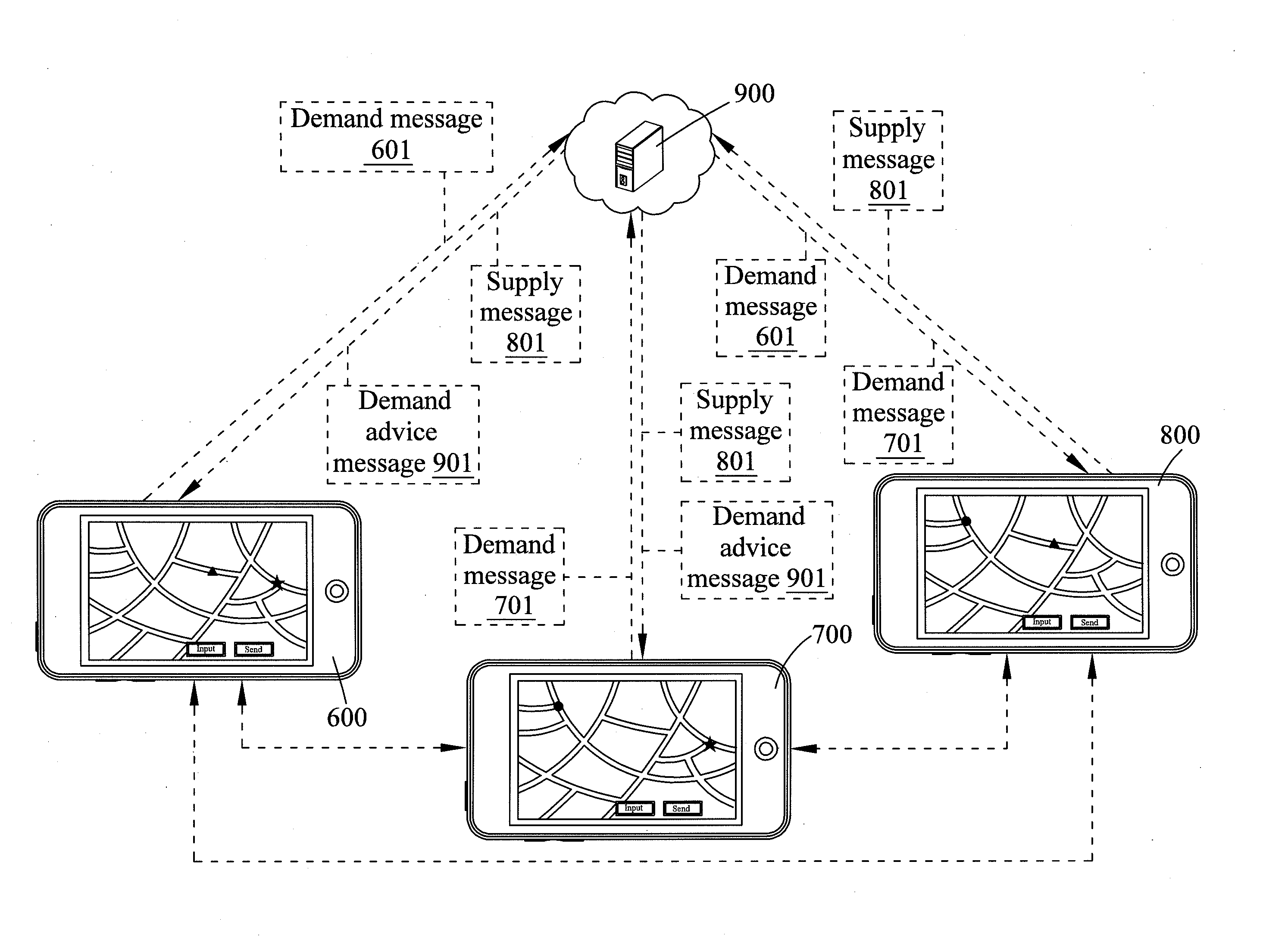
Figure 1 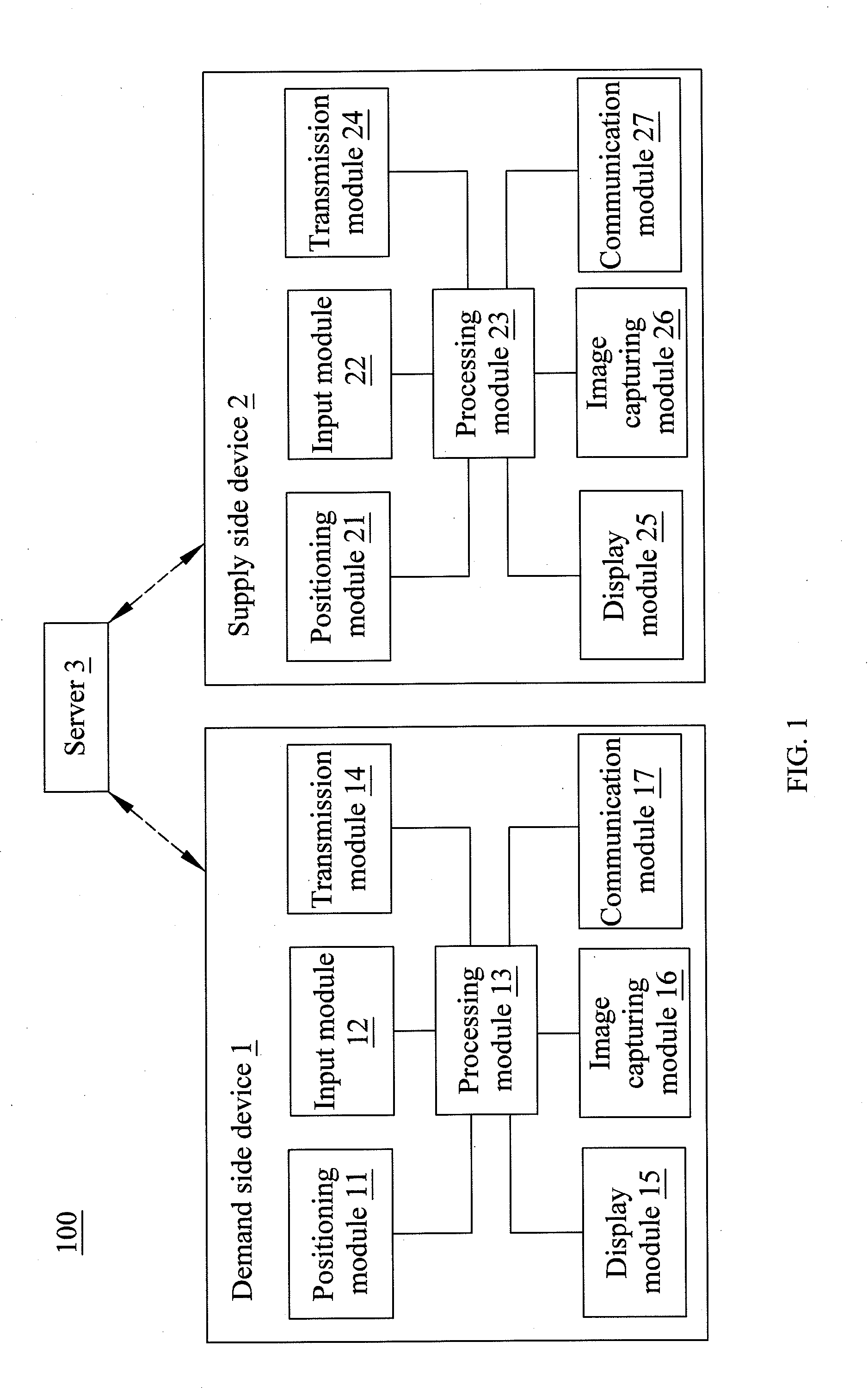
Figure 2 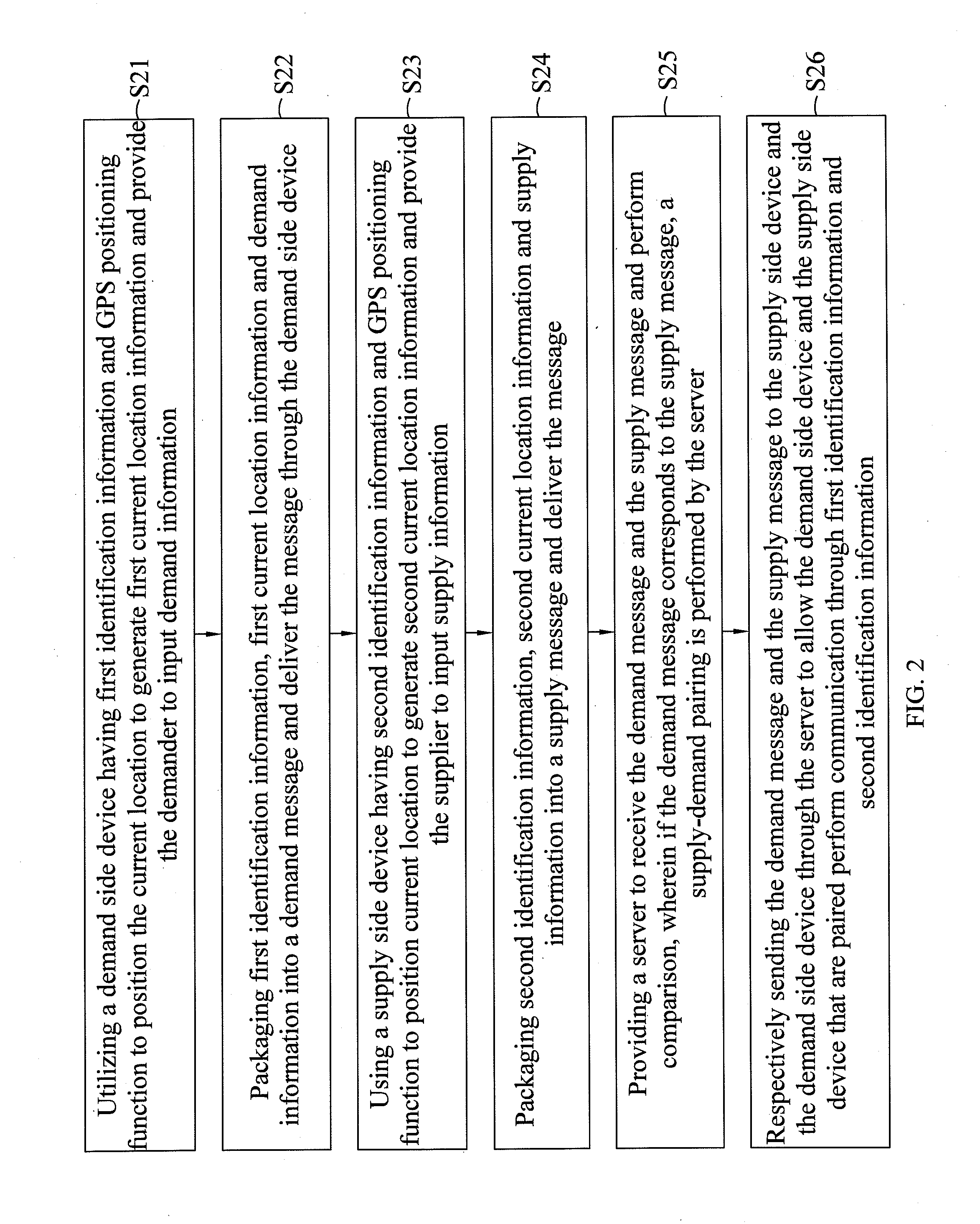
Figure 3
Abstract
Description
CROSS-REFERENCE TO RELATED APPLICATION
[0001] This application claims the benefit of China Patent Application No. 201210080285.5, filed on Mar. 23, 2012, in the State Intellectual Property Office of the People's Republic of China, the disclosure of which is incorporated herein in its entirety by reference.BACKGROUND OF THE INVENTION
[0002] 1. Field of the Invention
[0003] The present invention relates to a supply-demand pairing system and its method, and more particularly to a supply-demand pairing system capable of utilizing a GPS device to perform supply-demand searching and further performing supply-demand pairing and its method.
[0004] 2. Description of the Related Art
[0005] People will usually need to deal with a number of uncertain transactions or activities during daily life. However, these transaction or activities are usually contingencies or spontaneous such as vehicle riding when going out, shopping somewhere spontaneously, outdoor rescue, transportation and market message search ...
Examples
Embodiment Construction
[0033]The foregoing and other technical characteristics of the present invention will become apparent with the detailed description of the preferred embodiments and the illustration of the related drawings.
[0034]With reference to FIG. 1 for a block diagram of a supply-demand pairing system according to the invention is depicted. In the figure, the supply-demand pairing system 100 comprises a demand side device 1, a supply side device 2 and a server 3. The demand side device 1 and the supply side device 2 can be electronic devices such as a mobile phone having GPS positioning and navigation functions, or a PDA. The demand side device 1 and the supply side device 2 respectively corresponds to first identification information and second identification information. The first identification information and the second identification information can be an IP address, a media access control (MAC) address, a physical address or a phone number for identifying the demand side device 1 and the ...